France
Carcassonne
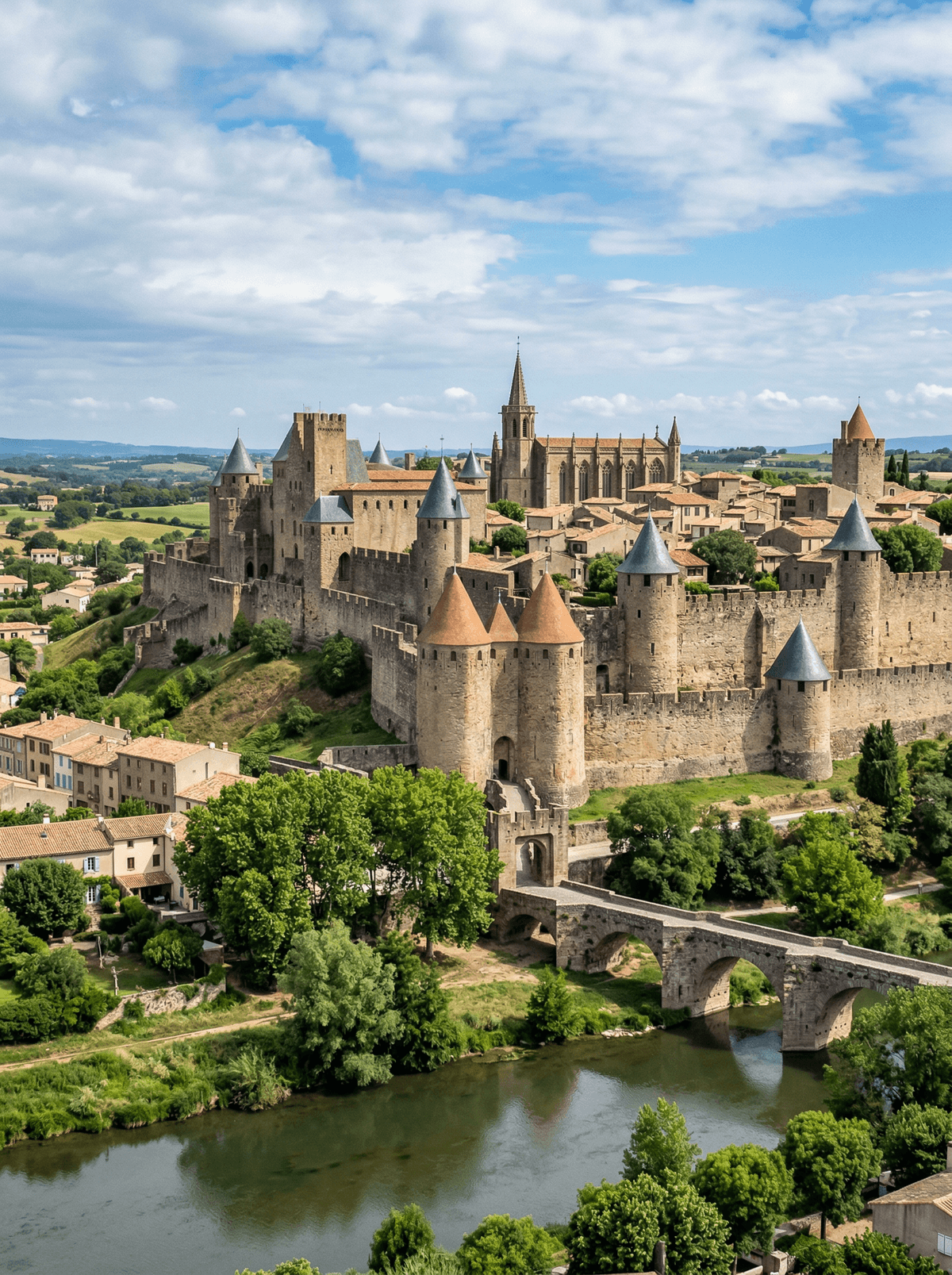
Double ramparts and a crown of towers silhouetted at dusk like a medieval fever dream.
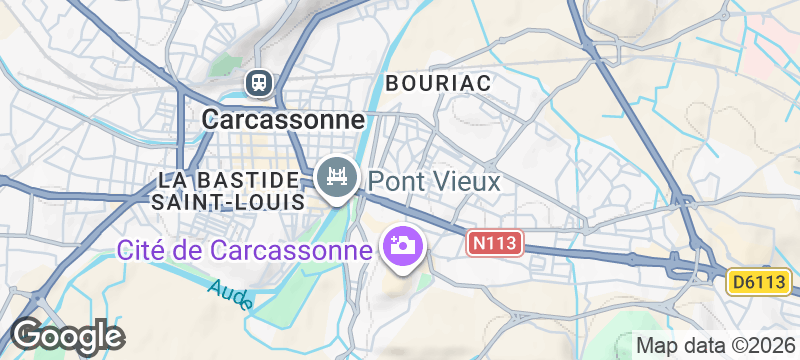
Two rings of walls and a bristle of towers rise from the Aude plain in a silhouette that looks drawn rather than built, the fortress glowing amber at dusk. Carcassonne, in France's Languedoc, is a whole fortified town rather than a castle, and your first sight of it — from the motorway, the river or the lower town — still produces the intended effect: awe at what human labour and defensive paranoia can build.
The Cité has been fortified since Roman times; its two concentric walls, with the lists between them and the château inside, were largely rebuilt after the crown took the town in the wake of the Albigensian Crusade, and in the nineteenth century Eugène Viollet-le-Duc's restoration gave the towers the pointed slate caps that purists still argue about. UNESCO inscribed it in 1997, and the Canal du Midi, its second World Heritage site, runs past the station in the lower town. That lower town, the Bastide Saint-Louis across the Aude, is where the city actually lives — a grid of streets in shimmering colours around the Place Carnot and its red-marble fountain, with the market, the butchers who each make their own Toulouse sausage, and the restaurants that serve cassoulet the way the Languedoc means it.
Couple
Walk the ramparts at sunset as the towers cast long shadows across the Aude valley, then cross to the lower town for cassoulet and a Minervois away from the tourist menus.
Family
The double walls, the towers and the drawbridge are a child's idea of a castle made real — the scale is thrilling and the history is tangible.
Friends
Base in the bastide below, eat in the local restaurants, and enter the fortress on foot through the Porte Narbonnaise — the approach is half the experience.
- Two concentric rings of walls and a crown of towers enclose a fortified medieval town, inscribed by UNESCO in 1997.
- Walking the ramparts at dusk, with the Aude valley spreading out below, feels like inhabiting a medieval manuscript.
- The lower town across the river has the real food — cassoulet of white beans, confit and sausage in restaurants the locals use.
- The Canal du Midi, the city's second World Heritage site, runs past the station in the lower town.
Cassoulet — white beans slow-baked with duck confit, Toulouse sausage and pork — the Languedoc dish Carcassonne claims as its own.
A Minervois or Corbières from the six local appellations, poured in a cellar beneath the walls.
Luxor
Egypt
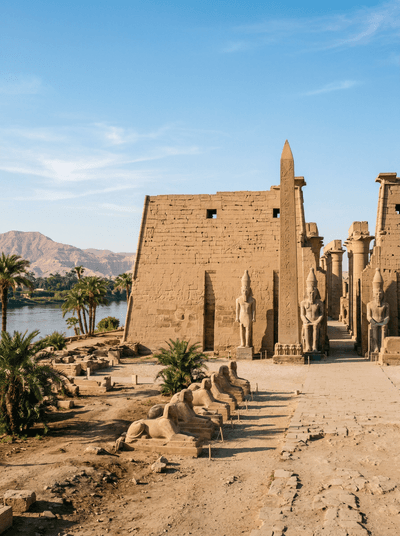
Dawn light flooding Karnak's hypostyle hall through columns carved before Rome existed.
Borobudur
Indonesia
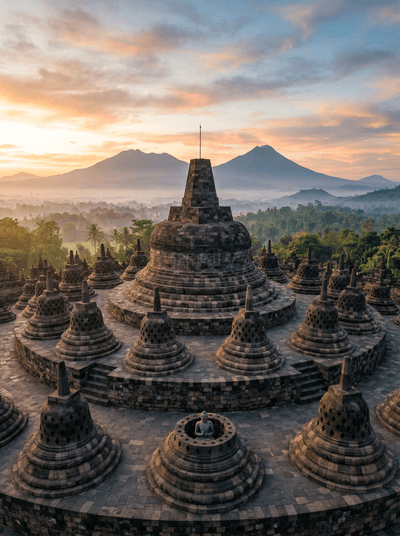
Buried under ash and jungle for centuries, the stone mandala came back.
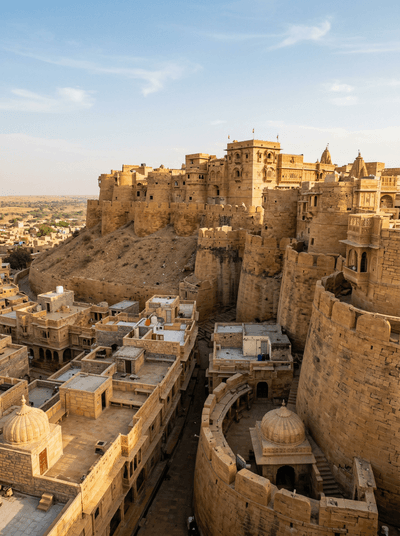
Jaisalmer
India
A living fortress carved entirely from golden sandstone rising like a mirage from the Thar.
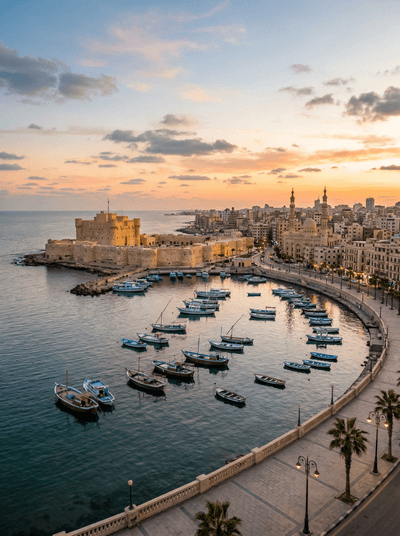
Alexandria
Egypt
Salt-weathered Mediterranean balconies above a seafront where Cleopatra's palace lies submerged offshore.
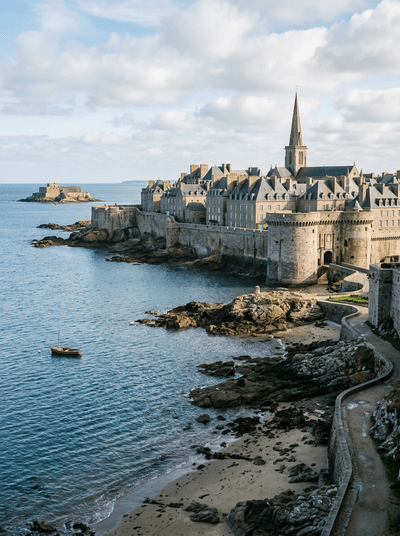
Saint-Malo
France
Granite ramparts ringing a corsair city where Europe's biggest tides lock you in twice a day.
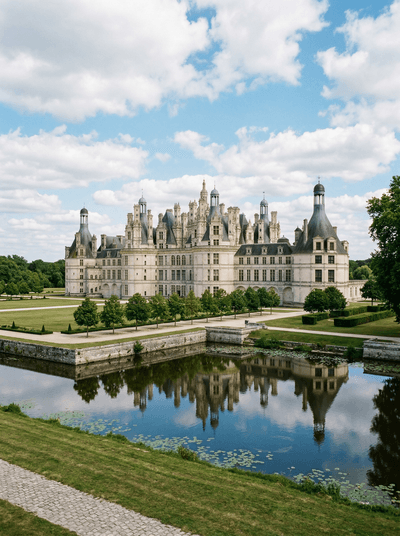
Château de Chambord
France
A double-spiral staircase inside a Renaissance hunting palace built for a king who barely stayed.

Mont-Saint-Michel
France
A granite abbey rising from a bay where the sea withdraws fifteen kilometres and races back.
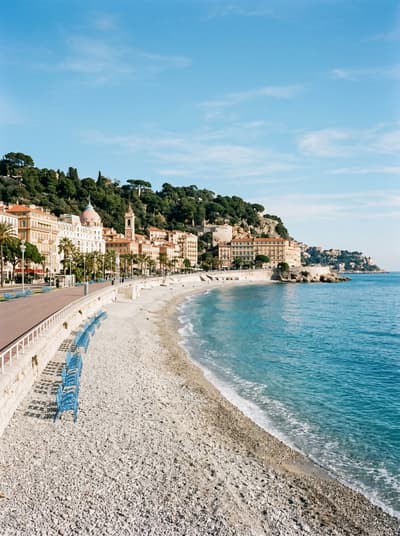
Nice
France
Italianate backstreets above a market where socca sizzles on copper pans the size of tables.