France
Chenonceau
A château arched across a river, built by a king's mistress and finished by his widow.
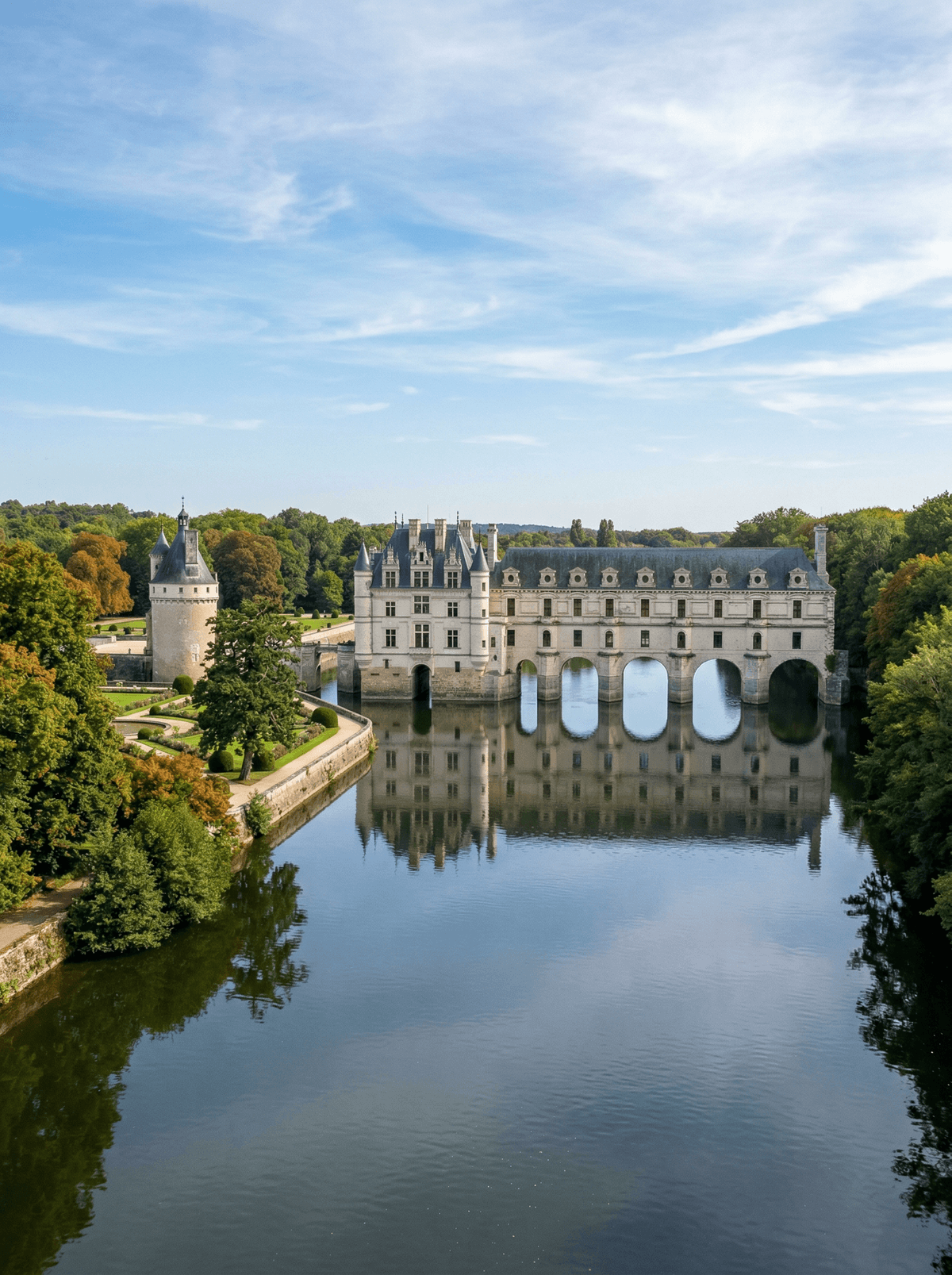
The château does not sit beside the river — it spans it. Arches carry the long gallery across the Cher, and on a still morning the reflection doubles the building into a flawless symmetry of white stone and dark water. Chenonceau, in France's Loire valley, is the rivalry of two women made architectural: Diane de Poitiers built the bridge, Catherine de Medici took the château from her and built the gallery on top, and their gardens still confront each other across the moat.
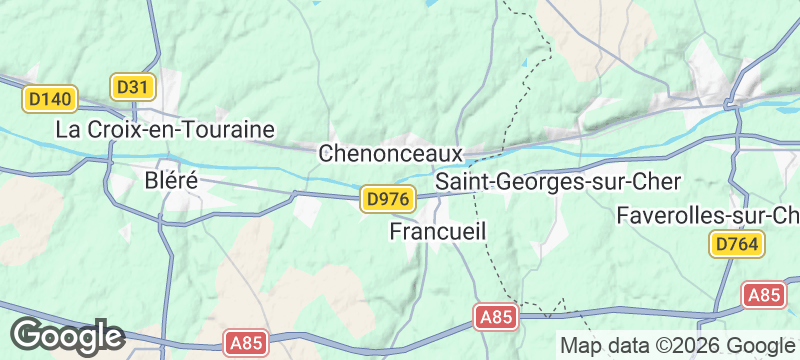
Chenonceau stands in the Touraine on the Cher, the most visited château in France after Versailles, and the two-storey gallery over the river is the reason — Diane de Poitiers, mistress of Henri II, had the bridge built across the water; when the king died his widow Catherine de Medici reclaimed the château and raised the gallery over it. Diane's garden and Catherine's garden remain, on either side, and the château is filled with fresh flowers arranged every week by its own floral team, which is why the rooms smell of the season. In 1940–44 the river was the demarcation line and the gallery straddled it — one door in occupied France, the other in the free zone. The château and its gardens are open all year round, and the maze, the kitchen garden and the river bank fill the remainder of the day.
Couple
The gallery over the river, with light reflecting off the water onto the ceiling, is among the most romantic rooms in France. The story of two women building against each other adds human drama to the architecture.
Family
The maze in Catherine's garden, the flower-filled rooms and the river setting give children a château that feels more like a storybook than a museum. The wartime escape route adds intrigue for older ones.
- The gallery spans the Cher on its arches — the reflection doubles the château into a flawless symmetry.
- Diane de Poitiers and Catherine de Medici each left a garden here, still facing each other across the water.
- In the Second World War the gallery straddled the demarcation line — one door in occupied France, the other in the free zone.
- Fresh flowers fill every room, arranged weekly by the château's own floral team — the rooms smell of the season.
Rillettes de Tours — pork cooked slowly until it falls into silky, spreadable shreds — on toasted bread.
Vouvray — honeyed Chenin Blanc from the cellars cut into the tufa a little way upstream on the Loire.
Mackinac Island
United States
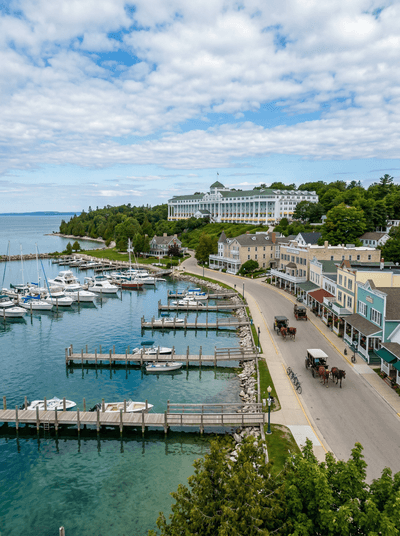
No cars since 1898, only horses, bicycles and the smell of fresh fudge.
Miyajima
Japan
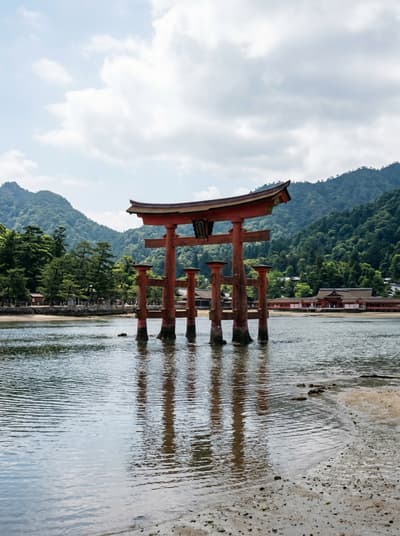
A vermilion gate floating on the tide while deer doze on the beach beside it.
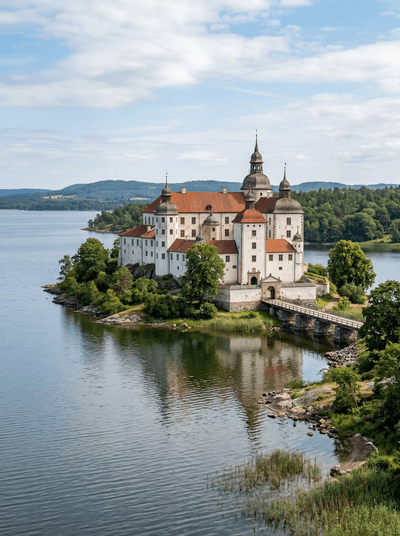
Läckö Castle (Kinnekulle)
Sweden
A white Baroque castle doubled in Lake Vänern, beneath a mountain of fossil layers.
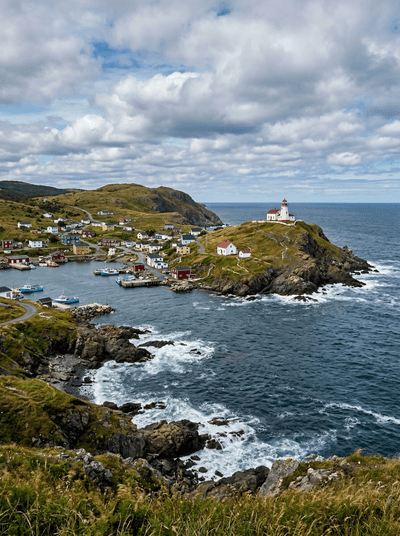
Ferryland
Canada
A picnic arrives at an 1870s lighthouse while icebergs and whales pass the headland below.
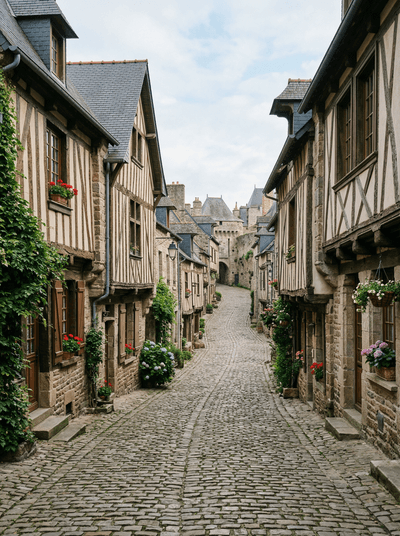
Dinan
France
Timber-framed houses leaning over cobbles that tumble from the ramparts to a medieval river port.
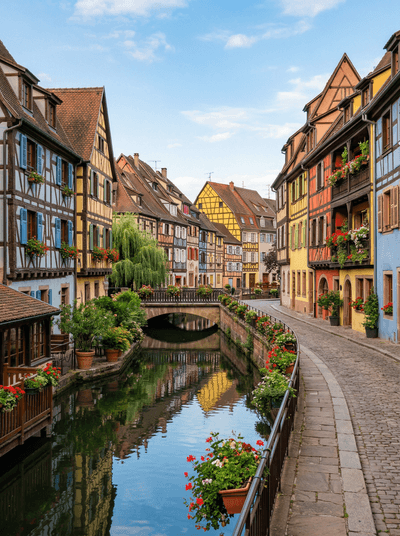
Colmar
France
Candy-coloured half-timbered façades reflected in canals so still they look like poured paint.
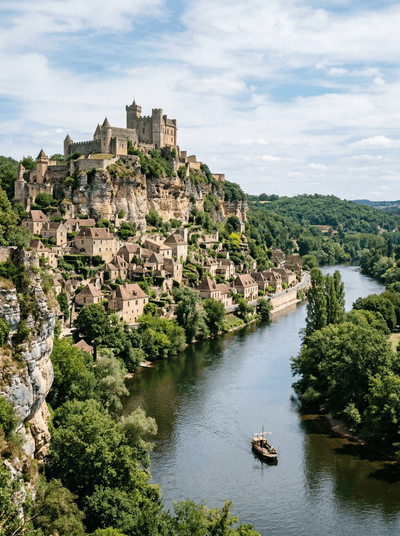
Beynac-et-Cazenac
France
A fortress village gripping a cliff high above the Dordogne's green coil.
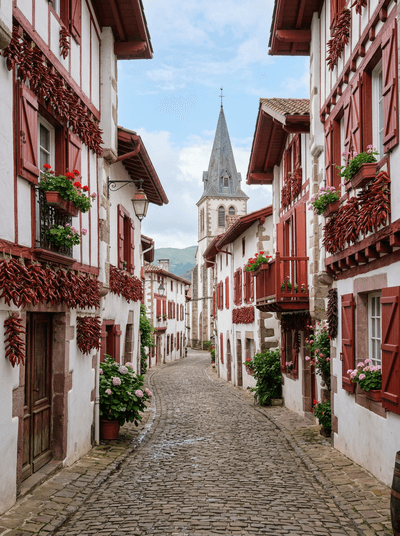
Espelette
France
Red peppers drying on every white façade — a Basque village wearing its spice outside.