Chile
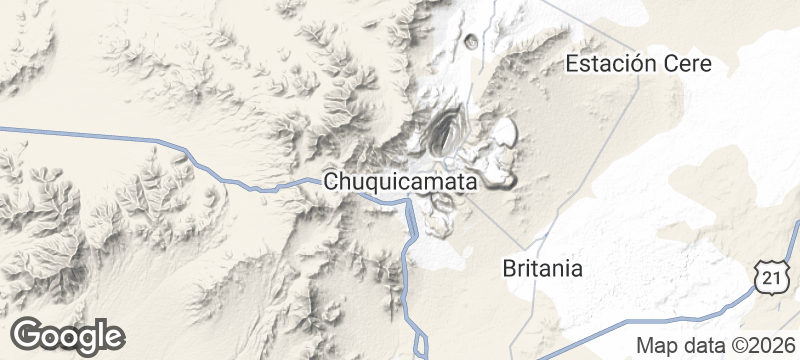
Chuquicamata
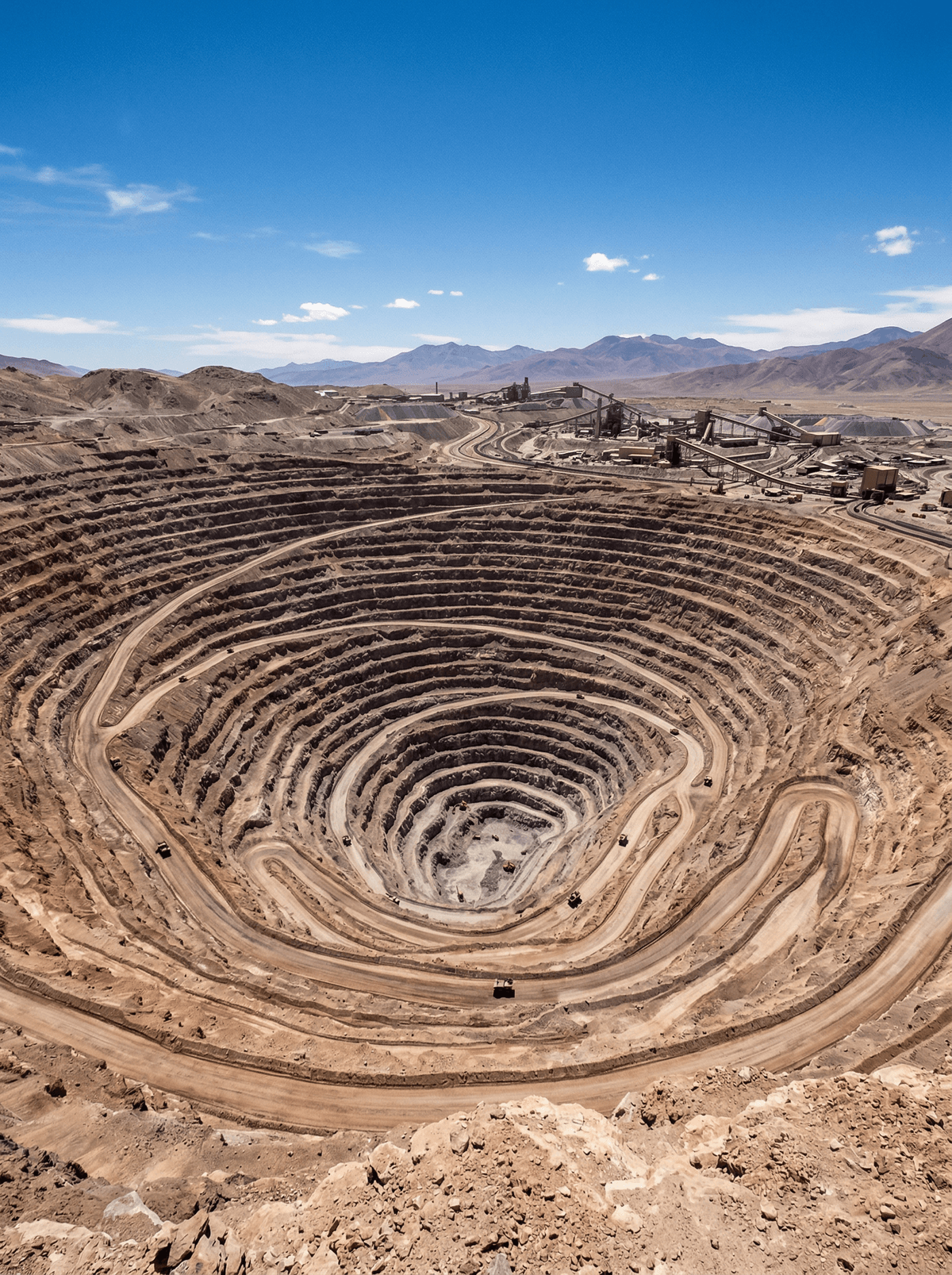
A silent company town faces a copper pit carved kilometres wide and deep.
Empty civic buildings stand in the desert while machinery moves beyond the controlled viewpoint. The shift from domestic streets to industrial scale is abrupt.
CODELCO's restored public tour links Chuquicamata's historic camp, mining heritage and a mine viewpoint on set days. Advance registration and controlled transport are essential because this remains an operating industrial environment. The camp's social history is as revealing as the pit.
Solo
The free controlled tour handles transport and safety while opening both camp and mine history.
Family
Older children grasp the scale through abandoned civic rooms before the industrial viewpoint.
- Chuquicamata pairs an abandoned company camp with a viewpoint over an open-pit copper mine measured in kilometres.
- Entry is only by CODELCO's organised tour from Calama, inside a working industrial operation.
- The empty theatre, homes and civic streets tell the social story behind the pit's scale.
San Francisco de Chiu Chiu's community-run restaurants cook the oasis's own harvest — the carrots, garlic and choclo its farms send nationwide.
The village, half an hour from the mine, is the natural after-tour table.
Stonehenge
England
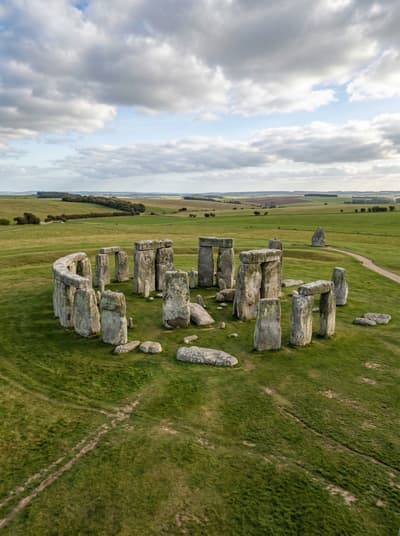
Bluestones hauled a hundred and fifty miles to stand in a circle nobody can fully explain.
Cradle of Humankind
South Africa
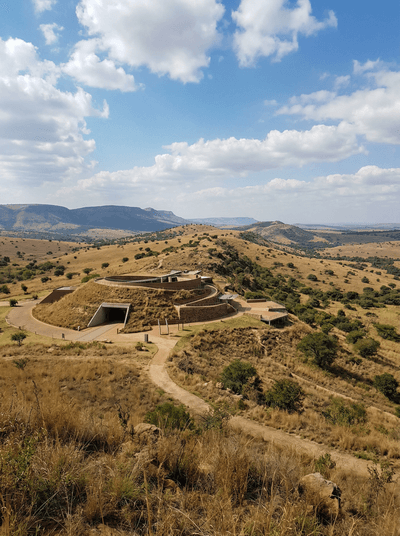
Fossils surface from limestone darkness, pulling the human family tree millions of years backwards.
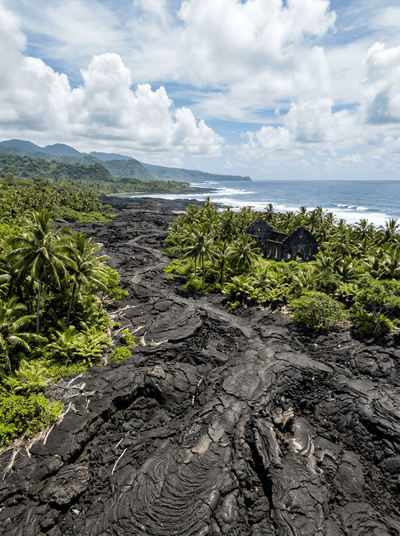
Saleaula Lava Fields
Samoa
The lava filled a church to its windows yet parted around a single grave.
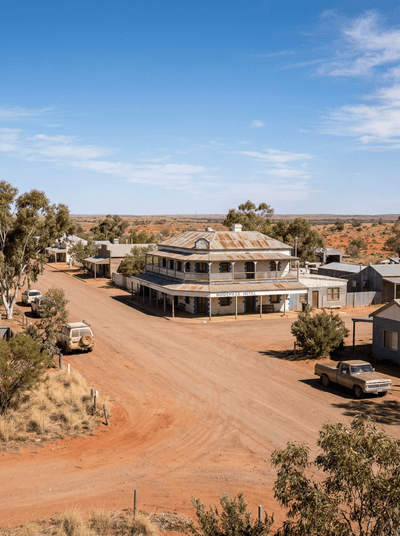
Birdsville
Australia
One pub, one racetrack and Big Red rising beside the Simpson Desert.
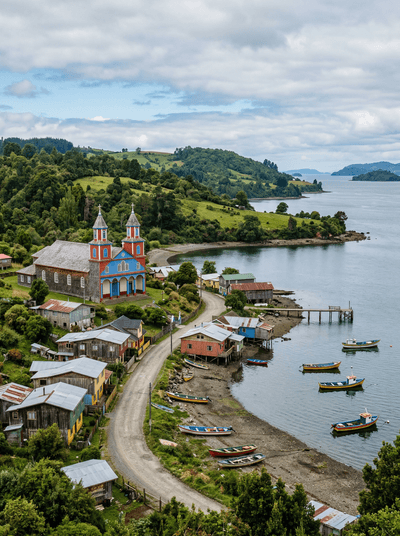
Isla Chiloé (Tenaún)
Chile
Three timber towers rise above a quiet Chilote waterfront.
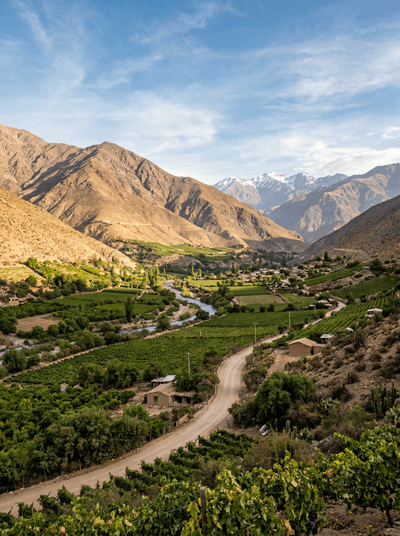
Elqui Valley
Chile
Pisco vines and observatory domes share a clear-skied Andean valley.
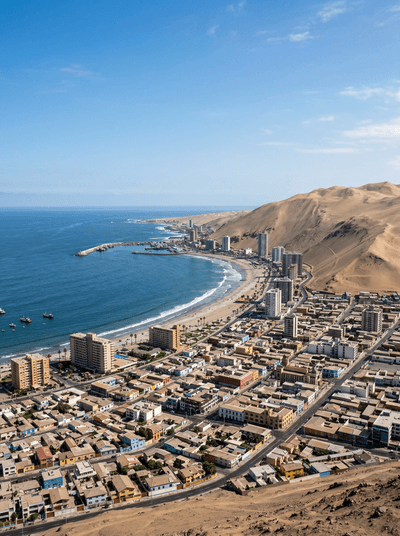
Iquique
Chile
Pacific beaches, nitrate history and desert paragliding give Iquique three horizons.
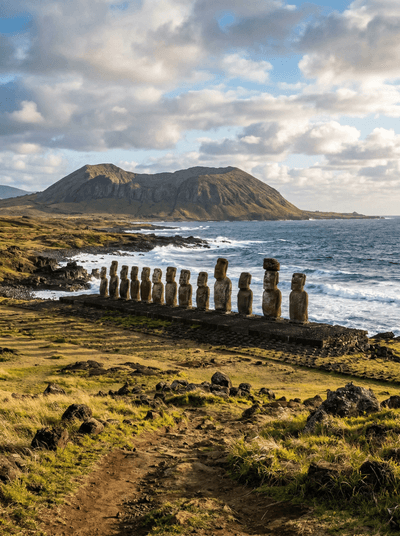
Rapa Nui (Easter Island)
Chile
Moai, grassed craters and a living Polynesian culture meet in the open Pacific.