France
Cirque de Navacelles
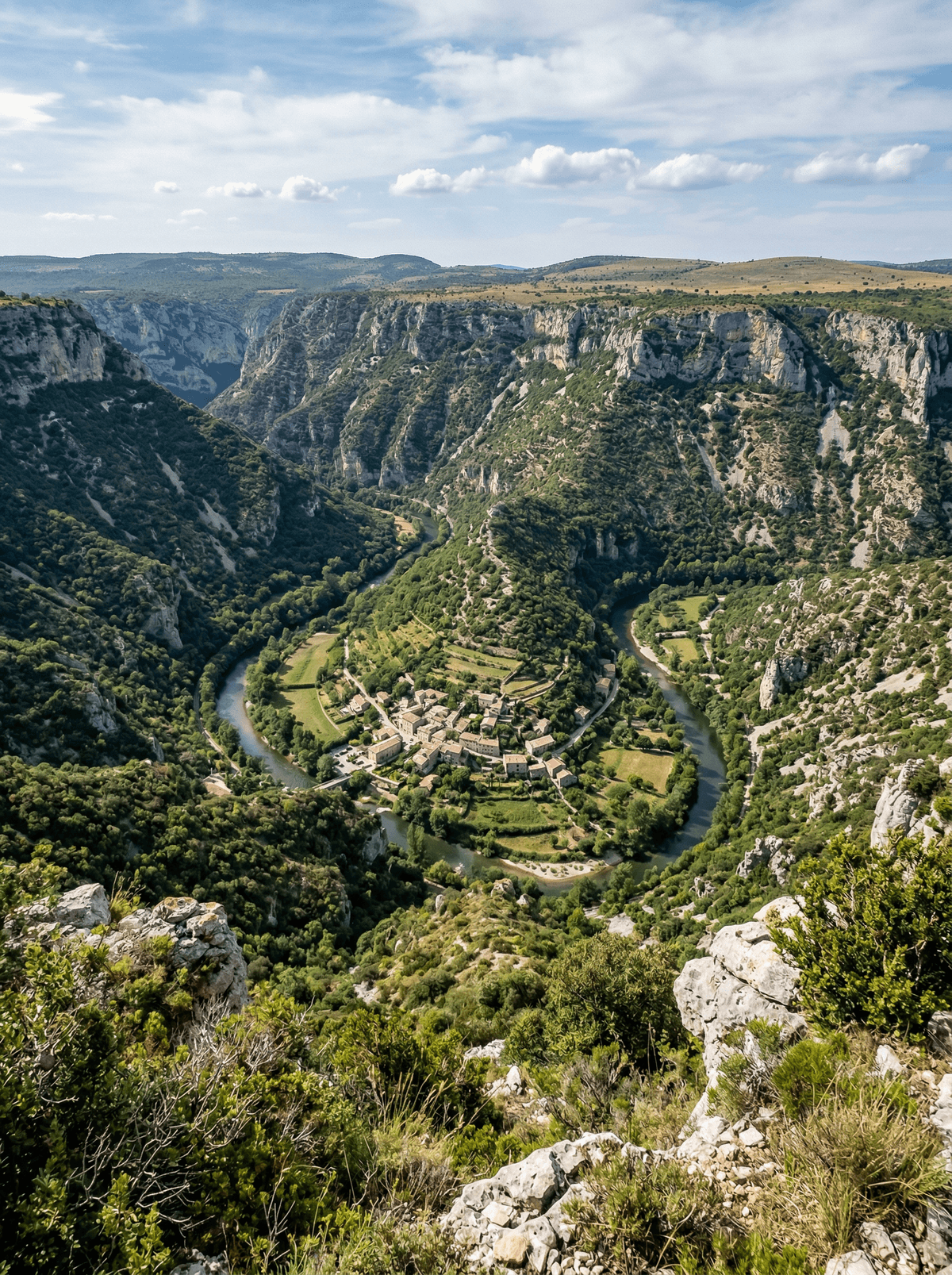
A natural amphitheatre where a river abandoned its own meander, leaving a hamlet at the bottom.
The river abandoned its own loop. The Vis once curved in a wide meander through the limestone plateaux, then one day — geologically speaking — it found a shortcut, leaving a vast natural amphitheatre with a hamlet at the bottom and walls three hundred metres high on every side. The Cirque de Navacelles, in southern France, is the result of that impatience: a bowl carved by water that moved on and left a village behind.
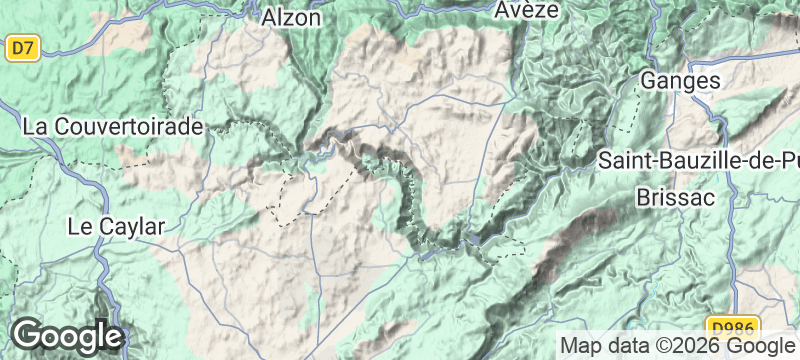
The cirque lies on the boundary of the Causse du Larzac and the Causse de Blandas, in the country of the Causses and Cévennes that UNESCO lists for its pastoral landscapes, and it is a Grand Site de France, with visitor centres on both rims open from spring to autumn. From the belvederes on the Blandas side and the Larzac side the view drops onto the abandoned meander, its old bed now a green oval of fields with the hamlet of Navacelles beside the river's new course and a waterfall at the cut; the road down is a chain of switchbacks and the hamlet looks toy-sized until you are in it. Paths run along the rim and down to the valley floor, and itineraries link the cirque to the gorges of the Vis, the Arre and the Hérault. Above, the causses are empty limestone grassland, sheep and wind — the contrast with the green bowl below is the whole point.
Solo
The drive down the switchbacks alone, the hamlet growing below and the walls rising above, is a descent into geological time. Walk the valley floor, cross the river, and climb back to the rim — the amphitheatre makes more sense from above.
- A river abandoned its own meander, leaving a natural amphitheatre with a hamlet at the bottom and three-hundred-metre walls above.
- The drive down the switchbacks is vertigo-inducing — the hamlet looks toy-sized until you are standing in it.
- Rim paths and belvederes on both causses give changing views of the cirque — the scale recalibrates at every viewpoint.
- The causses above are empty, windswept limestone — the contrast with the green bowl below is stark.
Pélardon — the small goat's cheese of the causses and Cévennes — tangy and earthy, from a farm on the plateau.
Larzac lamb roasted with the herbs of the plateau — the backbone of the local table.
Aït Mansour Gorge
Morocco
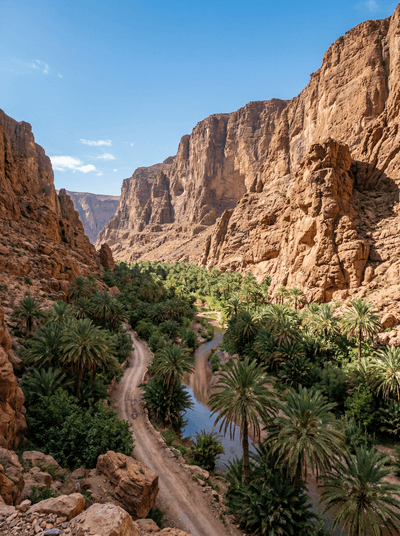
The road falls out of pink granite into a red gorge roofed with date palms.
Parque Nacional Perito Moreno
Argentina
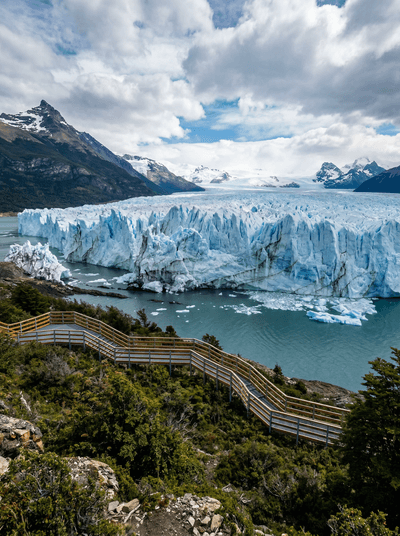
Argentina's emptiest national park — turquoise lakes, open steppe and trails measured in days.
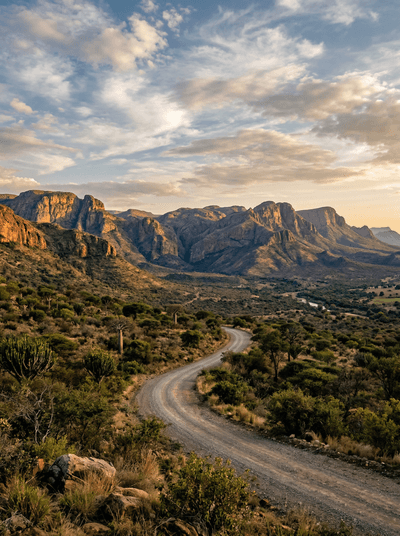
Soutpansberg
South Africa
Mist forest and baobab country meet along a mountain named for salt.
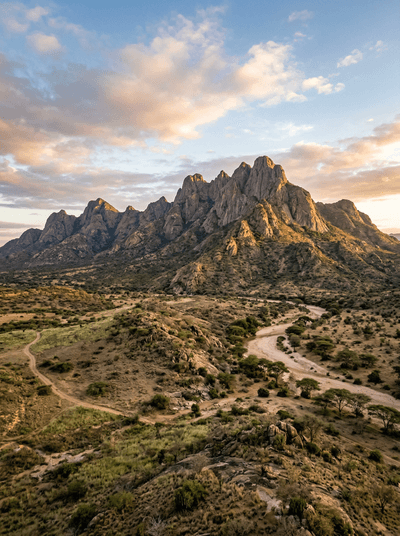
Ndoto Mountains
Kenya
Granite walls climb past 2,600 metres from the Kaisut Desert, with no gate and no road.
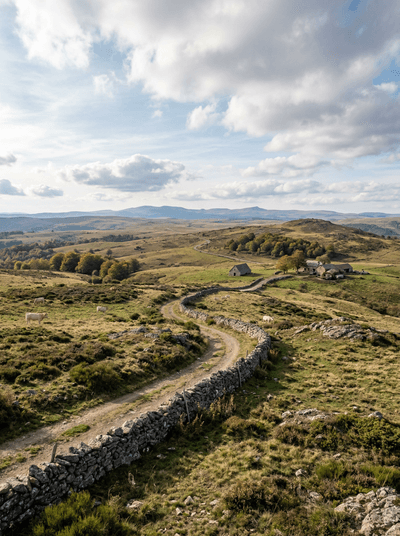
Aubrac Plateau
France
A treeless basalt plateau where granite crosses mark the pilgrim road through wind and mist.
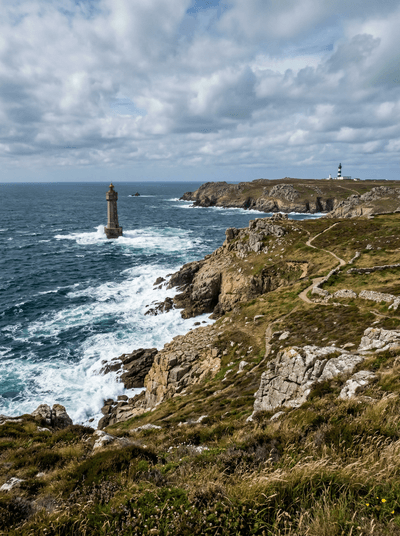
Île d'Ouessant
France
The last inhabited land before the Atlantic, where storms are the show and grass grows sideways.
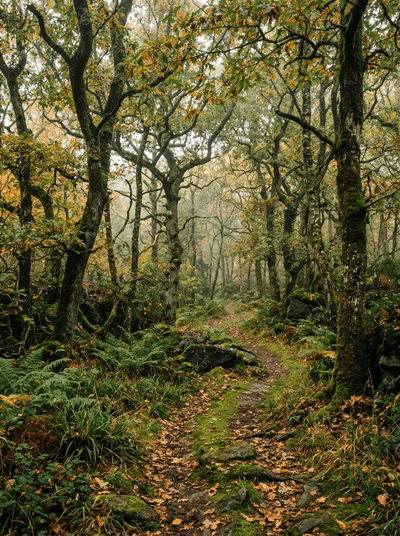
Forêt de Brocéliande
France
Moss-cloaked oaks and misty hollows where Arthurian legend clings to every twisted root.
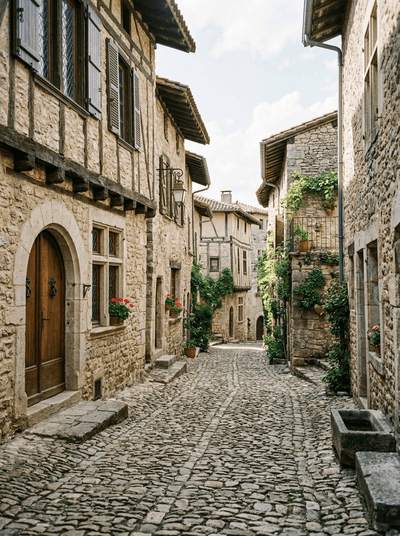
Pérouges
France
Cobbles polished to glass in a walled hilltop village where the fifteenth century never left.