Chile
Codpa Valley
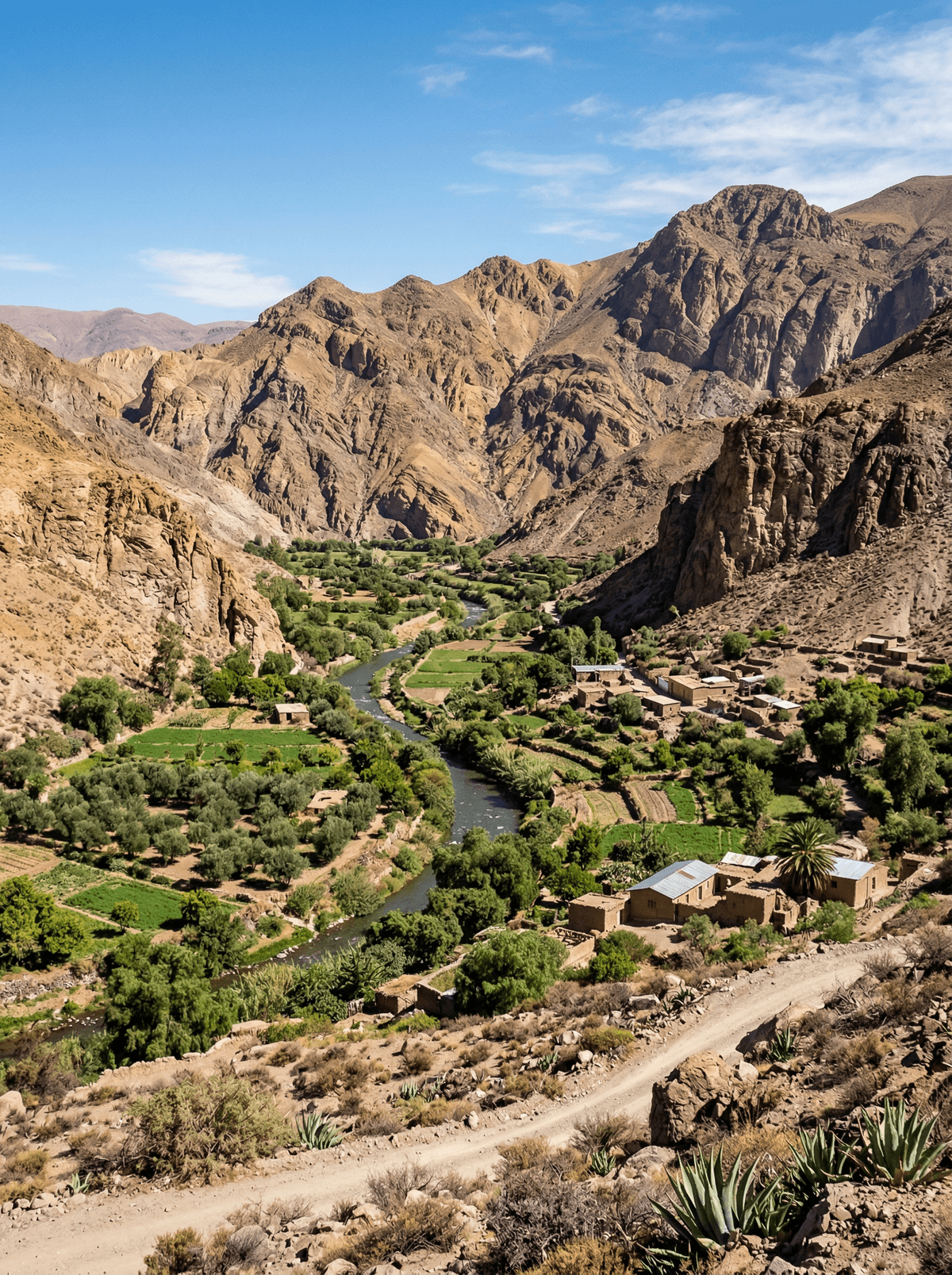
Pintatani vines green a desert canyon celebrated by Codpa's public harvest festival.
Irrigated terraces and fruit trees gather around an Andean village beneath bare slopes. During harvest, music and wine move through the plaza.
Codpa is a road-accessible pre-Andean oasis with a continuing Pintatani wine tradition. The public harvest festival confirms tastings, food and craft, while ordinary visits require direct arrangements with an open producer. The contrast between cultivated canyon and desert gives the valley its own visual pull.
Solo
Time the visit to the public harvest or a confirmed producer appointment rather than relying on chance.
Couple
Share a Pintatani tasting, then walk the irrigated village as the desert light softens.
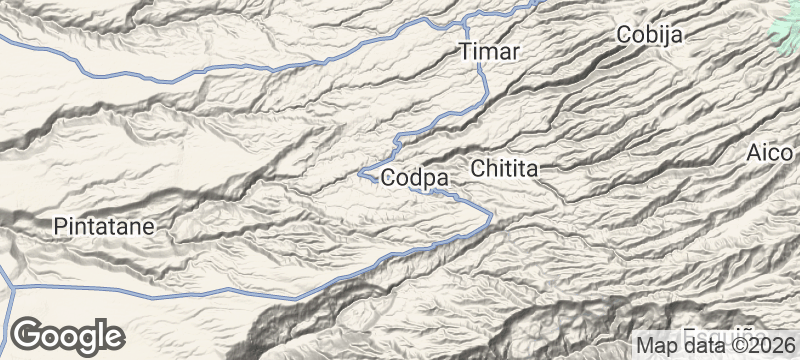
- Codpa is a public pre-Andean village and wine-growing oasis reached by road from Arica.
- The 2026 harvest festival confirmed open access, guided tastings, local craft and Andean food around the plaza.
- Outside festival dates, visitors should arrange winery or community experiences rather than assume every cellar is open.
Pintatani wine, foot-pressed in stone lagares from vines of 16th-century Listan Negro stock, survives here at Chile's desert edge.
Its vintners call it a south-Andean heritage treasure — one now kept alive by a handful of hands.
Arenal & La Fortuna
Costa Rica
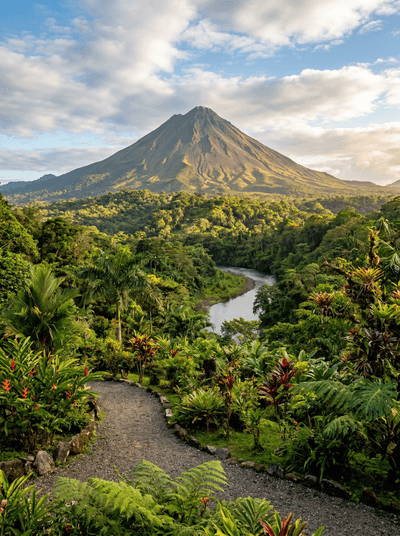
Hot springs steaming through jungle beneath a volcano's perfect cone at dusk.
Drakensberg
South Africa
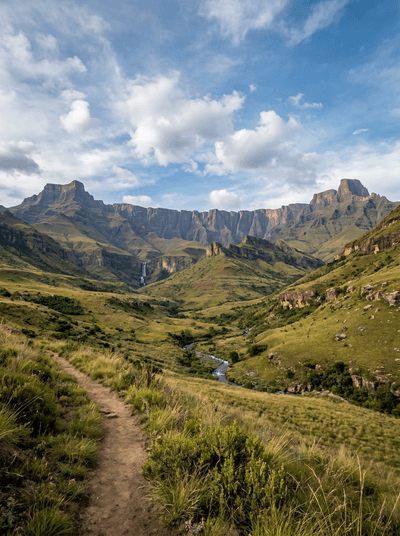
Basalt walls rise above sandstone caves painted across thousands of years.
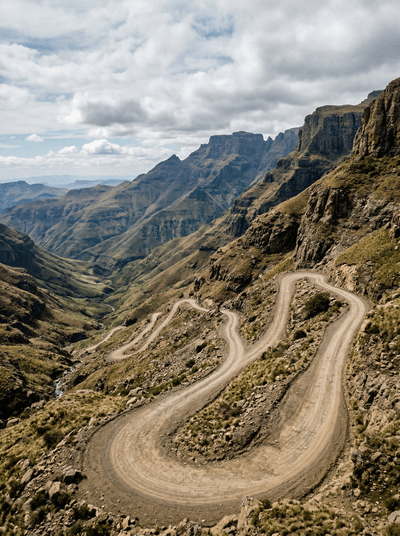
Sani Pass
South Africa
A switchback road climbs from green foothills to a high border above the clouds.
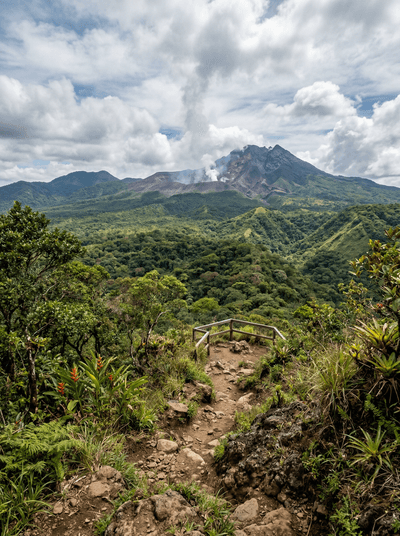
Rincón de la Vieja
Costa Rica
Volcanic mud pots belch and bubble through dry tropical forest like the earth digesting itself.
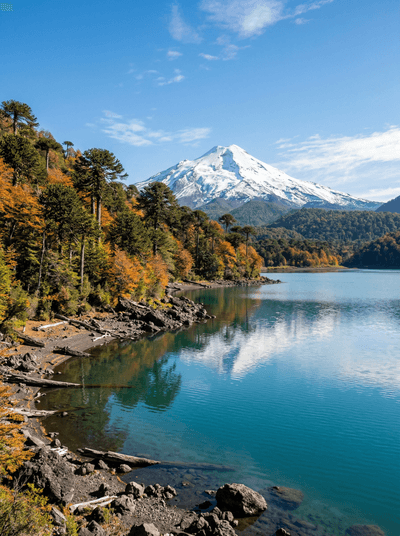
Parque Nacional Conguillío
Chile
Araucaria crowns stand over black lava and clear lakes beneath Volcán Llaima.
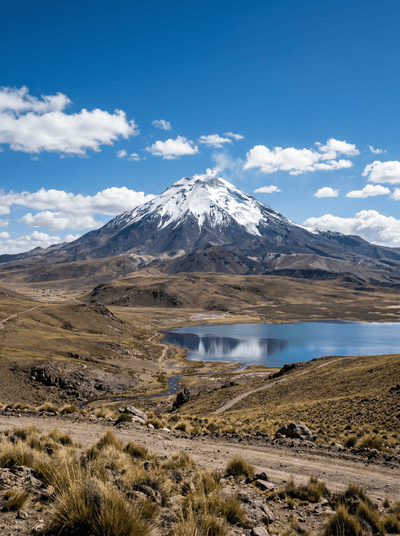
Parque Nacional Volcán Isluga
Chile
Volcanic horizons and high wetlands surround living Aymara settlements in the altiplano.
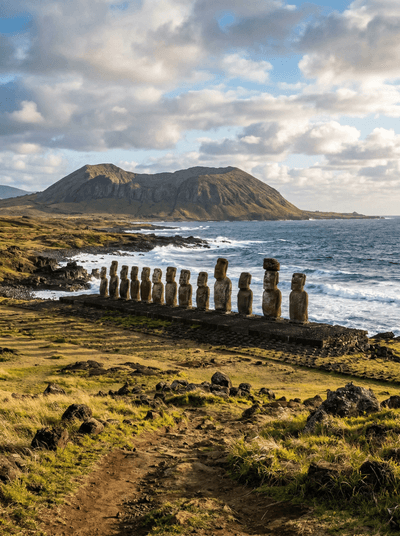
Rapa Nui (Easter Island)
Chile
Moai, grassed craters and a living Polynesian culture meet in the open Pacific.
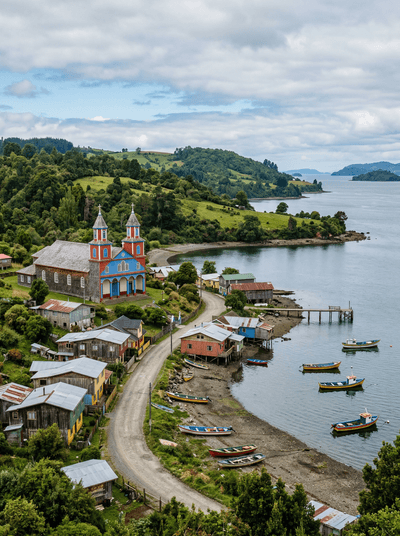
Isla Chiloé (Tenaún)
Chile
Three timber towers rise above a quiet Chilote waterfront.