Turkey
Derinkuyu
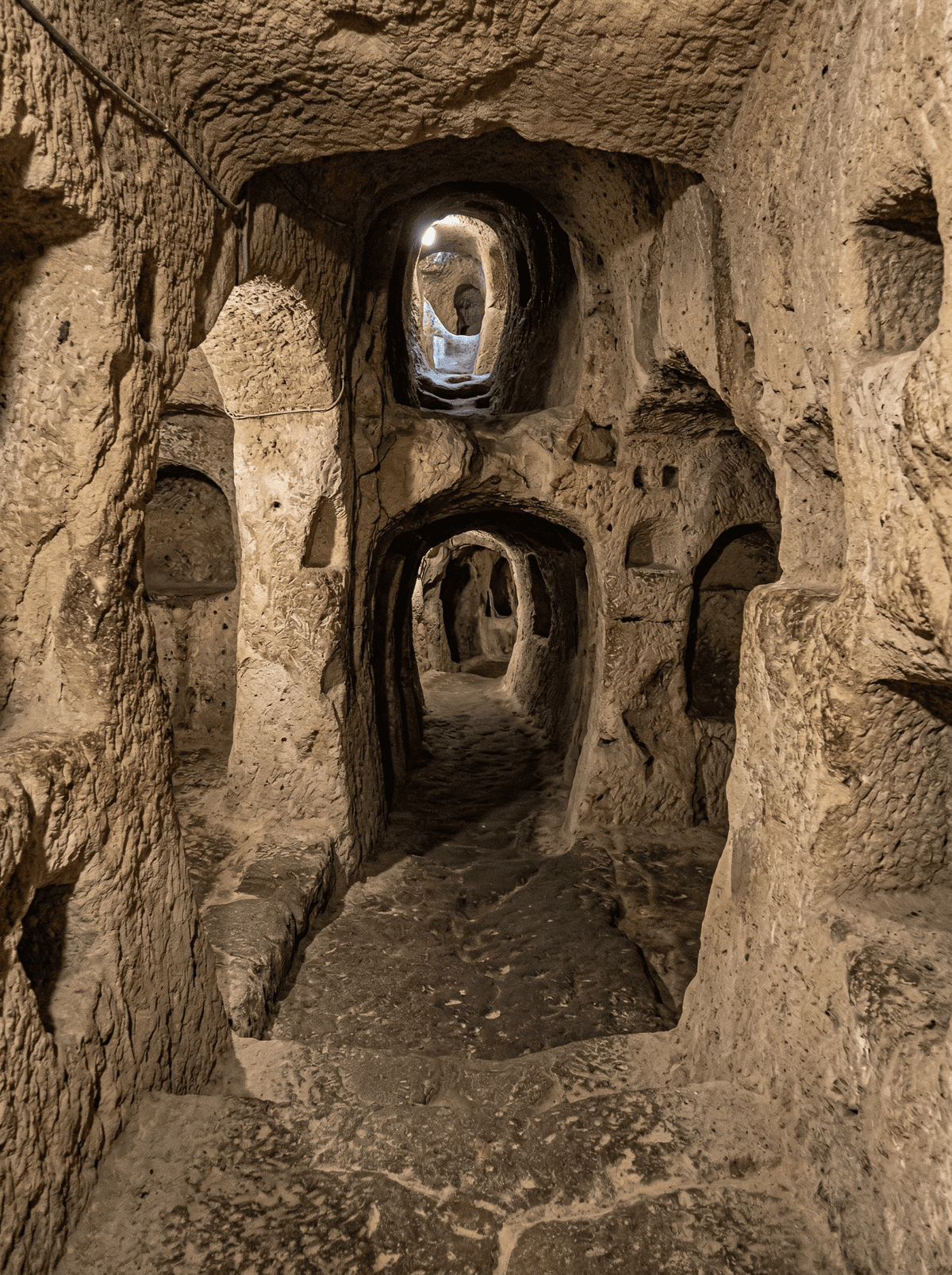
Eighteen levels carved straight down into the earth, a hidden city for 20,000 souls.
The staircase spirals downward through narrow rock corridors, and the temperature falls with each level. Deep below the Cappadocian surface you stand in a vaulted chamber that once held a church, a wine press, a school. The silence is absolute, and the rock still holds the soot stains of their oil lamps.
Derinkuyu is the world's largest excavated underground city, reaching more than 85 metres below the surface across eighteen levels, eight of which are open to visitors. Carved into Cappadocia's soft volcanic tuff, it may have been begun by the Phrygians nearly three millennia ago and was expanded by Byzantine Christians as a refuge from raids. Rolling stone doors sealed the corridors from the inside, ventilation shafts still draw fresh air to the lowest chambers, and a tunnel is said to run nine kilometres to the neighbouring underground city of Kaymaklı. Living quarters, stables, food stores and a school have all been identified. It was rediscovered in 1963, when a resident knocked through a wall of his house and found a passage behind it.
Solo
Descend alone through the narrow tunnels and let the sheer scale of human ingenuity settle on you without interruption. The absence of daylight and sound makes you intensely aware of how desperate, and how resourceful, people can be.
Couple
Pair the underground city with the fairy chimneys above ground for a day swinging between the otherworldly and the subterranean. The contrast sharpens both.
Family
Children are the perfect height for Derinkuyu's low tunnels, and the idea that thousands of people lived, cooked and went to school underground fires young imaginations like no textbook.
- The city reaches more than 85 metres below ground across eighteen levels, the largest excavated underground city in the world.
- It held sleeping quarters, wine presses, stables, a school and a church, with room for some 20,000 people.
- A tunnel is said to run nine kilometres to the neighbouring underground city of Kaymaklı.
- The ventilation shafts still work after thousands of years, drawing fresh air to every level.
Tandır fasulyesi, beans browned with meat then sealed in a clay pot for hours in the tandır.
Nevşehir mantısı, spiced mince wrapped in dough, baked, then served under garlic yoghurt.
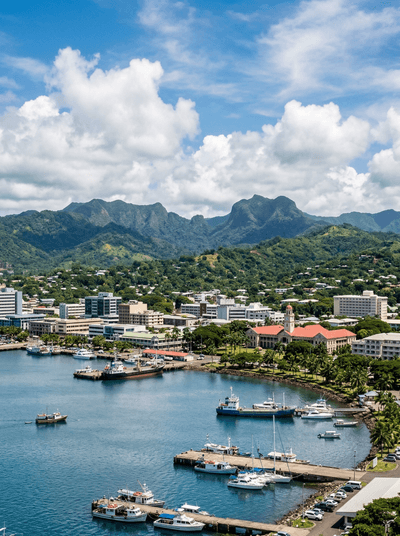
Suva
Fiji
South Pacific hustle where Hindu temples share streets with Fijian markets and colonial verandahs.
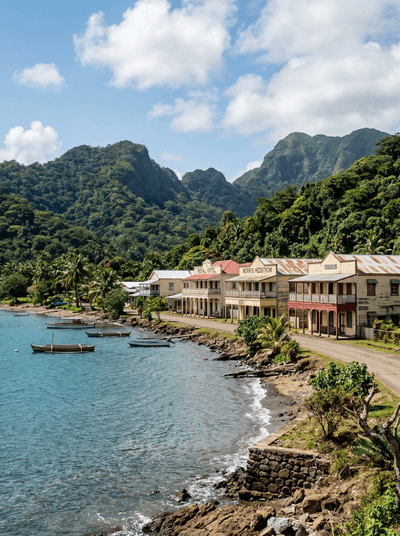
Levuka
Fiji
Fiji's first colonial capital frozen in the 1870s, wooden shopfronts sagging under tropical rain.
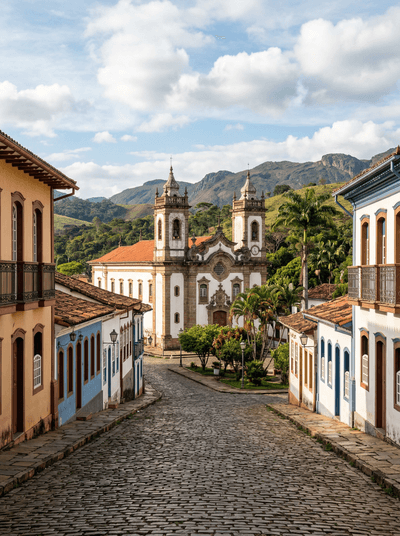
São João del-Rei
Brazil
Baroque towers answering each other across a valley, ringing the sex of whoever has just died.
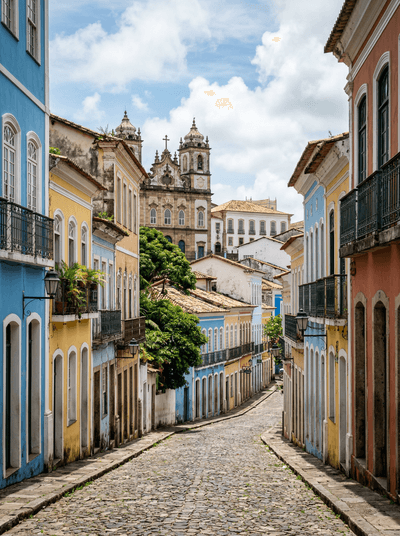
Salvador
Brazil
Drum rhythms ricocheting off colonial walls where song, dance and combat happen at once.
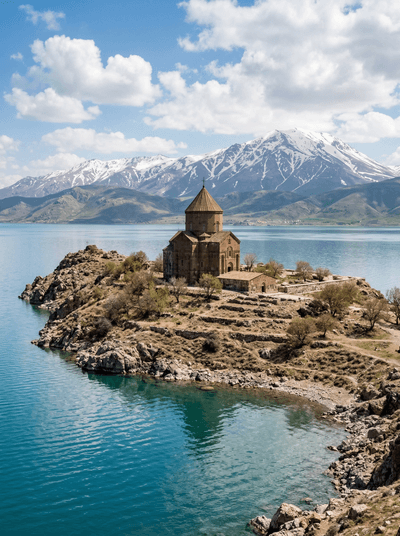
Akdamar Island
Turkey
A tenth-century Armenian church carved with biblical scenes floats alone on an island in Lake Van.
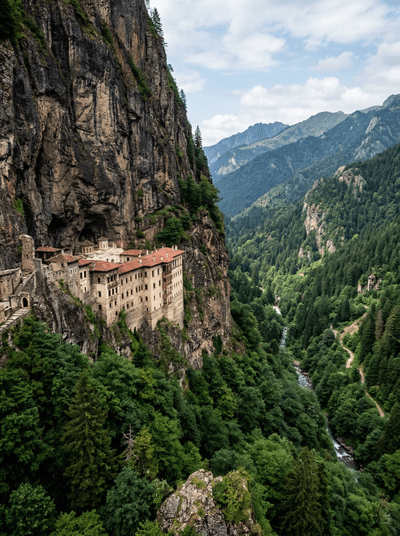
Sumela Monastery
Turkey
A monastery clinging to a cliff 300 metres above a misty Black Sea valley.
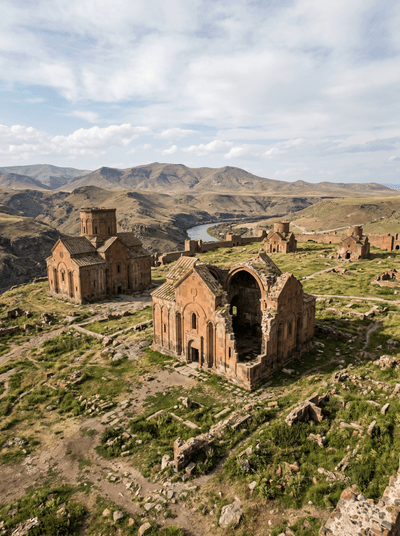
Ani
Turkey
A ghost city of 100,000 souls on the Armenian border, churches crumbling into wildflower meadows.
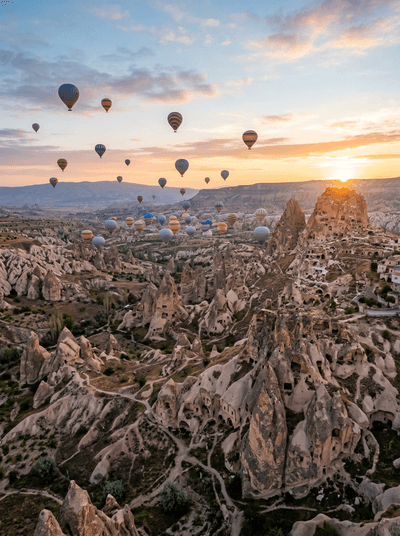
Cappadocia
Turkey
More than a hundred balloons rise at dawn through a forest of stone pillars.