Greece
Drakolimni
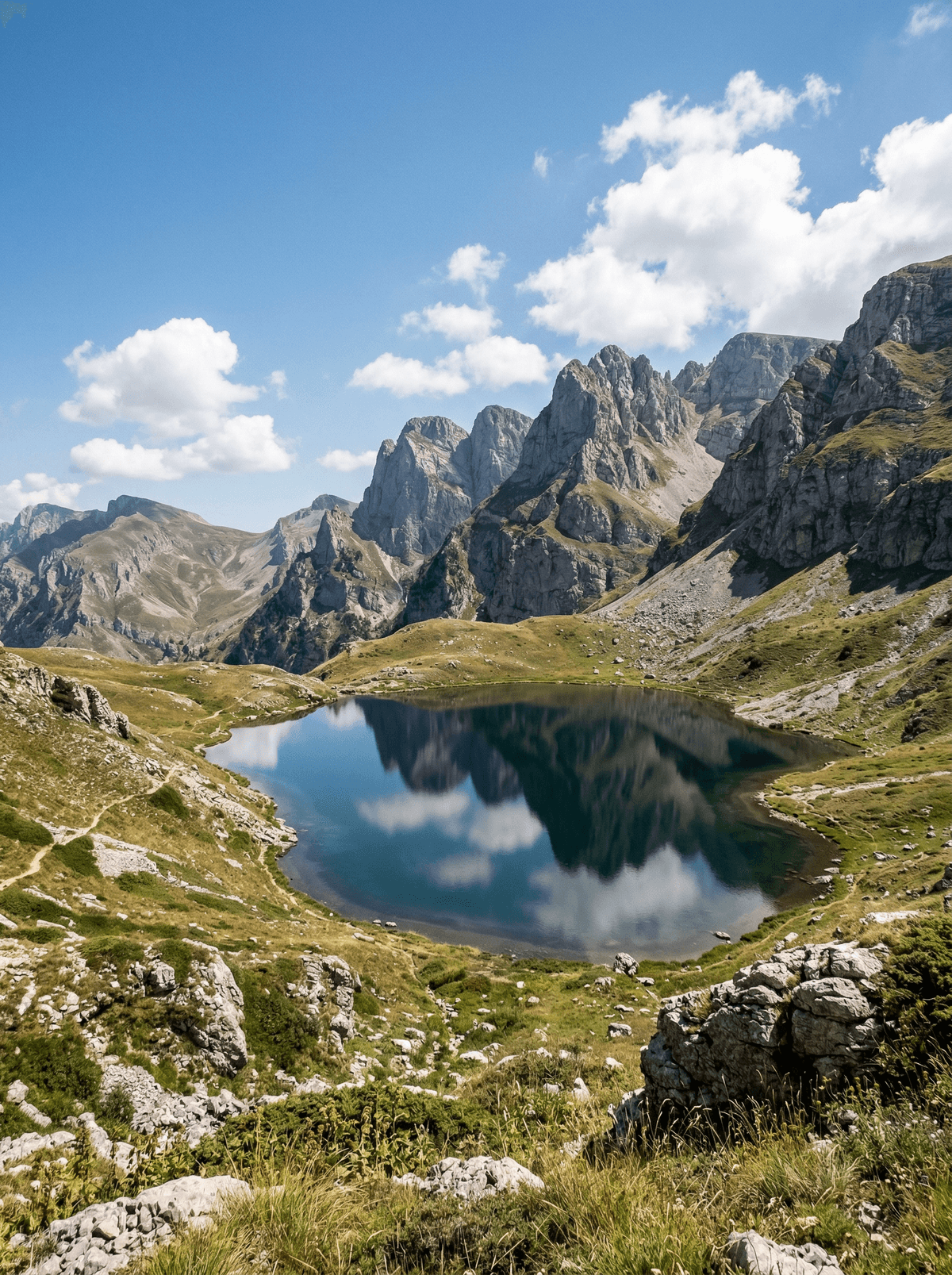
Alpine newts swim in glacial pools at 2,000 metres — the dragon lakes of the Pindos.
The lake sits in a limestone bowl at 2,050 metres, its water dark and still, alpine newts drifting just below the surface. The Gamila plateau stretches away in every direction — bare rock, crevices packed with alpine flowers, and a silence broken only by wind across the stone.
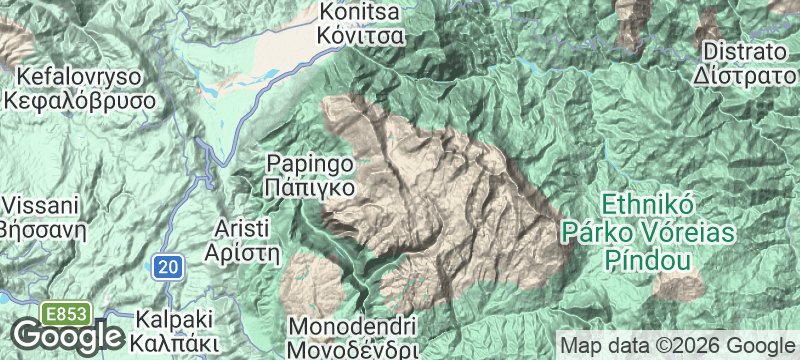
The Dragon Lake of Tymfi sits at about 2,050 metres, reached by the marked route past the Astraka refuge at 1,950 metres. Alpine newts — the 'dragons' that named it — drift just under the surface, protected and unbothered. The climb is a full mountain day: snowfields linger into summer, and the weather turns fast on the plateau.
Solo
Experienced mountain walkers prepared for a sustained ascent, exposed terrain and changing alpine weather.
Friends
A demanding shared hike with a refuge stop and time to enjoy the plateau without rushing the descent.
- The newts are the dragons — dark little bodies hanging in water clear as air.
- The Astraka refuge makes the natural overnight: sunset on the towers, the lake at dawn.
- Legend has the dragons of Tymfi and Smolikas hurling rocks at each other — both summit lakes carry the name.
- From the rim, the Aoos valley falls away a vertical kilometre.
A hot infusion of local sideritis gathered at the treeline, drunk at the Astraka refuge.
Down in Megalo Papingo, Astra serves lemony goat casserole with wild greens and grilled trout.
Ambae
Vanuatu
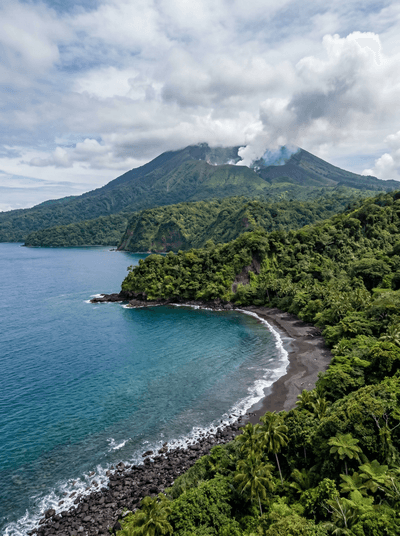
Every soul left Ambae twice when the volcano stirred; its crater lake still shifts colour.
Mount Rinjani
Indonesia
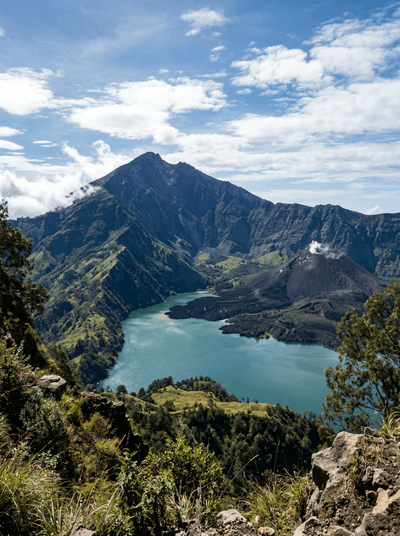
The crater lake holds another volcano inside it, still active, still building.
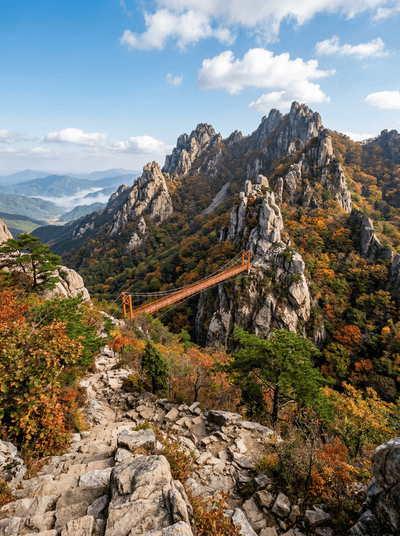
Wolchulsan
South Korea
The Cloud Bridge spans fifty-four metres of air between bare granite crags.
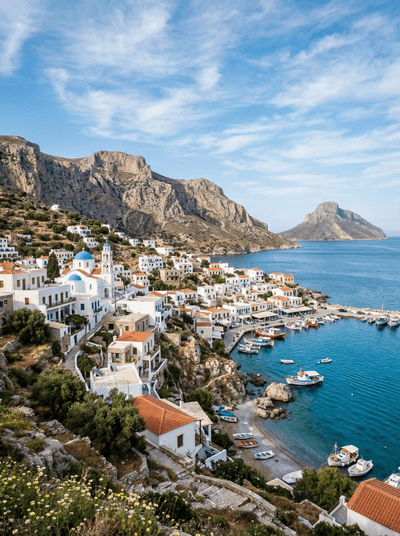
Kalymnos
Greece
Chalk-dusted hands on overhanging limestone where sponge divers' grandchildren turned an island into a climbing mecca.
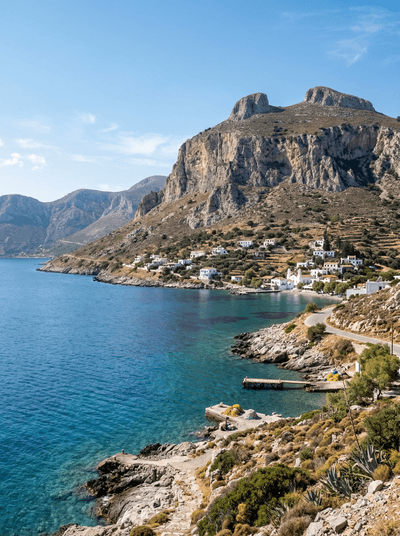
Telendos
Greece
A single dark cliff in the strait, Christian ruins on its shoulder, climbers on its face.
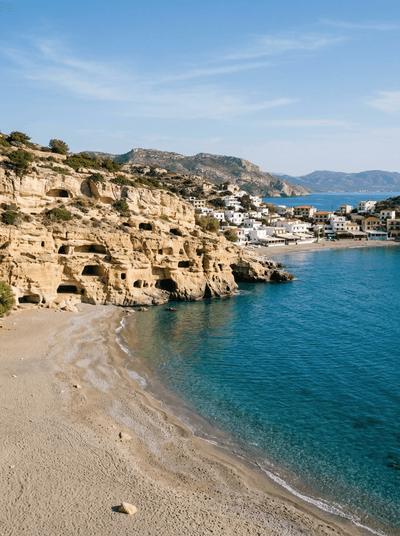
Matala
Greece
Cliff caves once Roman tombs, then a hippie commune — Joni Mitchell slept in these rocks.
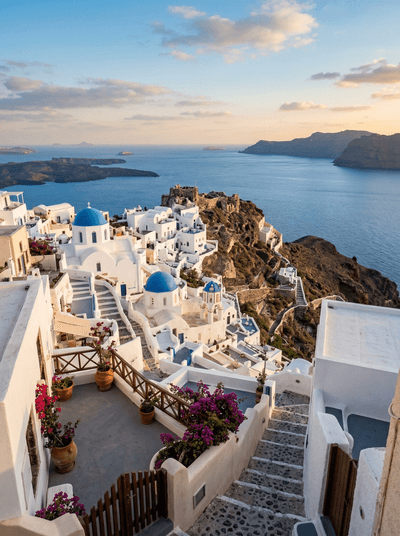
Santorini
Greece
White villages balanced on a caldera rim where the sea has flooded a volcano's shattered heart.