Argentina
El Cóndor
37,000 parrot nests honeycomb the sea cliffs at the world's largest burrowing colony.
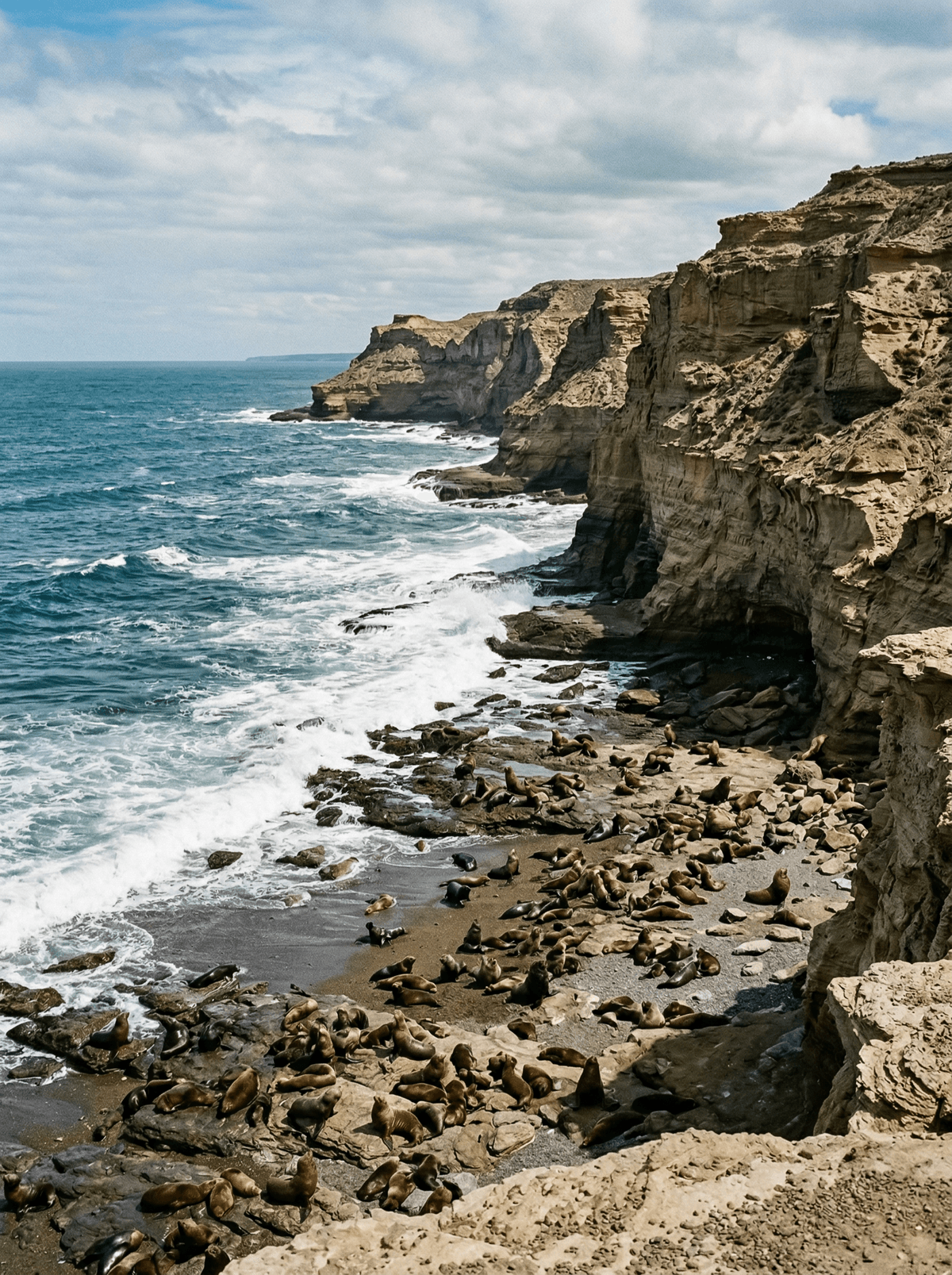
El Cóndor in Río Negro Province is where the Atlantic coast of Patagonia begins at the Río Negro mouth — a cliff line of red sandstone running 30 kilometres south from the river to Las Grutas, punctuated by the largest parrot colony in the world. Approximately 35,000 burrowing parrots (Cyanoliseus patagonus) nest in burrows excavated in the red sandstone cliffs between October and January, the morning departures turning the sky green in flocks so large they create their own sound.
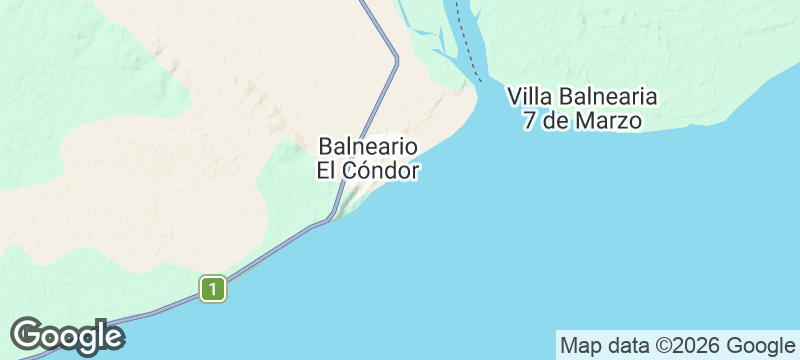
El Cóndor is a small resort town at the mouth of the Río Negro in Río Negro Province, 30 kilometres south of Viedma (the provincial capital), on the northern edge of the Atlantic Patagonian coast. The Barrancos del Río Negro — the red sandstone cliff system extending from El Cóndor south along the coast — host the world's largest colony of burrowing parrots (Cyanoliseus patagonus) with a population of approximately 35,000 breeding pairs documented in the cliffs. The parrots excavate burrows 1-2 metres deep in the soft sandstone, and the morning flight from the cliffs at 7-8am, when the entire colony takes off simultaneously to feed in the surrounding agricultural land, produces one of the most extraordinary avian spectacles on the Argentine coast. The town's beach resort function — popular with Patagonian families in summer — coexists with the parrot colony viewpoints without conflict, the cliffs being sufficiently preserved to maintain the population.
Solo
El Cóndor's cliff parrot colony at dawn — arriving at the viewpoint before the 7am mass departure, the sandstone warming from crimson to orange as the sun rises, the 35,000 birds building to their exodus — is one of those birdwatching experiences that doesn't require any interest in birdwatching to produce a physical reaction.
Couple
El Cóndor in November, when the nesting is at peak activity and the cliff face is a wall of green movement, is a morning experience that sets up the rest of the Patagonian coast journey with a visual reference that nothing else matches. The beach resort character of the town provides the necessary afternoon.
Family
The burrowing parrot colony is one of Argentina's most immediately accessible wildlife spectacles — the cliffs are at road level, the parrots are visible without optics, and the morning flight is sufficiently overwhelming to register with children at every age. October through December is the active season.
- The burrowing parrot colony is the largest in the world — 35,000+ active nest burrows in sea cliffs.
- Nesting peaks September–January — the noise of tens of thousands of parrots calling simultaneously is audible from 500m.
- The campsite sits directly below the cliffs — sunrise wakes you as the first parrot flights launch from the burrow faces.
- Low tide exposes a beach below the cliffs where the nest face is accessible — wardens prevent approach within 20m.
Cordero patagónico slow-roasted on iron crosses at beachside quincho shelters.
Tortas fritas dusted with sugar appear at every mate circle on the windswept shore.
Hideaway Island
Vanuatu
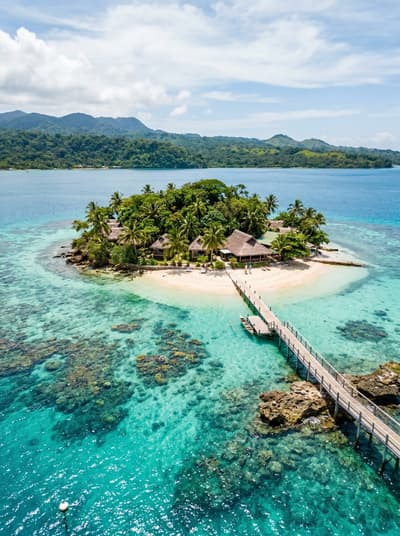
Post a waterproof postcard from the world's only underwater post office, then snorkel its coral reef.
Ureparapara
Vanuatu
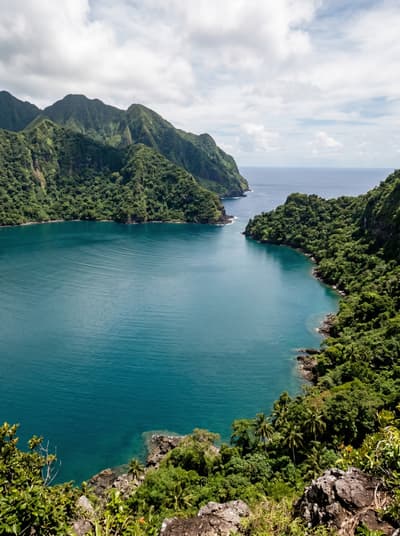
Sail into the flooded crater of a horseshoe-shaped volcanic island where fewer than 500 people remain.
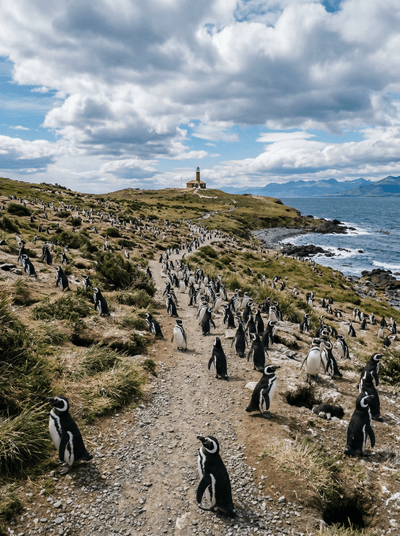
Isla Magdalena
Chile
Magellanic penguins in their tens of thousands, nesting so close you walk through their colony.
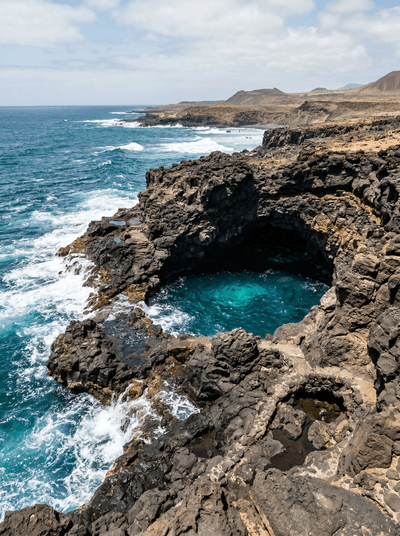
Buracona
Cape Verde
At midday, sunlight plunges through volcanic rock and ignites an underwater cave into electric blue.
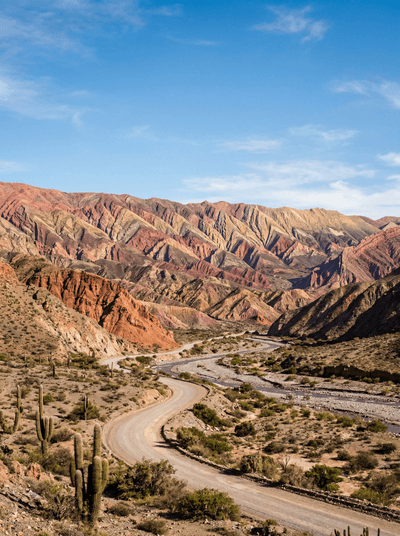
Quebrada de Humahuaca
Argentina
A canyon of fourteen-colour hills where Inca trails thread through villages older than the conquest.
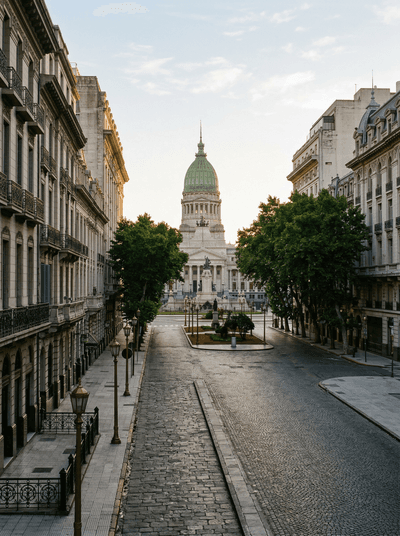
Buenos Aires
Argentina
Tango echoes through crumbling art-deco ballrooms where strangers dance until the city wakes.
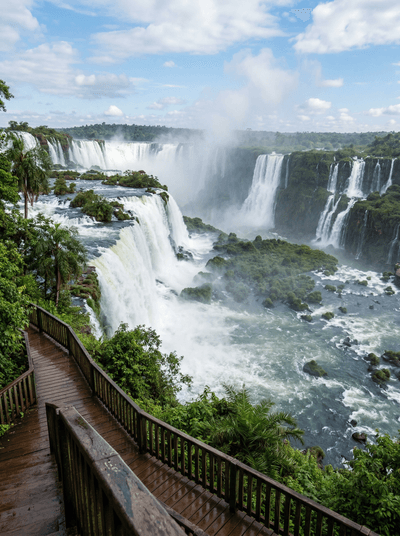
Iguazú Falls
Argentina
275 waterfalls collapse into a devil's throat of mist, thunder, and rainbow spray.
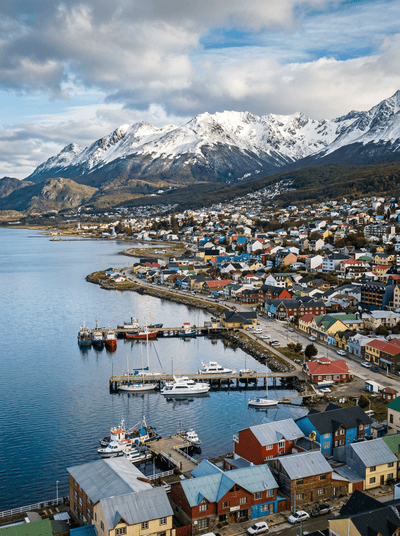
Ushuaia
Argentina
The last city before Antarctica, where beech forests dissolve into glaciers at the planet's edge.