Argentina
Buenos Aires
Tango echoes through faded ballrooms where strangers dance until the city wakes.
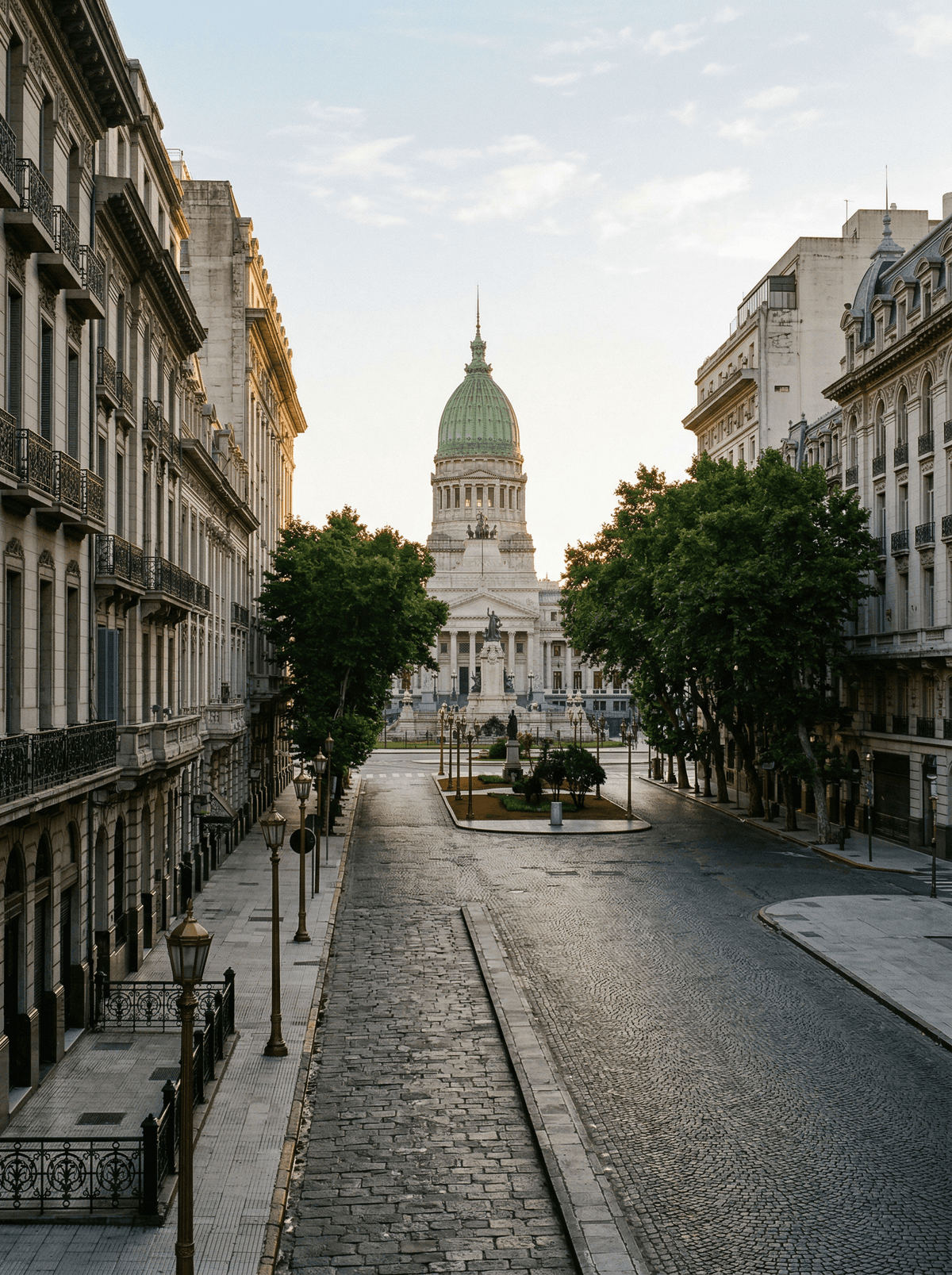
There is a Buenos Aires that exists only after midnight — milongas filling with dancers who lock eyes across a floor of worn parquet, step together, and learn each other's rhythm before exchanging names. The historic cafés glow amber late into the night, marble counters worn smooth by a century of elbows and espresso cups. This is a city that treats the night as the main event and the day as preparation.
Argentina's capital wears its immigrant century openly — Italian balconies, Parisian boulevards and Spanish café culture layered by the waves that arrived through the 1800s and 1900s. The Colón Theatre, opened in 1908, counts among the world's great opera houses, its gilt tiers worth entering for the building alone. San Telmo's cobbled streets carry one of South America's most established antique-fair traditions, where porcelain, gaucho silverwork and vinyl change hands beneath wrought-iron arcades. And the city keeps an official register of its historic cafés — bares notables — so a cortado at a marble counter is not nostalgia but protected heritage. Each barrio reads as a separate city; the deepest visits pick one per day and surrender to it.
Solo
Buenos Aires rewards self-directed wandering — afternoon cafés, late gallery openings, and milongas where a lone traveller is absorbed rather than entertained.
Couple
The tango tradition is built for two, from the shared choreography of a milonga to a long asado dinner that stretches past midnight, as the city intends. San Telmo at night, cobblestones and candlelit bars, does the rest.
Family
Parks, ice cream in improbable volume and a late dining rhythm mean nobody minds when young children are still awake at ten.
Friends
Few cities match it for eating, drinking and talking into the small hours — parrillas built for groups, Malbec by the litre, and a social clock that considers midnight early.
- Milongas keep the tango tradition alive as a social dance, not a stage show.
- The 1908 Colón Theatre ranks among the world's storied opera houses.
- The city's historic cafés are a protected register — marble, mirrors and a century of cortados.
- San Telmo's antique-fair tradition spreads beneath wrought-iron arcades.
Bife de chorizo sizzling on a corner bodegón's parrilla, the fat charred and the interior pink.
Medialunas still warm from the bakery, torn open and dunked in café con leche at a marble counter.
Noto
Italy
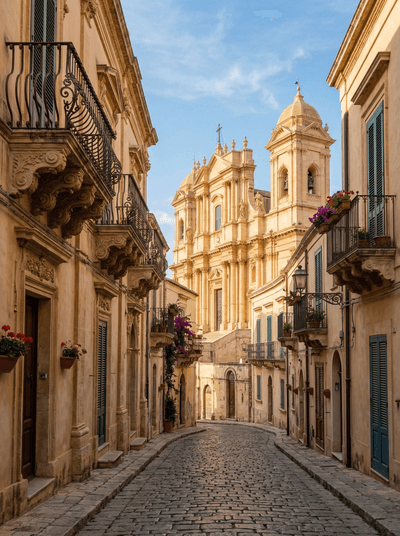
Rebuilt in honey-coloured stone after an earthquake, every facade a Baroque theatrical set.
Rome
Italy
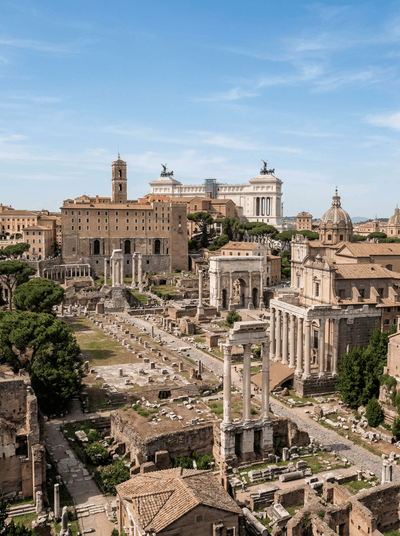
Twenty-seven centuries layered underfoot, every wrong turn revealing another empire's ruins.
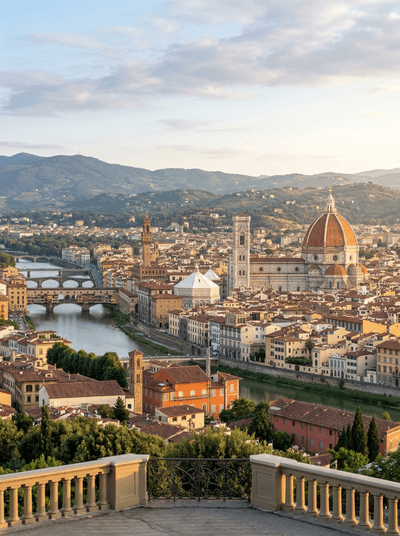
Florence
Italy
Terracotta rooftops from Brunelleschi's dome, the Arno gold at sunset, gelato in every piazza.
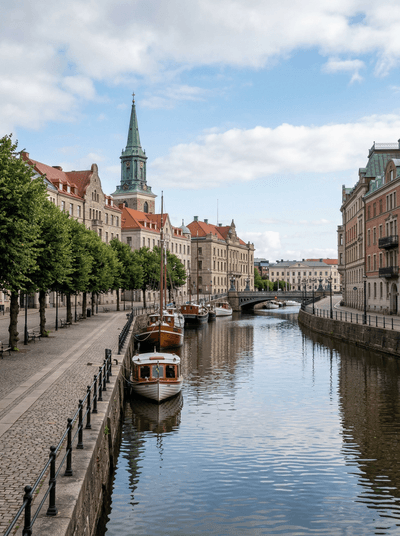
Gothenburg
Sweden
A fish market shaped like a church where the west coast's langoustine feels like sacrament.
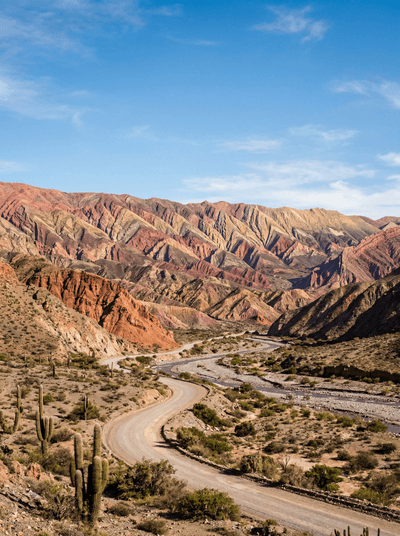
Quebrada de Humahuaca
Argentina
A canyon of painted strata where Andean trade routes thread villages older than the conquest.
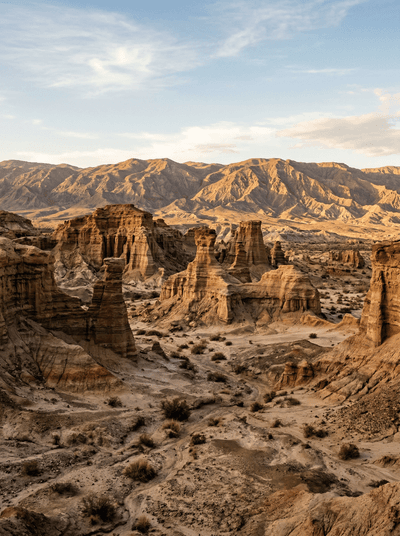
Ischigualasto
Argentina
A moonscape where the dinosaur age begins — bones in grey clay, stone spheres underfoot.
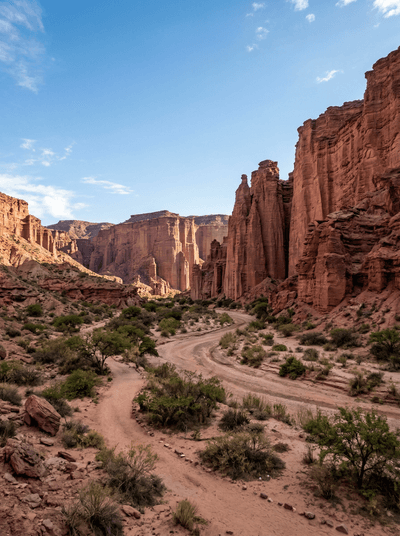
Parque Nacional Talampaya
Argentina
Red sandstone canyons where condors nest above dinosaur-age trackways in the riverbed.
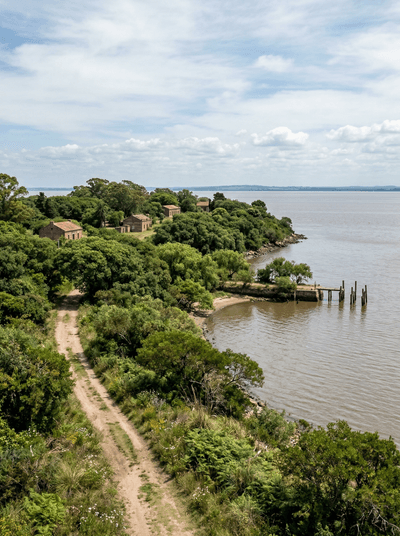
Isla Martín García
Argentina
Four Argentine presidents were imprisoned on this river island near Buenos Aires.