United States
Everglades
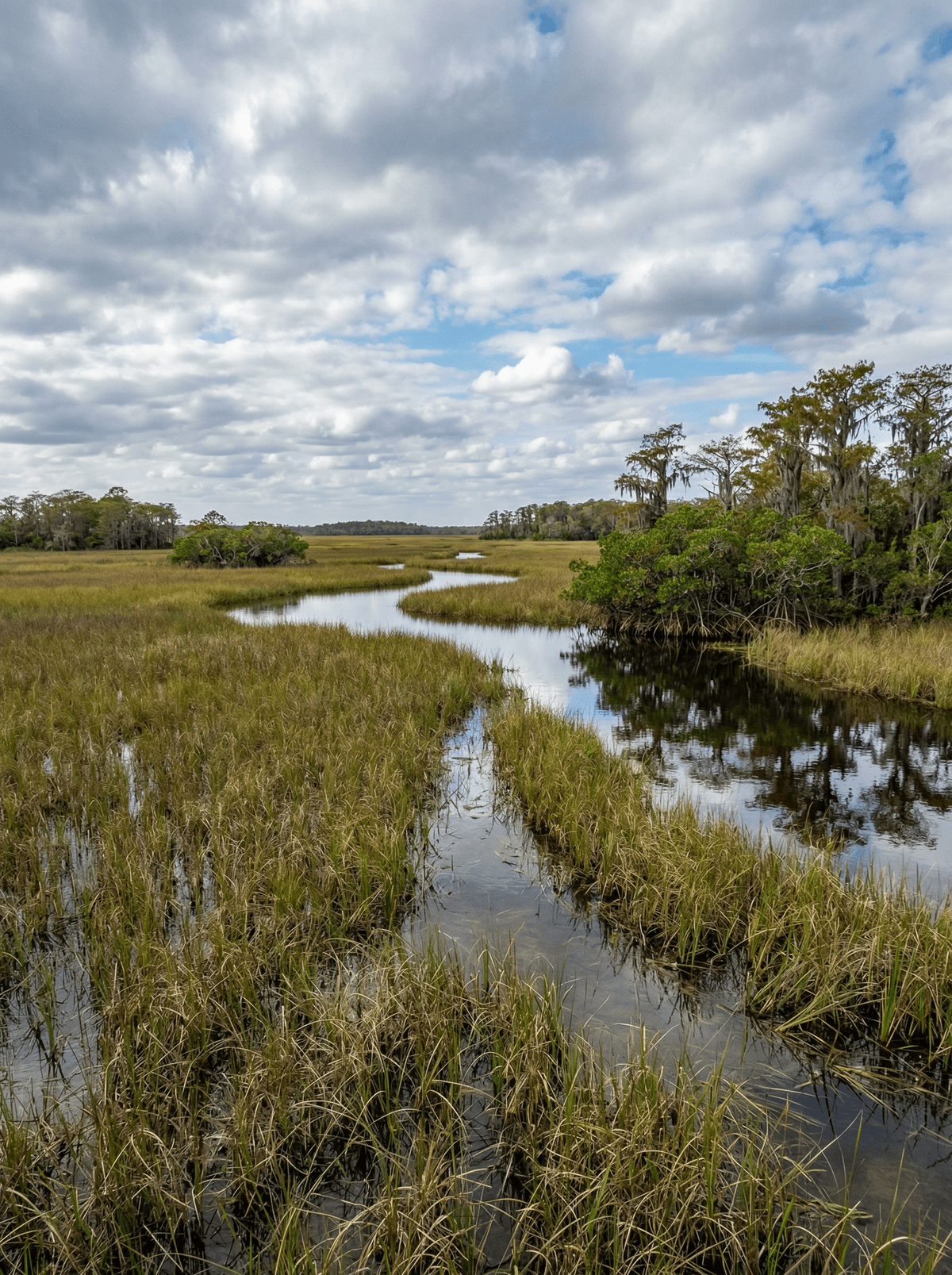
A river of grass sixty miles wide and six inches deep, prowled by alligators and panthers.
The water moves so slowly you cannot tell it is moving at all. Sawgrass runs to every horizon, broken by the dark hump of a mangrove island or the motionless shape of an alligator on a mud bank, in a landscape that is neither land nor sea but something stubbornly between.
The Everglades is not a swamp but a river, the one Marjory Stoneman Douglas named a river of grass, sixty miles wide, inches deep, easing south from Lake Okeechobee toward Florida Bay. The national park protects 1.5 million acres of its wetland, forest and marine habitats, home to alligators, wading birds, turtles and the shyest resident of all, the Florida panther. At the brackish southern fringe, American alligators overlap with American crocodiles, the rare ground on Earth where the two coexist. The Anhinga Trail boardwalk passes close enough to nesting birds that no long lens is needed, and the dry winter months concentrate the wildlife along the sloughs where everyone, feathered and scaled, comes to drink.
Family
Alligators beside the boardwalk, manatees at the marina and spoonbills in the shallows give children a safari without leaving the footpath.
Couple
Paddle the mangrove tunnels at dawn with nothing but birdsong and paddle drips, then watch the sawgrass go gold at sunset.
Solo
The ninety-nine-mile Wilderness Waterway through the mangrove backcountry is one of America's great solo paddling commitments.
- This is a river, not a swamp: the river of grass runs sixty miles wide and inches deep, easing seaward a mile a day.
- The park's southern brackish fringe is one of the only places on Earth where alligators and crocodiles coexist.
- The Anhinga Trail's boardwalk passes nesting birds so closely that no telephoto lens is needed.
- Winter's dry season concentrates the wildlife along the sloughs, which is why the cooler months are the season here.
Stone crab claws in Everglades City, the little port that styles itself the Stone Crab Capital of the World.
Fried gator tail at the airboat stops along the Tamiami Trail, the swamp's own bar snack.
Milia
Greece
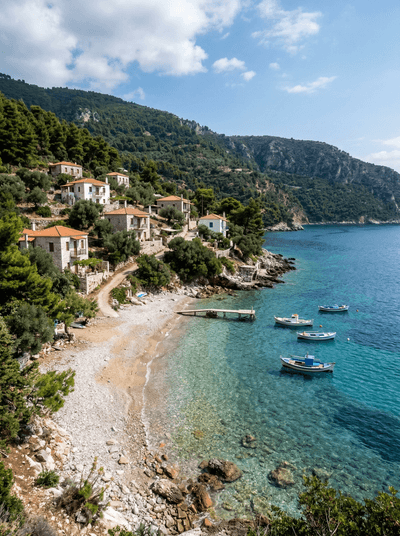
An abandoned Cretan hamlet rebuilt from stone into an off-grid eco-settlement deep in chestnut forest.
Hornborgasjön
Sweden
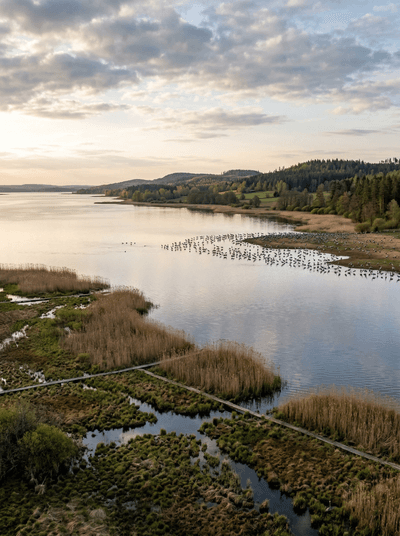
Thousands of cranes dancing at a restored lake each spring — a resurrection with wings.
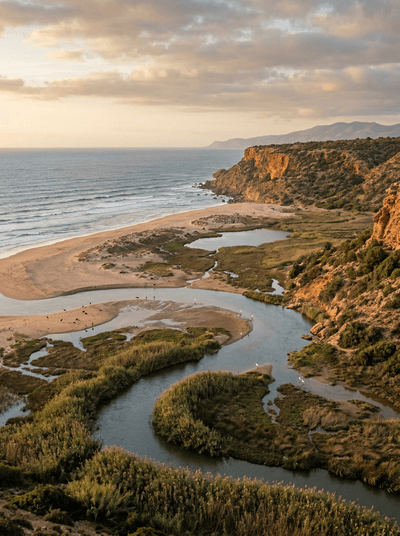
Souss-Massa National Park
Morocco
Red-faced ibises lift from Atlantic cliffs while migrants crowd a desert-edge estuary.
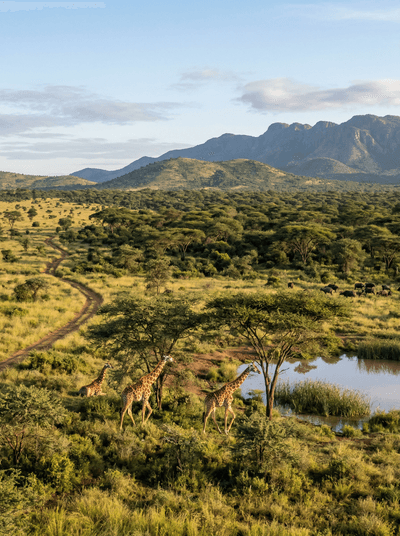
Meru National Park
Kenya
Born Free country — a park that collapsed under poaching and rebuilt itself from ruin.
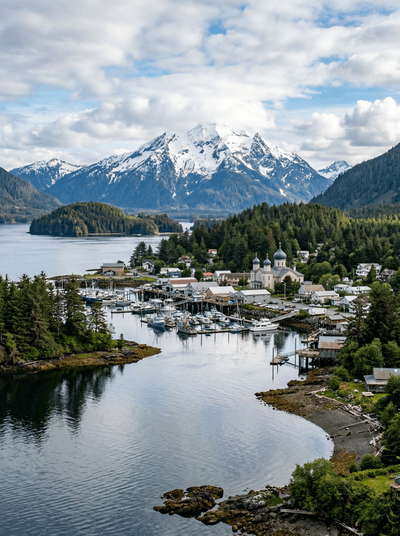
Sitka
United States
Totem poles and Russian onion domes facing each other across a harbour where humpbacks surface.
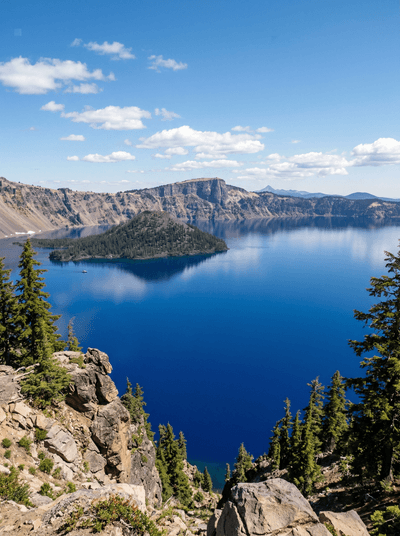
Crater Lake
United States
The deepest lake in America filling a collapsed volcano in a blue that defies photography.
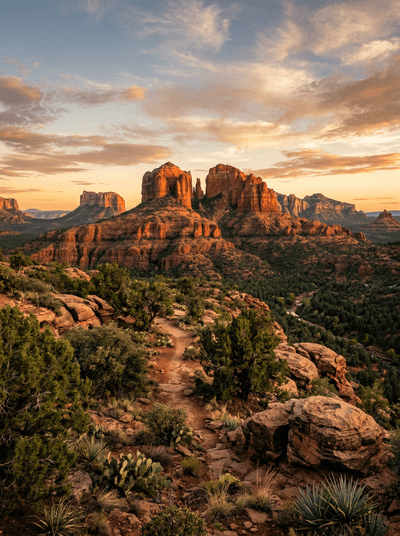
Sedona
United States
Red rock cathedrals rising from the desert where pilgrims come to feel the ground hum.
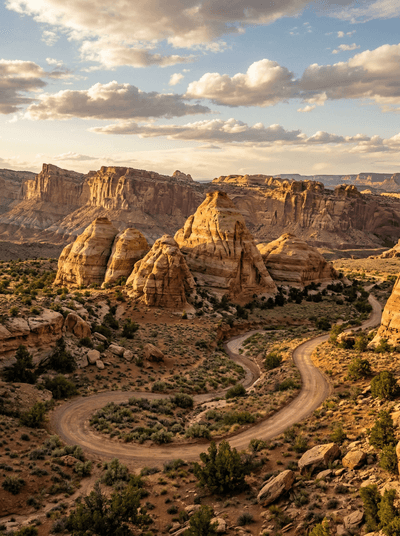
Capitol Reef
United States
Pioneer orchards still bearing fruit inside a hundred-mile wrinkle in the Earth's crust.