Morocco
Souss-Massa National Park
Red-faced ibises lift from Atlantic cliffs while migrants crowd a desert-edge estuary.
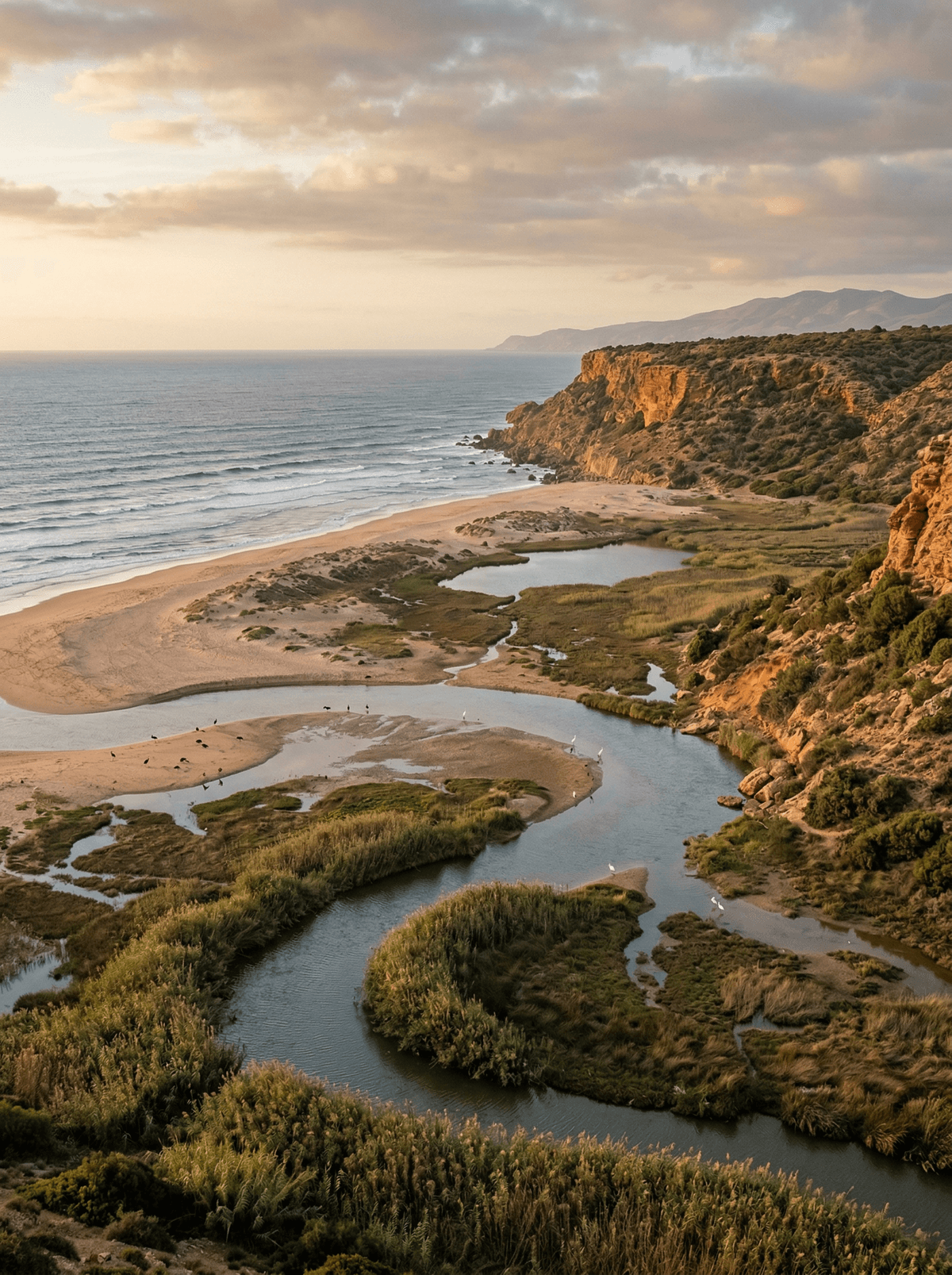
A dark flock clears the ochre Atlantic cliffs, long red bills curved beneath bare crimson faces. Inland, the Oued Massa slows among reeds and mudflats where flamingos, spoonbills and waders feed; dunes and dry steppe begin almost at the water's edge.
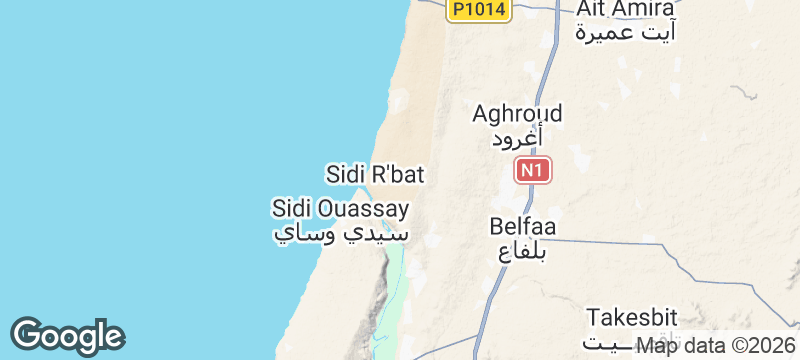
Souss-Massa protects 33,800 hectares of this coast and one of the Northern Bald Ibis's crucial wild breeding landscapes. Its global IUCN category improved from Critically Endangered to Endangered in 2018, a recovery story that makes careful access more important, not less. Start at Sidi Binzarne with the five-kilometre Ramsar bird trail along Oued Massa and an eco-guide who can read the tides, calls and seasonal movements. A separate Rokein visit adds a three-kilometre observation walk or a booked 4x4 circuit through managed reserves for dorcas gazelle, addax, oryx and North African ostrich. Specialist half-day ibis searches use the nesting coast, but distance, route rules and the possibility of seeing none belong to an honest ibis search.
Solo
Book a bird-focused eco-guide for the Oued Massa trail and ask about a small shared departure rather than exploring breeding coast alone. Pack binoculars plus ample water and sun protection, and let the guide choose observation distance and timing.
Family
Choose the three-kilometre Rokein walk with its observation and rest points, or arrange the managed-reserve drive for younger legs. Add only a short estuary section, keeping the day varied without turning wildlife into a checklist.
Couple
Begin quietly at the Massa estuary with a specialist guide, pause for a Bouzroug tagine, then take a booked late-afternoon reserve circuit. The change from wetland birds to dunes and Saharan fauna gives the day a strong natural arc.
- An Endangered Northern Bald Ibis population still breeds in a protected Atlantic-cliff landscape.
- A five-kilometre Ramsar trail follows Oued Massa through feeding and wintering habitat for migratory birds.
- Rokein's managed reserves add dorcas gazelle, addax, oryx and North African ostrich to a dedicated wildlife day.
- Cliffs, dunes, estuary, beaches and dry steppe meet within one conservation corridor south of Agadir.
A Massa Bouzroug tagine, local mussels cooked slowly with spice in the region's coastal style.
Fish baddaz, a Souss-Massa cornmeal couscous whose savoury grains suit a post-estuary lunch.
Hornborgasjön
Sweden
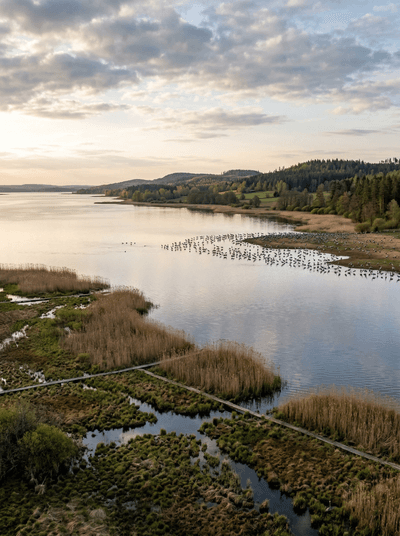
Thousands of cranes dancing at a restored lake each spring — a resurrection with wings.
Cathedral Grove
Canada
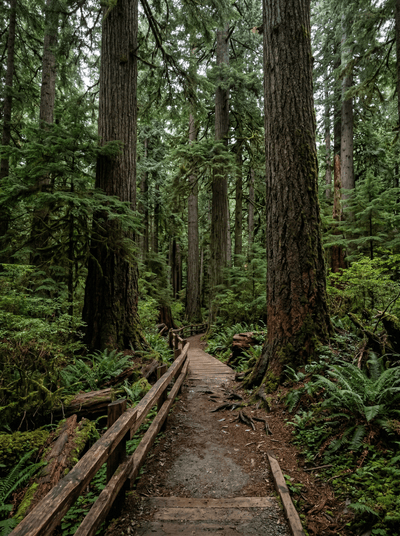
Douglas firs eight centuries old stand within steps of the island highway.
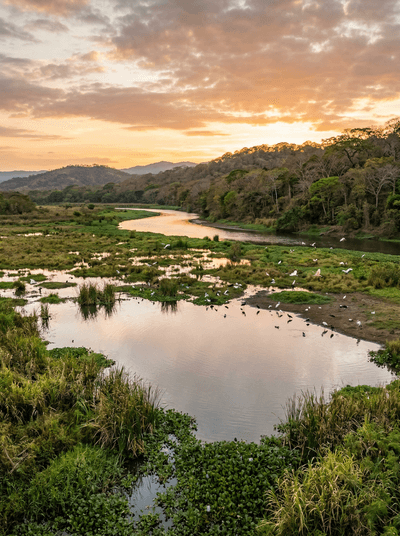
Palo Verde National Park
Costa Rica
Ten thousand hectares of marsh erupt with waterbirds while crocodiles bask below limestone hills.
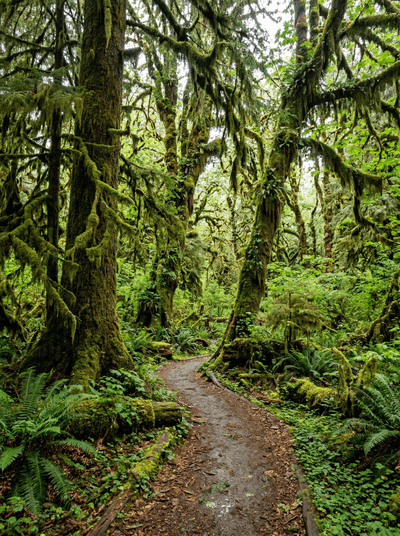
Hoh Rainforest
United States
Twelve feet of rain a year drape the maples in moss that swallows sound whole.
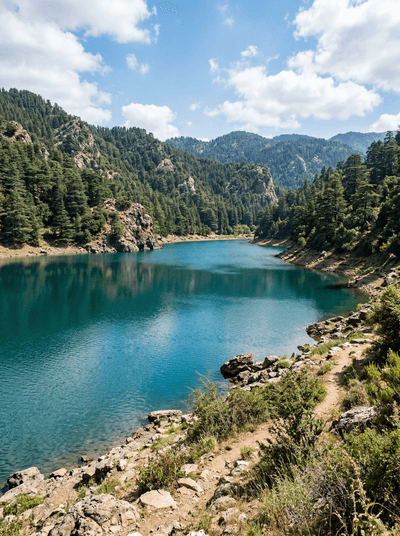
Aguelmame Azigza
Morocco
A blue-green lake fills a limestone bowl where cedar forest comes down to the water.
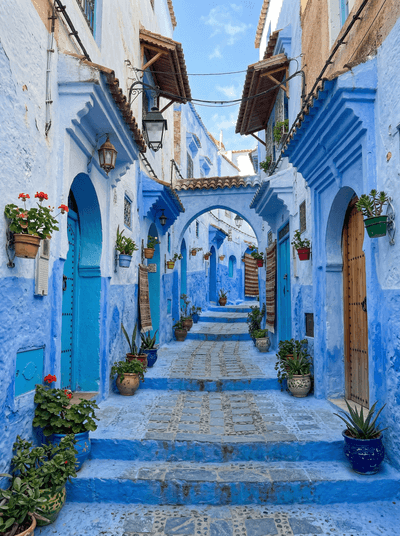
Chefchaouen
Morocco
A whole mountainside rinsed in blue, and the town still argues over who started it.
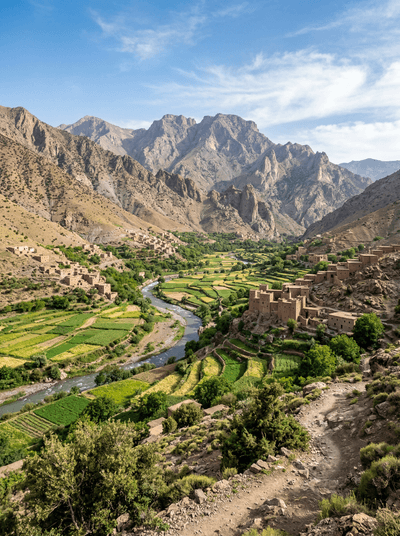
Aït Bouguemez Valley
Morocco
Dinosaur tracks survive on the valley floor among irrigated fields and earthen villages.
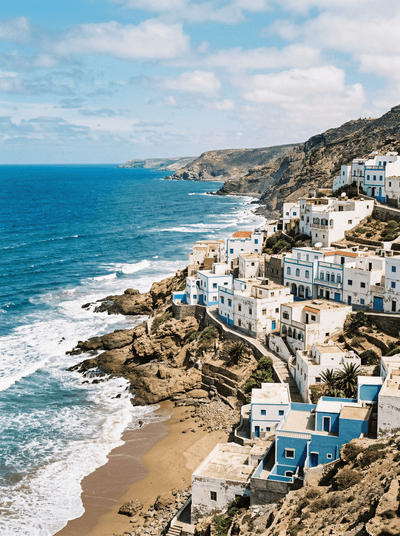
Sidi Ifni
Morocco
Spain left on the last day of June 1969, and the Art Deco is still standing.