Pakistan
Fairy Meadows
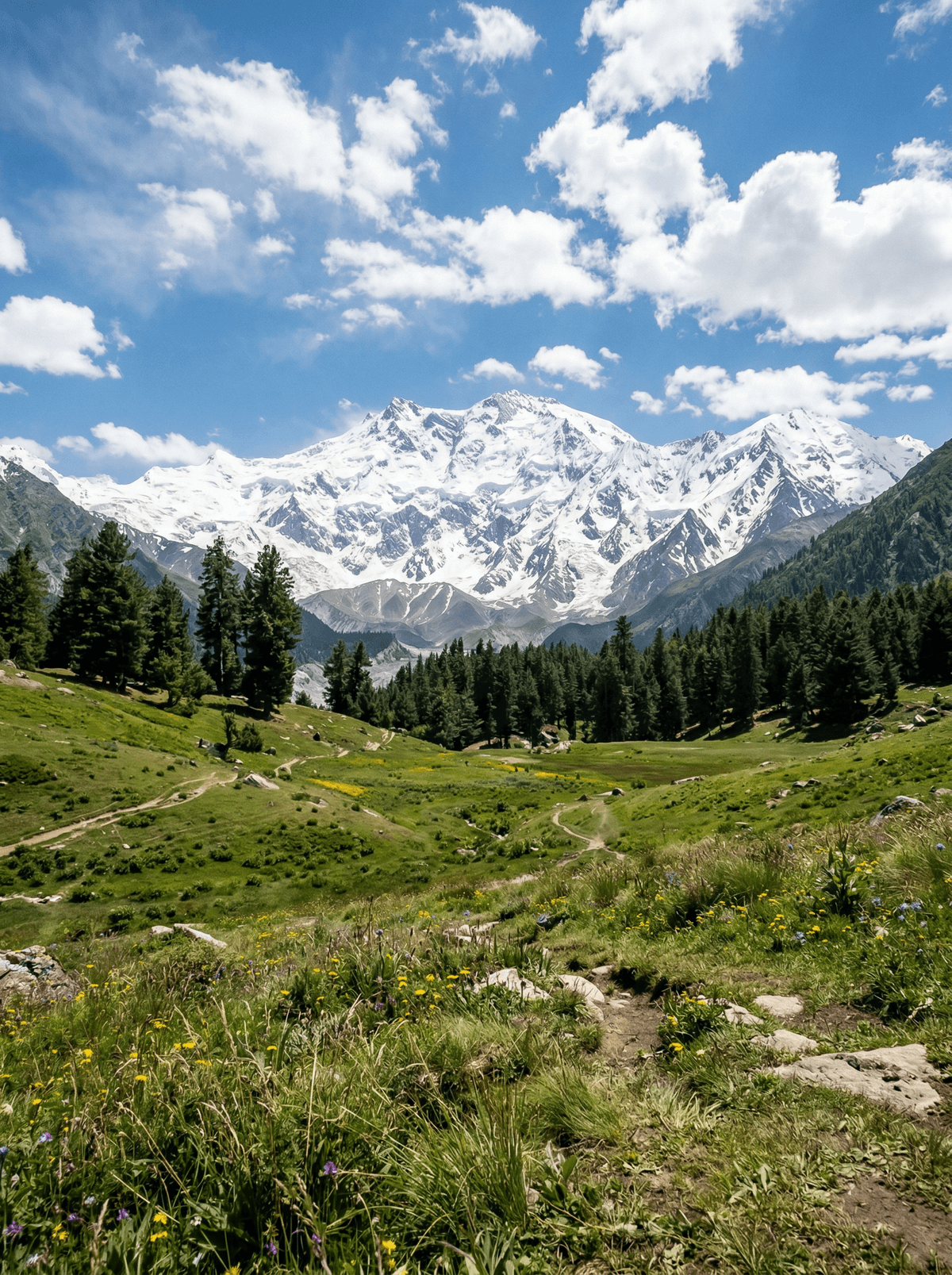
A wildflower carpet at 3,300 metres where Nanga Parbat's killer face fills the entire sky.
The meadow reveals itself after the walk up through silent pine forest — a carpet of wildflowers at 3,300 metres, impossibly green against the grey granite behind it. Then you look up. Nanga Parbat's Raikot Face fills the northern sky, 8,126 metres of mountain rising so steeply your neck aches trying to find the summit.
Fairy Meadows is the name given to Joot, a high alpine pasture in Pakistan's Gilgit-Baltistan that sits directly below Nanga Parbat, the world's ninth-highest mountain. The meadow is reached by a white-knuckle jeep ride up a single-track cliff road from the Karakoram Highway, then a stiff couple of hours on foot through blue pine and birch forest. There are no paved roads and no concrete buildings. Basic eco-camps pitch wooden huts and tents on the grassland itself, with the view Hermann Buhl contemplated before his legendary 1953 first ascent from this side of the mountain. Dawn transforms the peak from dark silhouette to rose-gold while the meadow below still lies in blue shadow.
Solo
The walk in filters out casual visitors, leaving a community of trekkers and mountaineers at the eco-camps — solo travellers find easy company around campfires and shared meals of dal and roti.
Couple
Few places on Earth offer this level of dramatic isolation with this little effort. Watching Nanga Parbat turn pink at dawn from a wooden hut is a memory that outlasts any luxury hotel.
Family
Families with older children reach the meadow by jeep and a manageable forest walk. The reward — wildflowers, wood-fire camps, and Nanga Parbat filling the sky — creates shared wonder no theme park touches.
Friends
The meadow launches the day-trek towards Nanga Parbat's northern base camp at about 4,000 metres. Groups can split between the push and the wildflowers-and-stargazing camp.
- Nanga Parbat's Raikot Face fills the entire northern sky — nothing else competes for your attention.
- A cliff-road jeep ride and a forest walk guard the meadow — the effort is the gatekeeper.
- Basic eco-camps pitch tents and wooden huts directly on the wildflower carpet at 3,300 metres.
- Dawn turns the summit rose-gold long before light reaches the meadow floor.
Dal and roti cooked over wood fires at the meadow huts — the 8,126-metre view from your breakfast spot is the luxury.
Chapati with local honey at dawn, and shepherds' milk still warm from the camps above.
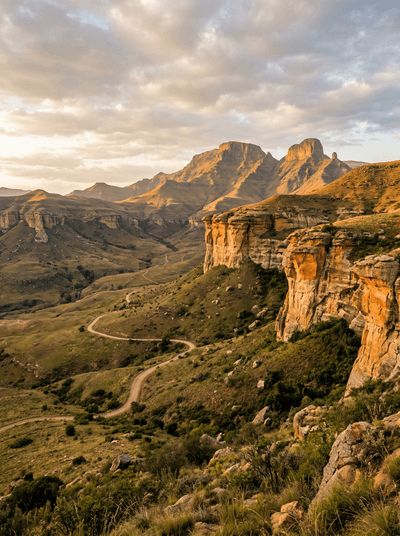
Golden Gate Highlands National Park
South Africa
Sandstone walls flare gold above grassland where black wildebeest graze.
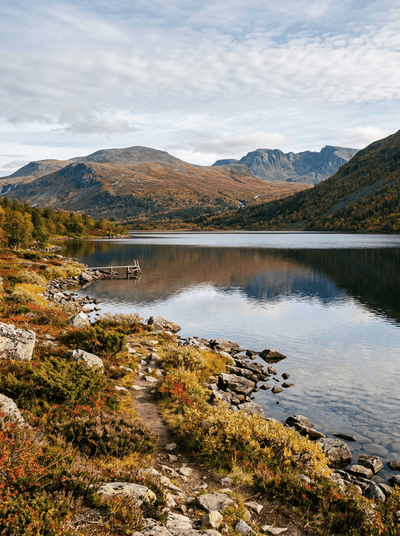
Grövelsjön
Sweden
A mountain station beside the Norway line, whose trails cross countries before lunch.
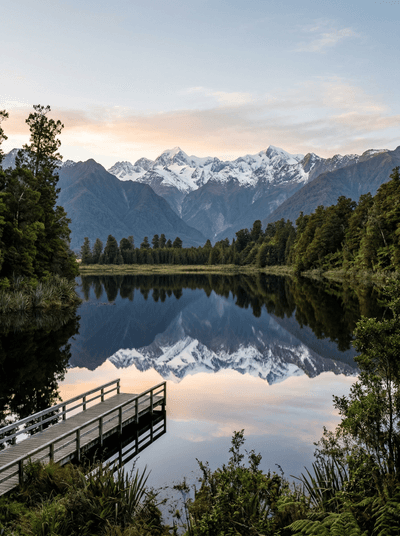
Lake Matheson
New Zealand
Tannic black water that mirrors Aoraki so sharply the reflection outdoes the peak.
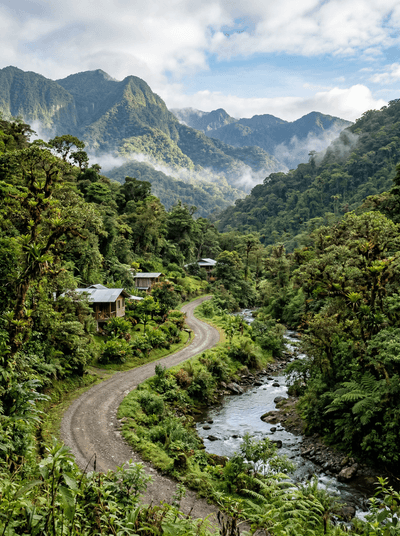
San Gerardo de Dota
Costa Rica
A bird the Maya held sacred flashes emerald through one cold valley's mist.