Portugal
Flores
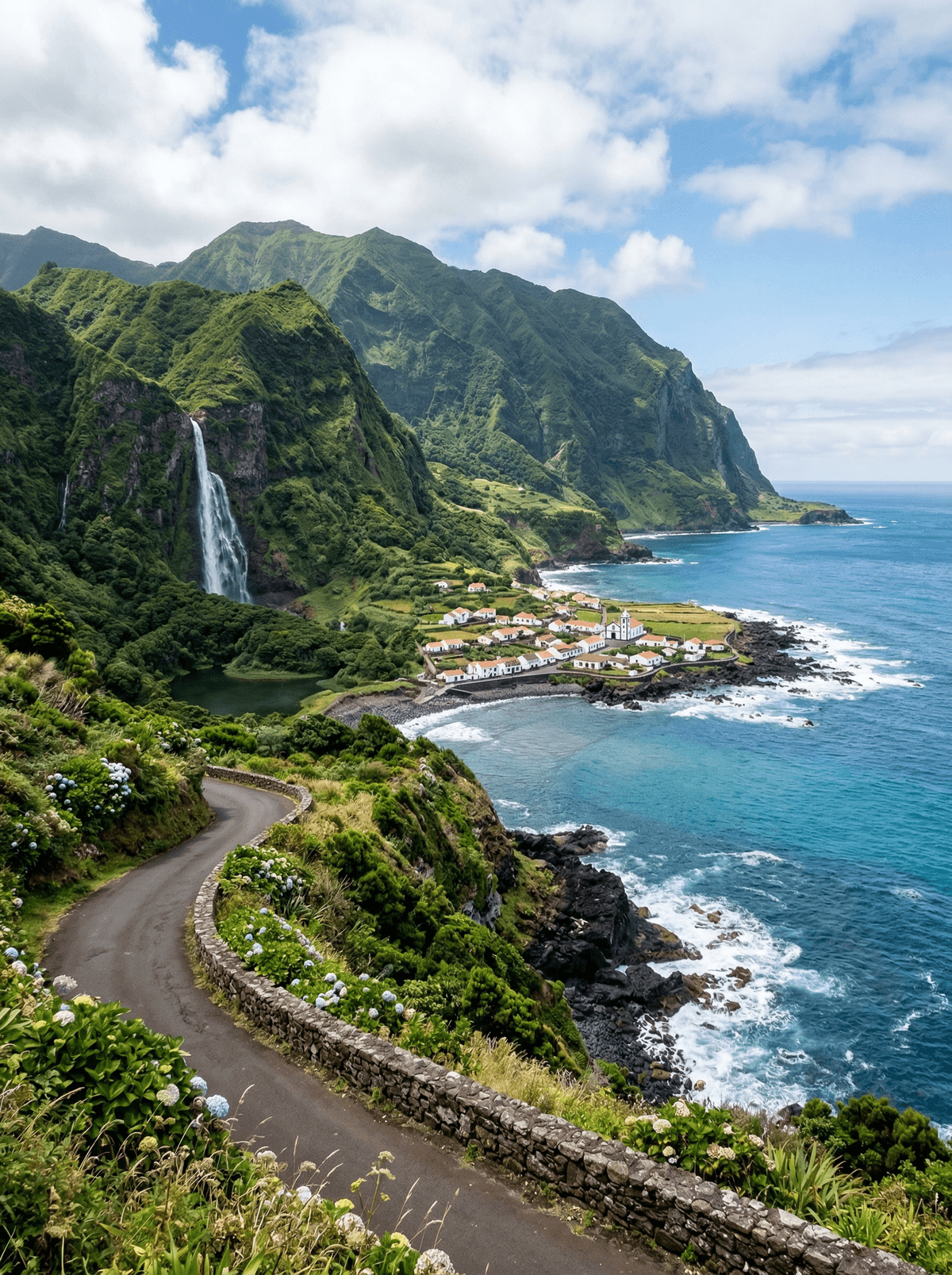
Waterfalls drop straight into the Atlantic on an island farther from Lisbon than Morocco.
Waterfalls drop directly into the sea. Not into rivers that reach the sea — into the Atlantic itself, freefalling from green cliff edges into salt spray. Flores earns its name from the hydrangeas lining every road, but the island's true character is vertical: water falling, cliffs rising, cloud descending.
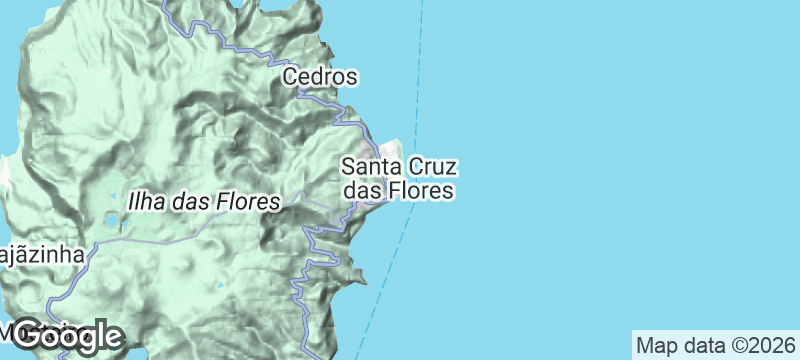
Flores is Europe's westernmost fringe — farther from Lisbon than Marrakech is, closer to the New World than feels reasonable — a 143-square-kilometre island of the Azores' western group holding seven crater lakes, the deep Lagoa Funda among them, in permanently green uplands fed by the archipelago's heaviest rainfall. That rain powers the signature: the waterfall wall behind Fajã Grande, where the Poço do Bacalhau plunges ninety metres, and the cascades that leap straight off the coastal cliffs into the ocean. The Rocha dos Bordões raises its organ-pipe basalt columns in the interior — among the Atlantic's most dramatic volcanic sculpture — and a population under four thousand keeps a pace the better-connected islands have begun to lose. Open-boat whaling worked these harbours into the 1980s — living memory here, not distant history — and the whales still pass the same coast.
Solo
Where you go when the rest of the Azores feels too connected — trails linking crater lakes above the cloud line, and long stretches of coastline with no road to them.
Couple
Remoteness that creates real intimacy — a crater-lake picnic, waterfalls pouring into the Atlantic at Fajã Grande, grilled limpets at a quiet harbour as the light goes.
- Portugal's westernmost island lies closer to the New World than feels reasonable.
- The archipelago's heaviest rain feeds falls that plunge straight into the sea.
- The Rocha dos Bordões raises basalt organ pipes above the green interior.
- Open-boat whaling worked these harbours into the 1980s — within living memory.
Lapas grelhadas — grilled limpets in garlic butter, the taste of volcanic shoreline.
Fresh fish and island soft cheese — the simple food of the edge of everything.
Taveuni
Fiji
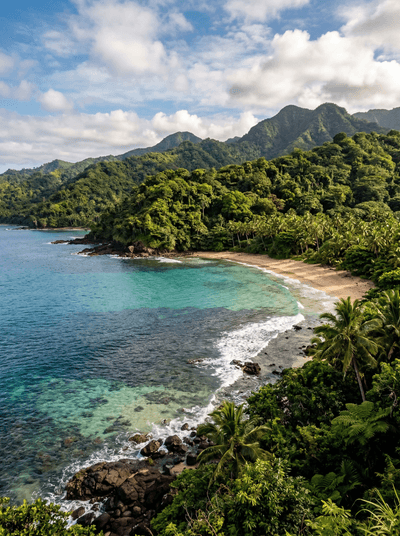
Stand astride the 180th meridian in rainforest, one foot in today, one in yesterday.
Parque Nacional Conguillío
Chile
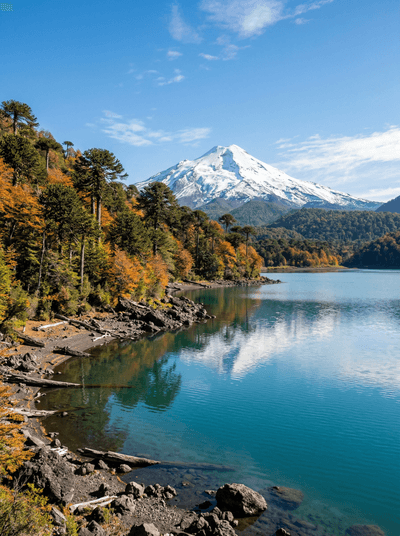
Araucaria crowns stand over black lava and clear lakes beneath Volcán Llaima.
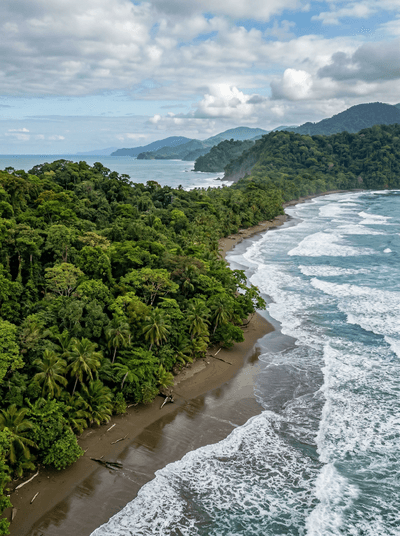
Corcovado National Park
Costa Rica
National Geographic called it the most biologically intense place on Earth. They undersold it.
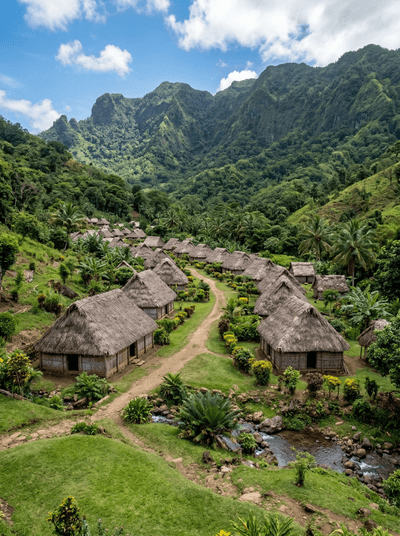
Navala Village
Fiji
Two hundred thatched bures, all built the same size, climb a valley above the Ba River.
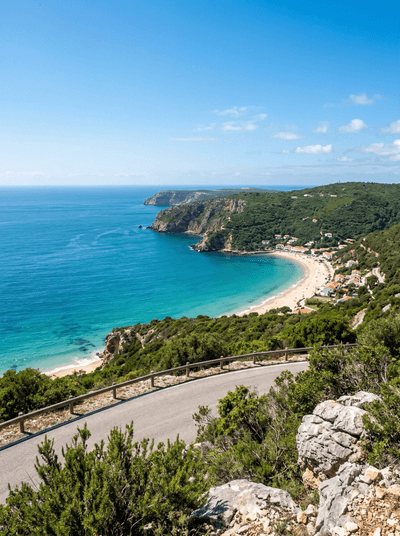
Arrábida
Portugal
Turquoise coves locked between limestone cliffs and monastery forest above the sea.
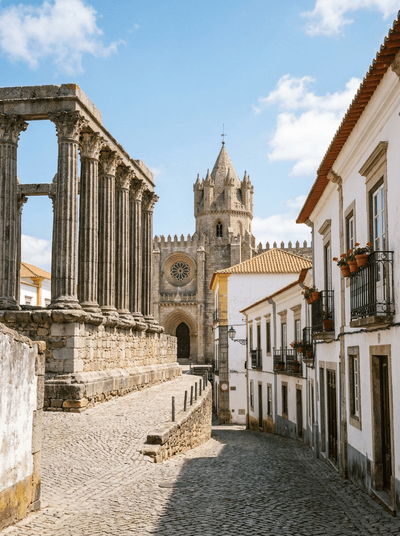
Évora
Portugal
A Roman temple stands intact beside a chapel the monks lined with their own dead.
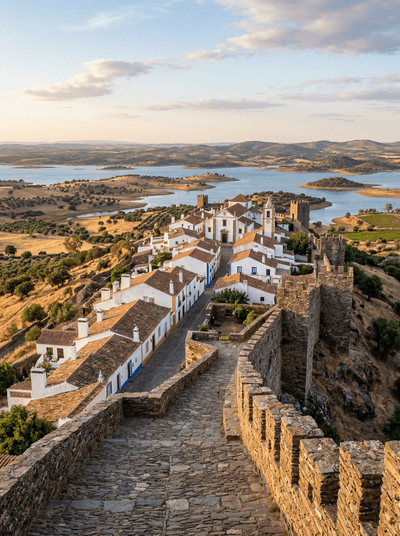
Monsaraz
Portugal
A walled village of whitewashed stone above a lake so still it doubles the sky.
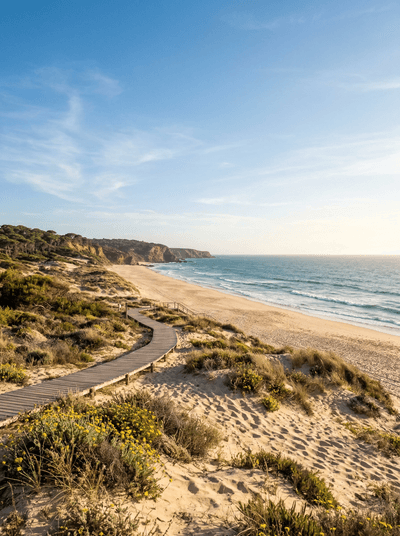
Comporta
Portugal
Rice paddies end where the dunes begin, an undeveloped Atlantic beach running for hours.