Turkey
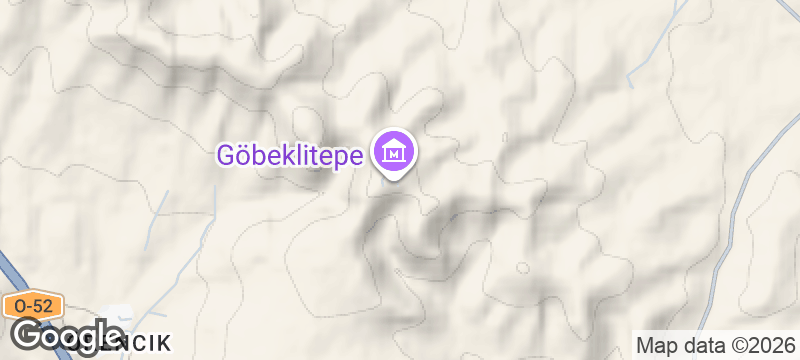
Göbekli Tepe
Stone pillars raised before farming existed, six thousand years older than Stonehenge.
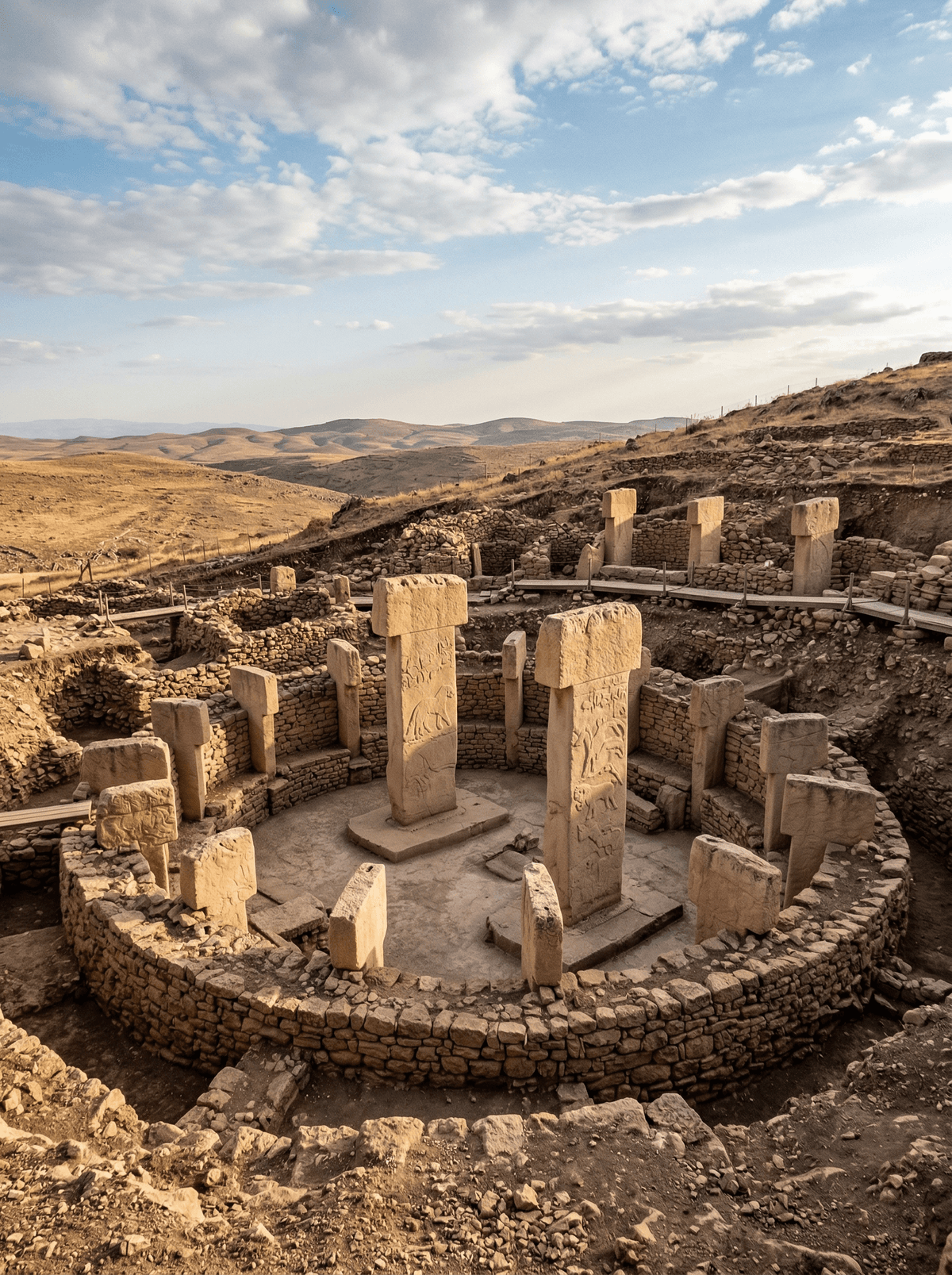
The stone pillars stand in circles on a bare hilltop above the Harran Plain, carved with foxes, boars and serpents by people who had not yet learned to plant crops. The scale is wrong: these T-shaped megaliths, some weighing up to twenty tonnes, should not exist at this point in human history. You walk the covered walkway above the pits and feel the timeline of civilisation shift under your feet.
Göbekli Tepe, near Şanlıurfa in southeastern Turkey, is the oldest known monumental structure on Earth, radiocarbon-dated to about 9500 BCE, roughly six thousand years before Stonehenge. Circular enclosures ring T-shaped limestone pillars up to 5.5 metres tall, many carved with detailed animal reliefs, and only around 5% of the site has been excavated. Its identification in 1994 by the German archaeologist Klaus Schmidt upended the assumption that organised ritual followed agriculture; here the opposite appears true. The Şanlıurfa Archaeology Museum holds the finds, including Urfa Man, the oldest known life-sized human sculpture.
Solo
Göbekli Tepe is a pilgrimage for anyone obsessed with deep history. Standing above those carved pillars, knowing nothing older of this scale has ever been found, is the kind of moment only solitude sharpens.
Couple
Pair the site with the old city of Şanlıurfa: the sacred fish pools at Balıklıgöl, the covered bazaar, the evening promenade. The world's oldest monument and one of Mesopotamia's living cities in a single day.
- The site predates Stonehenge by some 6,000 years and the Egyptian pyramids by about 7,000.
- The T-shaped limestone pillars, some weighing up to 20 tonnes, were carved with stone tools.
- Only around 5% of the site has been excavated; geophysics suggests many enclosures remain buried.
- The 1994 identification forced a fundamental rethink of the timeline of human civilisation.
Şanlıurfa çiğ köfte, raw meat pounded to a paste with fine bulgur and kneaded by hand.
İsot, the smoky Urfa chilli that çiğ köfte cannot be made without.
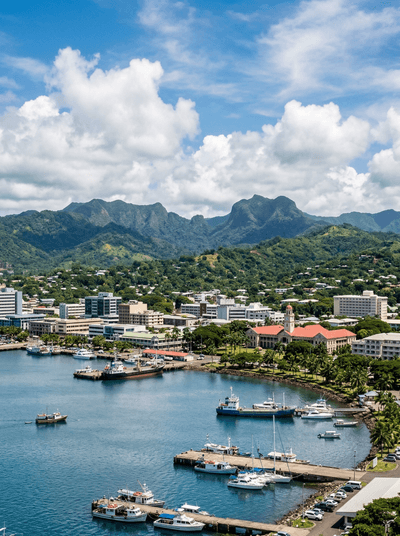
Suva
Fiji
South Pacific hustle where Hindu temples share streets with Fijian markets and colonial verandahs.
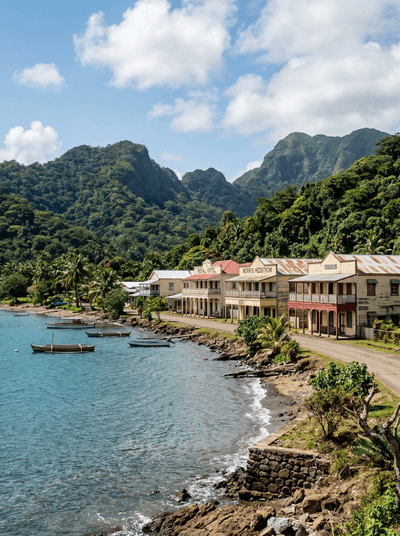
Levuka
Fiji
Fiji's first colonial capital frozen in the 1870s, wooden shopfronts sagging under tropical rain.
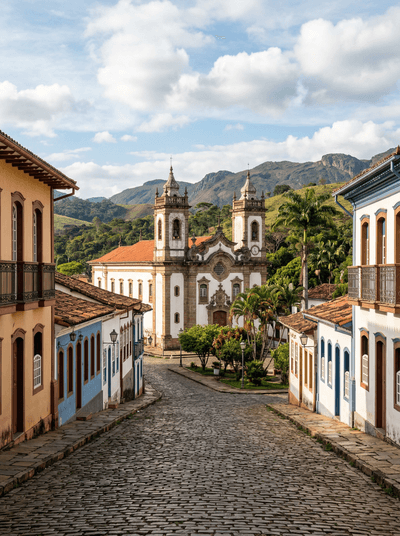
São João del-Rei
Brazil
Baroque towers answering each other across a valley, ringing the sex of whoever has just died.
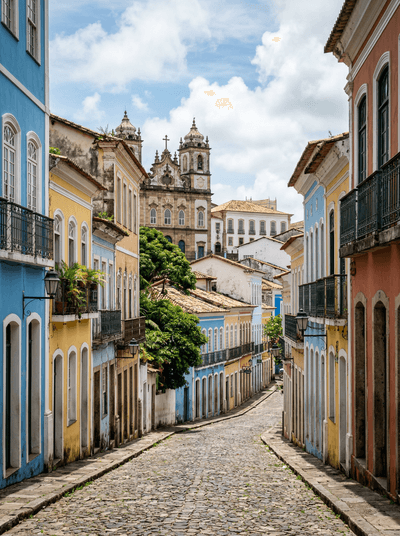
Salvador
Brazil
Drum rhythms ricocheting off colonial walls where song, dance and combat happen at once.
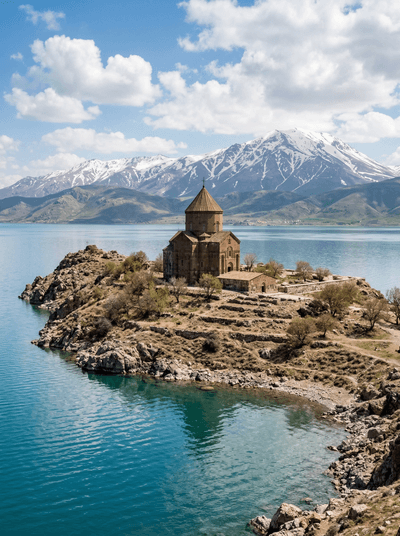
Akdamar Island
Turkey
A tenth-century Armenian church carved with biblical scenes floats alone on an island in Lake Van.
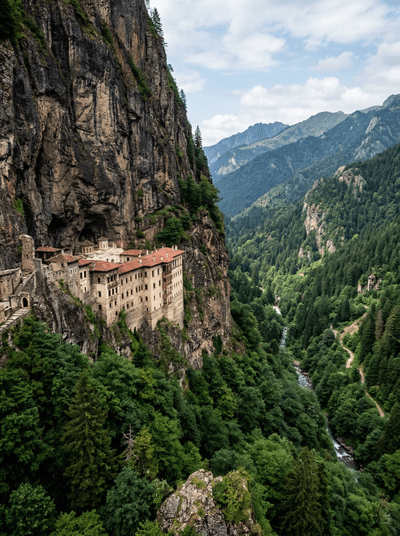
Sumela Monastery
Turkey
A monastery clinging to a cliff 300 metres above a misty Black Sea valley.
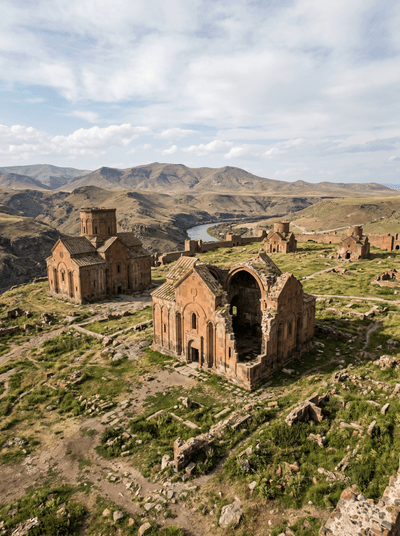
Ani
Turkey
A ghost city of 100,000 souls on the Armenian border, churches crumbling into wildflower meadows.
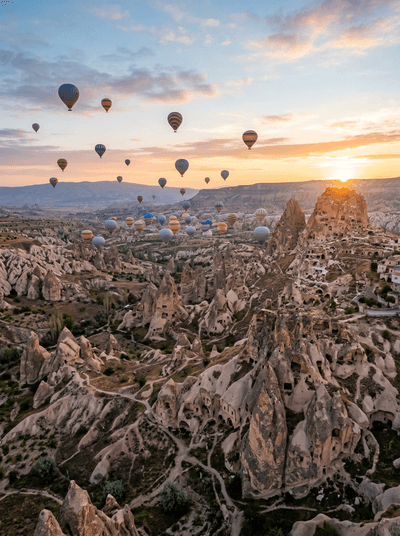
Cappadocia
Turkey
More than a hundred balloons rise at dawn through a forest of stone pillars.