France
Gorges de l'Ardèche
Thirty kilometres of canyon paddled in silence beneath a natural stone arch the river carved itself.
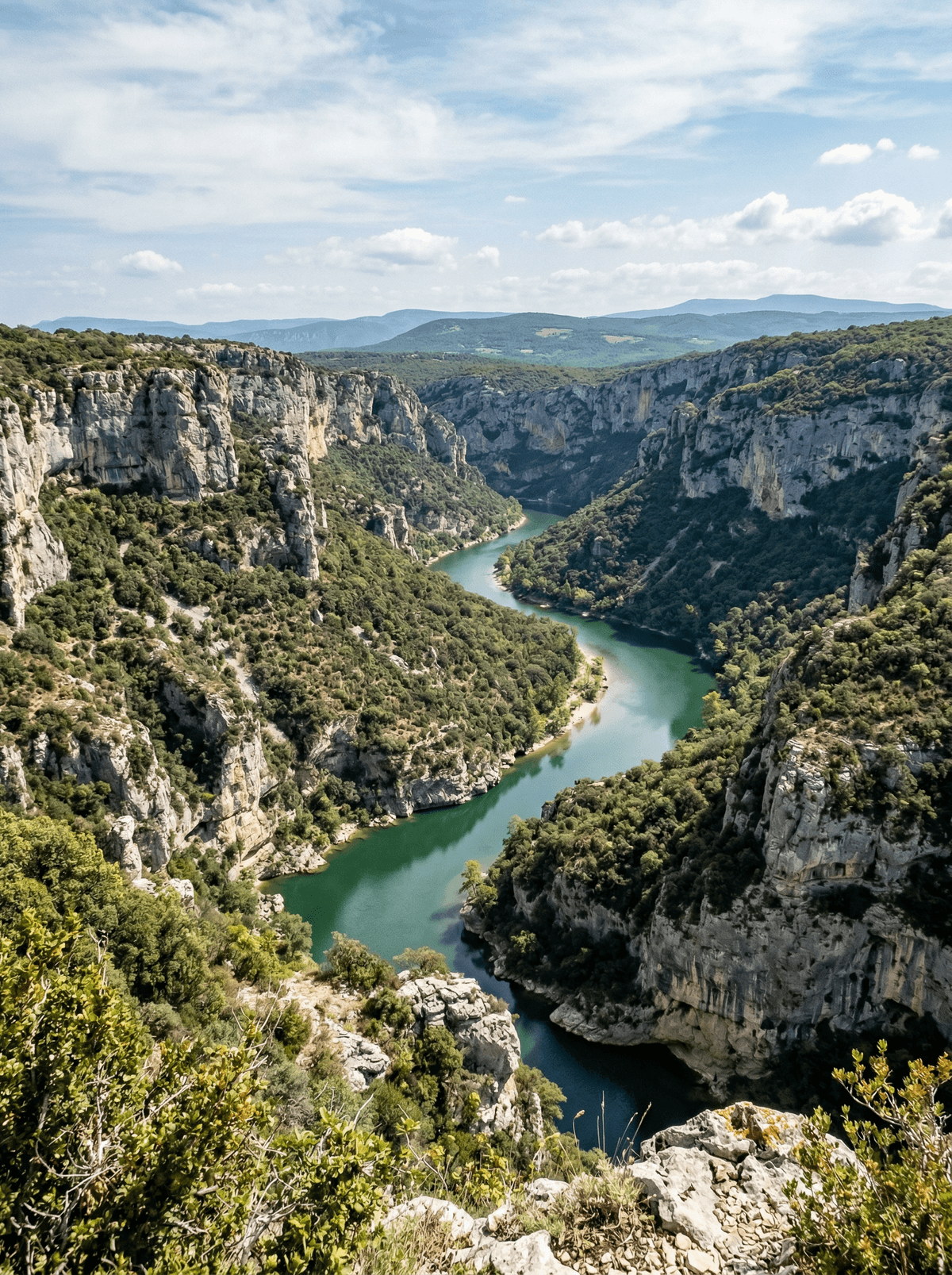
The Pont d'Arc appears around a bend — a natural stone arch some sixty metres wide, framing the turquoise water of the Ardèche like a doorway into the canyon beyond. From here the gorge runs thirty kilometres downstream through southern France, the limestone walls rising higher with every paddle stroke and the silence deepening until the only sound is your own hull on the water.
The Gorges de l'Ardèche run from the Pont d'Arc to Saint-Martin-d'Ardèche through a nature reserve, the river cutting a canyon with walls up to three hundred metres between the plateaux, and the Pont d'Arc — cut by the river through the neck of a meander — is among the largest natural arches in Europe. The classic way through is by canoe or kayak, a full day or two with an overnight at one of the reserve's bivouac sites on the pebble beaches mid-gorge, which must be booked and which close when the river runs high. The road along the rim links a series of belvederes over emerald water and white rock for anyone staying dry. A few minutes from the arch, Grotte Chauvet 2 reproduces the painted cave discovered nearby — lions, horses and rhinoceros drawn some thirty-six thousand years ago, some of Europe's earliest figurative art — in a replica so exact you forget it is one.
Couple
A two-day canoe descent with a night on a pebble beach mid-gorge — the canyon walls above and the stars overhead. The Pont d'Arc at the start sets the scale for everything that follows.
Friends
The descent is a shared adventure — small rapids, swimming stops, a bivouac night, and the canyon walls narrowing to a slot above you. The Chauvet replica adds thirty-six thousand years of context to the landscape.
- Thirty kilometres of canyon by canoe — the Pont d'Arc natural bridge marks the entrance like a stone gateway.
- Bivouac nights on the pebble beaches mid-gorge are allowed at the reserve's booked sites — sleep under the canyon walls.
- Grotte Chauvet 2 nearby reproduces cave paintings some thirty-six thousand years old — among Europe's earliest — in a single gallery.
- The rim road follows the canyon with belvederes at each bend — the water below is emerald and the rock is white.
Caillette — the Ardèche's herby pork-and-chard patty wrapped in caul fat — served warm with a green salad.
Ardèche chestnuts — roasted, or as crème de marrons on a crêpe — the department's signature crop, with its own appellation.
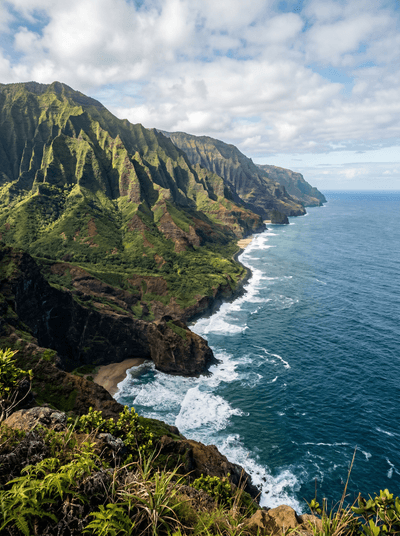
Na Pali Coast
United States
Cathedral sea cliffs rising four thousand feet from the Pacific, reachable only by boat or trail.
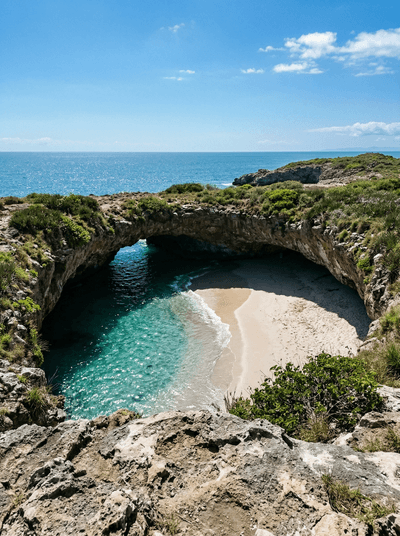
Marietas Islands
Mexico
A crater beach hides inside an island loud with seabirds.
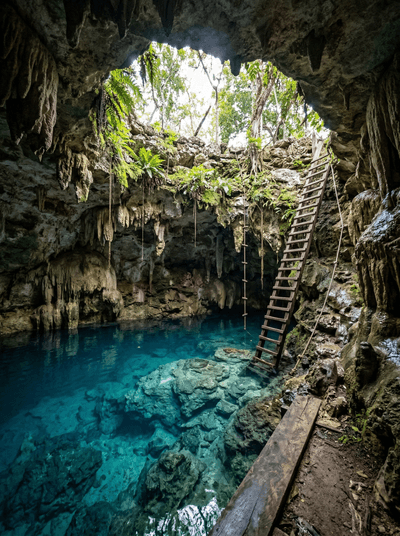
Cenotes of Cuzamá
Mexico
Horse-drawn rail carts rattle old henequen tracks towards pools lit by single shafts of light.
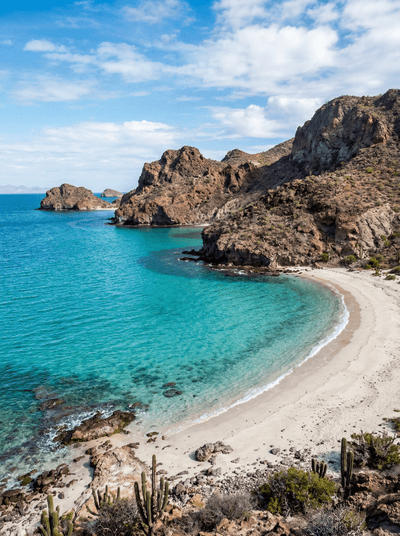
Espíritu Santo Island
Mexico
Red volcanic cliffs fold around clear coves reached by boat from La Paz.
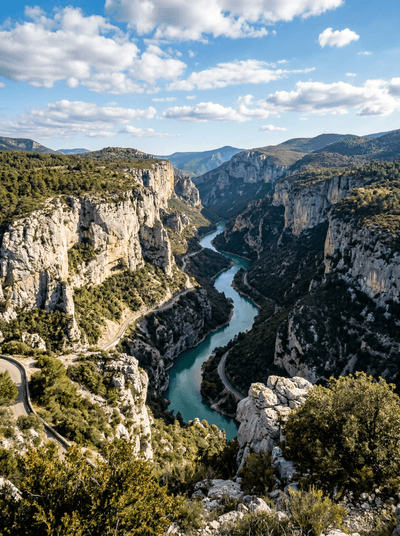
Gorges du Verdon
France
Turquoise water slicing deep into white limestone — Europe's grand canyon, vertigo included.
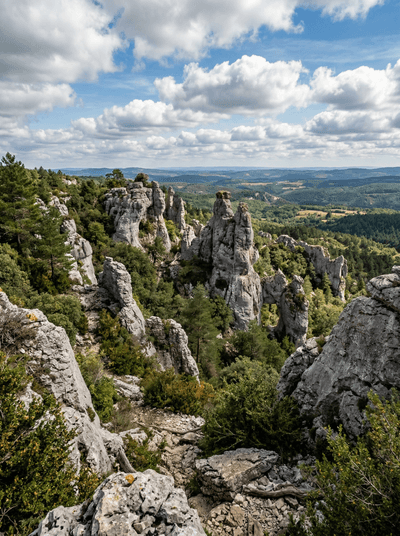
Chaos de Montpellier-le-Vieux
France
Dolomite towers and arches eroded into a ruined city that nature built and nobody lived in.
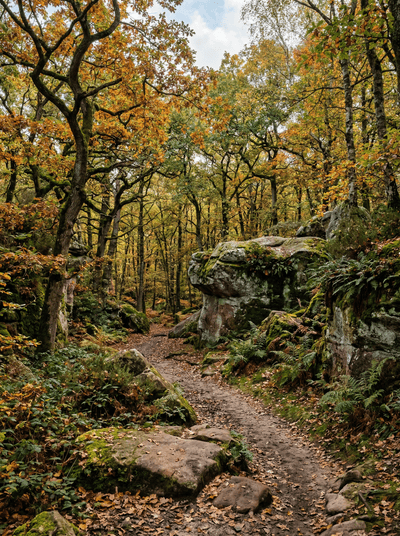
Forêt de Fontainebleau
France
Sandstone boulders erupting from an ancient forest floor where climbers outnumber the deer.
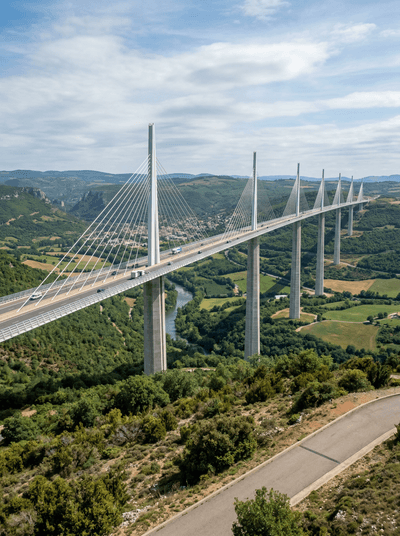
Millau Viaduct
France
The tallest bridge in the world crossing a cloud-filled valley — vertigo as architecture.