Argentina
Isla Victoria
A Patagonian island where a forest of five continents grows from one failed experiment.
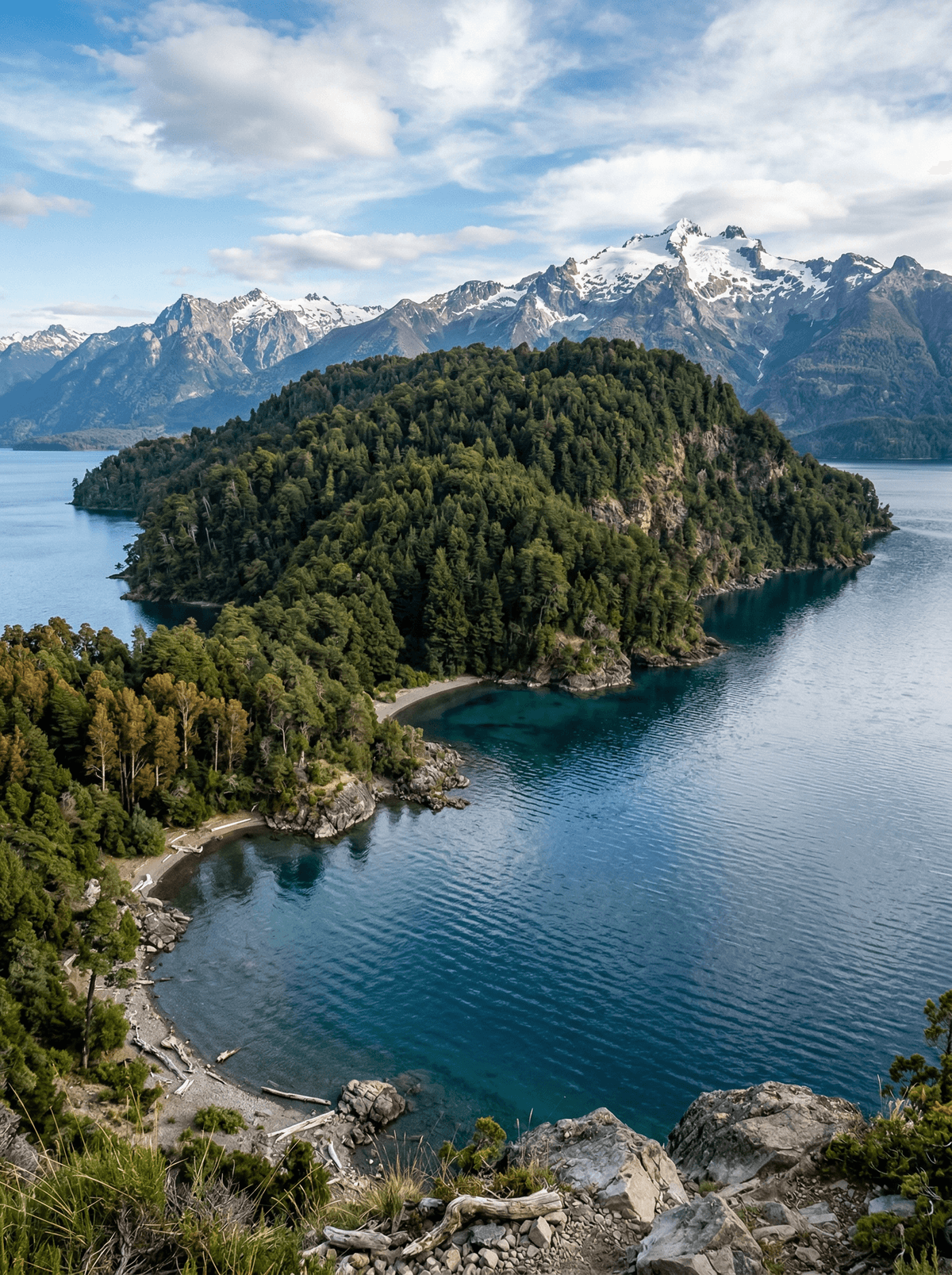
Isla Victoria, the largest island in Nahuel Huapi, carries a forest that should not exist: well over a hundred tree species from five continents — Monterey pine, Douglas fir, Sitka spruce, European beech — growing beside native arrayán and coihue, the living remains of a forestry experiment begun in the late 1920s. The commercial project failed; the forest it left behind became one of Patagonia's strangest and most beautiful accidents.
The island spreads 3,500 hectares inside Nahuel Huapi National Park, reached by scheduled navigations from Puerto Pañuelo near Bariloche, with guided walks through the season. The introduction programme tested what the world's temperate forests could do in Patagonia; when the economics collapsed, the plantings stayed, self-sustaining, and today the trails move between ecosystems the way other walks move between viewpoints. On the island's northern reaches, a native arrayán grove twists its orange trunks over the shore — a botanical treasure protected in its own right — while introduced deer drift through the mixed woods, met on the trail network more often than seems fair. Beaches of volcanic sand, rock paintings near the landing, and the lake's cobalt frame complete a day that no other Patagonian island offers.
Couple
Walking from Californian pine into Patagonian arrayán inside ten minutes, the lake glittering through every treeline, gives couples a gentle, strange, entirely unhurried island day.
Family
The boat crossing, the beach, the deer on the trails and a forest genuinely built like a botanical adventure park hold children the full day — with the return ferry as the deadline that structures it.
- The 1920s forestry experiment planted species from five continents to see what would take.
- A native arrayán grove twists orange trunks over the island's northern shore.
- Scheduled navigations cross from Puerto Pañuelo, with ranger-guided walks in season.
- Introduced deer roam the trail network and are met more often than seems fair.
Trucha ahumada from Nahuel Huapi's cold waters smoked on the island's ancient arrayán wood.
Chocolate caliente from Bariloche's Belgian-tradition chocolaterías warms the return ferry crossing.
Manuel Antonio
Costa Rica
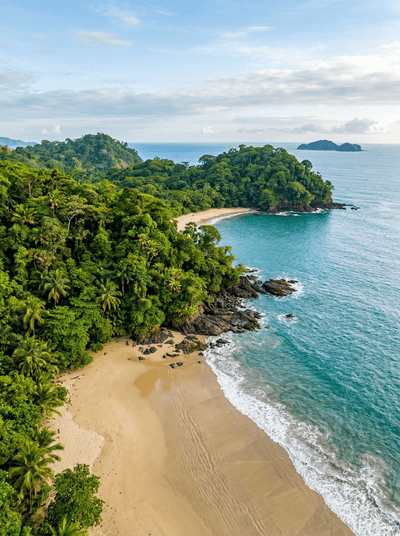
Capuchins patrol the sand beneath dozing sloths where rainforest walks into the ocean.
Vaitupu
Tuvalu
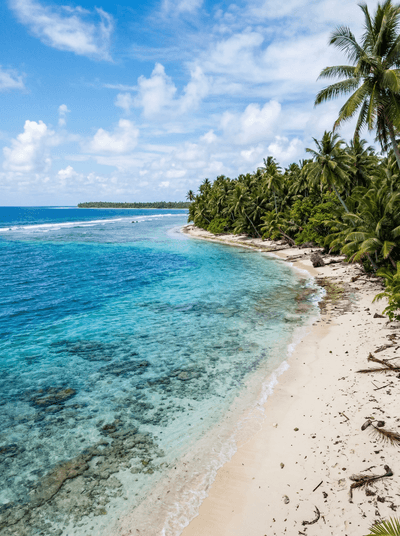
Tuvalu's largest island, where traditional sport te ano sends two woven balls flying at once.
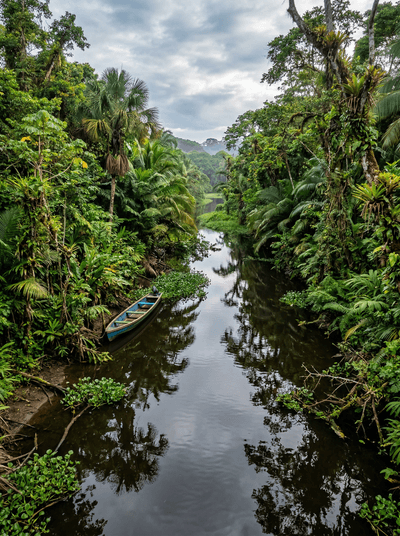
Tortuguero
Costa Rica
Jungle canals where green sea turtles haul onto black volcanic sand under a moonless sky.
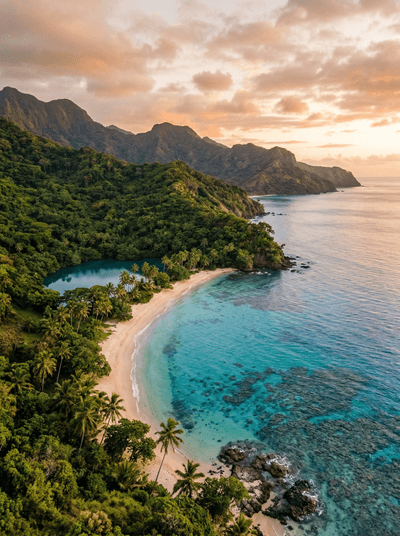
Kadavu
Fiji
Manta rays circle the world's fourth-largest barrier reef, off villages the road barely reaches.
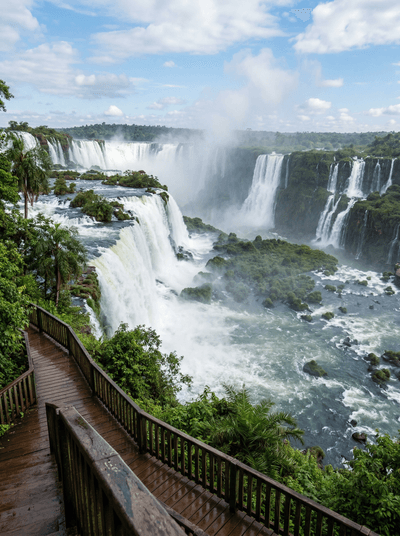
Iguazú Falls
Argentina
A river shatters into hundreds of waterfalls around the thunder of the Devil's Throat.
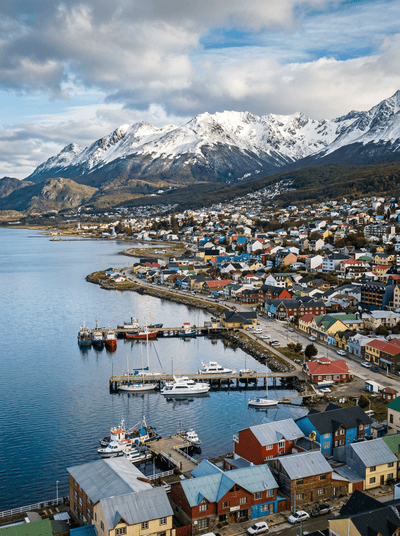
Ushuaia
Argentina
The port where Antarctica begins — beech forest climbing to glaciers at the planet's edge.
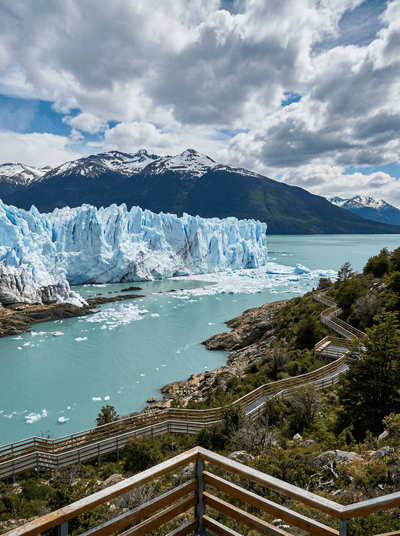
El Calafate
Argentina
A glacier calves office-block towers of ice into turquoise water as you watch.
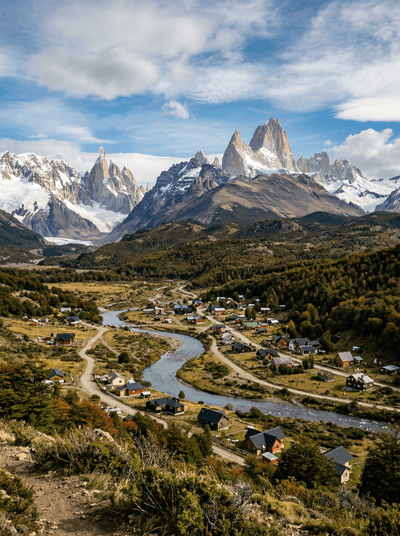
El Chaltén
Argentina
Granite spires pierce Patagonian cloud — condor country of vertical stone and wind.