Gambia
Juffureh
A Kinte griot still recites the family line that pulled a diaspora back upriver.
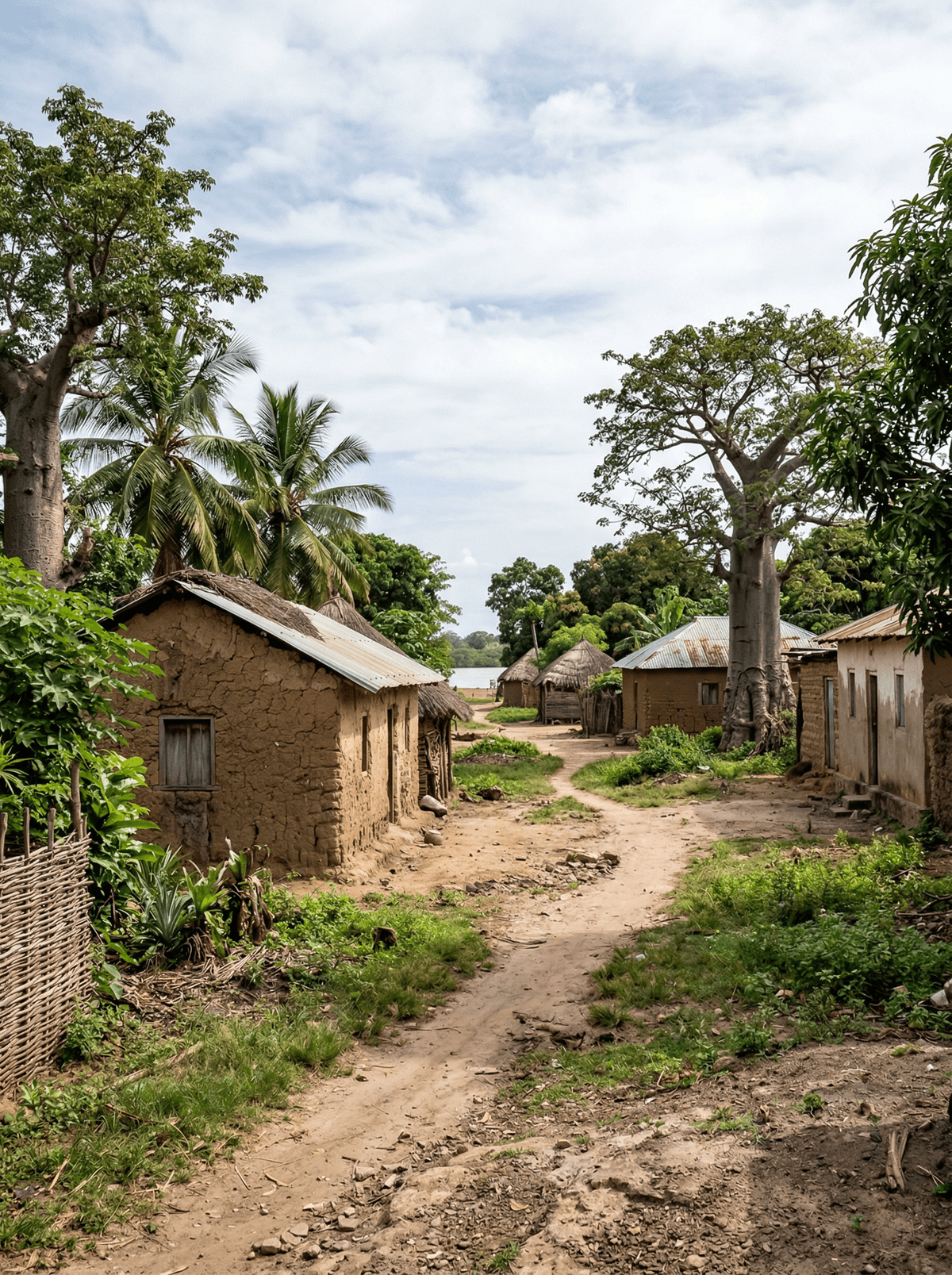
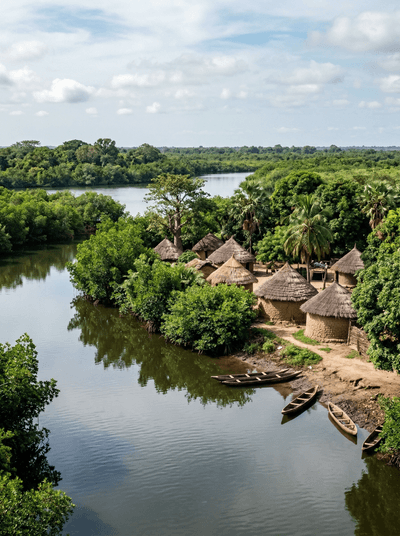
The ferry and the north-bank road end in a working Mandinka village: compounds, a mosque, women printing batik in the shade. Juffureh would pass unnoticed, except that a book made it the place a scattered people came back to look for themselves.
In 1967 Alex Haley sat in Juffureh while the griot Kebba Kanji Fofana recited the Kinte family lineage, and the result, Roots, published in 1976, sent millions searching for their beginnings; a steady stream of them came here. The genealogy has been challenged ever since, accusations of borrowed passages and fictionalised links included, and honest guides present it as oral tradition braided with a novelist's craft rather than proven descent. What is documented needs no embellishment: Juffureh and neighbouring Albreda belong to the UNESCO landscape around Kunta Kinteh Island, holding a small museum of the slave trade with a Roots section, the restored Maurel Freres trading house and a ruined Portuguese chapel. A member of the Kinte family, usually a griot, still receives visitors and speaks the line aloud, part in Mandinka, part translated. Arrive by river if you can; thirty kilometres of brown water is the right approach to a shore the slave ships knew.
Solo
For travellers of African descent this can be a pilgrimage, and for everyone it asks unhurried attention. Give the griot's recitation your whole focus, then sit with the museum's documents; they carry different kinds of truth.
Couple
Take the river route up and let the day breathe: village, museum, the island offshore. The conversations between the stops are the point.
Family
Children meet history here as living people rather than display cases: a working village, a genealogy spoken aloud. Frame the Roots story honestly for them, and the guides will help.
Friends
Share a guide, then compare what the museum's evidence, the oral recitation and the television version each claim. Respect the compounds; people live in every part of this place.
- Juffureh and Albreda sit inside the UNESCO cultural landscape around Kunta Kinteh Island, a short boat ride offshore.
- A member of the Kinte family, usually a griot, receives visitors and recites the lineage part in Mandinka, part translated.
- A small slavery museum, the restored Maurel Freres trading house and a ruined Portuguese chapel carry the documented history.
- Haley's Roots genealogy is contested, and good local guides hold the oral tradition and the doubts together.
Yassa, chicken or fish sharpened with lemon and drowned in slow-cooked onion; the tang is the whole argument.
Superkanja, okra stew dense with smoked fish, ladled over rice: village cooking at its most Gambian.
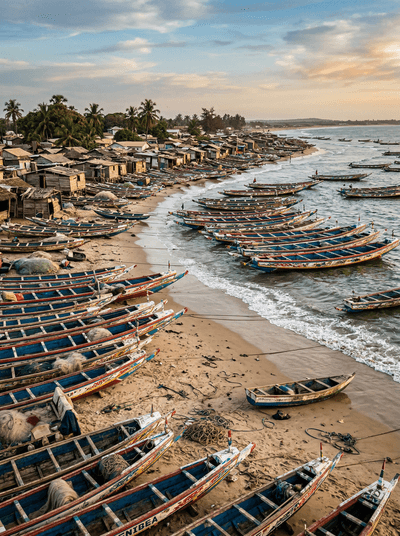
Tanji Fishing Village
Gambia
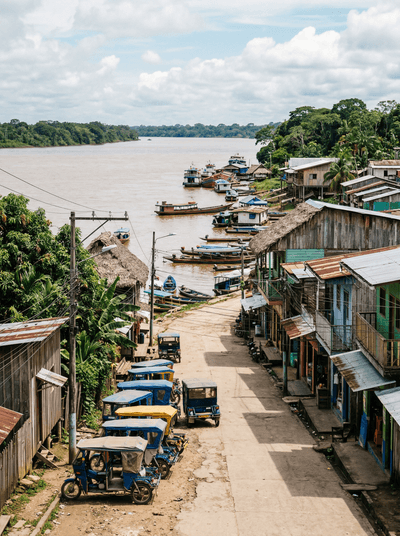
The beach erupts each afternoon: pirogues through surf, silver bonga by the basket, woodsmoke everywhere.
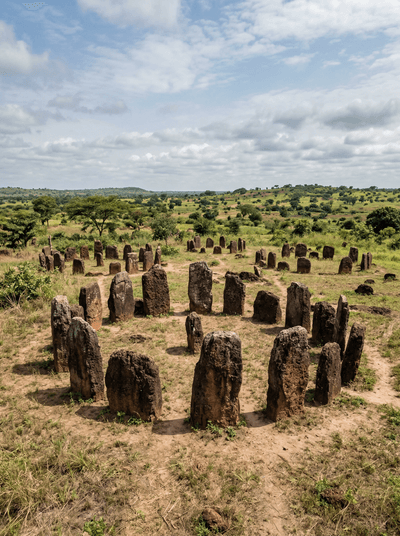
Wassu Stone Circles
Gambia
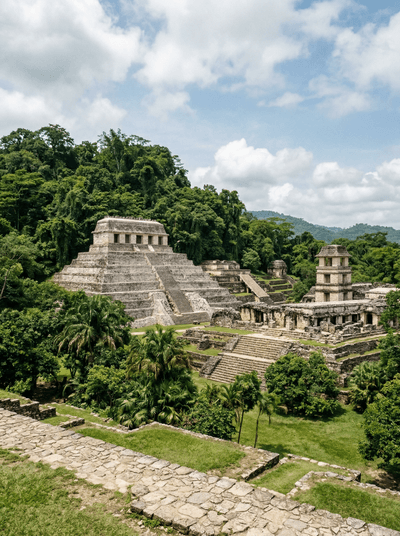
Eleven rings of rust-red pillars guard ancient graves; visitors still add pebbles for luck.
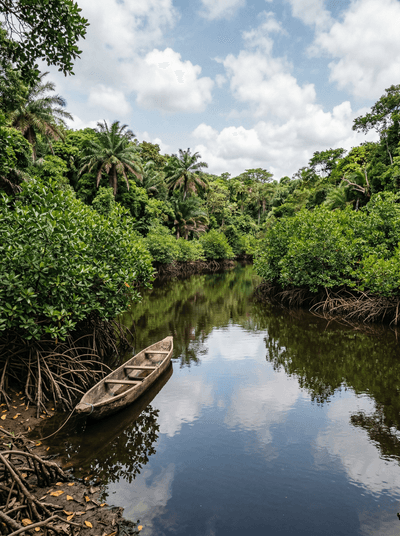
Makasutu Cultural Forest
Gambia
A forest named for Mecca: palm wine drips from the trunks, baboons patrol the floor.
Tumani Tenda
Gambia
A Jola village that owns its own tourism: every hut built and named by a family.