United States
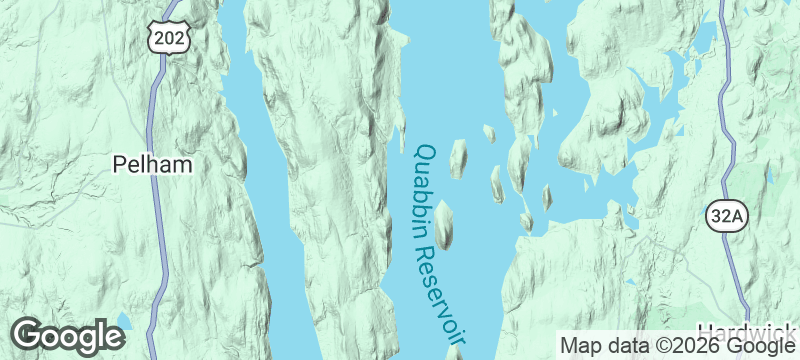
Quabbin Reservoir
Four drowned towns sleep beneath the reservoir; their dead left one hearse at a time.
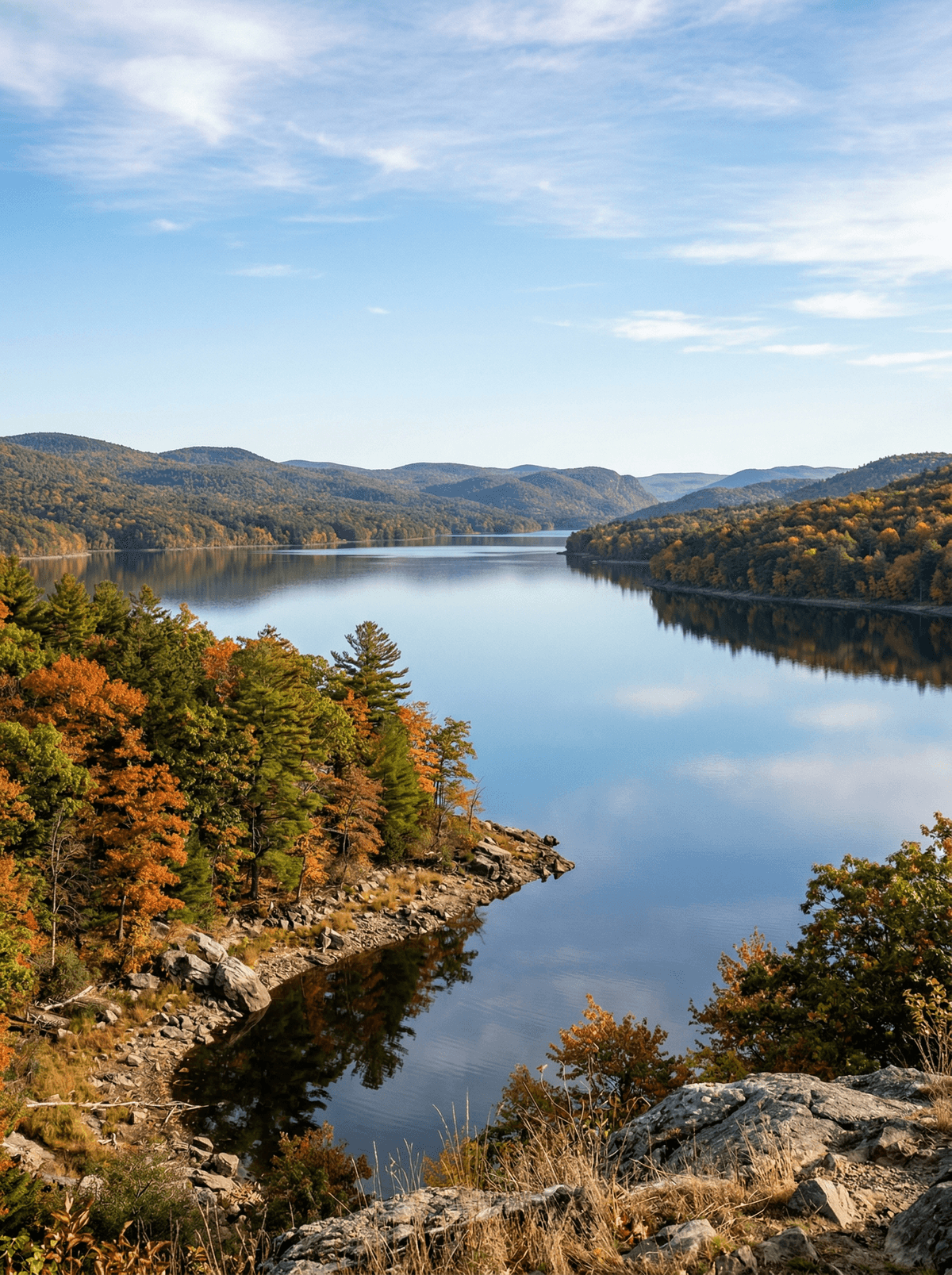
From the Enfield Lookout the water lies still all the way to forested hills, and nothing on the surface admits what happened here. Somewhere below sit the foundations of Dana, Enfield, Greenwich and Prescott, four Massachusetts towns emptied and flooded in the 1930s so that Boston could drink.
At midnight on 28 April 1938 the four towns of the Swift River Valley were lawfully dissolved, and the night before, Enfield's fire department threw a farewell ball in the town hall. Around 2,500 people were moved out, 7,600 graves were exhumed and driven to a new cemetery one hearse at a time, and the valley filled to become a 412 billion gallon reservoir covering 39 square miles. Quabbin now supplies drinking water to 2.7 million people, so the shore stays fenced, forested and close to silent, entered on foot through numbered gates. Dana Common survived above the waterline, a two-mile walk in from Gate 40, its cellar holes and shaded green still legible under the trees.
Solo
This is a landscape for people who find beauty in absence. Walk in to Dana Common alone, read the cellar holes like a text and sit a while with what one city's thirst removed.
- The four towns were dissolved at midnight on 28 April 1938, and Enfield's fire department held a farewell ball in the town hall the evening before.
- The valley's 7,600 dead were exhumed before the flooding and carried to a new cemetery individually by hearse.
- Dana Common still stands above the waterline, reached by a two-mile walk in from Gate 40, with the old town's foundations traceable around the green.
- The reservoir guards the drinking water of 2.7 million people, which keeps its 181 miles of shoreline fenced, forested and almost soundless.
Heritage-apple cider pressed at a 1700s farm in New Salem whose rows look straight down the reservoir.
A packed picnic at the designated tables above the water; the watershed has no cafés, and the quiet is the reward.
Kanton
Kiribati
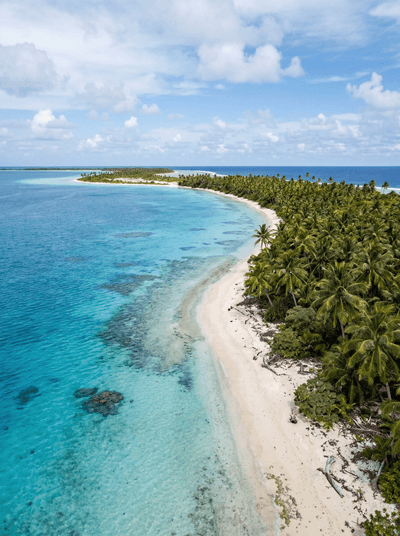
Flying-boat ruins and space-tracking relics rust beside a lagoon kept by forty-one islanders.
Fair Isle
Scotland
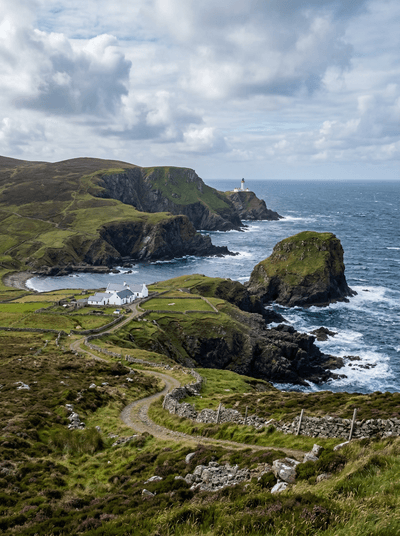
Britain's most remote inhabited island — knitwear as intricate as the bird migrations overhead.
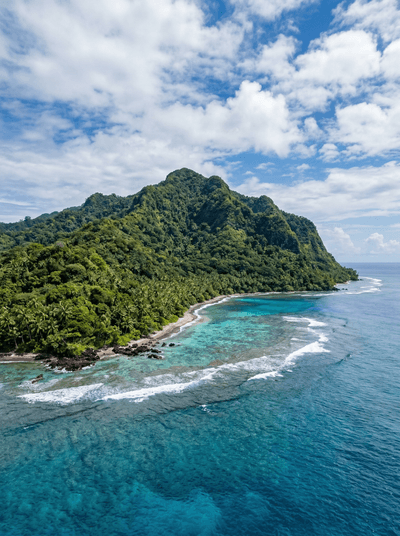
Anuta
Solomon Islands
Three hundred people, one mile of island, and a supply ship once or twice a year.
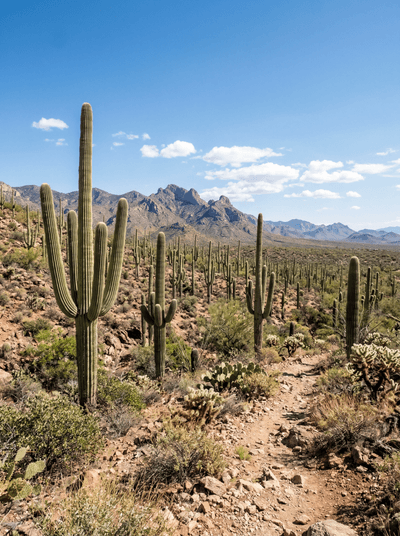
Saguaro
United States
Cathedral stands of giant cacti with arms raised, some nearly two centuries old.
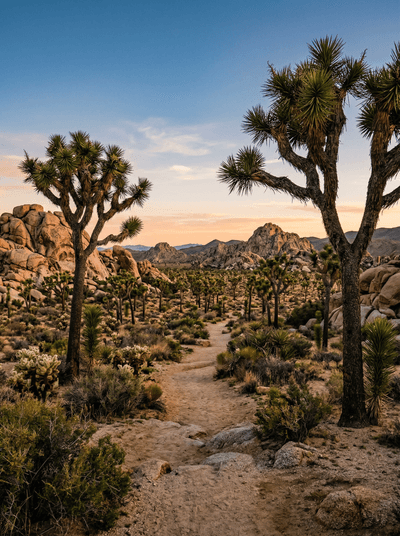
Joshua Tree
United States
Twisted trees and boulder piles under a night sky with more stars than dark space.
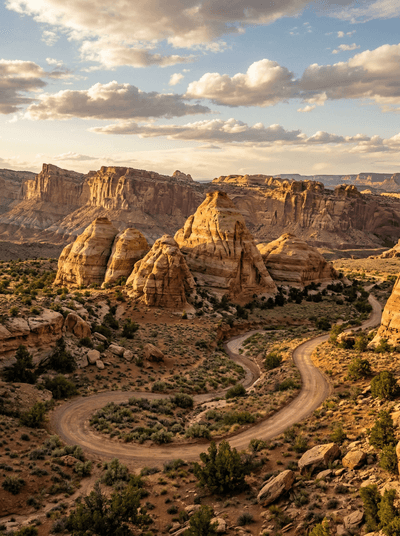
Capitol Reef
United States
Pioneer orchards still bearing fruit inside a hundred-mile wrinkle in the Earth's crust.
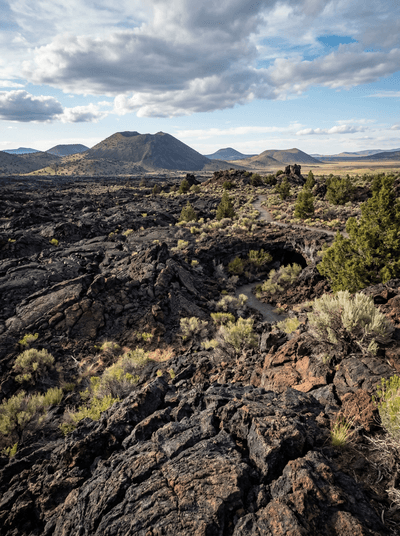
Lava Beds
United States
More than eight hundred caves, from one lit tube to permitted headlamp crawls beneath basalt.