Tanzania
Katavi National Park
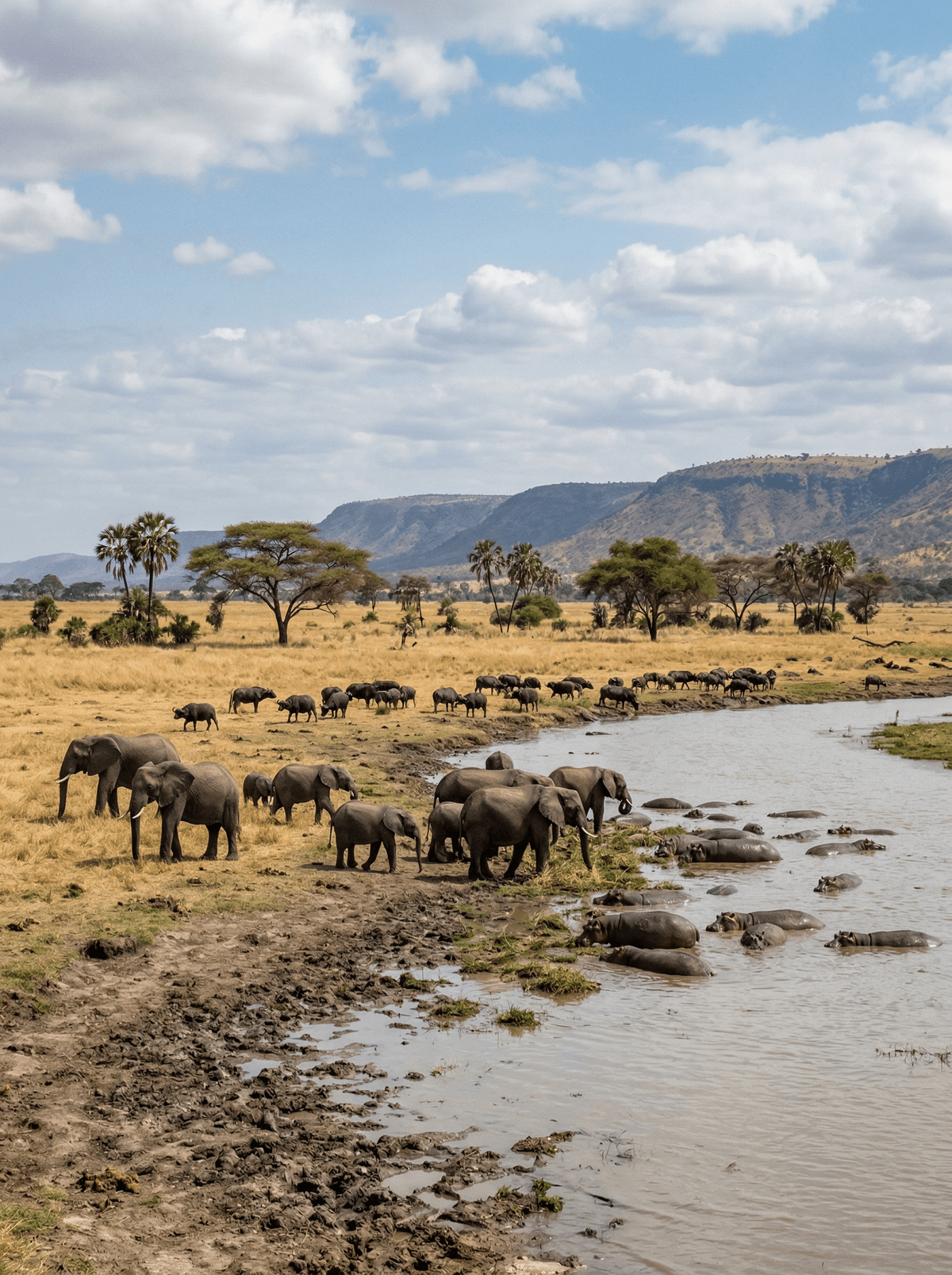
Hundreds of hippos cram the last drying pools in one of Tanzania's remotest parks.
By September the pools are shrinking and the hippos have nowhere else to go: hundreds cram into water barely bigger than they are, a heaving, honking, primal crush that no film prepares you for.
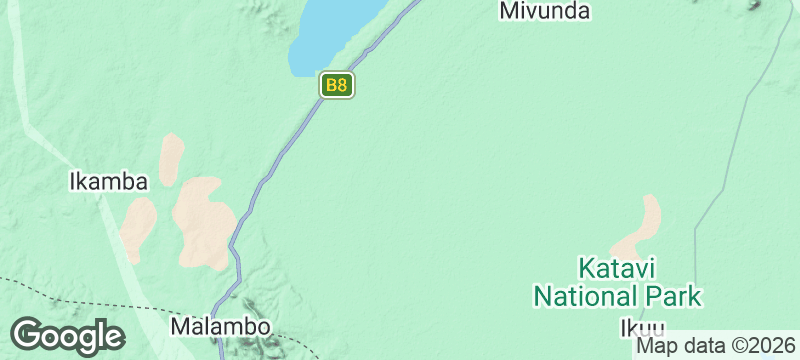
Katavi is Tanzania's remote third-largest park, most visitors arriving by light aircraft to a grass strip, and its drama is seasonal arithmetic: the Katuma river system dries between June and October, concentrating wildlife onto the last water, hippo gatherings by the hundred documented annually and buffalo herds among East Africa's largest. Services are minimal and the two or three camps cook everything, candlelit dinners and star-lit barbecues included. July to October is the window the park is built on.
Solo
Experienced solo safari travellers can value Katavi’s remoteness once air or road access and accommodation are firmly arranged.
Friends
A committed group can share the long approach and enjoy floodplain ecology without assuming dry-season crowds of wildlife.
- Drying pools cram hundreds of hippos into astonishing proximity.
- Most visitors arrive by light aircraft to a grass strip, and few arrive at all.
- Buffalo herds here count among East Africa's largest.
- The Katuma's July-to-October dry-down is the whole show's engine.
Mbali Mbali's candlelit three-course dinners come with a twice-weekly barbecue under the stars.
The camps run full board; the nearest alternative kitchen is a flight away.
Taveuni
Fiji
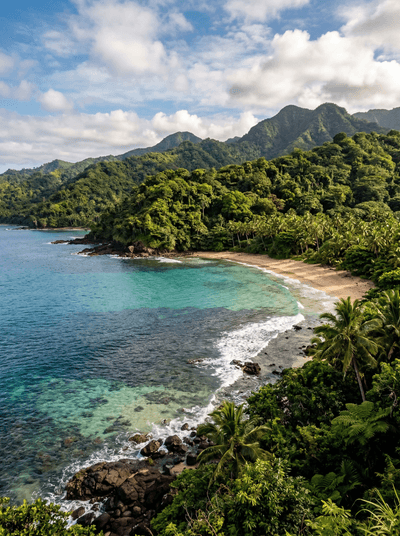
Stand astride the 180th meridian in rainforest, one foot in today, one in yesterday.
Parque Nacional Conguillío
Chile
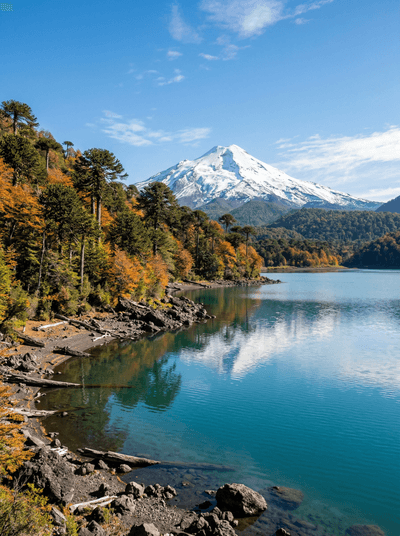
Araucaria crowns stand over black lava and clear lakes beneath Volcán Llaima.
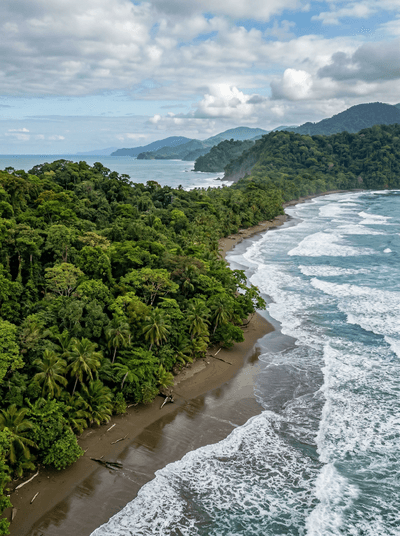
Corcovado National Park
Costa Rica
National Geographic called it the most biologically intense place on Earth. They undersold it.
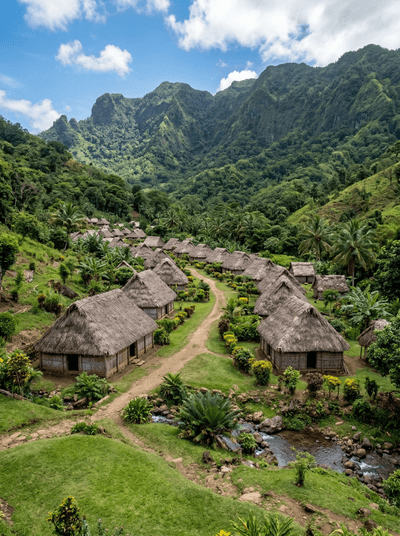
Navala Village
Fiji
Two hundred thatched bures, all built the same size, climb a valley above the Ba River.
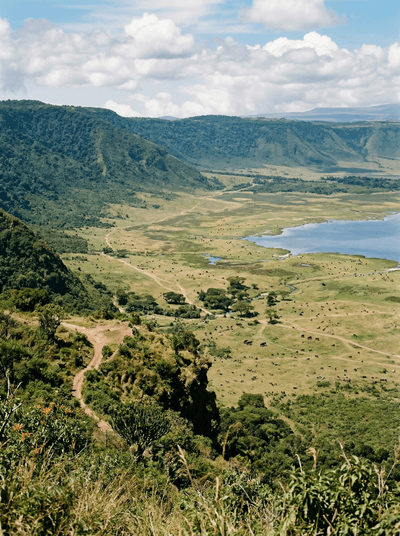
Ngorongoro Crater
Tanzania
A collapsed volcano holds its own weather, its own herds, and Maasai cattle besides.
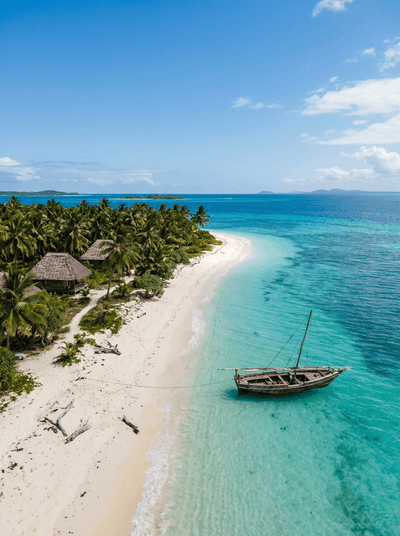
Fanjove Private Island
Tanzania
Green turtles nest beside a lighthouse whose ground floor serves dinner.
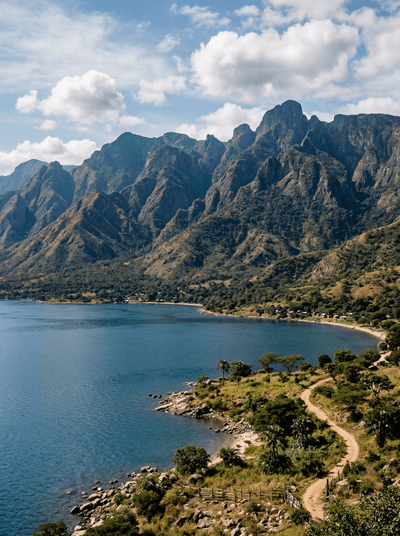
Livingstone Mountains
Tanzania
A green wall drops 1,500 metres from cold summits into a warm clear lake.
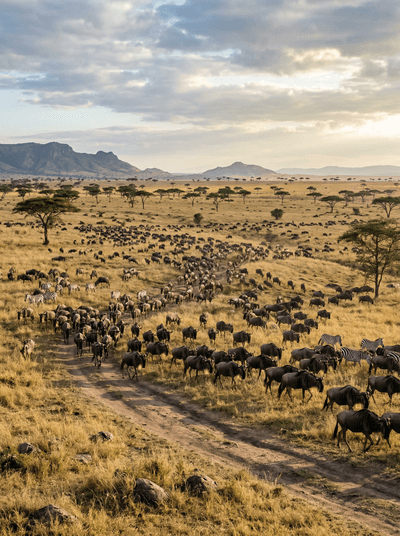
Serengeti National Park
Tanzania
Two million animals move with the rain across plains that have never known a fence.