Kyrgyzstan
Koshoy-Korgon
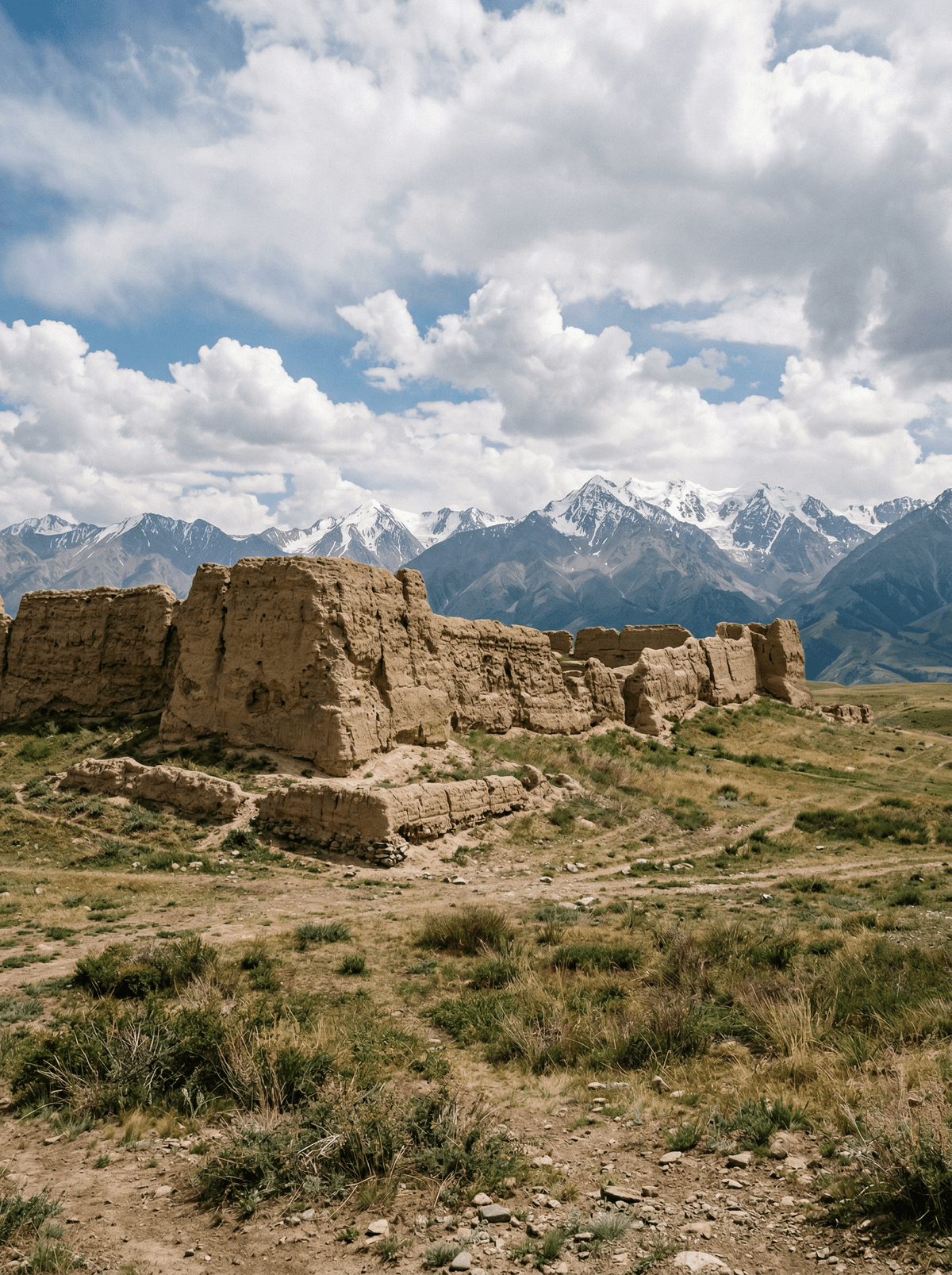
Sixty towers crumbling on a high plateau, the steppe silent around its thousand-year-old walls.
Sixty towers stand in varying stages of collapse across a raised plateau, their mud-brick walls the same colour as the steppe that extends to every horizon. Koshoy-Korgon in Kyrgyzstan's Naryn region is a fortress designed for a thousand-year lifespan, and it is roughly on schedule — still upright, still silent, still unvisited by anyone who hasn't specifically come looking for it.
Koshoy-Korgon was built by the Karakhanids in the 10th or 11th century as a garrison on the Silk Road's northern branch through what is now Kyrgyzstan's At-Bashy district. The fortress walls enclose a large compound on a raised plateau, with sixty towers spaced along the perimeter in various states of erosion. No entry fee, no guide, and no fencing restrict access — the entire fortress is freely walkable, with towers that can be climbed from inside. The plateau's isolation means the horizon in every direction is empty steppe, with no modern structures visible. The small museum beside the entrance provides context, but the ruins themselves are the primary document.
Solo
Walk the walls alone with no other visitors, no barriers, and no audio guide. Koshoy-Korgon is the rare archaeological site where the solitude matches the age — a thousand years of silence that you inherit for the afternoon.
Couple
The steppe light at golden hour turns the mud-brick walls to amber. There is nothing here but the fortress, the sky, and whoever you brought with you — an intimacy that fenced-off heritage sites cannot replicate.
- The fortress walls enclose a large area on a raised plateau — sixty towers stand in varying stages of collapse.
- Built by the Karakhanids in the 10th-11th century, it served as a garrison on the Silk Road's northern branch.
- No entry fee, no guide, no fencing — the entire fortress is freely walkable, with towers you can climb from inside.
- The plateau's isolation means the horizon in every direction is empty steppe — no modern structures interrupt the view.
Tea and fresh bread at the small museum beside the ruins.
Kuurdak stew in At-Bashy village — chunks of mutton and liver fried crisp.
Loiyangalani
Kenya
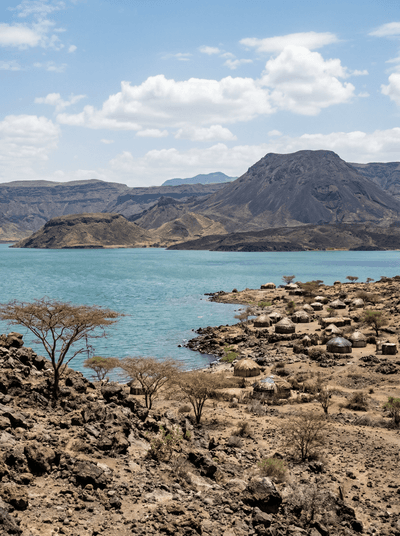
Four tribes meet at a windswept settlement where the desert ends and the Jade Sea begins.
Hîncești
Moldova
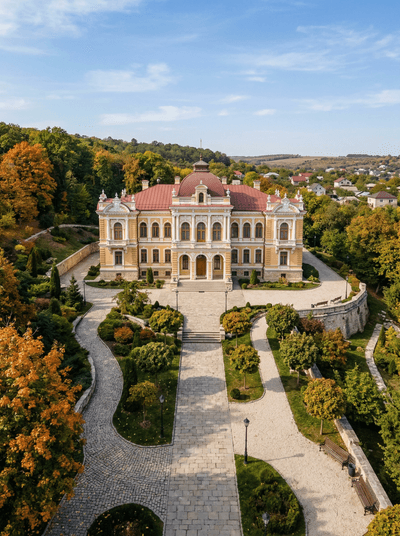
An Armenian merchant prince's crumbling estate — ballrooms open to the sky, filling with ivy.
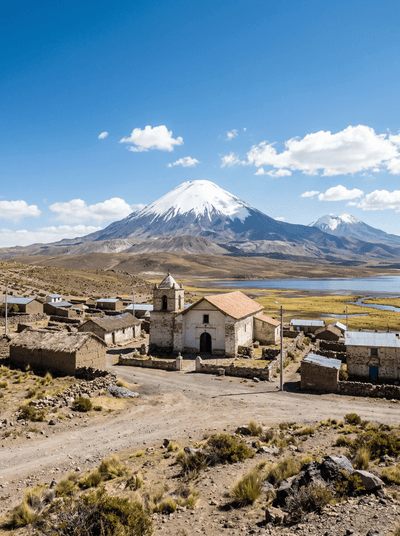
Parque Nacional Lauca (Parinacota Village)
Chile
A 17th-century Aymara church alone on the altiplano, twin volcanoes framed behind its bell tower.
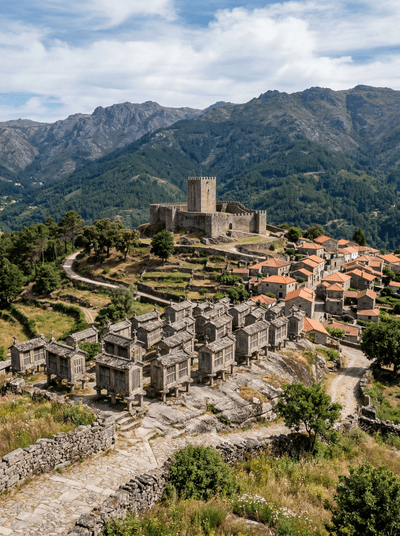
Lindoso
Portugal
Sixty granite granaries cluster like tiny temples beneath a castle on the Spanish border.
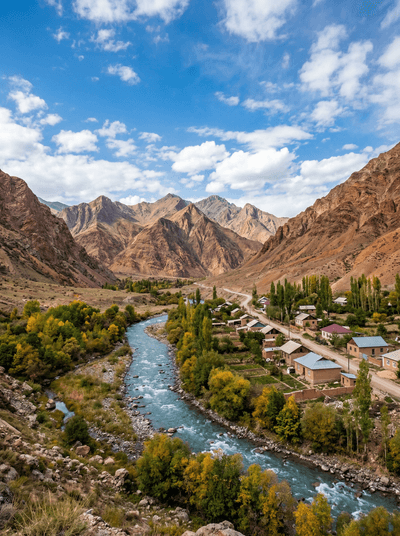
Kyzyl-Oi
Kyrgyzstan
A Silk Road village inside a red-rock canyon, one of the few settlements predating Soviet collectivisation.
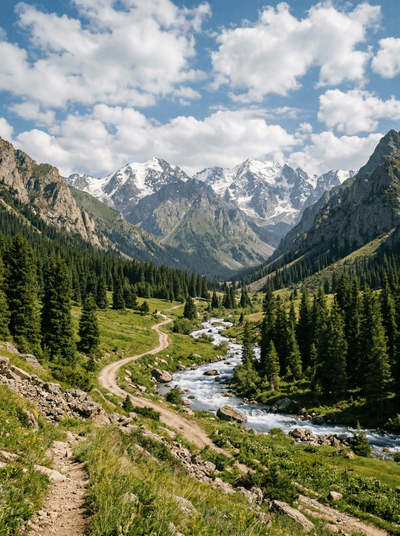
Padysha-Ata
Kyrgyzstan
Sacred juniper forests where pilgrims tie cloth to ancient trees at a mountaintop mazar shrine.
Sary-Chelek
Kyrgyzstan
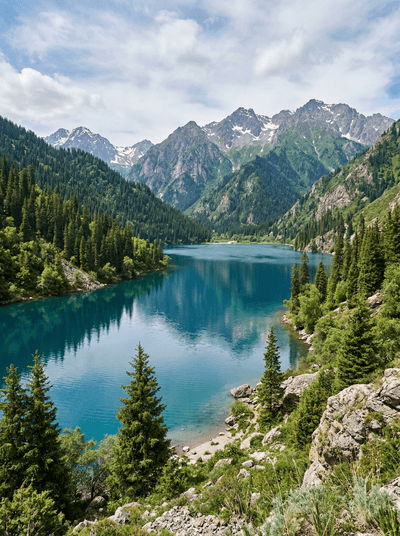
A UNESCO biosphere lake 245 metres deep in walnut forests where snow leopards still hunt.
Sary-Mogol
Kyrgyzstan
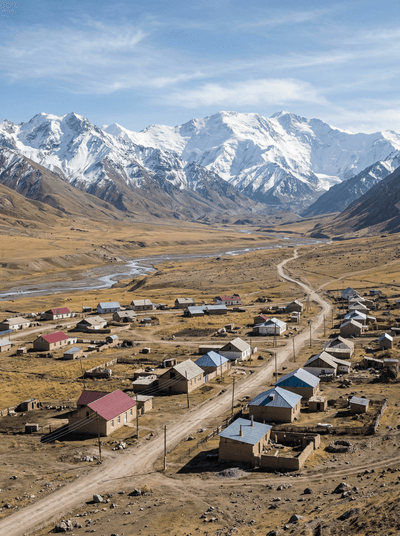
Every guesthouse window frames a 7,134-metre wall of ice — the village sits at 3,100 metres.