Kenya
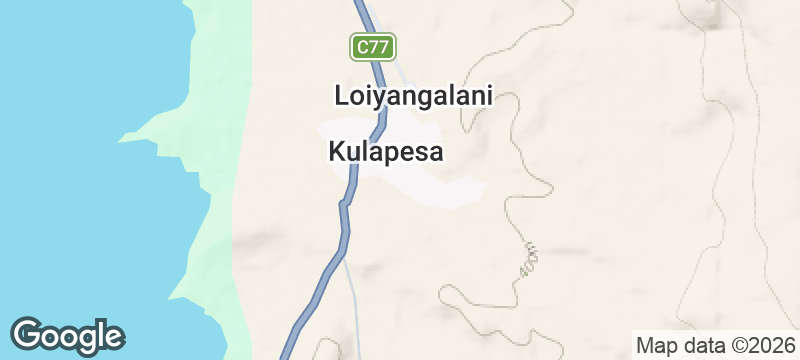
Loiyangalani
Four peoples meet at a windswept settlement where the desert ends and the Jade Sea begins.
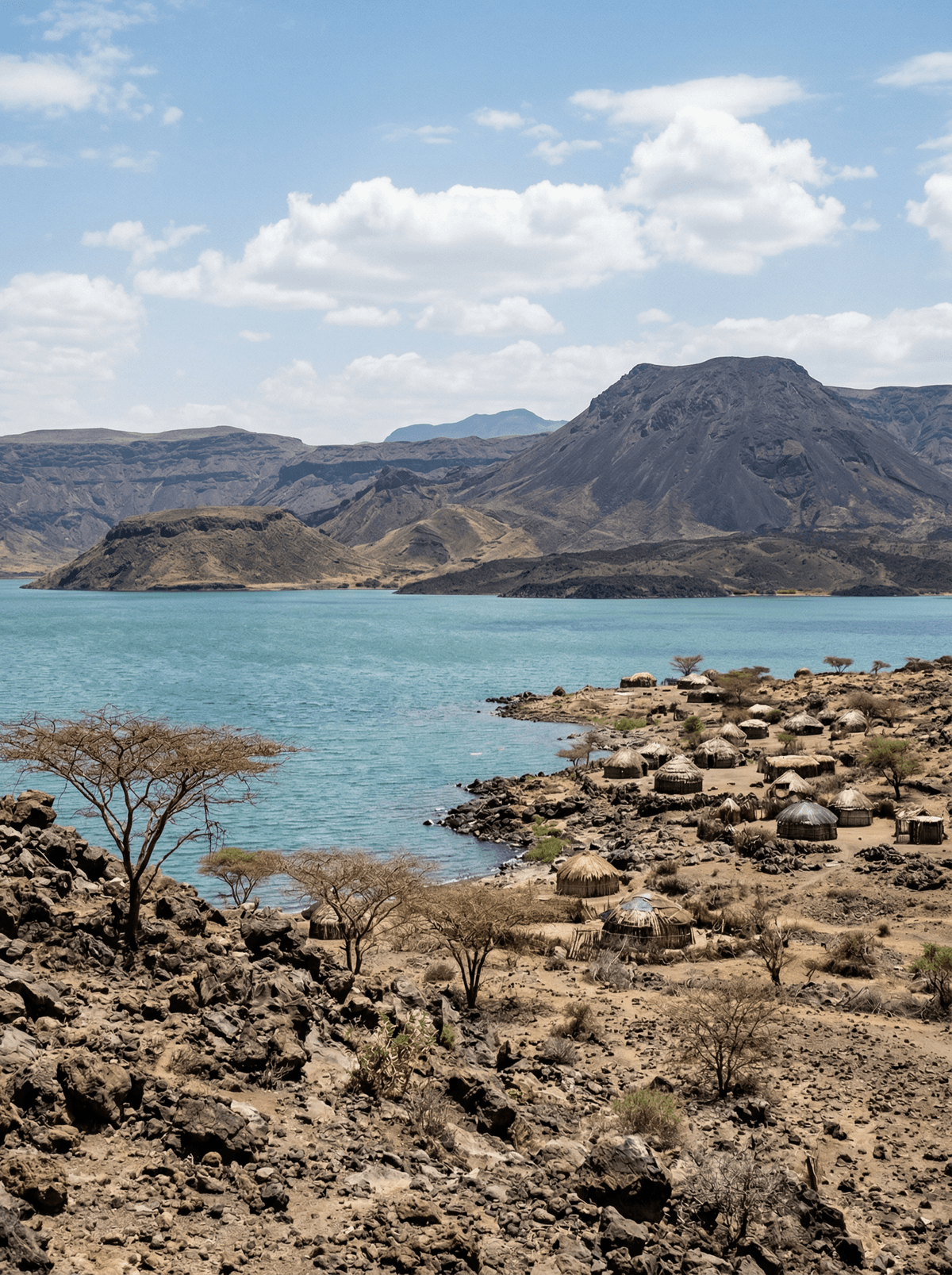
Wind hits first — constant, sand-carrying, warm. Then the lake appears, impossibly green against the desert brown, and the settlement's low roofs resolve from the haze. Loiyangalani sits where the Chalbi meets Lake Turkana: four distinct peoples sharing one water source and remarkably little else.
Loiyangalani — 'place of many trees' in Samburu, a name its palms only half honour now — is the cultural crossroads of Turkana's south-eastern shore, where Turkana, Samburu, Rendille and El Molo lives interleave. The El Molo, among the smallest peoples in Africa with fewer than a thousand members, still fish the alkaline water from doum-palm rafts in their nearby villages. The hilltop Desert Museum sets the basin's peoples and geology in order. Most days the wind does the talking, spring water feeds the palms, and the jade lake changes colour all day.
Solo
Raw encounter — El Molo fishing villages, Turkana herding life and jade water shifting colour through the day: the far north at its rawest.
Couple
A frontier town of palm springs and lakeshore silence — sunsets over the Jade Sea with conversation as the only programme.
- Four peoples — Turkana, Samburu, Rendille and El Molo — share one desert-edge settlement.
- The El Molo, fewer than a thousand strong, still fish Turkana's alkaline water from their villages nearby.
- Spring-fed palms keep the settlement alive between the desert and the alkaline lake.
- A hilltop Desert Museum reads the basin's peoples and deep geology in one sweep.
Grilled tilapia from the Jade Sea, eaten with the wind as seasoning.
Sweet chai in a palm-shade hoteli while camel bells pass outside.
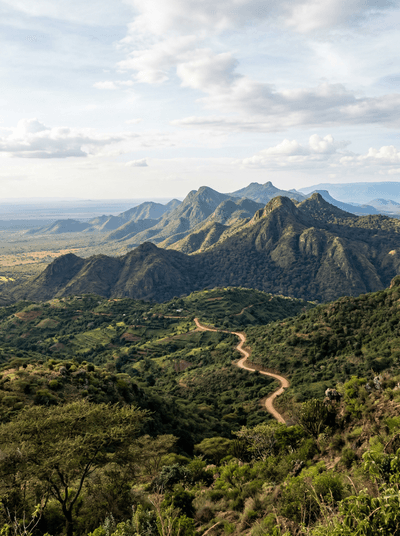
Taita Hills
Kenya
Mist clings to forest fragments where birds that exist only here still sing.
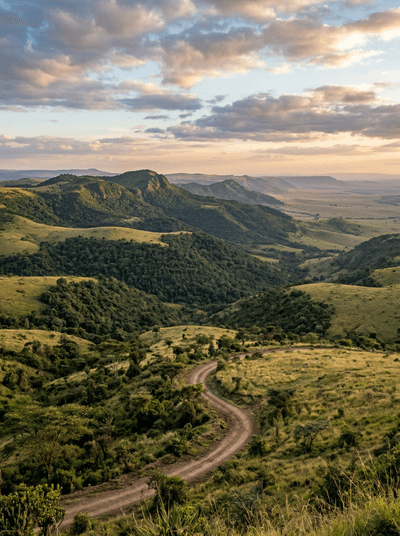
Loita Hills
Kenya
Cattle outnumber cars a thousand to one in hills where Maasai life sets the terms.
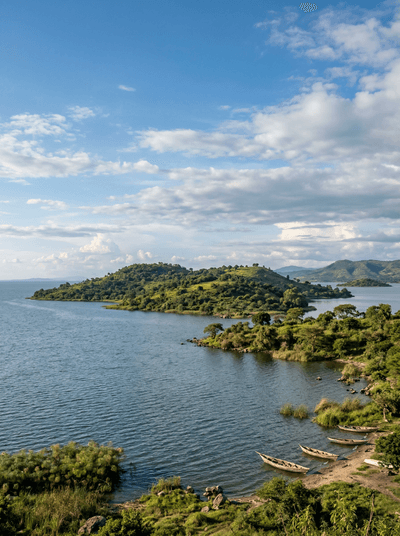
Rusinga Island
Kenya
A fossil island in Lake Victoria where 18-million-year-old apes were unearthed from shoreline rock.
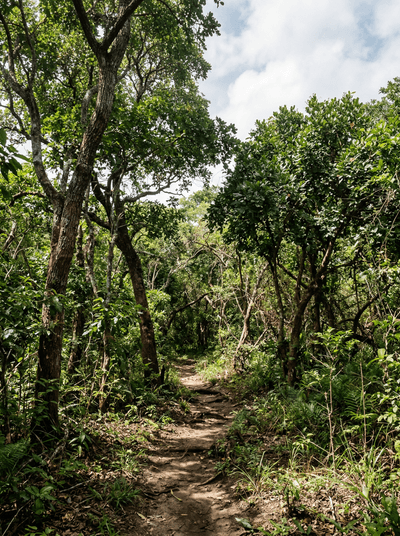
Arabuko-Sokoke Forest
Kenya
East Africa's largest coastal forest shelters the golden-rumped sengi — and nothing else does.