Tanzania
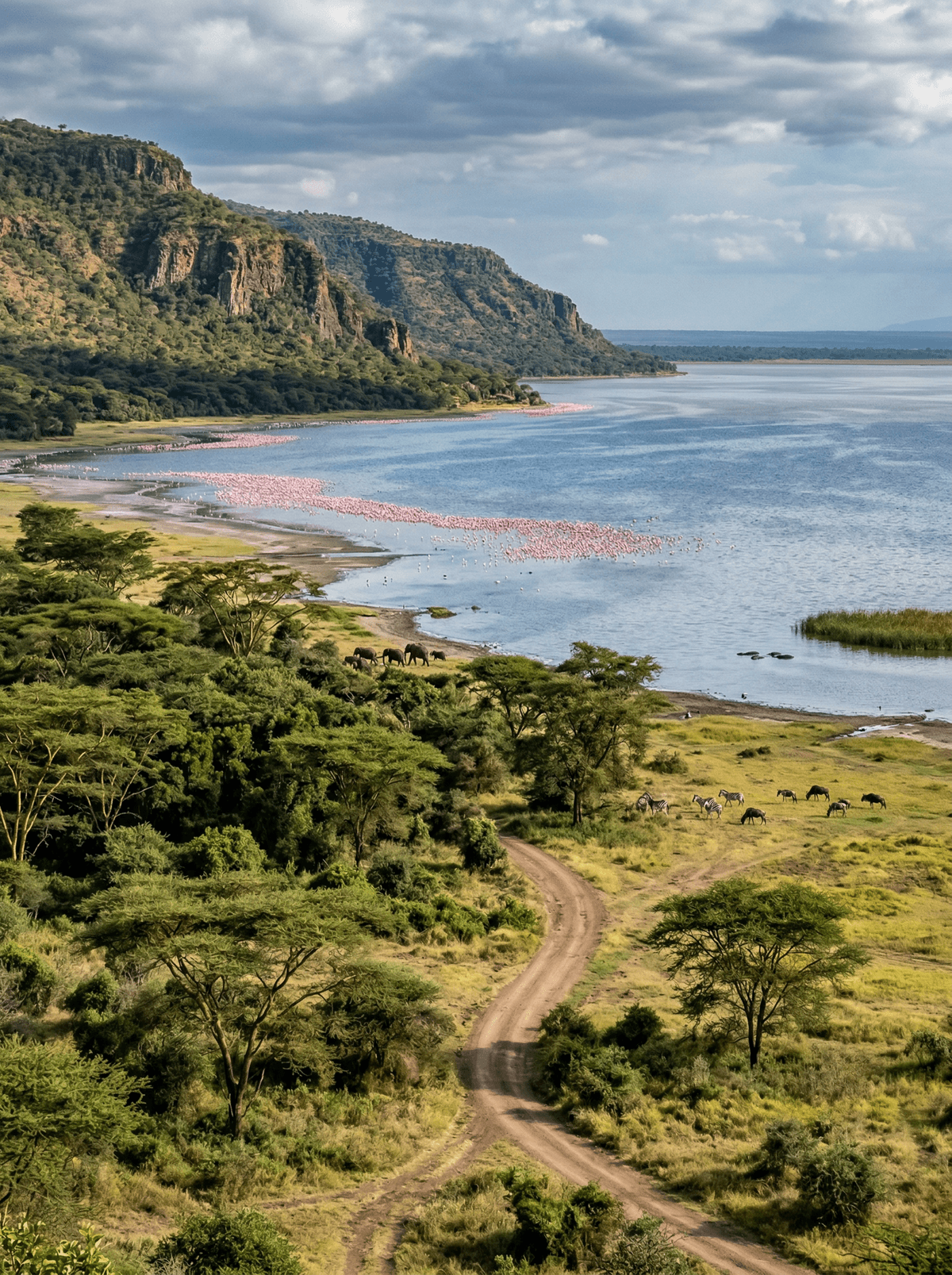
Lake Manyara National Park
The lions of Manyara climb trees, a habit almost nowhere else on Earth.
The lions here climb trees, draping themselves through acacia branches in one of only two places in Africa where the behaviour is documented. Below them the park runs forest to alkaline shore in a single narrow strip.
Manyara compresses five vegetation zones into a strip beneath the Rift wall, groundwater forest giving way to acacia woodland and the alkaline lake, and its lions are famous for sleeping in the trees, a habit documented in only one other African population. Flamingos mass on the water chiefly in the wetter months, the mid-year dry months serve the mammals best, and the Mto wa Mbu lodges on the circuit's edge grill nyama choma and pack fresh picnics for the drives.
Couple
A pair can move from forest to lakeshore and add the canopy walk, leaving flamingos and lions to chance.
Family
Manyara’s compact habitat changes suit families who want variety without promising children a specific species.
- Manyara's tree-climbing lions are one of only two documented populations.
- Five vegetation zones compress into one narrow strip beneath the Rift wall.
- Flamingos mass on the alkaline water in the wetter months.
- The park drives well in half a day, which the circuit's schedules love.
Suricata Boma at Mto wa Mbu grills nyama and mboga choma off the coals.
Mawe Mawe packs fresh picnics for the park drives.
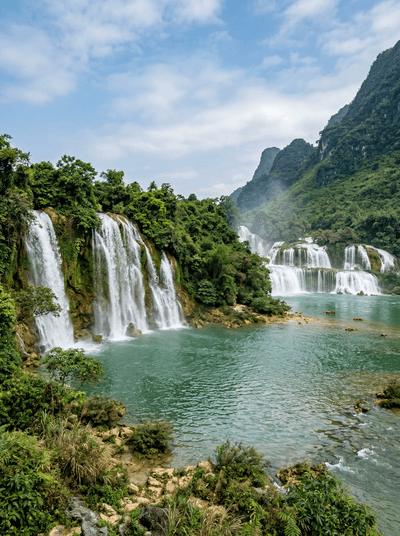
Ban Gioc
Vietnam
A multi-tiered waterfall thundering across an international border into jade-green pools.
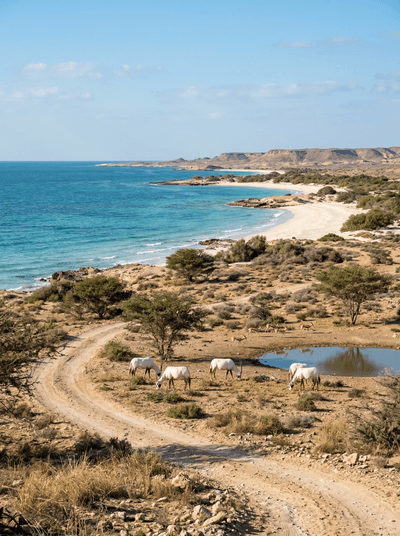
Sir Bani Yas Island
United Arab Emirates
A year after the first oryx arrived here, the species went extinct in the wild.
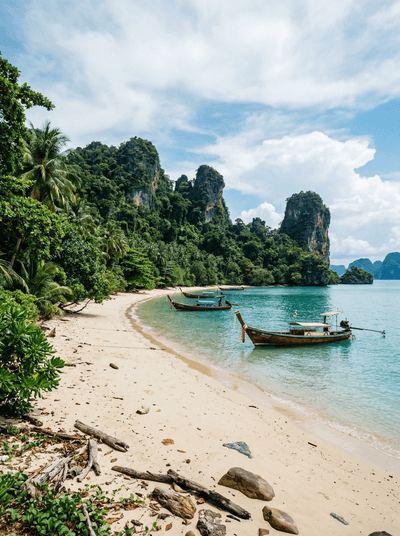
Koh Yao Noi
Thailand
Hornbills swoop over rubber plantations while limestone karst towers slice the horizon in half.
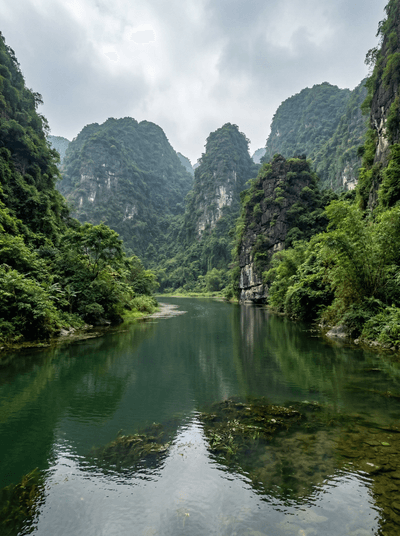
Trang An
Vietnam
Sampans paddled by foot through flooded caves beneath vertical limestone monoliths.
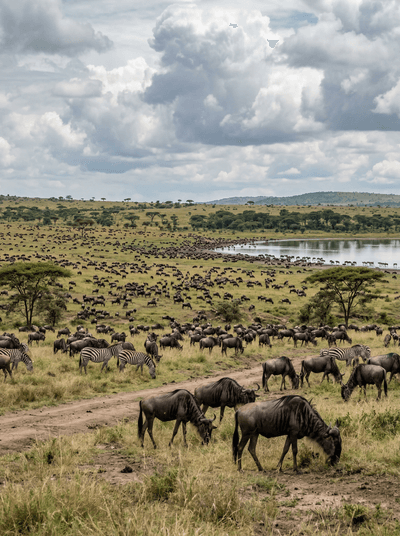
Ndutu
Tanzania
Half a million wildebeest are born onto open grass in a few short weeks.
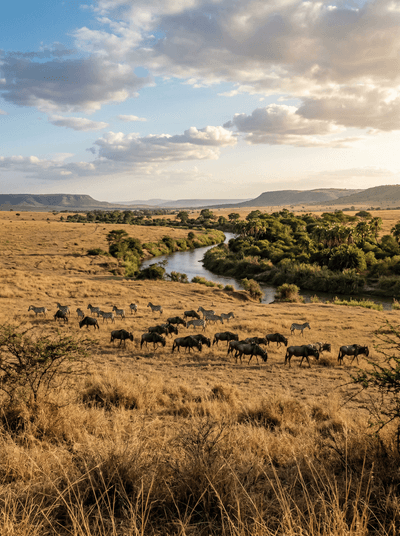
Grumeti Reserves
Tanzania
Five-metre crocodiles hold the river crossing where the western migration must pass.
Karatu
Tanzania
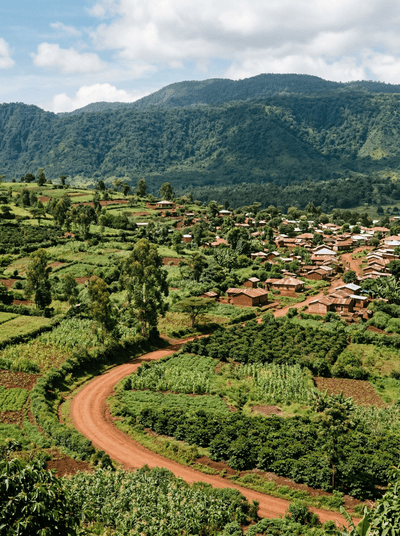
Thirty acres of arabica roast by hand at the crater's doorstep.
Ruaha National Park
Tanzania
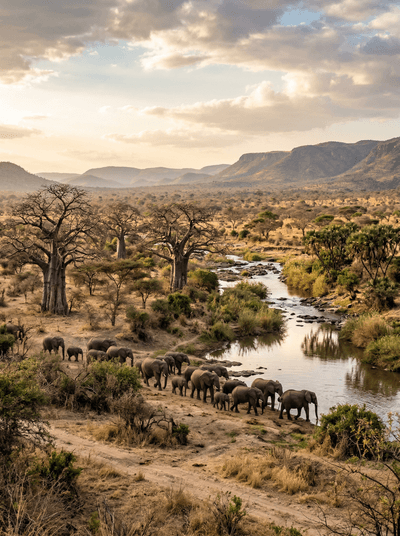
Wild dogs and buffalo-hunting lions share baobab country the crowds never reach.