France
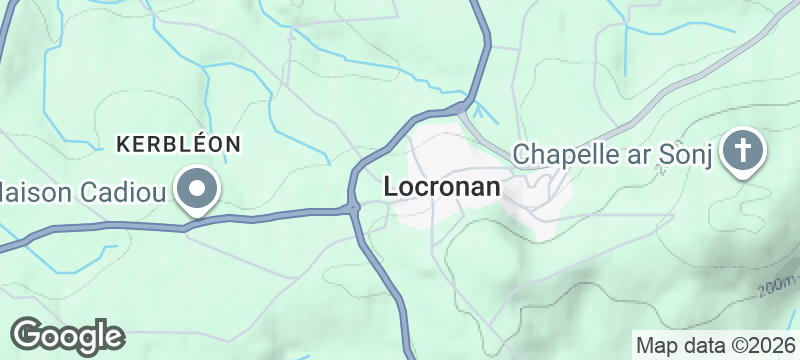
Locronan
A granite village frozen in its sailcloth-weaving prime, where the seventeenth century never left.
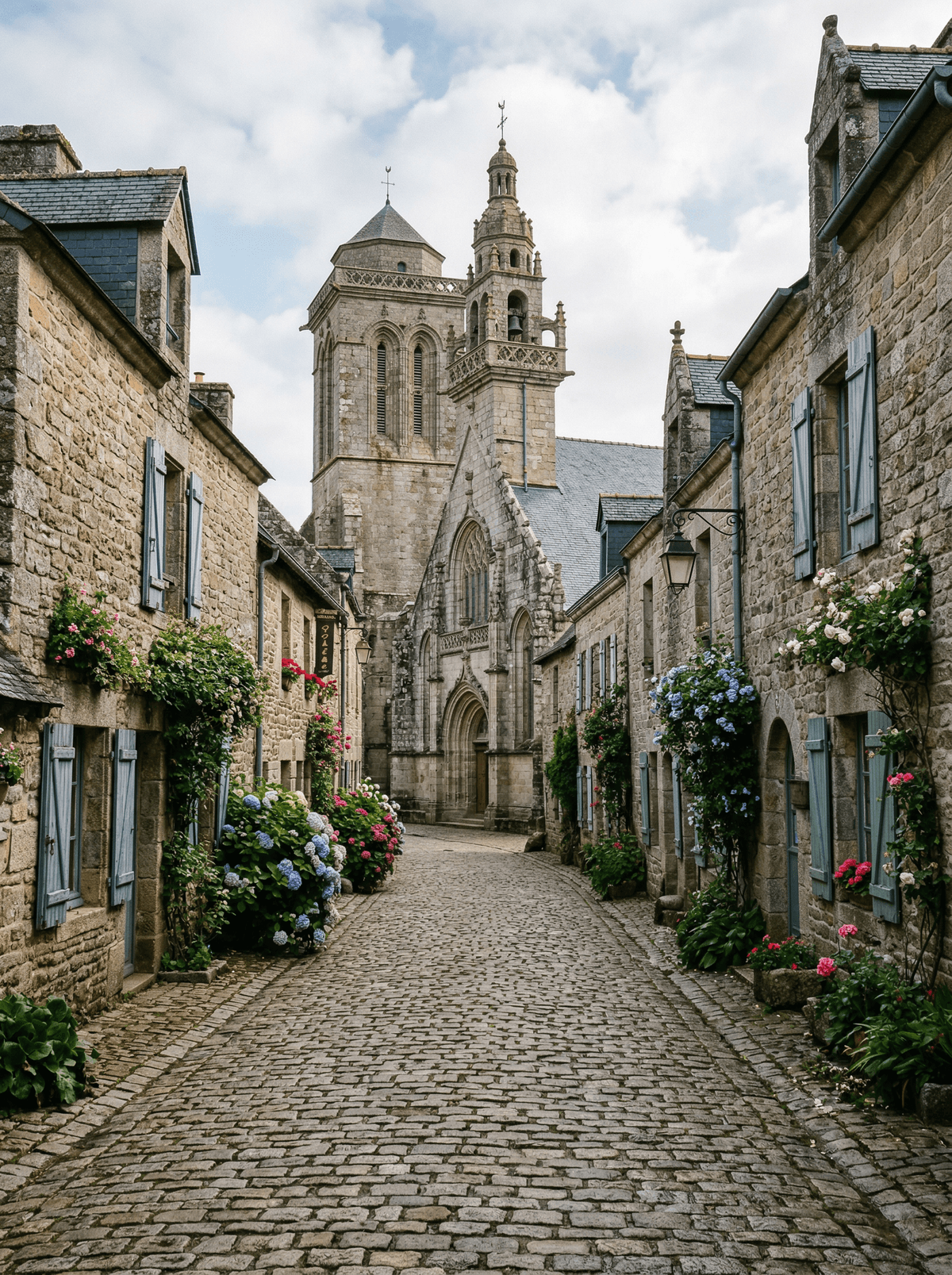
The granite glows silver when it rains and gold when the sun breaks through. Locronan, in France's Brittany, is a village that changes character with the weather, every stone façade responding to the light like a sundial built at village scale — no power lines, no modern shopfronts, no anachronisms. The seventeenth century left and forgot to send for its architecture.
Locronan has been protected as a historic monument since 1924, and it wears the labels of Petite Cité de Caractère and Plus Beau Village de France without straining: a square of granite merchant houses around a fifteenth-century church, built on the money of the weavers whose sailcloth rigged the ships of the French navy and the trading companies. The church of Saint-Ronan, named for the Irish hermit who settled the hill, holds a carved pulpit telling his life panel by panel, and every six years the Grande Troménie sends thousands of pilgrims round a twelve-kilometre circuit of the parish bounds in a procession older than the village's fame. Film crews come here to shoot the past because nothing has to be hidden, and the museum keeps the weaving story. Beyond the last house the Finistère opens towards the Crozon peninsula.
Solo
Locronan in rain is better than most villages in sun. The wet granite glows, the square reflects the church, and the absence of anything modern makes the whole village feel like a set.
Couple
The square on a quiet morning — coffee at a granite table, the church rising behind, the granite glowing. Locronan makes two people talk in lowered voices out of respect for the silence.
- The whole village has been protected as a historic monument since 1924 — no modern intrusions, no power lines, no anachronisms.
- Granite buildings glow silver in rain and gold in sun — the village changes character with the weather.
- The church of Saint-Ronan holds a carved pulpit with the saint's life panel by panel — every panel a story.
- Film crews use Locronan to shoot the past — it has doubled for old France in production after production.
Kig ha farz — the Breton pot-au-feu with a buckwheat pudding steamed in a cloth bag alongside the meat.
Kouign-amann from the village boulangerie — dense, golden, layered with butter and sugar, almost obscenely rich.
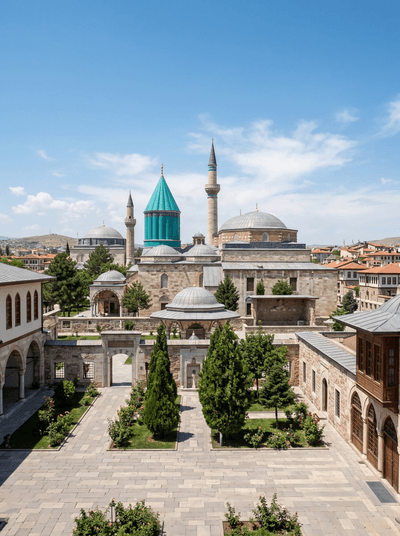
Konya
Turkey
Whirling dervishes spin in silent trance in the city that keeps Rumi's turquoise-tiled tomb.
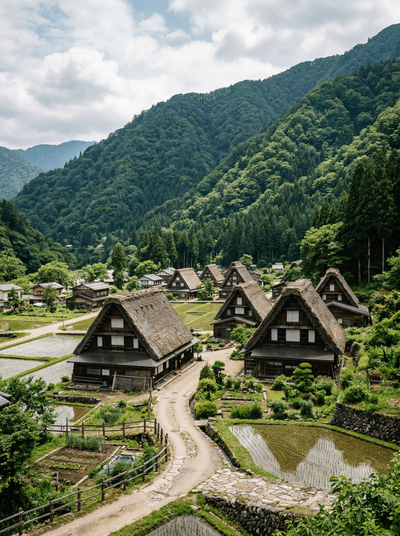
Gokayama
Japan
Thatched farmhouses like praying hands, where a secret gunpowder trade once hid in the snow.
Murakami
Japan
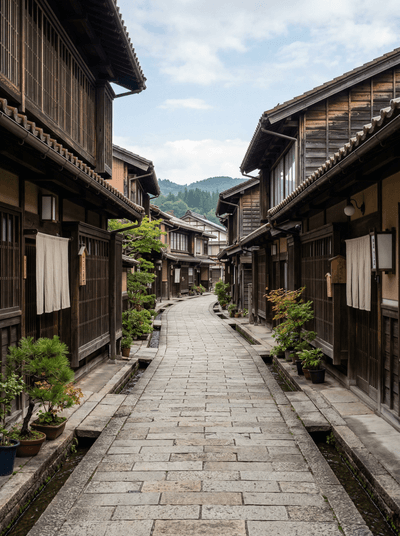
Salmon hanging by their tails from the eaves of old houses, the air salt-sweet and amber.
Tsuwano
Japan
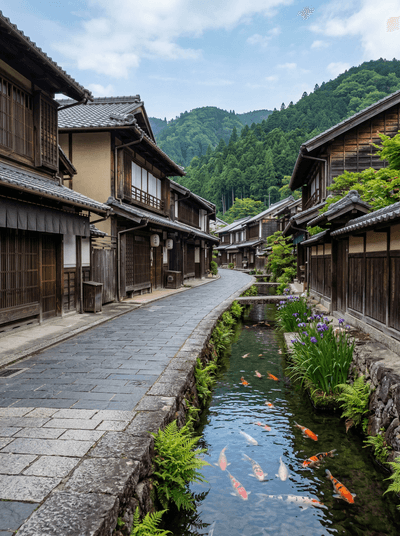
Koi swimming through the stone-lined gutters of a valley town the modern world forgot.
Collioure
France
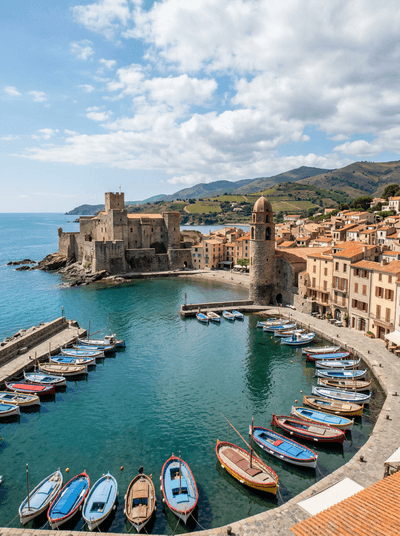
Matisse's fishing port, where the light bends colour until red boats glow against violet water.
Honfleur
France
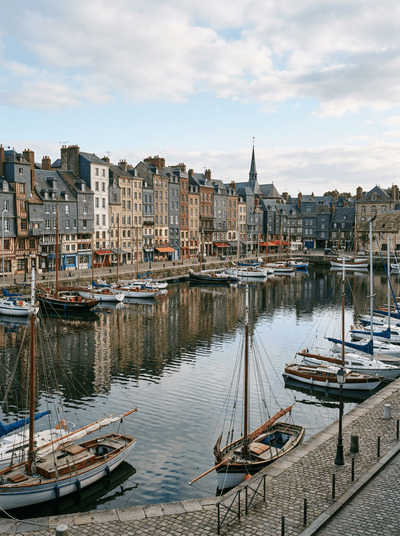
Slate-fronted houses mirrored in a harbour that taught the Impressionists how light works.
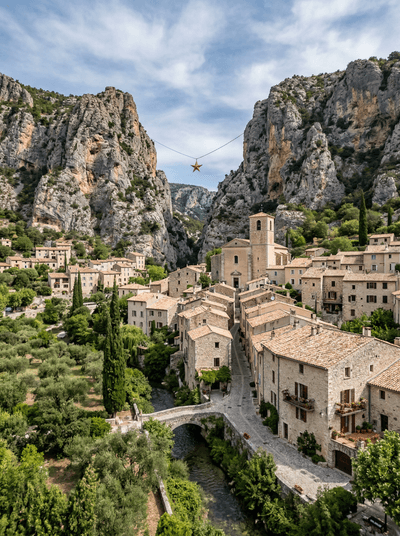
Moustiers-Sainte-Marie
France
A gold star on a chain slung between two cliffs above a village of faïence painters.
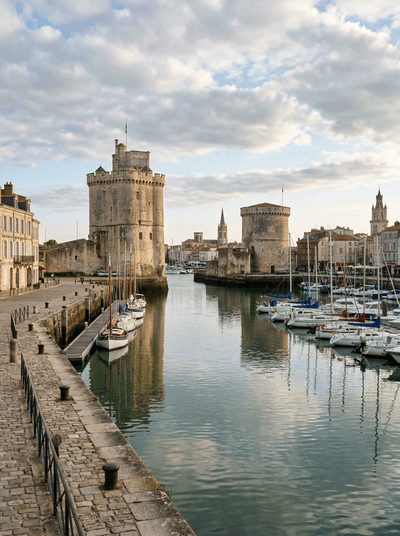
La Rochelle
France
Medieval towers guarding a harbour mouth where a chain once locked out the sea each night.