Kenya
Loita Hills
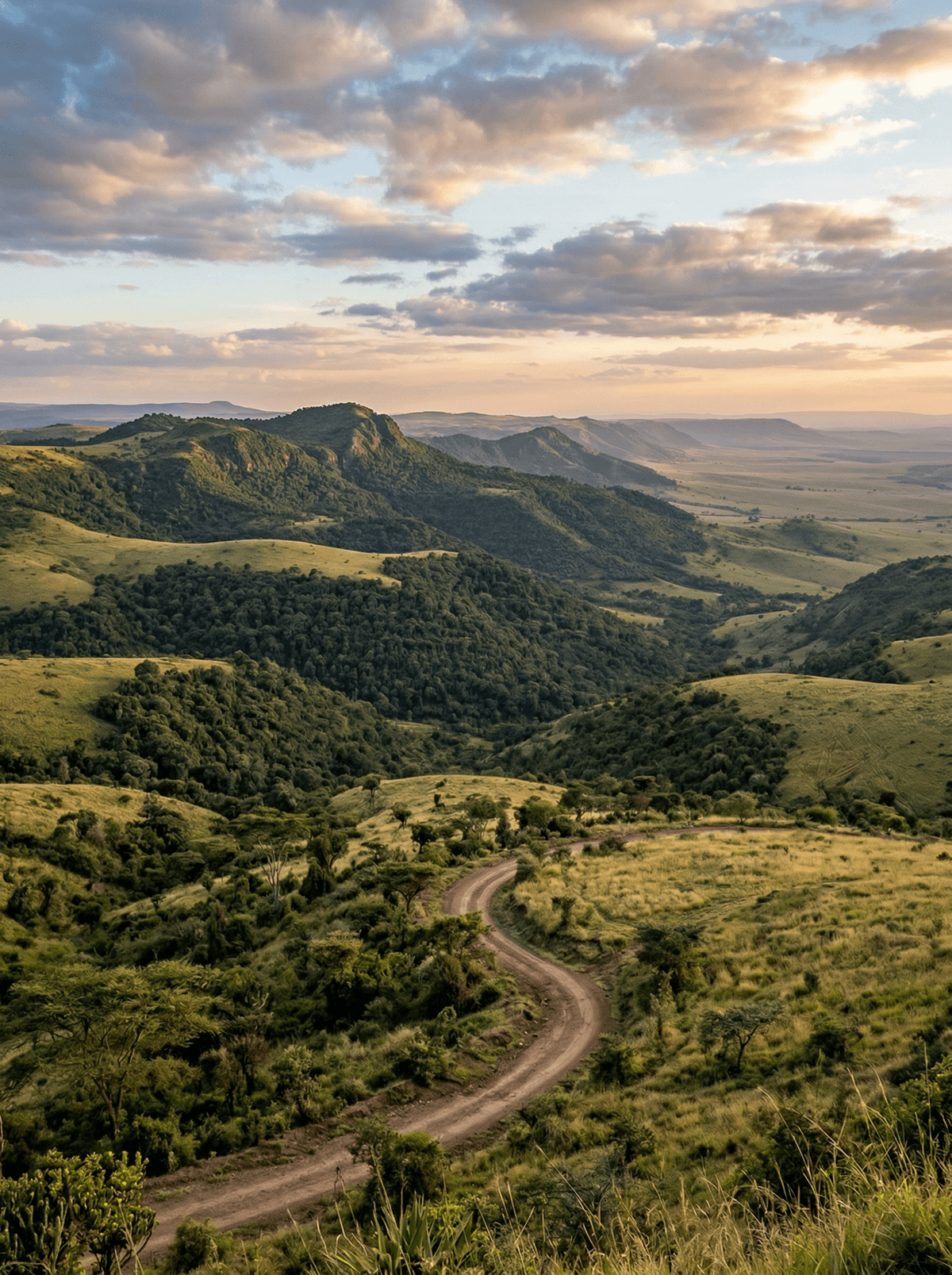
Cattle outnumber cars a thousand to one in hills where Maasai life sets the terms.
The morning smells of woodsmoke and cattle. Paths worn by generations of herds lead through the grass toward a forest whose ceremonies are not for outsiders to schedule. There are no lodges here, no signposts. The hills belong to the Loita Maasai, and visitors enter on their terms.
The Loita Hills rise south-east of the Mara, forested highland that the Loita Maasai community has deliberately kept outside commercial tourism. At their heart stands the Naimina Enkiyio — the Forest of the Lost Child — a sacred landscape where laibon spiritual leaders hold ceremonies and initiations that remain closed to visitors; its name alone carries a story mothers still tell. What is shared is the walking: community-arranged treks follow cattle paths between manyattas, seasonal springs and medicinal-plant grounds, with nights in simple bush camps arranged with the community. Nothing here is packaged, and that is the entire point — this is Maasai pastoral life met as a guest, not consumed as a product.
Solo
For travellers comfortable with uncertainty — no fixed itinerary, no amenities, just immersion in a life older than tourism.
Couple
Walking Maasai country together and sleeping in bush camps — intimacy no lodge can copy.
- The sacred Naimina Enkiyio forest — the Forest of the Lost Child — anchors a living ceremonial landscape.
- The Loita Maasai have deliberately kept the hills outside the commercial tourism economy.
- Treks cross Loita grazing country — cattle remain the hills' real economy.
- The Loita arrange access themselves — and have kept mass tourism out.
Milk from the herds anchors Maasai foodways in these hills.
Meat roasted over open coals marks Maasai celebration — the everyday is milk, maize and greens.
Mawphlang
India
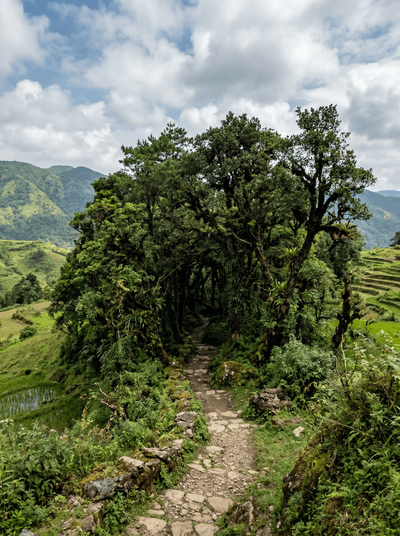
Sacred groves where thick moss absorbs all sound and removing a single leaf is taboo.
Calakmul
Mexico
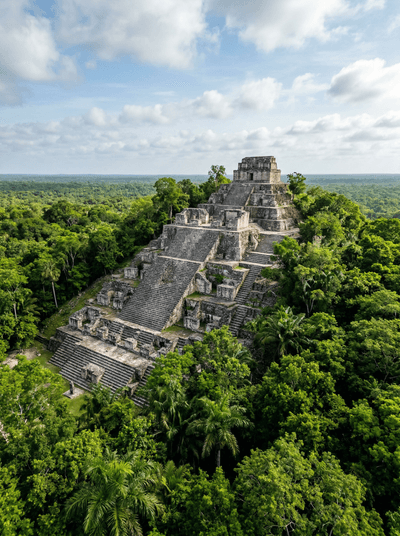
A Maya capital's towers still stand above an unbroken sea of forest.
Hermitage Castle
Scotland
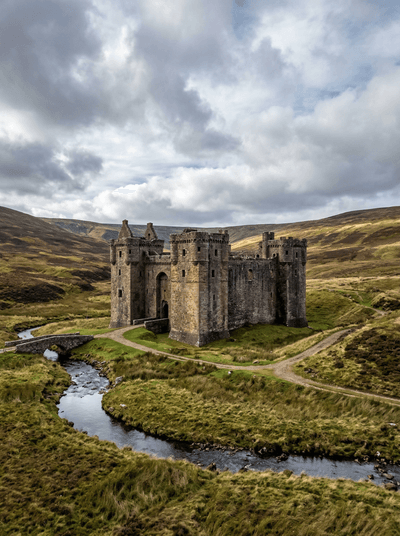
The most sinister castle in Scotland squats alone on moorland that remembers its cruelty.
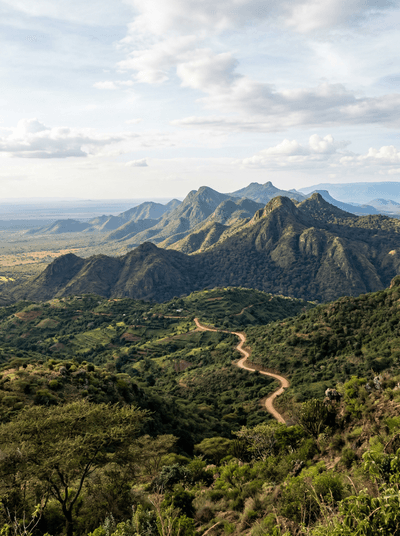
Taita Hills
Kenya
Mist clings to forest fragments where birds that exist only here still sing.
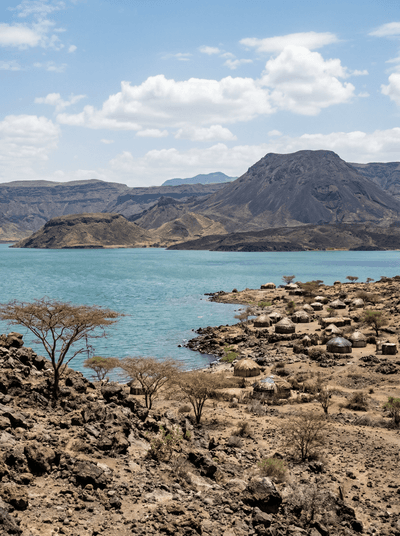
Loiyangalani
Kenya
Four peoples meet at a windswept settlement where the desert ends and the Jade Sea begins.
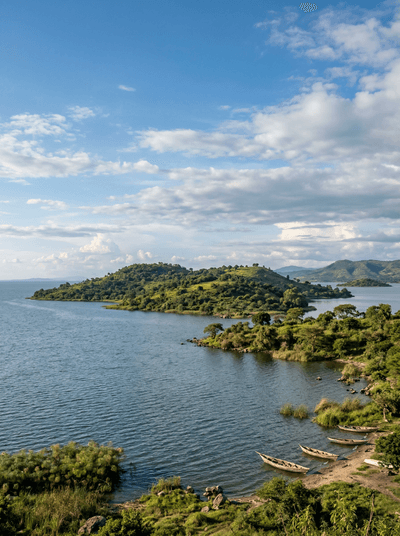
Rusinga Island
Kenya
A fossil island in Lake Victoria where 18-million-year-old apes were unearthed from shoreline rock.