Greece
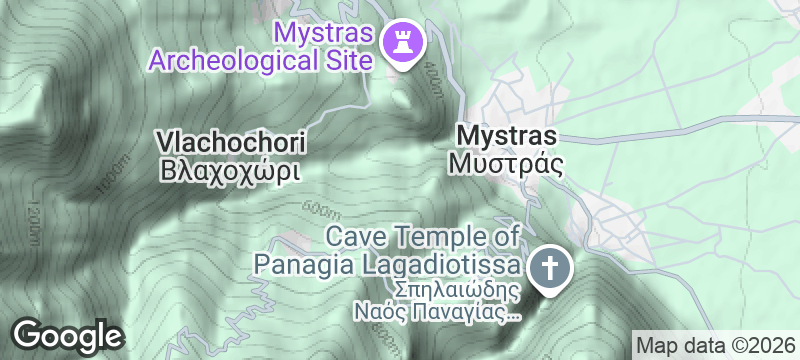
Mystras
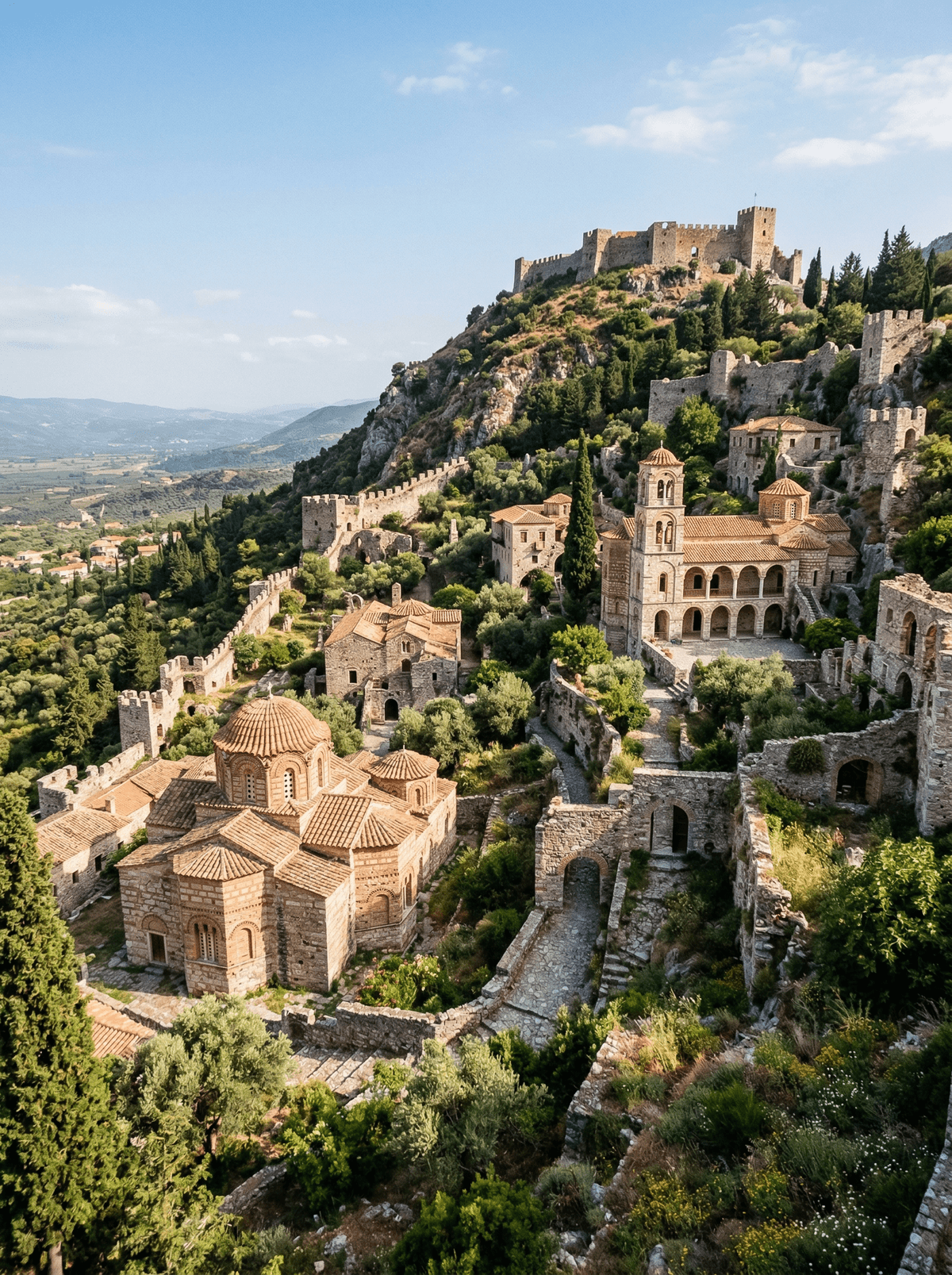
A Byzantine ghost city of frescoed churches crumbling down a hillside above the Spartan plain.
The ruined city climbs the hillside in terraces of roofless churches, crumbling palaces, and cobbled lanes that lead upward through arched gateways into silence. Frescoes in ultramarine and ochre still cover the interior walls of churches that have stood open to the weather for two centuries, and from the upper citadel the Spartan plain stretches flat and green to the horizon.
Mystras served as the capital of the Despotate of Morea — the last Byzantine domain in the Peloponnese — from 1348 until its fall to the Ottomans in 1460. The philosopher Gemistos Plethon taught here and later influenced the Florentine Renaissance through his writings on Plato. The site contains over twenty churches retaining original frescoes, many in good condition despite centuries of exposure. The city was abandoned in 1832 when its population was relocated to the newly built town of Sparta on the plain below, and it has remained uninhabited since — except for the Pantanassa convent, where a small community of nuns maintains the 15th-century church and its frescoes. The hillside setting means the site involves significant climbing on uneven stone paths.
Solo
A ghost city of Byzantine frescoes and crumbling palaces — hours of quiet exploration on stone paths with almost no other visitors midweek.
Couple
Wander the terraced ruins as the day fades, when the frescoes catch the late sun and the Spartan plain glows below — stay in Sparta or a Mystras guesthouse.
- Plethon taught Plato here to the last Byzantines — and through them, Florence.
- More than twenty churches keep original frescoes in ultramarine and ochre.
- The 1832 abandonment left a complete medieval city with no modern town inside it.
- The Pantanassa convent is still inhabited — the nuns sell embroidery and keep the site's one living voice.
Laconian oranges so juicy they stain your shirt, bought from roadside stalls on the road to Sparta.
Lamb kleftiko slow-baked in parchment with potatoes and oregano at tavernas below the ruins.
Uch Sharif
Pakistan
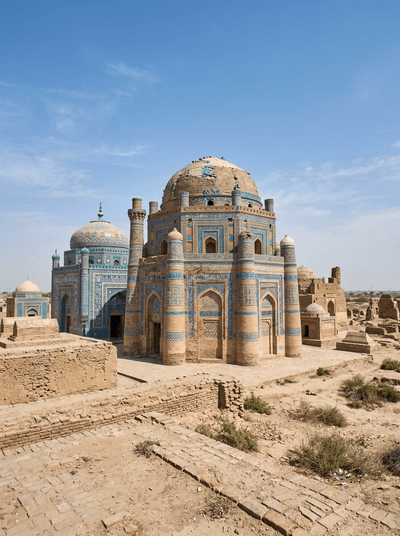
Half-fallen blue-tiled Sufi tombs leaning over the Indus plain, exquisite in their surrender.
Cacaxtla
Mexico
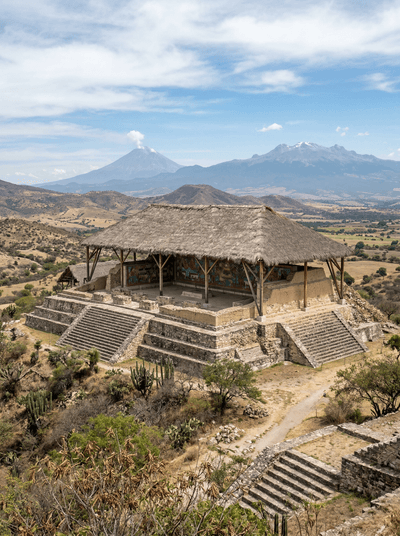
Battle murals hold their colour after more than 1,300 years, warriors and jaguars still vivid.
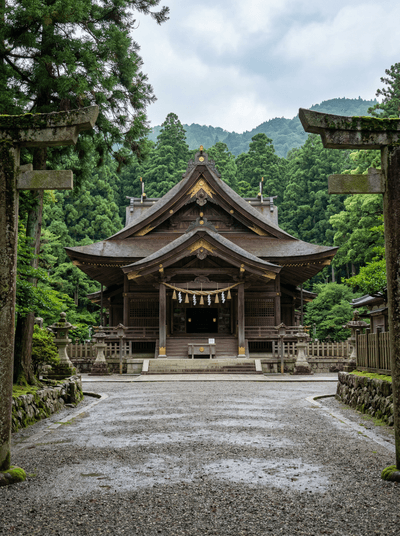
Izumo
Japan
The shrine where Japan's eight million gods are said to gather, leaving everywhere else godless.
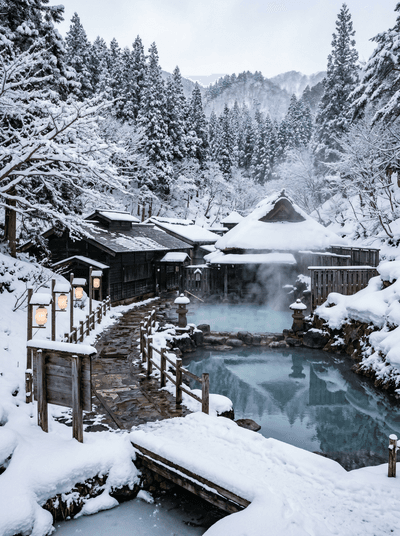
Akita
Japan
Bamboo poles hung with dozens of lanterns, balanced on a palm, a forehead, a hip.
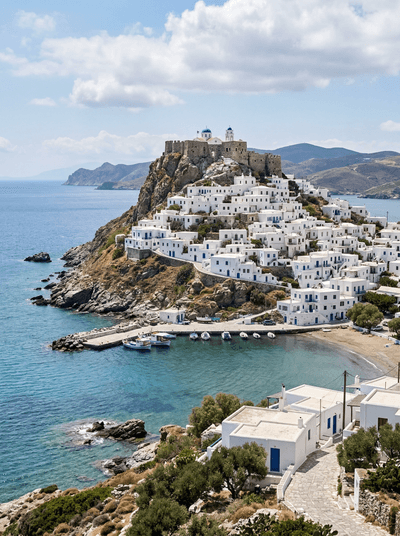
Skyros
Greece
Wild Skyrian ponies roam the southern hills of an island where Carnival masks hide ancient rites.
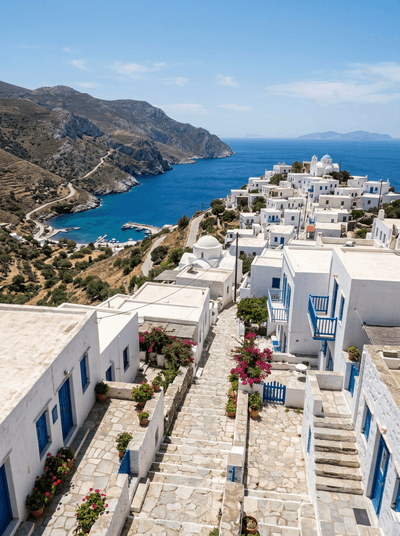
Amorgos
Greece
A whitewashed monastery clings to a 300-metre cliff face above crashing Aegean surf.
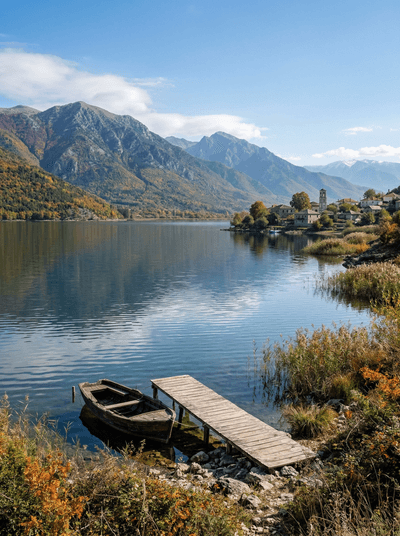
Prespa Lakes
Greece
Byzantine hermitages painted on cave walls above a lake shared by three countries.
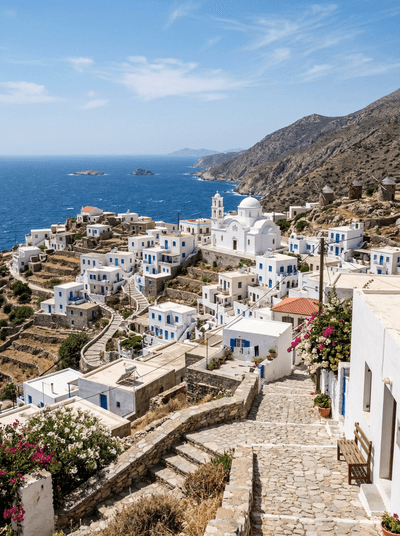
Karpathos
Greece
Mountain women in traditional dress still bake bread in wood ovens above wind-lashed Aegean cliffs.