Japan
Izumo
The shrine where Japan's eight million gods are said to gather, leaving everywhere else godless.
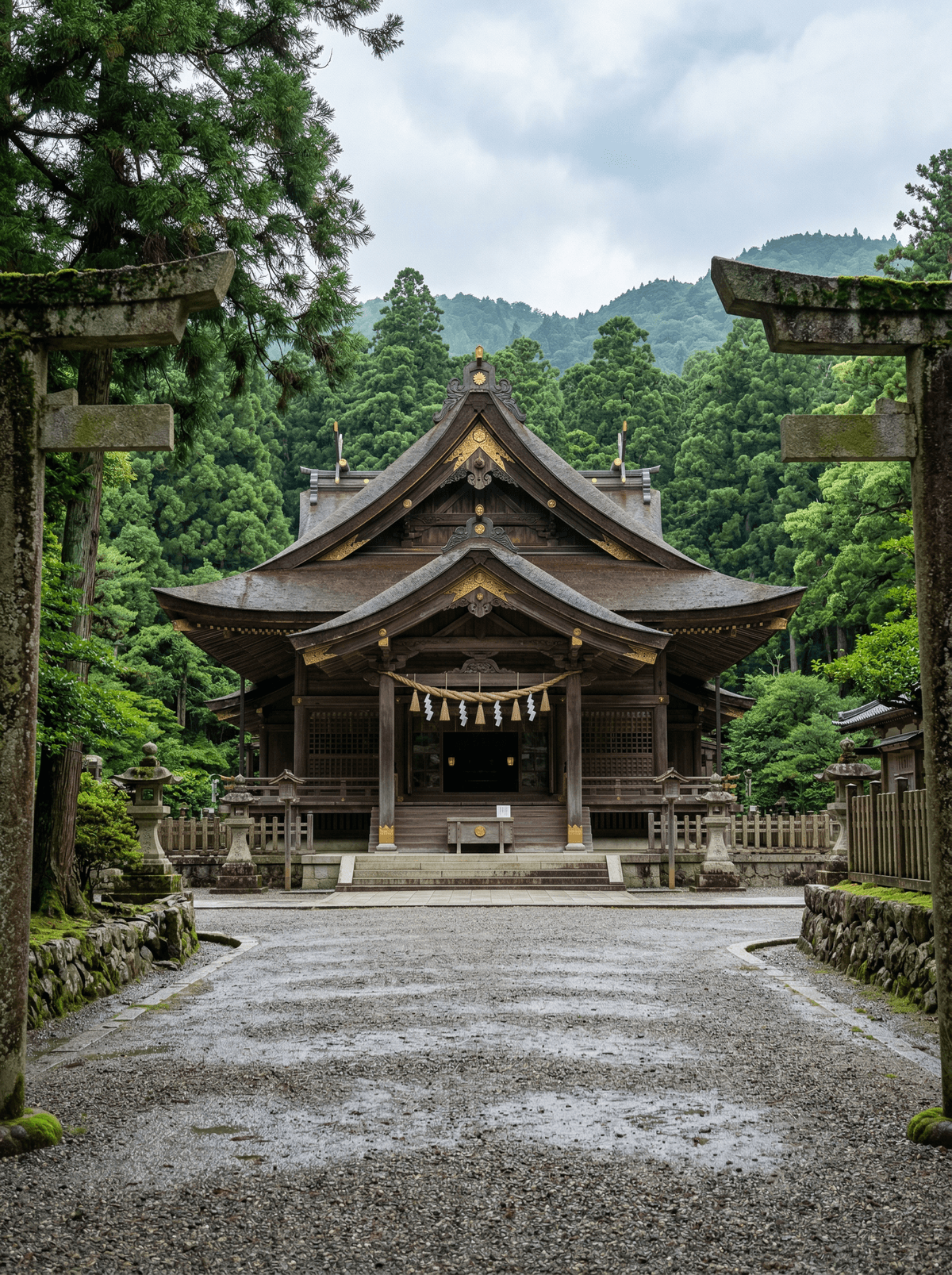
Once a year, the gods leave their shrines across Japan and come here. Everywhere else in Japan the tenth lunar month is called Kannazuki — the month without gods. In Izumo it is Kamiarizuki — the month with gods — and in November they are welcomed ashore at Inasa Beach and led in procession to the shrine. The distinction has drawn pilgrims for well over a millennium.
Izumo Taisha is commonly regarded as Japan's oldest shrine, the centre of the 'Country of the Gods' described in the two oldest chronicles of Japan, and the cradle of the nation's origin story. Its most famous feature is the enormous twisted shimenawa rope strung across the sacred dance hall, weighing more than five tonnes, and its most famous custom the four claps worshippers give instead of the usual two — half the eight claps of the shrine's May festival, the shrine explains, all of them in praise of its deity, Ōkuninushi, the god of relationships. The museum next door holds the huge pillar excavated from the ruins of an earlier hall, said to have stood 48 metres high, and the former Taishō-era railway station at the shrine's approach is among the finest surviving pieces of 1920s architecture in the country. Soba shops line the road to the gate.
Solo
The shrine's weight lands differently when you are alone. The soba trail along the approach road and the quiet Museum of Ancient Izumo fill a contemplative day.
Couple
Izumo Taisha is Japan's pre-eminent shrine for en-musubi, the tying of romantic bonds. Couples clap four times together beneath the great rope, then share warigo soba from stacked lacquer bowls.
- Izumo Taisha is commonly regarded as the oldest shrine in Japan — its colossal shimenawa rope weighs more than five tonnes.
- In the tenth lunar month the eight million gods of Japan are said to gather here — everywhere else calls it the month without gods.
- Worshippers clap four times instead of two — half the eight of the shrine's May festival — at the shrine of the god of relationships.
- Izumo soba — cold buckwheat in stacked round lacquer bowls — is the strong-flavoured local style eaten along the approach road.
Izumo soba served warigo-style — three stacking round lacquer bowls, dark and nutty, with dashi poured over and toppings on each layer.
Shimane wagyu from the San'in coast, quietly rivalling the famous names, at a specialist grill near the shrine.
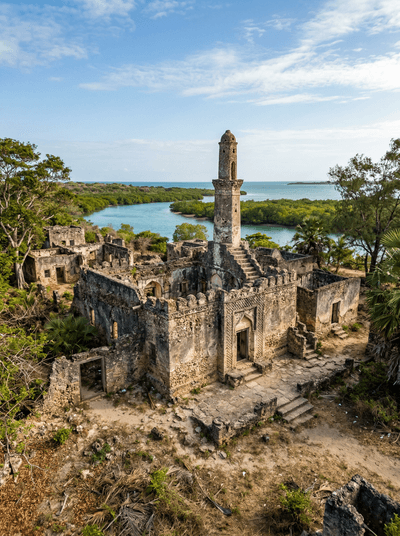
Takwa Ruins
Kenya
A Swahili ghost town in Manda Island's mangroves — its mosque still oriented toward Mecca.
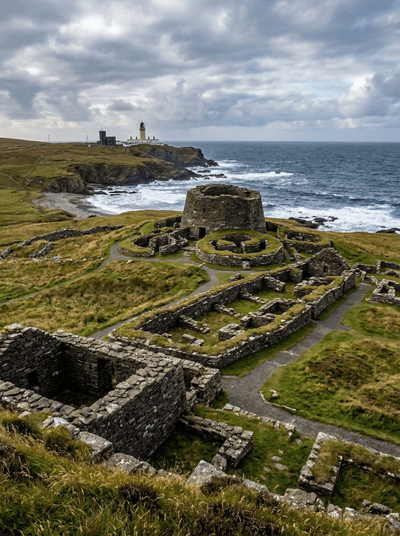
Jarlshof
Scotland
Four millennia of homes stacked on one headland — Bronze Age to Viking, layer upon layer.
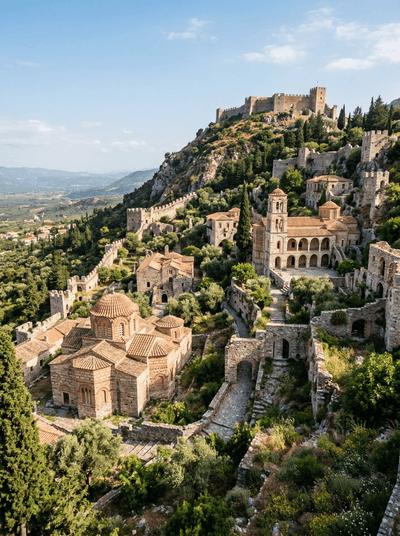
Mystras
Greece
A Byzantine ghost city of frescoed churches crumbling down a hillside above the Spartan plain.
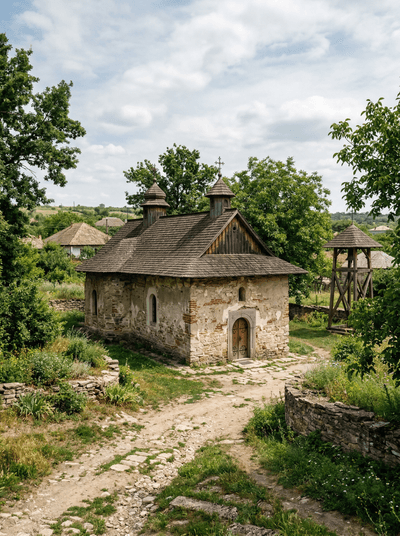
Căușeni
Moldova
Built into the ground to duck Ottoman height law, a sunken nave filled with saints.
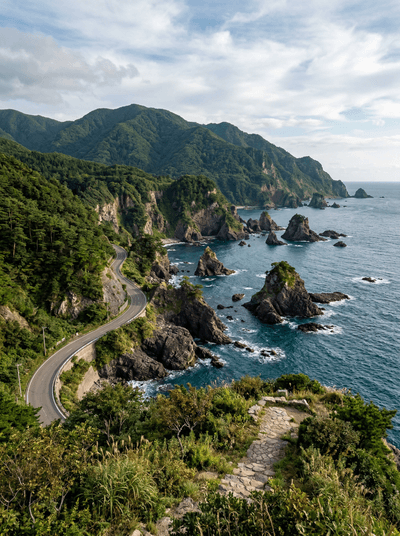
Sado Island
Japan
An exile island where gold miners, taiko drummers and crested ibis coexist in the fog.
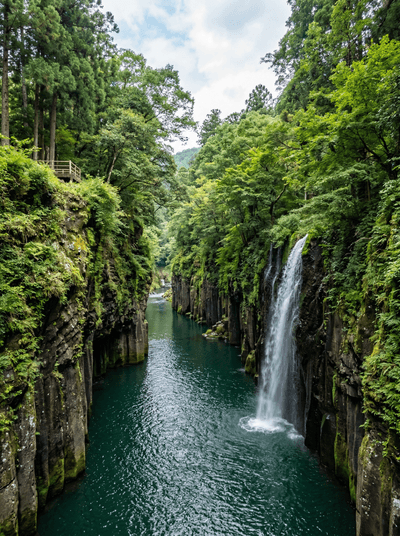
Takachiho
Japan
A basalt gorge where the sun goddess hid, and a night dance that has never stopped.
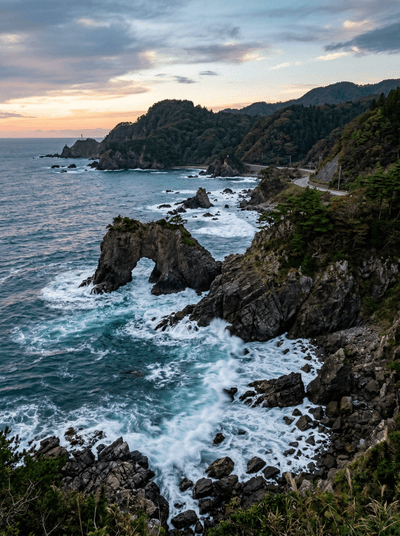
Noto Peninsula
Japan
Rice terraces falling into the sea and lacquer villages on a coast an earthquake reshaped.
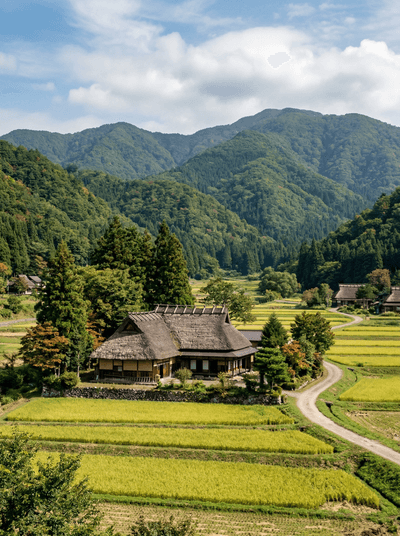
Tono
Japan
A folklore valley where kappa haunt the ponds and every farmhouse once stabled a horse.