Pakistan
Naltar Valley
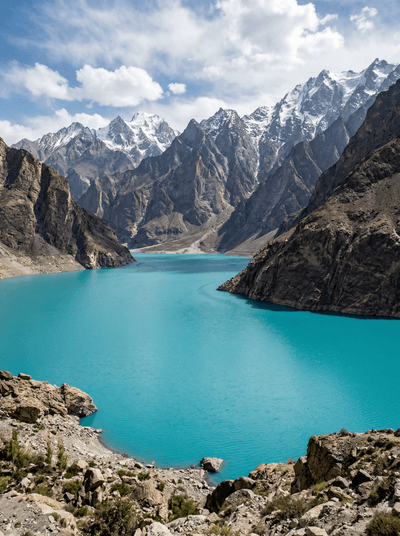
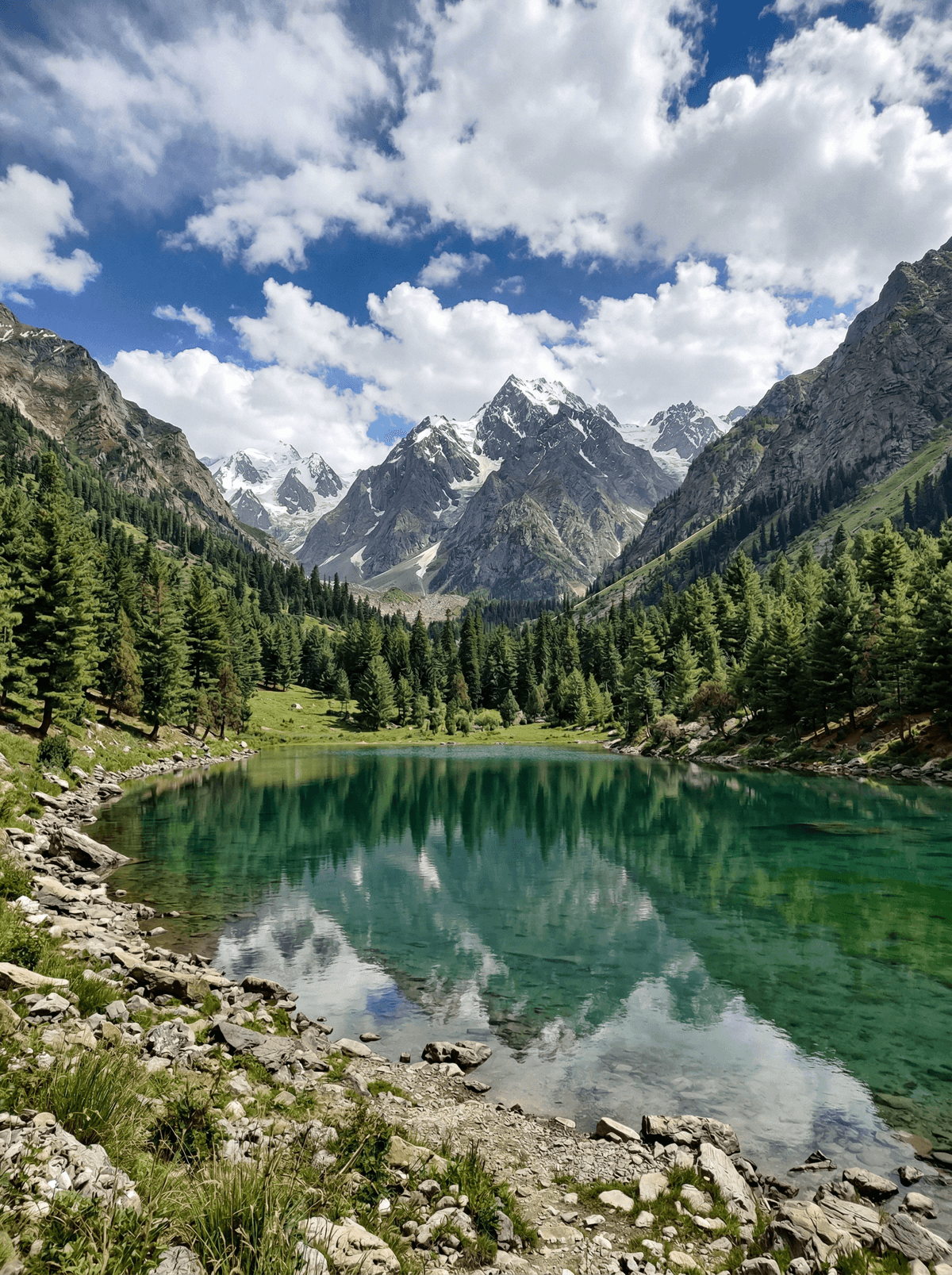
Three lakes cycling through turquoise, emerald, and sapphire depending on the angle of light.
The first lake is turquoise. The second, a short walk further, shifts to deep emerald. The third turns sapphire as the angle of light changes through the pines. Three glacial lakes, three colours, all held in a single valley walled by blue spruce and silent granite.
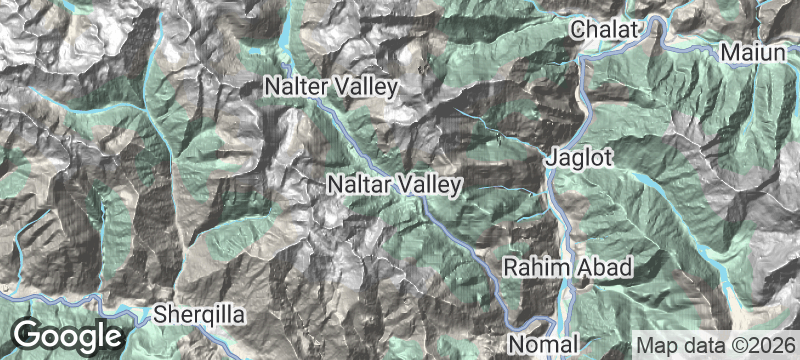
Naltar Valley lies two hours by unpaved road from Gilgit in Pakistan's Gilgit-Baltistan, hidden behind a steep pass that deters casual visitors and preserves the valley's quiet. Its glacial lakes sit within a morning's walk of one another, their shifting mineral colours the work of glacial sediment refracting light at different depths. The Pakistan Air Force pioneered formal skiing in Pakistan here in 1958, its slopes cut at 2,900 metres on the upper valley, and dense blue pine and spruce forest cools the valley floor several degrees below the Gilgit plains, filling the air with a resinous scent that sharpens after rain. The road's condition is the valley's best defence — it keeps the lakes free of the crowds that have altered similar places elsewhere.
Solo
The valley's quiet rewards unhurried exploration — the lake walks fill a morning, and the forest trails between rest houses offer real solitude.
Couple
Colour-shifting lakes in a pine-scented valley, reached by a road too rough for tour buses — one of Gilgit-Baltistan's most undervisited romantic escapes.
Family
The road reaches the valley floor and the lakes are a gentle walk apart — children are mesmerised by water that changes colour with every angle of light.
Friends
Camp beside the lakes, walk all three in a day, and let the pine forest slow the group down — Naltar rewards friends who like their adventures unpolished.
- Three glacial lakes sit within a morning's walk of each other, each shifting colour with the light.
- The Pakistan Air Force set up its ski slopes here at 2,900 metres — an improbable piece of ski geography.
- Blue pine and spruce forest lines the valley floor, cooling the air several degrees below the Gilgit plains.
- The road from Gilgit is unsealed and steep — which keeps the valley quiet and the lakes uncrowded.
Fresh trout from the lakes, grilled over pine wood at the valley rest houses.
Girda — dense round bread — torn warm with local butter and wild honey.
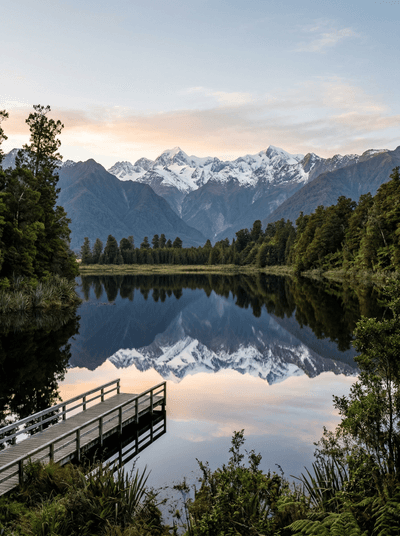
Lake Matheson
New Zealand
Tannic black water that mirrors Aoraki so sharply the reflection outdoes the peak.
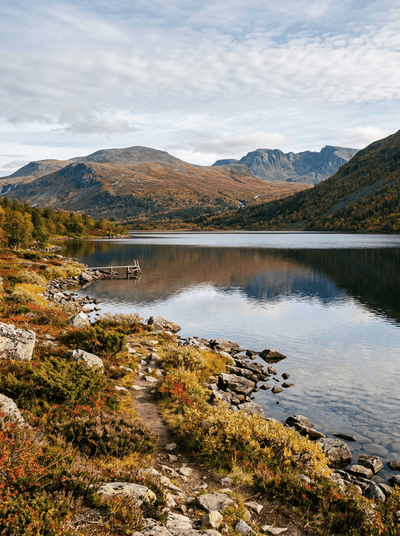
Grövelsjön
Sweden
A mountain station beside the Norway line, whose trails cross countries before lunch.
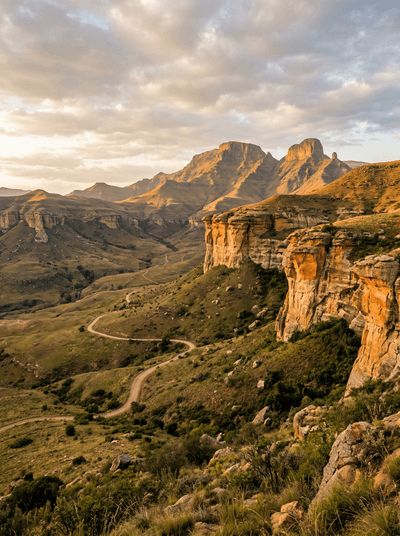
Golden Gate Highlands National Park
South Africa
Sandstone walls flare gold above grassland where black wildebeest graze.
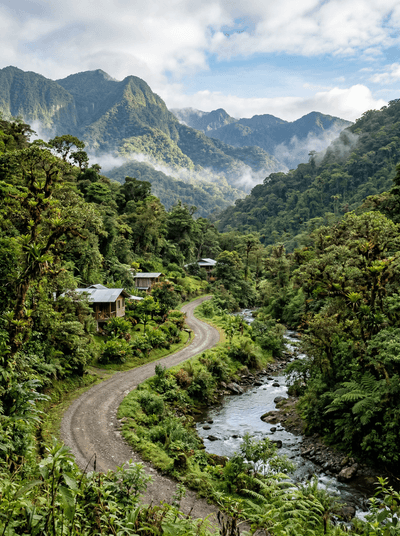
San Gerardo de Dota
Costa Rica
A bird the Maya held sacred flashes emerald through one cold valley's mist.