Brazil
Novo Airão
In tea-dark water, pink dolphins take chilled fish from staff hands; you may touch, never feed.
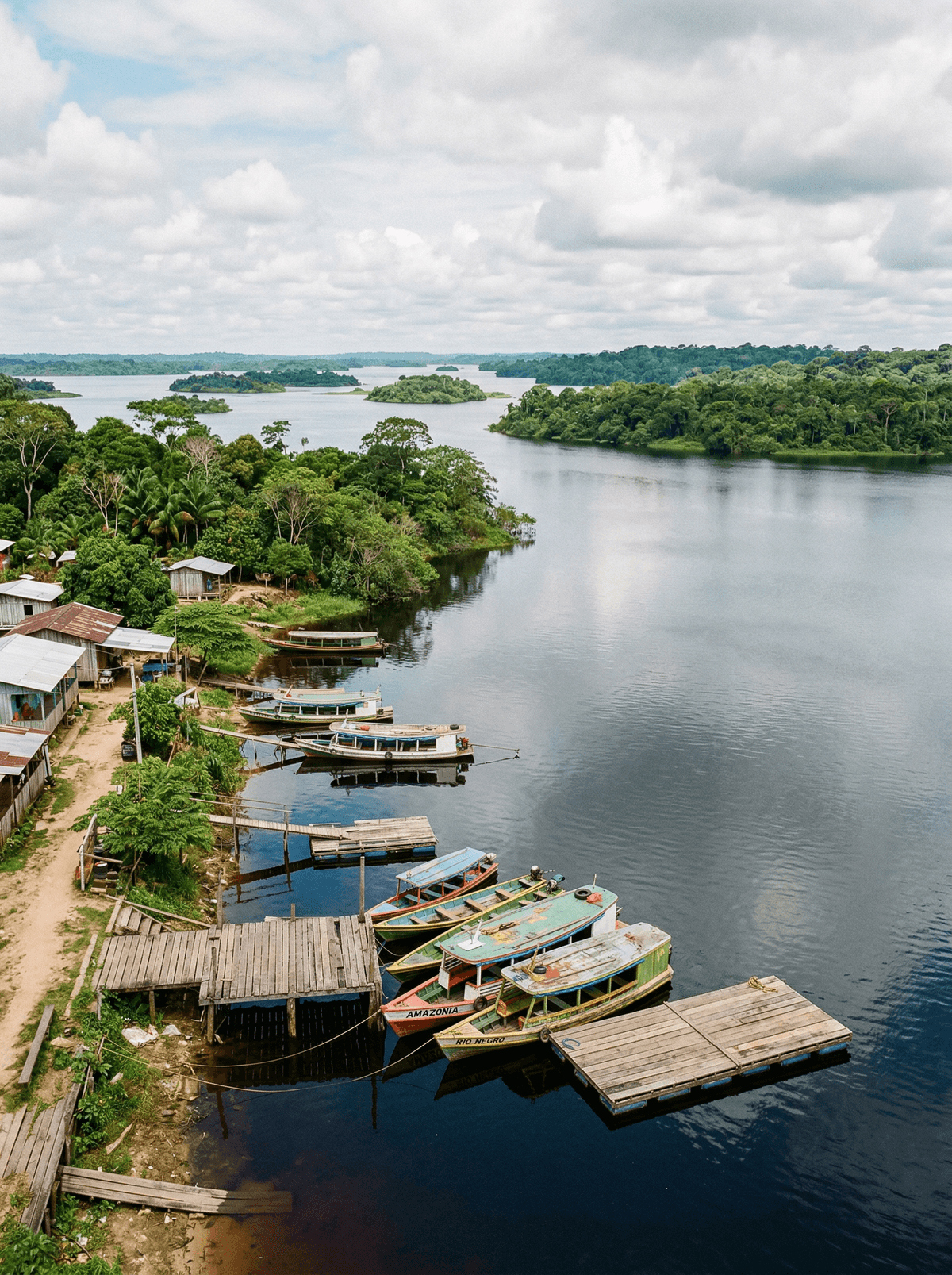
The water runs strong-tea brown, and a wooden platform floats on it in front of the town. On the hour a member of staff gives a short talk about the animals, then carries out chilled fish, and the botos come in: pink, heavy, up to two and a half metres, shouldering each other along the deck edge.
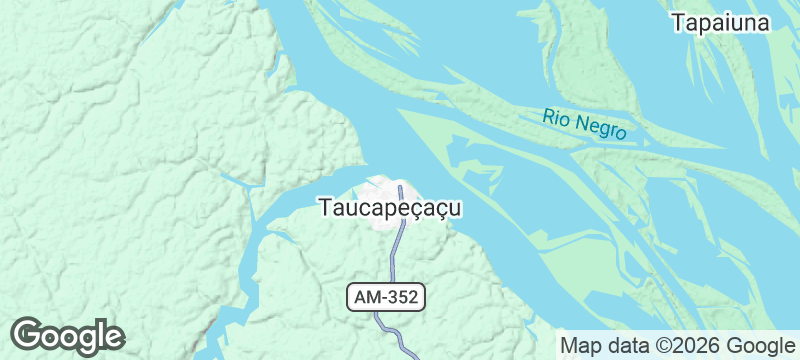
Novo Airão sits on the Rio Negro in Amazonas with the Parque Nacional de Anavilhanas straight across the channel, 350,000 hectares of roughly 400 islands and 60 lakes, and the town has grown around what happens on one floating deck. The feeding started in 1997, when the restaurant owner's daughter began giving fish to a boto that kept visiting; by 2011 about fifteen animals were arriving daily, tourists were buying fish portions to hand over themselves, swimming with them and lifting them clear of the water for photographs. ICMBio worked with the operators through a participatory ordering process from 2010, and the activity that survives it is a managed one: staff alone feed the animals, chilled fish only, at most two kilos a day each, across eight half-hour sessions between nine and five, every session opened by a talk on boto biology and conduct. Visitors buy a ticket, watch, photograph and touch, and enter the water only after a session closes, on a submerged platform that holds seven, in a compulsory life jacket and standing still. Boats are kept out of a twenty-metre ring around the deck, and the whole flutuante was moved 200 metres upstream of the town port and its fuel station to get the botos away from the traffic.
Couple
The archipelago starts on the far bank, so an outing here can be an hour or a whole day, and operators build the good ones around sunrise and sunset. From March the water trails run through the igapó itself, and there is tree climbing if you would rather see Anavilhanas from the top of its own canopy than from a boat.
Family
Children get the botos, and the rules are the interesting part to explain on the way in: the platform staff hand over the fish, visitors watch, photograph and touch, and the water opens only once the session ends, seven at a time, life jackets on. The other easy win is the beaches, which surface along the Negro from September as the river falls.
Friends
Six hours on the water gets you the Grutas do Madadá and the Pedra Sanduíche, with caves, rock formations and rapids deep inside the forest. Closer in are the ruins of Airão Velho, the town's original site with its century-old cemetery, and the rock art near the mouth of the Jaú that the river covers again when it rises.
- Anavilhanas lies directly across the water: 350,000 hectares, roughly 400 islands and 60 lakes, the second largest river archipelago in the world, with free entry and no closed season.
- The Rio Negro rises and falls eight to ten metres, so the same park hands you white river beaches between September and February, then a flooded igapó of water trails through March to August.
- Eight feeding sessions a day run at the Flutuante dos Botos, each opened by a talk on the animals, with only the platform's staff handling the fish and seven people at a time allowed onto the submerged deck.
- Six hours upriver are the Grutas do Madadá and the Pedra Sanduíche, and near the mouth of the Jaú there are rock inscriptions that surface only as the water drops.
Flor do Luar floats off the front street and roasts its tambaqui with rosemary sprigs, plating it with baião de dois, tucupi vinaigrette and pacovã banana.
Sabor do Sul keeps it plain a few streets back, a gaúcho chef's kitchen at the Amazon's edge turning out galinha caipira and river fish.
Udo
South Korea
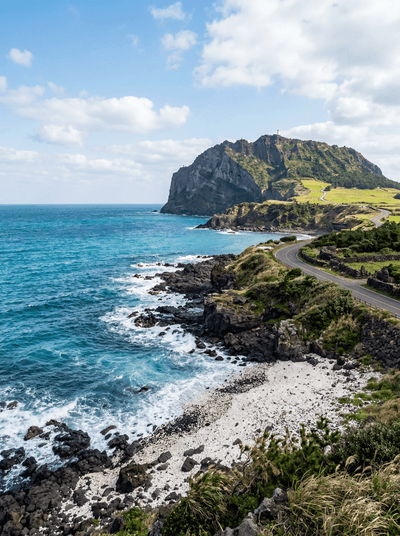
Black lava meets white coral sand on an island that grows its own dessert.
Stockholm Archipelago
Sweden
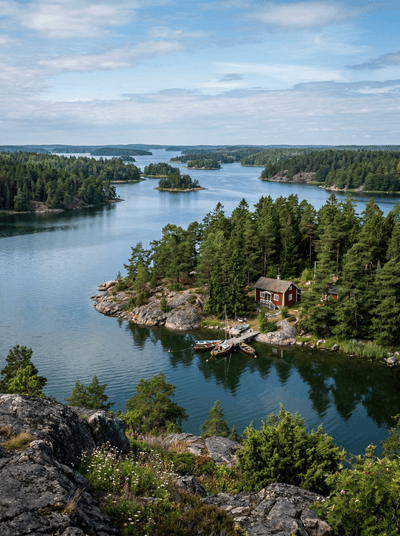
Thirty thousand islands dissolving into the Baltic, each with its own jetty and swimming rock.
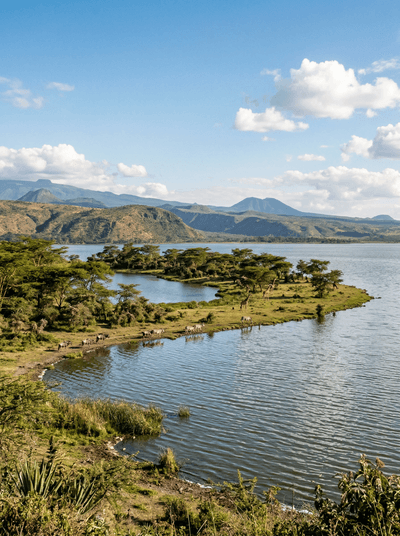
Crescent Island
Kenya
No fences, no vehicles — walk among giraffes and hippos on a volcanic lake island.
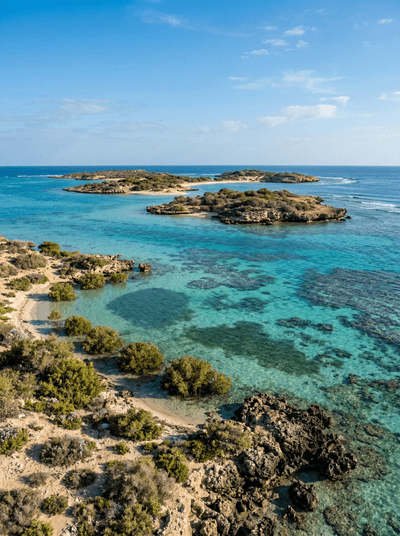
Farasan Islands
Saudi Arabia
Gazelles graze between Ottoman ruins on a Red Sea archipelago ringed by living coral.
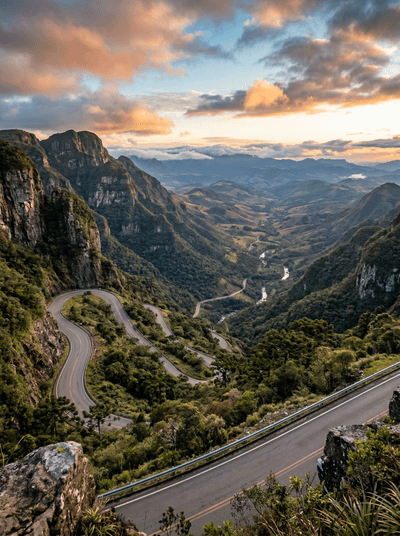
Urubici
Brazil
Frost-coated araucaria forests and canyon rims at the frozen heart of subtropical Brazil.
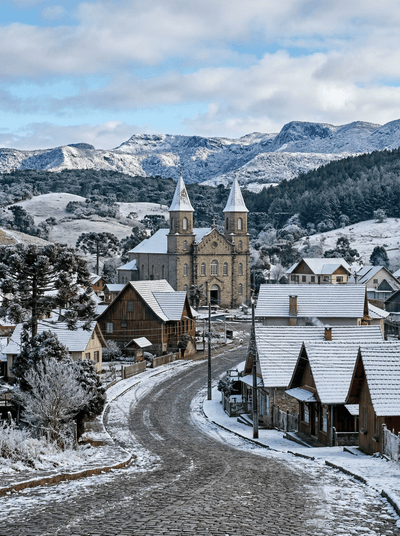
São Joaquim
Brazil
Apple orchards under frost in a highland town where Brazil forgets it's supposed to be tropical.
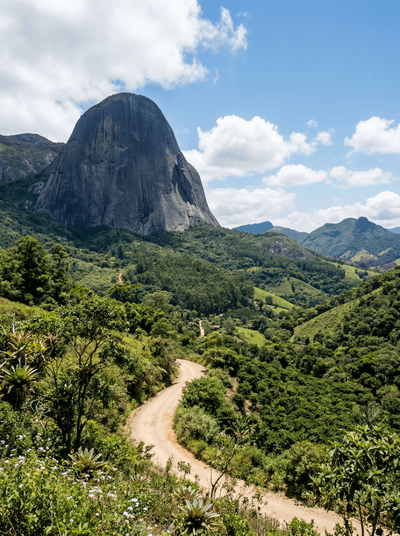
Pedra Azul
Brazil
A granite monolith blue with lichen, erupting from Atlantic Forest like a wave.
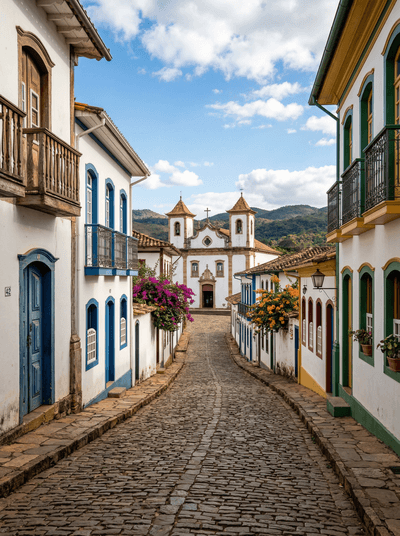
Pirenópolis
Brazil
A colonial gold town erupting in costumed cavalry battles between Moors and Christians every Pentecost.