Kyrgyzstan
Osh
A five-peaked sacred mountain, worshipped for millennia, rising straight out of a Silk Road bazaar city.
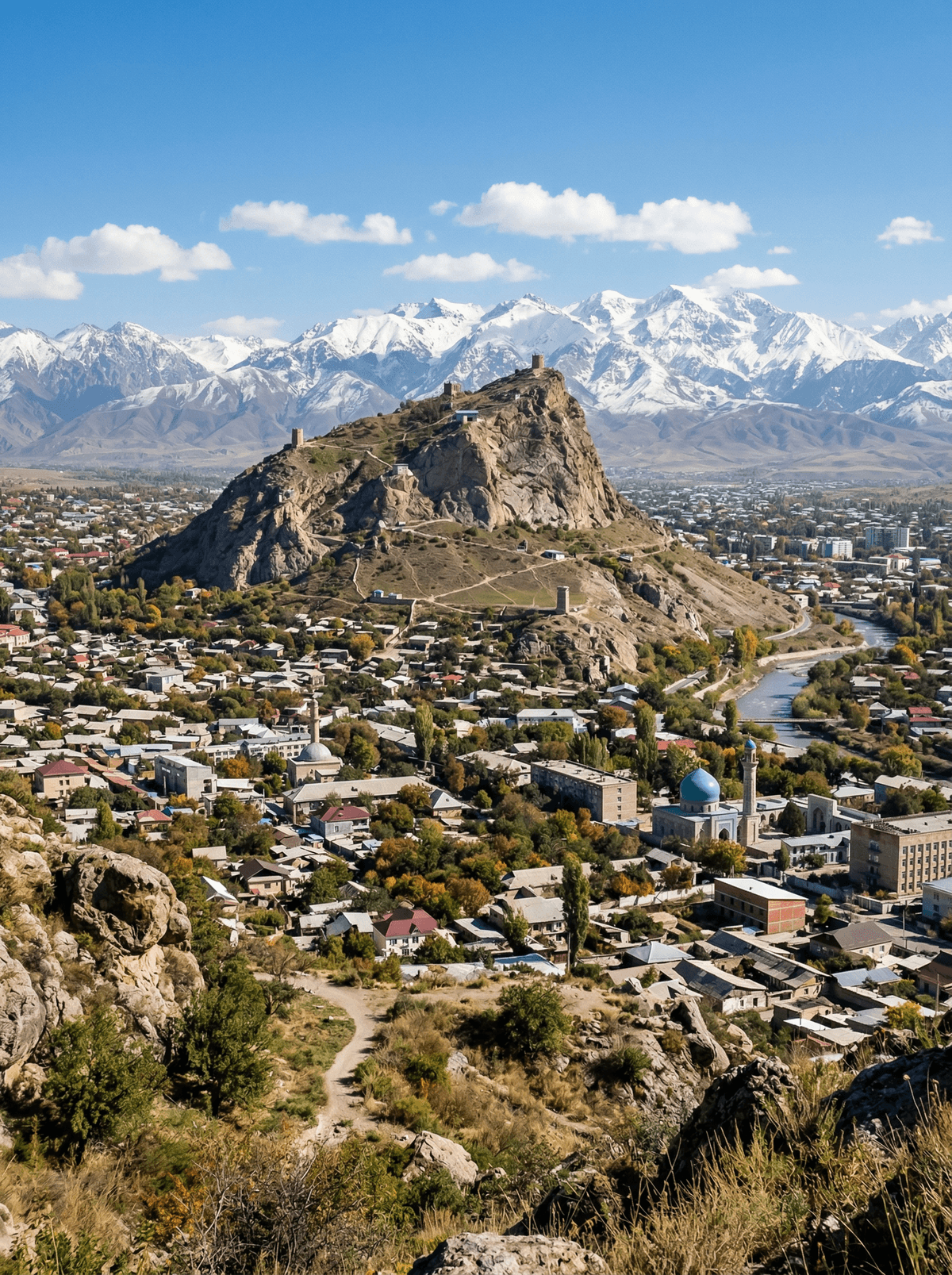
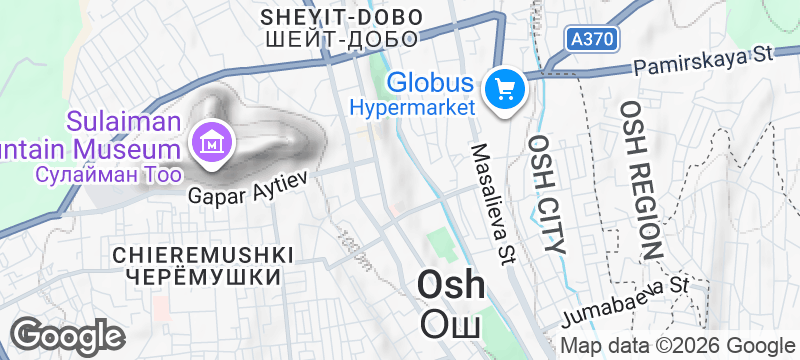
Sulaiman-Too rises straight out of the centre of Osh, its five summits threaded with shrines, caves and pilgrim paths. Below it spreads a city that traded beside the Ak-Buura River for two thousand years, and where the midday air still carries the smell of plov from the oshxona cauldrons.
Osh is Kyrgyzstan's second-largest city and, by UNESCO's estimate, its oldest, with more than three thousand years behind it where the Fergana Valley opens. Sulaiman-Too, the mountain at its heart, is the only World Heritage Site lying entirely within Kyrgyzstan, worshipped over several millennia and a major pilgrimage place long before Islam; some scholars identify it as the 'Stone Tower' Ptolemy marked at the midpoint of the Silk Road. Babur raised the summit mosque in 1510, and a museum inside the mountain's cave complex traces three thousand years of beliefs. Below, the riverside Jayma Bazaar traded on the same Ak-Buura bank for two thousand years, the most ancient preserved Silk Road bazaar in Kyrgyzstan, until 2026, when its traders moved to the vast Zhibek Zholu market and the city signed plans for a cultural complex and ethnocentre on the old site. The kitchens never stopped: Fergana-style plov is still ladled from cauldrons in the oshxona halls, and tandoor samsa is still the standing snack.
Solo
A city that rewards wandering without a plan: climb Sulaiman-Too at dawn, browse the stalls of the new Zhibek Zholu market, eat standing wherever the plov smells best. Osh absorbs solo travellers without demanding anything of them.
Couple
Sunset from the mountain's pilgrim paths and chaikhana evenings over plov and green tea. The layered history leaves something to discover at every turn.
Family
Sulaiman-Too's caves and viewpoints make a scramble children love, and the museum inside the mountain turns the climb into the classroom. The food is friendly: samsa, manty, plov.
Friends
The gateway to the Alay: eat well in the city and climb the sacred mountain, then take the road south towards Sary-Mogol, Tulpar-Köl and the high Pamir.
- Sulaiman-Too, a five-peaked mountain worshipped over several millennia, is the sole World Heritage Site lying entirely within Kyrgyzstan.
- Some scholars identify the mountain as Ptolemy's 'Stone Tower', the marker of the Silk Road's midpoint.
- A museum inside the mountain's cave complex traces three thousand years of religions and beliefs.
- The signature dish is Fergana-style plov, ladled at midday from cauldrons in the city's oshxona halls.
Fergana-style plov from the oshxona cauldron halls, rice stained amber with carrot and lamb fat; in Osh it is a midday dish.
Samsa, flaky tandoor pastry around minced lamb and onion, the must-try of the Osh tandoor ovens.
Olinda
Brazil
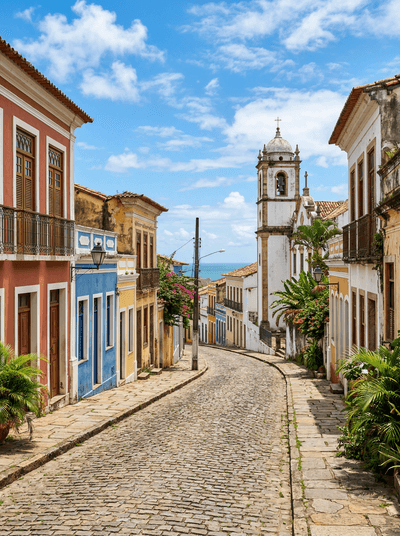
Candy-coloured colonial streets tumbling downhill to the sea, alive with maracatu drums and giant puppets.
Coimbra
Portugal
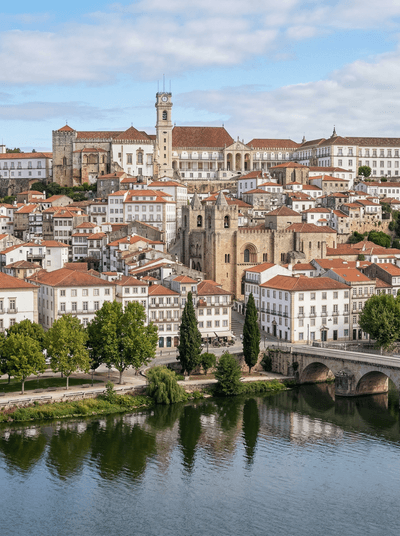
Black-caped students sing fado on medieval steps above a library gilded in Brazilian gold.
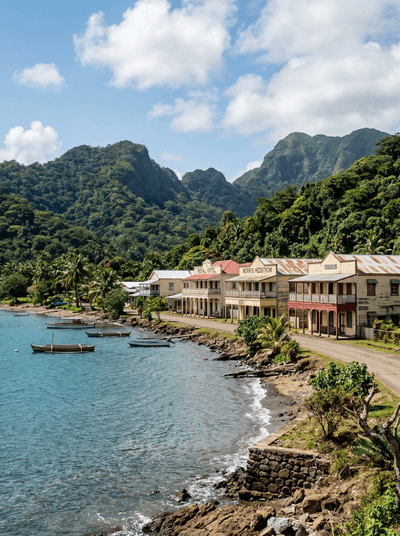
Levuka
Fiji
Fiji's first colonial capital frozen in the 1870s, wooden shopfronts sagging under tropical rain.
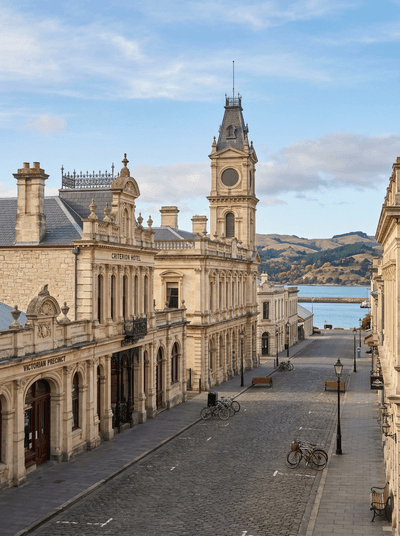
Oamaru
New Zealand
Victorian limestone streets host a steampunk imagination while penguins parade at dusk.
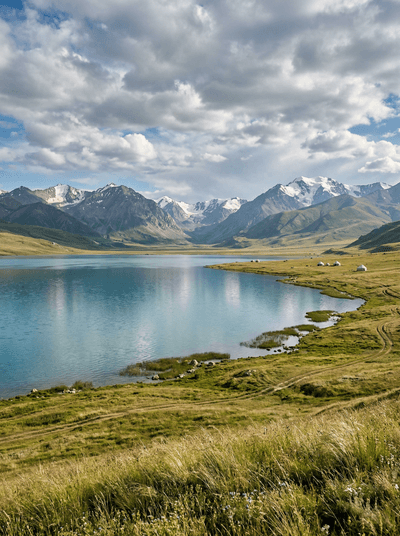
Song-Köl
Kyrgyzstan
Nomad yurts circling a lake at 3,000 metres where the only sound is wind through grass.
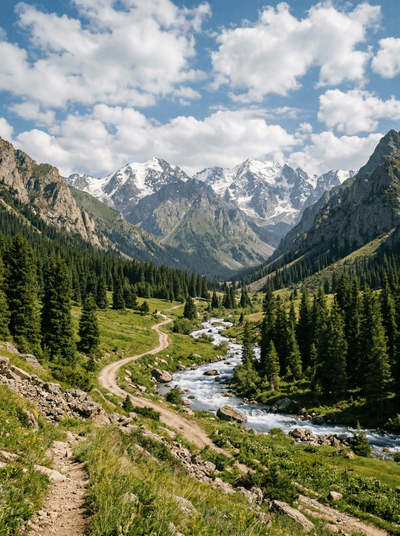
Padysha-Ata
Kyrgyzstan
A snow-leopard juniper reserve wrapped around a mausoleum that still draws pilgrims.
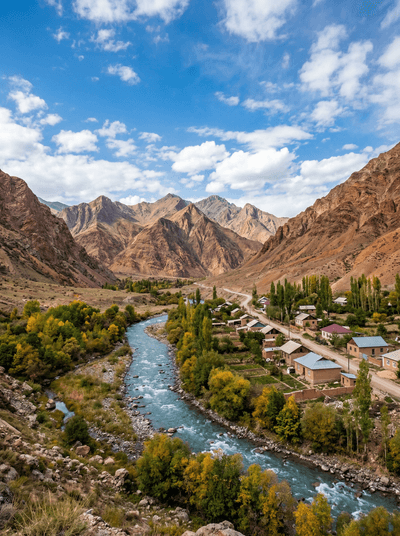
Kyzyl-Oi
Kyrgyzstan
A village of red clay houses inside a red-rock gorge, settled before the Soviets rearranged Kyrgyzstan.