Costa Rica
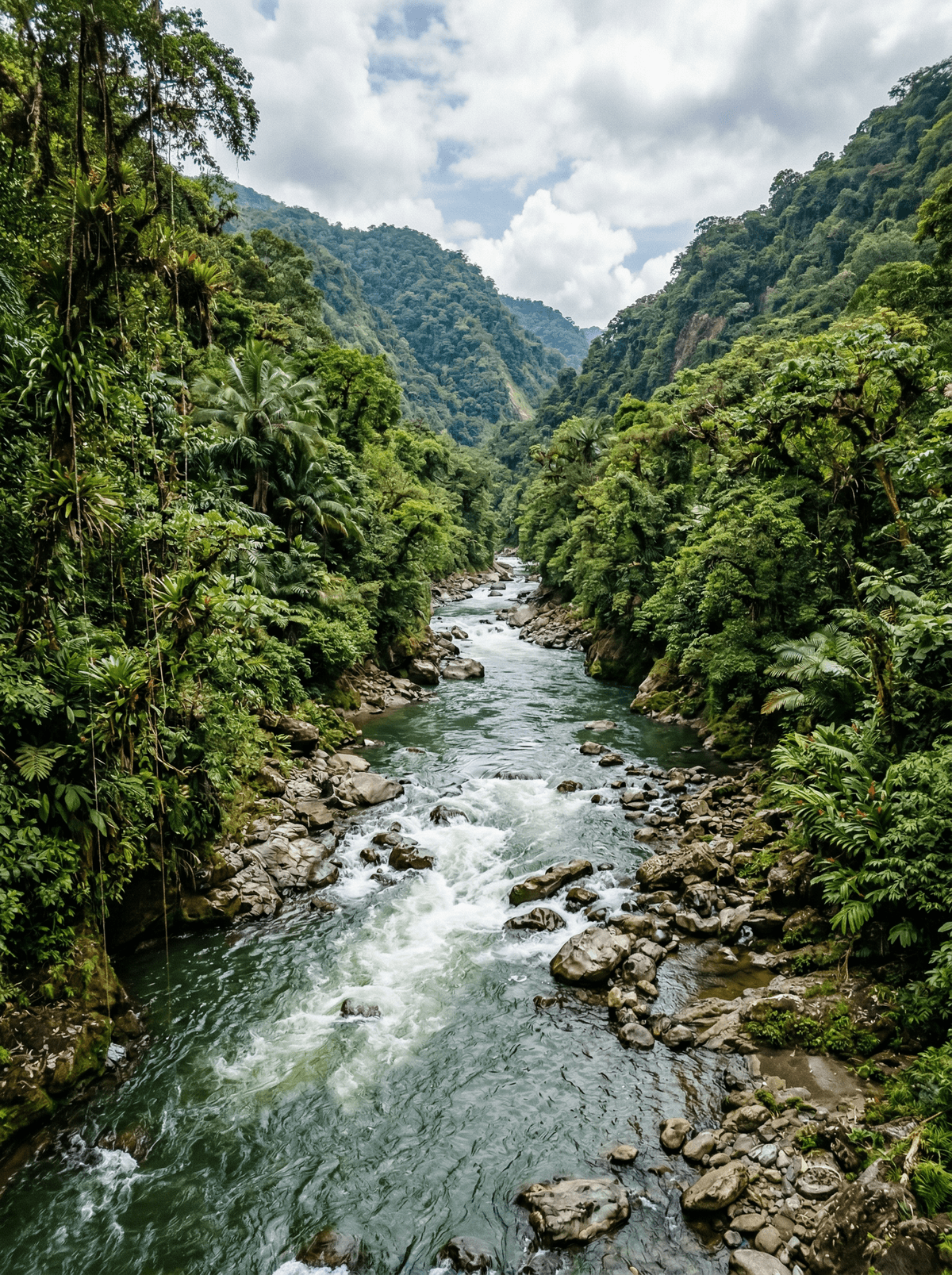
Pacuare River
Class III-IV rapids through a jungle canyon where oropendola nests dangle above the current.
The raft drops over a ledge and the jungle canyon swallows you — green walls rising on both sides, oropendola nests swinging over the current like woven pendulums, the next rapid already audible ahead. The Pacuare is not just a river to run; it is a corridor through forest no road has ever touched.
The Pacuare threads Class III-IV whitewater through a rainforest gorge so beloved that in 2005 the town of Turrialba voted 97% against damming it — and in 2015 Costa Rica's president went rafting here with his family in the morning and signed a 25-year ban on dams. Multi-day descents overnight at riverside lodges reached only by water, where Cabécar communities from the surrounding territory share food and craft with guests. Oropendola nests hang above the rapids like woven pouches, and the river's roar replaces every signal your phone loses on the way in.
Couple
Adrenaline with genuine wilderness romance — evenings on a platform above the rapids, candlelight, no signal, and the river's constant roar.
Friends
Four people in a raft, screaming through the drops, sleeping in a roadless jungle lodge — the Pacuare turns a friend group into a river crew inside a day.
- Class III-IV rapids run through a roadless rainforest gorge — among the most celebrated whitewater anywhere.
- Turrialba voted 97% against damming the river in 2005, and a presidential decree banned dams for 25 years in 2015.
- The gorge's lodges are reachable only by the river itself, deep in Cabécar territory.
- The rafting season peaks with the rains, June to October, when the gorge runs full.
A Cabécar cook-up on the riverbank — traditional dishes from sustainably harvested forest ingredients.
Turrialba cheese melted onto handmade tortillas — the valley's namesake, from the market in town.
Tanegashima
Japan
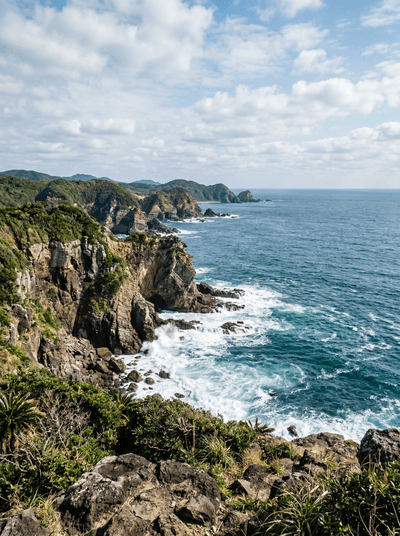
A surf island where Japan launches rockets and Portuguese sailors first brought guns.
Gorges du Tarn
France
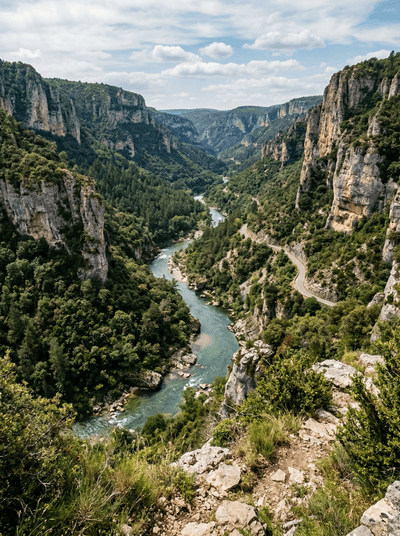
Emerald water snaking between limestone walls hundreds of metres high while vultures circle overhead.
Ko Lao Liang
Thailand
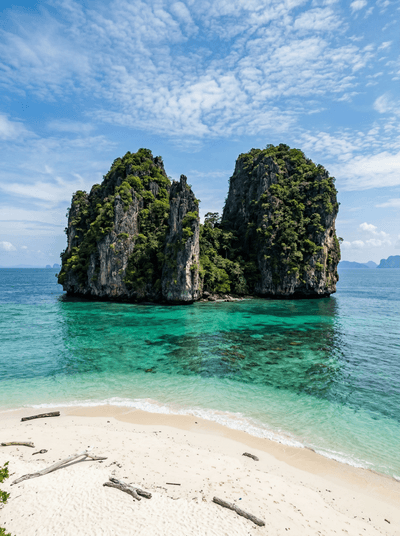
Twin limestone towers sheer out of the Andaman, guarded for their swiftlet nests.
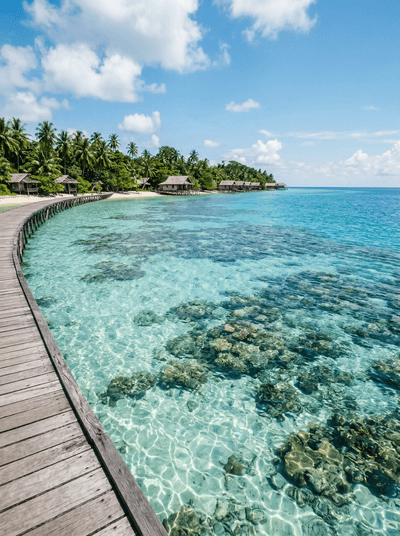
Derawan Islands
Indonesia
Stingless jellyfish drift in a landlocked lake while green turtles nest on the next island.
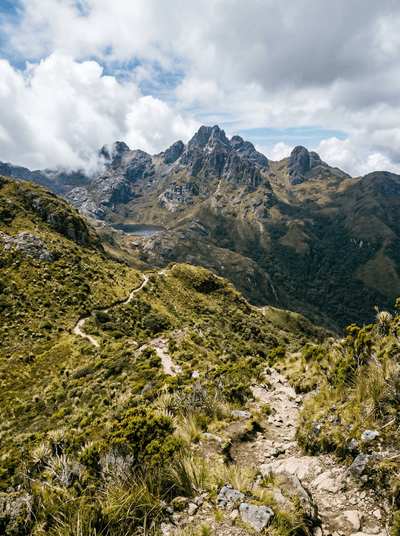
Chirripó National Park
Costa Rica
From Costa Rica's rooftop on a clear morning, the Pacific and Caribbean both lie below.
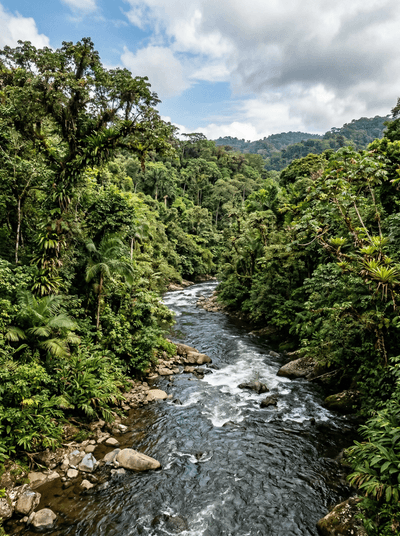
Sarapiquí
Costa Rica
Poison dart frogs glow neon on the forest floor while rapids thunder through lowland jungle.
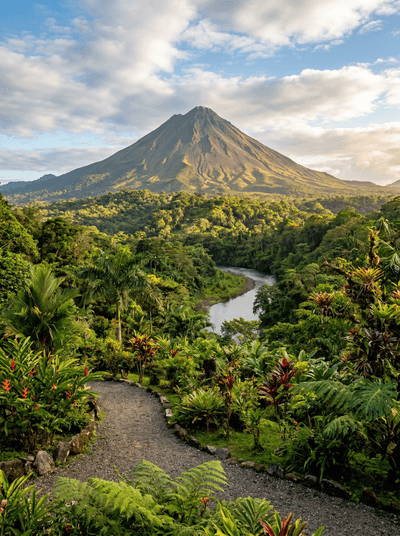
Arenal & La Fortuna
Costa Rica
Hot springs steaming through jungle beneath a volcano's perfect cone at dusk.