Peru
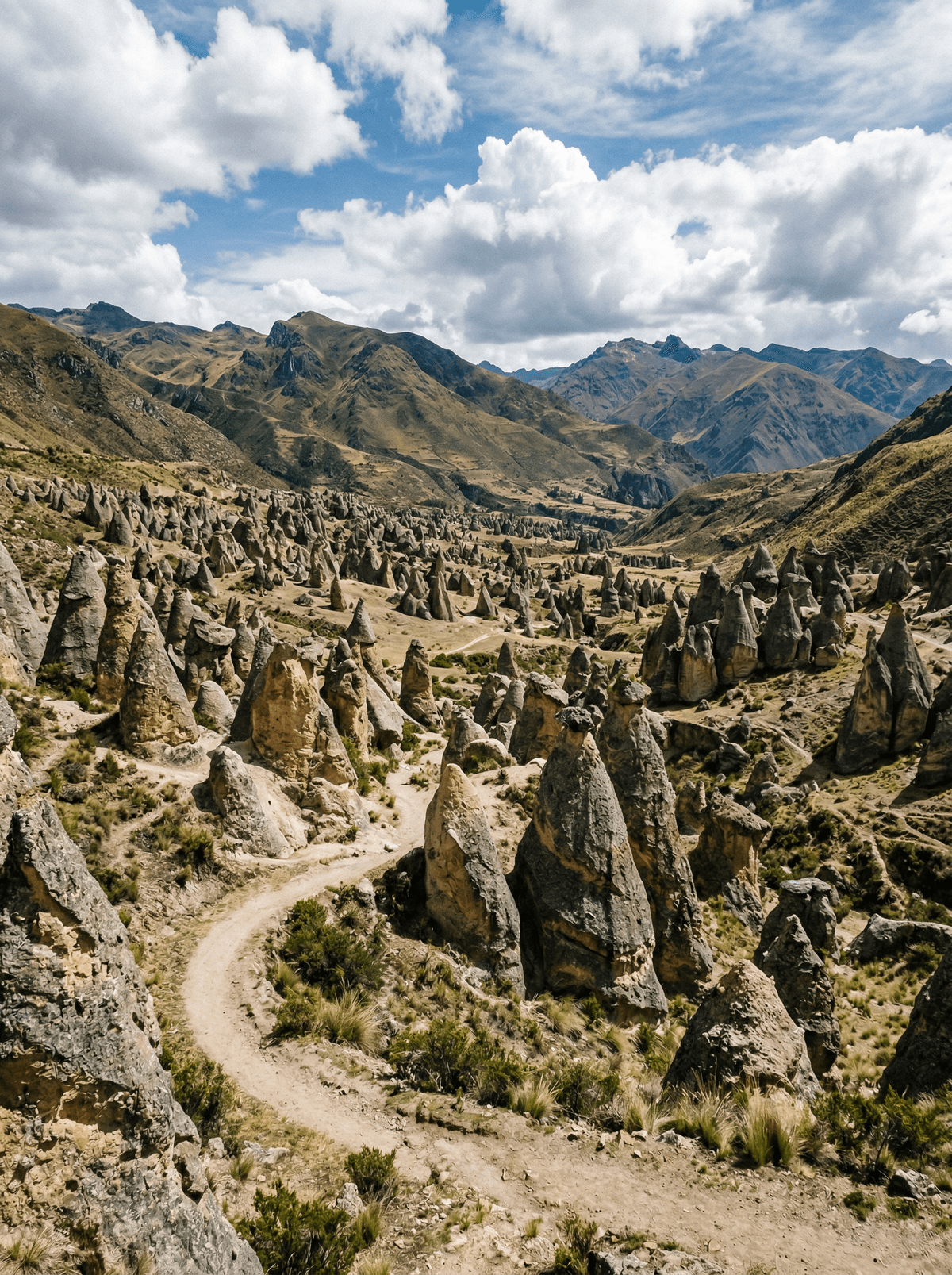
Pampachiri Stone Forest
Stone pillars rising from the high puna like a petrified army at 4,000 metres.
Wind cuts across the puna at 4,000 metres and the stone pillars stand against it without flinching — cones and towers to twenty metres, clustered like sentries across grassland running unbroken to the horizon. Late light turns them terracotta; their shadows reach across grazing ground where vicuña drift unbothered.
The Pampachiri stone forest spreads across high Apurímac plateau country roughly 200 kilometres from Cusco — volcanic tuff weathered over millennia into steep-roofed cones, towers and overhangs that change identity with the light: a hooded figure at noon, a mushroom field by sunset. What keeps the visit honest is that this is a working pastoral landscape, not an empty geological park — herders' homes and livestock thread the formations, footpaths belong to daily life, and the right way in is with a Pampachiri-based guide who knows the routes, the households and the courtesies. Roads are rough, nights are properly cold, and the reward is proportionate: altiplano light on stone at an altitude that makes everything glow, shared with almost no one.
Solo
Peru at its least discovered — locally guided, self-sufficient, and rewarded with near-total quiet among the towers.
Couple
Terracotta light shifting across the pillars at dusk, vicuña grazing near, makes the shared memory no photograph carries home.
- Volcanic tuff has weathered into cones and towers reaching twenty metres.
- Pampachiri's herding families live and work among the stones.
- Vicuña — the puna's wild camelid — graze the high grassland around the towers.
- A Pampachiri-based guide opens the routes, the households and the courtesies.
Watia — potatoes baked in a collapsed clay-clod oven — the puna's oldest cooking.
Cancha and fresh cheese, herding-country staples carried onto the puna.
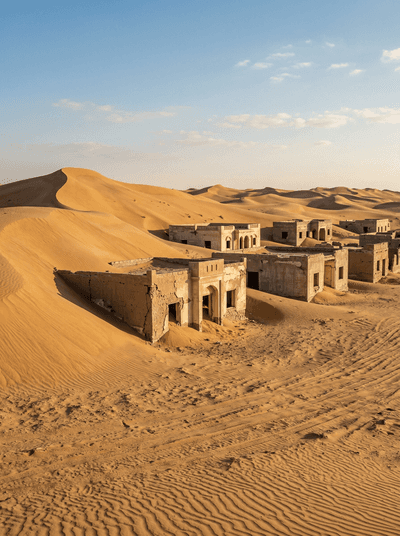
Al Madam
United Arab Emirates
Sand pours through the doorways of a village the desert is swallowing whole.

Wistman's Wood
England
Twisted ancient oaks dripping with moss in a silence so deep it hums.
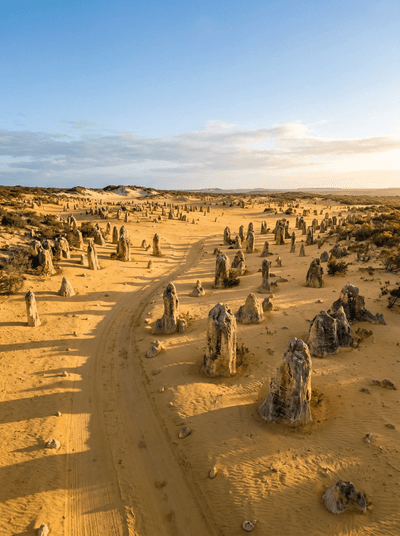
The Pinnacles
Australia
Thousands of limestone pillars cast long shadows across Nambung National Park's yellow sand.
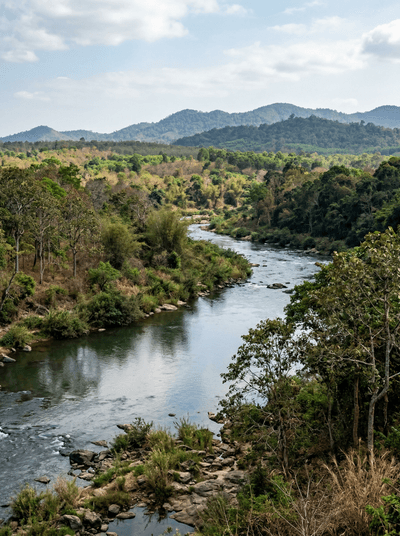
Yok Don National Park
Vietnam
Golden dry dipterocarp forest where rescued elephants roam free and forge their own paths.
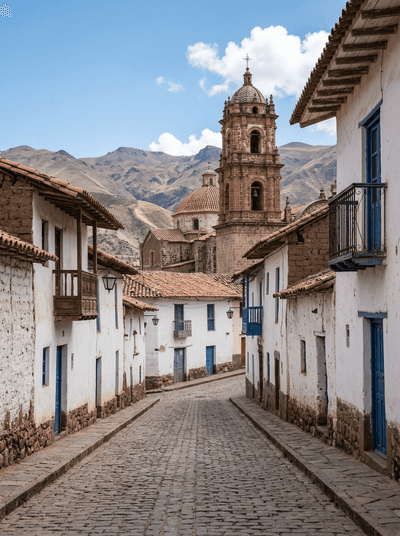
Lampa
Peru
A rose-pink Andean town hiding a full-scale Pietà replica in its colonial church.
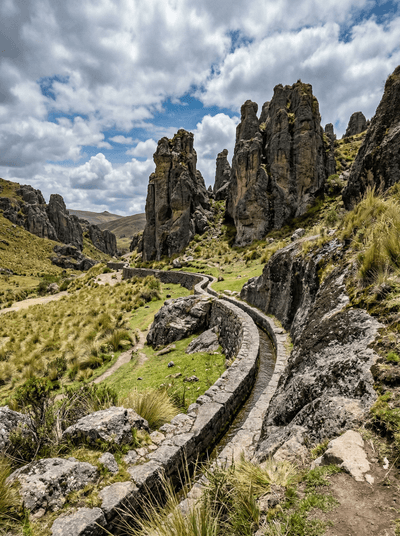
Cumbemayo
Peru
Pre-Inca aqueducts carved through living rock — still channelling water after millennia.
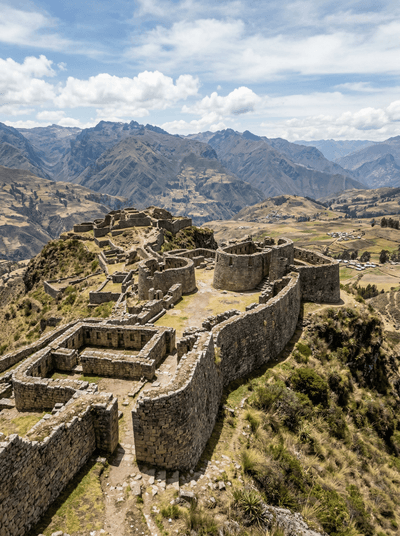
Marcahuamachuco
Peru
Kilometres of stone galleries crowning a mesa — pre-Inca grandeur without an audience.
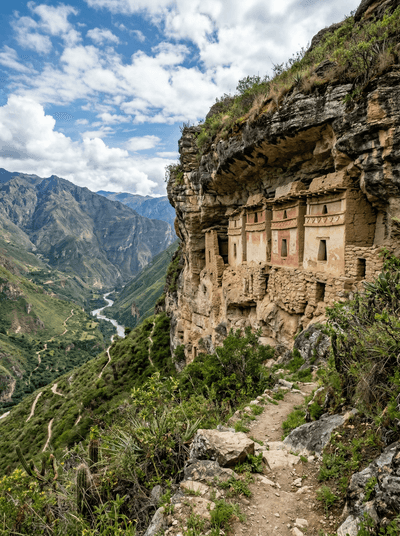
Revash
Peru
Miniature painted houses for the dead, set into a cliff above swirling cloud forest.