Peru
Revash
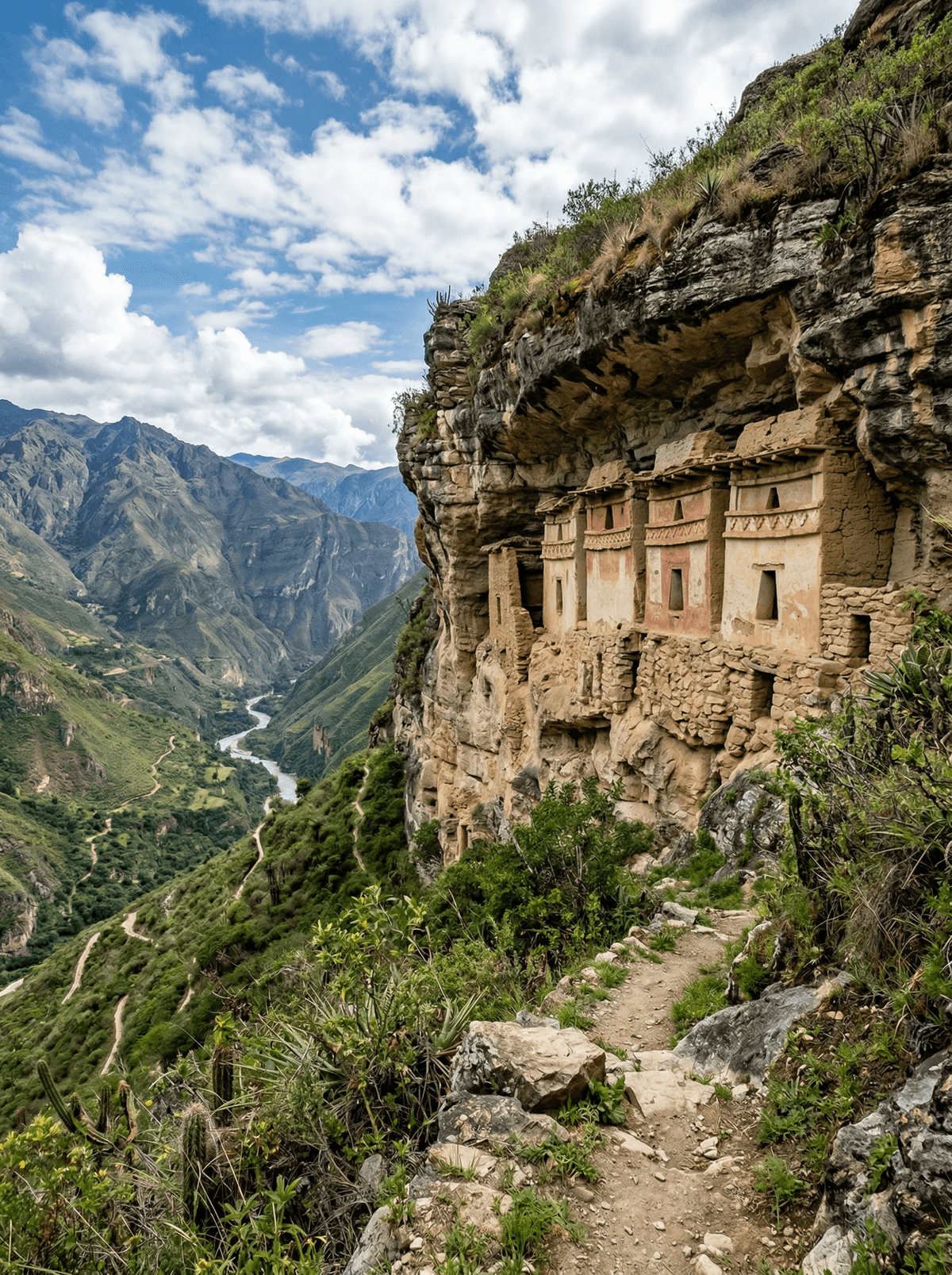
Miniature painted houses for the dead, set into a cliff above swirling cloud forest.
The tombs do not look like tombs. They look like a miniature village — red-and-cream houses with gabled roofs gathered beneath a limestone overhang, mist rolling past their doorways. From the viewpoint across the valley they seem almost cheerful. Then the scale registers: each little house was built for the seated dead, not the living.
Revash is a Chachapoya funerary complex near San Bartolo in Amazonas — collective mausoleums built into a protected cliff recess, their house-like facades and red geometric motifs still legible after centuries of weather. The Chachapoya buried generations here, keeping their ancestors above the valley in architecture that mimics the world of the living; the established viewing area across the gorge is the right and respectful distance. The approach is a rural trail through farmland the Chachapoya themselves terraced, and the pairing that completes it is the museum at Leymebamba, where recovered textiles and mummies give the painted cliff its full context — spectacle traded for understanding.
Solo
For travellers who go deep for one extraordinary sight — village trail, cloud-forest mist, and the painted cliff arriving all at once in one atmospheric day.
Couple
The painted tombs' strange beauty pairs with Karajía and Kuélap into days of shared discovery, with Leymebamba's museum as the interpretive key.
- Gable-roofed mausoleums cluster beneath the overhang like a village for the dead.
- Red geometric motifs still mark the facades after centuries exposed.
- The viewing area across the gorge keeps the burials at a respectful distance.
- Leymebamba's museum supplies the textiles and context the cliff withholds.
Caldo verde — thick herb-and-potato soup — at village stops along the trail.
Manjar blanco on fresh bread from highland farmhouse kitchens.
Pare Mountains
Tanzania
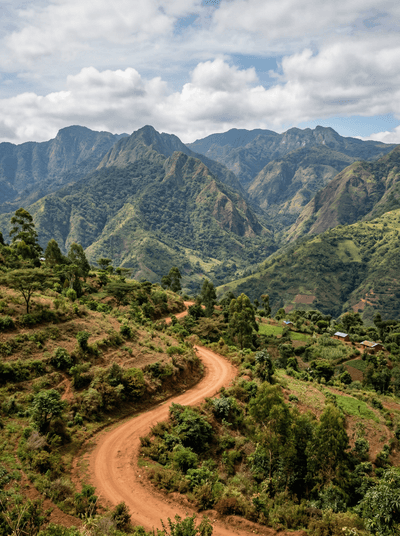
Irrigation channels cut centuries ago still water the terraces below.
Pitões das Júnias
Portugal
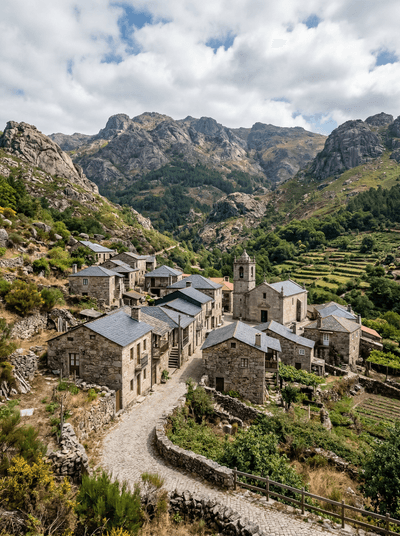
A monastery abandoned to wolves and rain crumbles beside a waterfall at the road's end.
Carnarvon Gorge
Australia
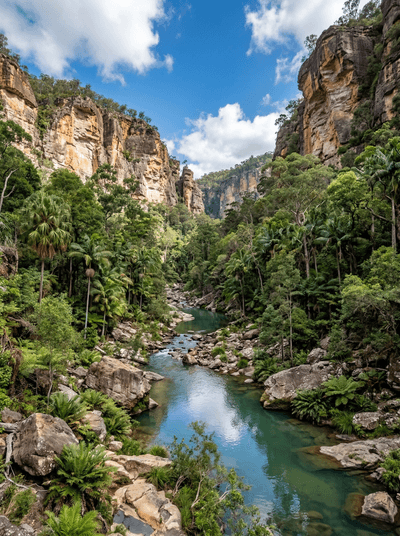
Ochre stencils crowd sandstone walls deep beyond a gorge of palms and creek crossings.
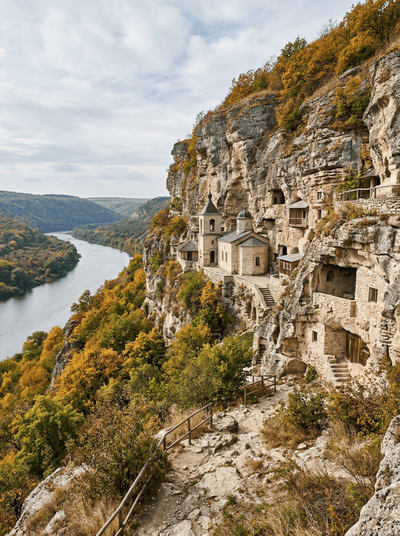
Țipova
Moldova
Hermit cells climb a Dniester cliff where legend buries Orpheus in a nook of a waterfall.
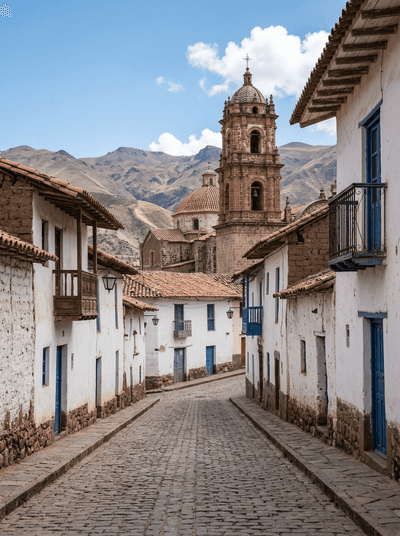
Lampa
Peru
A rose-pink Andean town hiding a full-scale Pietà replica in its colonial church.
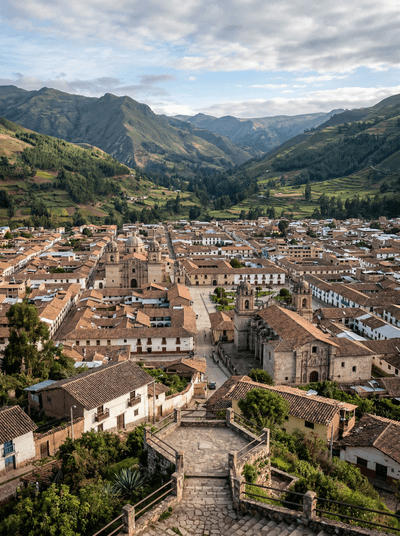
Cajamarca
Peru
The stone room where the last Inca emperor offered to fill the walls with gold.
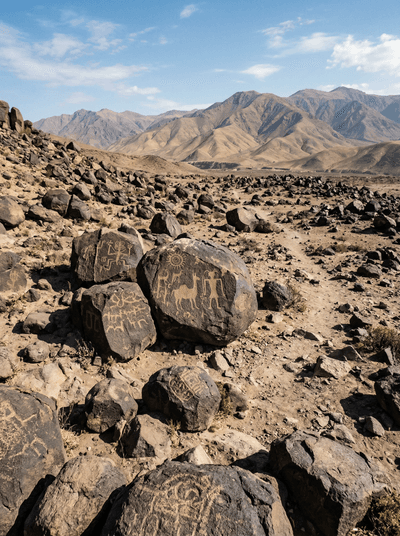
Toro Muerto
Peru
A desert of engraved boulders — thousands of petroglyphs, barely a visitor.
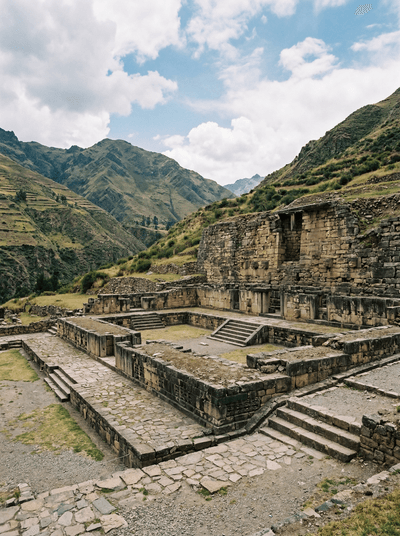
Chavín de Huántar
Peru
Underground galleries where a fanged god has waited in the dark for 3,000 years.