Peru
Cumbemayo
Pre-Inca aqueducts carved through living rock — still channelling water after millennia.
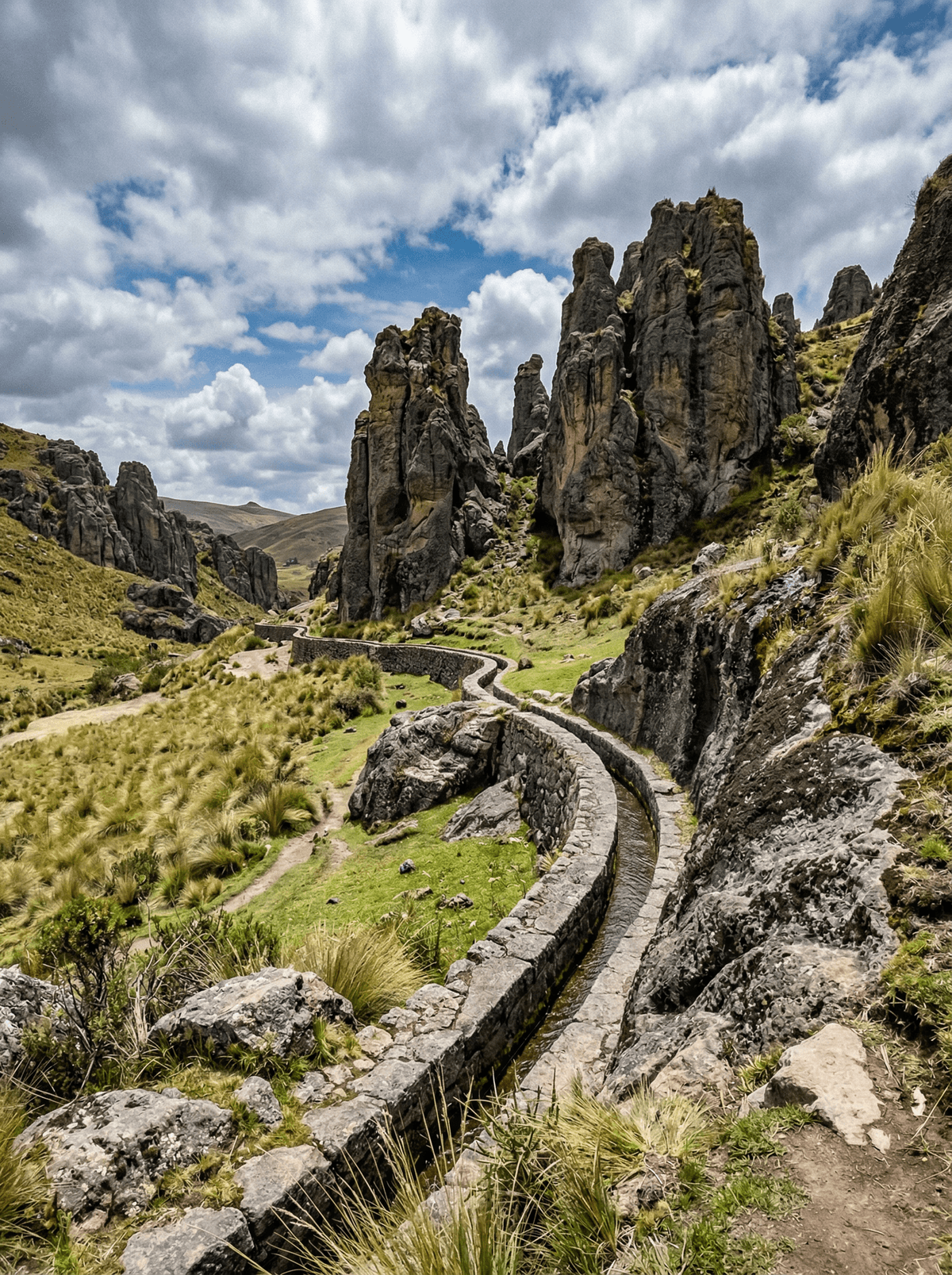
Water runs through channels cut into bare volcanic rock, turning crisp right angles that look machined. The precision shouldn't exist at 3,500 metres in pre-Inca Peru, and yet here it is underfoot — while around it the Frailones rise from cold grassland like a procession of hooded stone monks, frozen mid-stride.
Cumbemayo, twenty kilometres from Cajamarca, pairs two wonders that would each justify the drive. The first is hydraulic: a rock-cut channel system held to be among the oldest water engineering in the Americas, its kilometres of course worked with deliberate angled turns and shaped cross-sections that slow the flow and spare the stone — carved petroglyphs near the channel confirming that water here was ritual as much as resource, though the carvers' identity stays honestly unknown. The second is geological: the Frailones, volcanic tuff eroded into monk-like pillars that crowd the plateau. Road access makes it an easy half-day from the city; the altitude, cold and open weather deserve more respect than the short drive suggests.
Solo
Tracing the carved channel alone among the stone friars, the engineering feels left for exactly one person to find.
Couple
Enigmatic engineering plus otherworldly rock gives a pair two studies in one walk, with Cajamarca's colonial pleasures saved for the afternoon.
- The rock-cut channels rank among the Americas' oldest water engineering.
- Angled turns and shaped cross-sections slowed the flow to spare the stone.
- Petroglyphs by the channels mark water as ritual — their carvers still unknown.
- The Frailones crowd the plateau like a procession of hooded stone monks.
A packed market lunch from Cajamarca — fresh cheese, manjar blanco, warm humitas.
Caldo verde at a roadside stop on the drive back down.
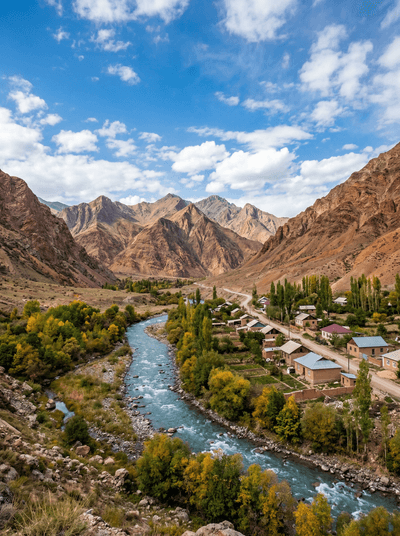
Kyzyl-Oi
Kyrgyzstan
A village of red clay houses inside a red-rock gorge, settled before the Soviets rearranged Kyrgyzstan.
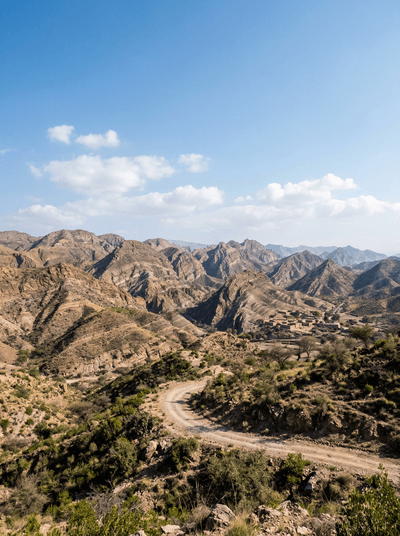
Salt Range
Pakistan
Crimson salt cliffs exposing the floor of a 600-million-year-old vanished ocean in Punjab's flat plains.
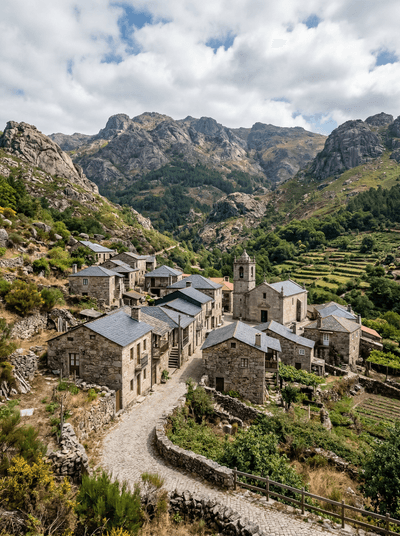
Pitões das Júnias
Portugal
A monastery abandoned to wolves and rain crumbles beside a waterfall at the road's end.
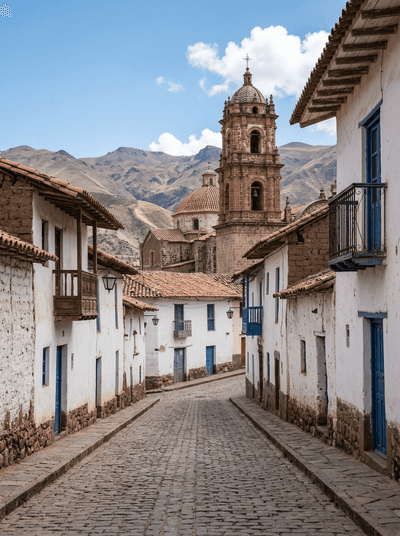
Lampa
Peru
A rose-pink Andean town hiding a full-scale Pietà replica in its colonial church.
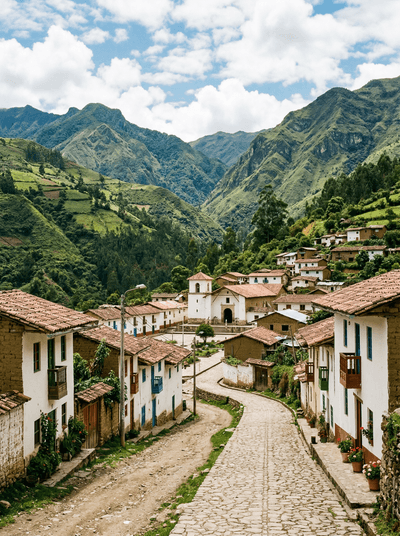
Leymebamba
Peru
A cloud-forest town guarding two hundred rescued Chachapoya dead with personal tenderness.
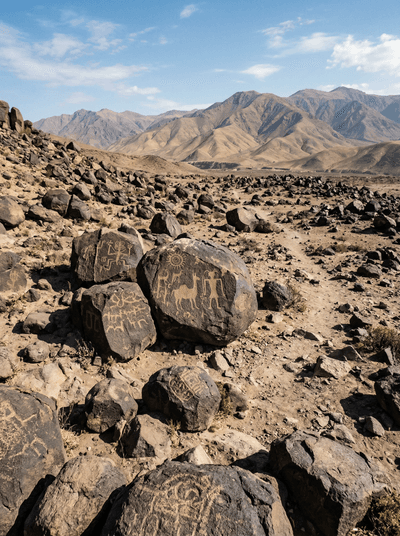
Toro Muerto
Peru
A desert of engraved boulders — thousands of petroglyphs, barely a visitor.
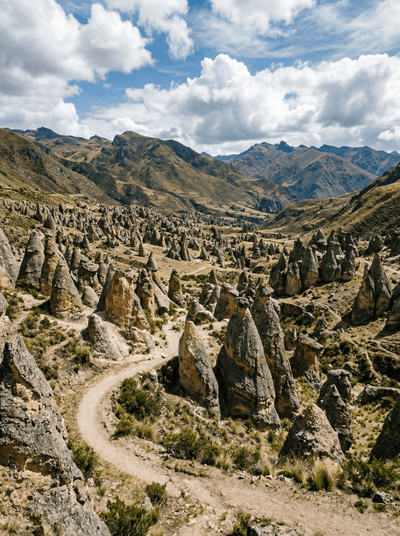
Pampachiri Stone Forest
Peru
Stone pillars rising from the high puna like a petrified army at 4,000 metres.