Argentina
Península Valdés
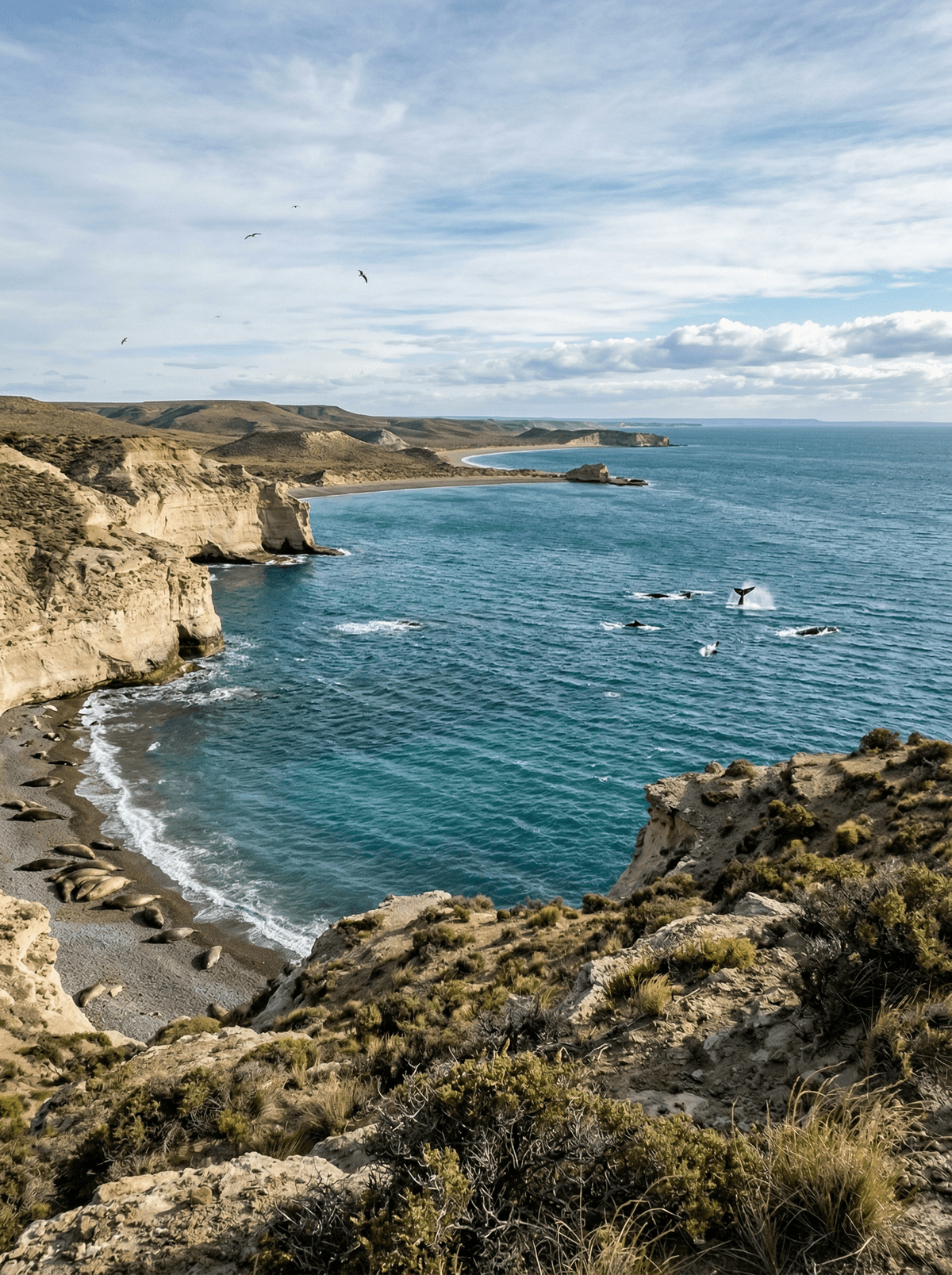
Right whales breach in sheltered gulfs where orcas hunt sea lions in the surf.
Southern right whales return to these sheltered gulfs each season, and the research here has continuity few coastlines can match — mothers photographed as calves decades ago now bring their own calves, identified by the white callosities on their heads. Península Valdés juts into the South Atlantic as a flat, wind-scoured plateau ringed by water on three sides, and its concentration of whales, orcas, elephant seals, penguins and guanacos is why UNESCO listed it in 1999.
The peninsula covers 3,625 square kilometres of Patagonian steppe and coast, protected as a provincial reserve since 1983. Its two gulfs — Golfo Nuevo and Golfo San José — make it nearly an island, sheltering marine life unlike anywhere else on this coast, and Puerto Pirámides gives the reserve its one practical human base. At Caleta Valdés and Punta Norte, orcas have learned to surge onto the gravel to take sea lion pups in the shallows — a hunting behaviour documented at barely a handful of sites worldwide, and witnessed on the tide's schedule and the orcas' own, never on demand. Every encounter here runs the same way: signed viewing areas, licensed boats, seasonal species and honest distances. The long circuit wants a full day, fuel and return times settled before departure.
Solo
Two days working the circuit from Puerto Madryn — whales one sector, elephant seals another — is the trip that makes a solo traveller wish for someone to explain it to in real time.
Couple
Whale-watching at dawn from the water under the reserve's rules, close enough to hear a whale exhale, is among South America's most intimate wildlife encounters, and the vast Atlantic light makes it feel personal.
Family
A child who sees an orca surge onto the beach after a sea lion remembers it for life — and a child who doesn't still gets penguins crossing a dirt road. The reserve teaches that wild animals keep their own diaries.
Friends
The full circuit is a day's driving, and the sequence — penguins at the roadside, a right whale surfacing beside cliffs, elephant seals arranged like geology — is best shared.
- Right whales fill the sheltered gulfs in season, met under the reserve's strict rules.
- Orcas beach themselves here to hunt — behaviour documented at barely a handful of sites worldwide.
- Elephant seals, penguins and guanacos share the UNESCO-listed shoreline.
- Sea lion colonies mass at Punta Norte by the thousand, announced by smell before sight.
Fresh mussels and octopus in Puerto Pirámides, eaten watching the gulf from the window.
Cordero al asador after a day of Atlantic wind, the Patagonian standard done properly.
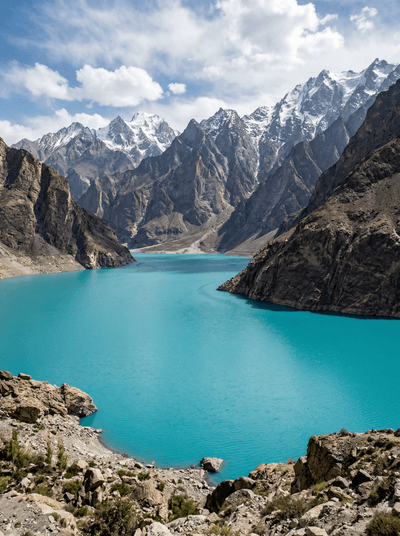
Attabad Lake
Pakistan
Turquoise water fills a valley that was dry land until a 2010 landslide dammed the river.
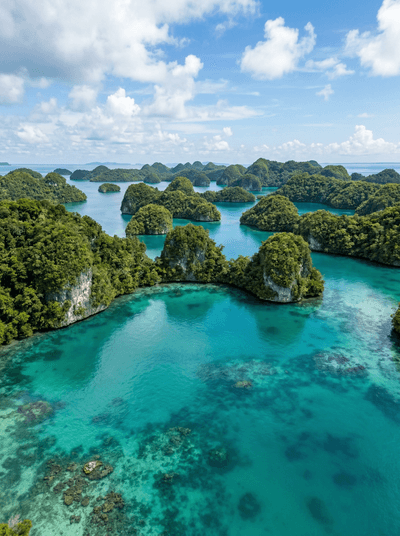
Rock Islands Southern Lagoon
Palau
Hundreds of mushroom-shaped limestone islands floating on water so clear the shadows have shadows.
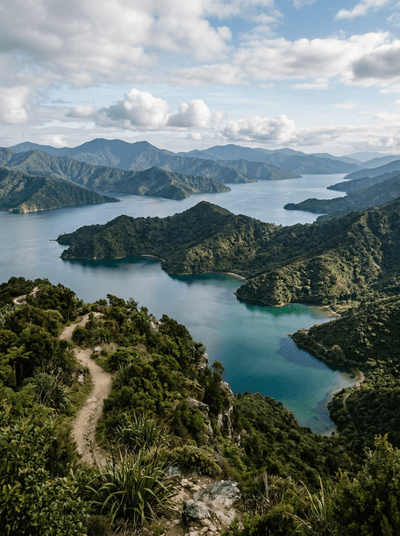
Marlborough Sounds
New Zealand
Drowned valleys folding whole seas of coastline into forested, road-shy waterways.
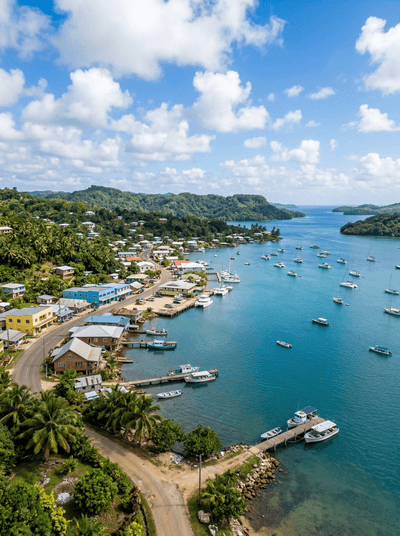
Neiafu
Tonga
The town that once hunted whales now sends swimmers, four at a time, to meet them.
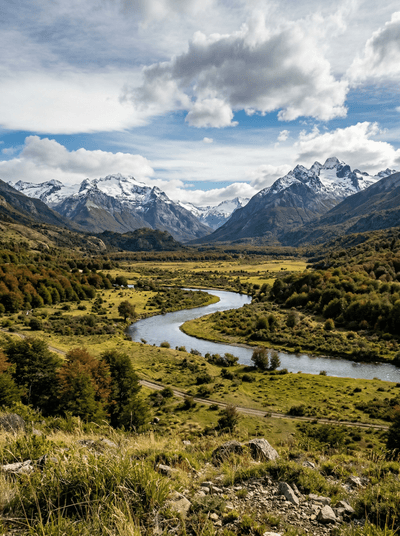
Cholila
Argentina
Butch Cassidy's cabin still stands in a valley where gauchos outnumber tourists.
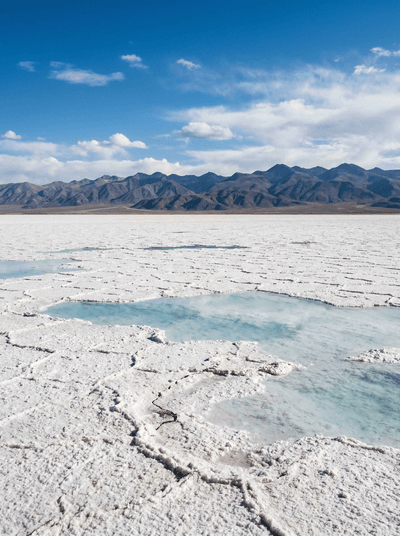
Salinas Grandes
Argentina
A salt flat so white it dissolves the horizon, cracked into hexagonal tiles.
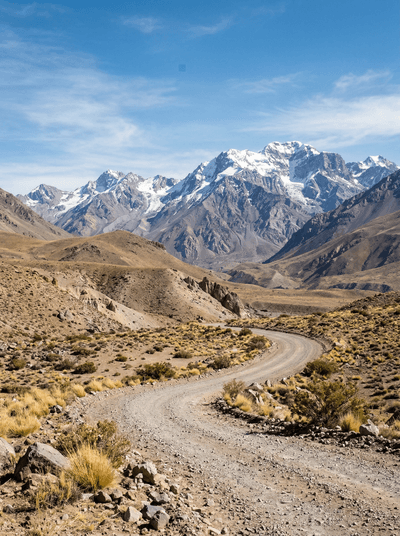
El Leoncito National Park
Argentina
Observatories under Argentina's clearest sky, where the Milky Way is bright enough to shadow.
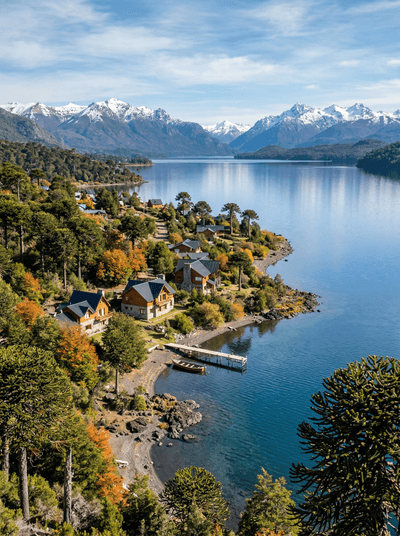
Villa Pehuenia
Argentina
Monkey puzzle trees cast dinosaur-era silhouettes over twin lakes rimmed in volcanic sand.