Argentina
Salinas Grandes
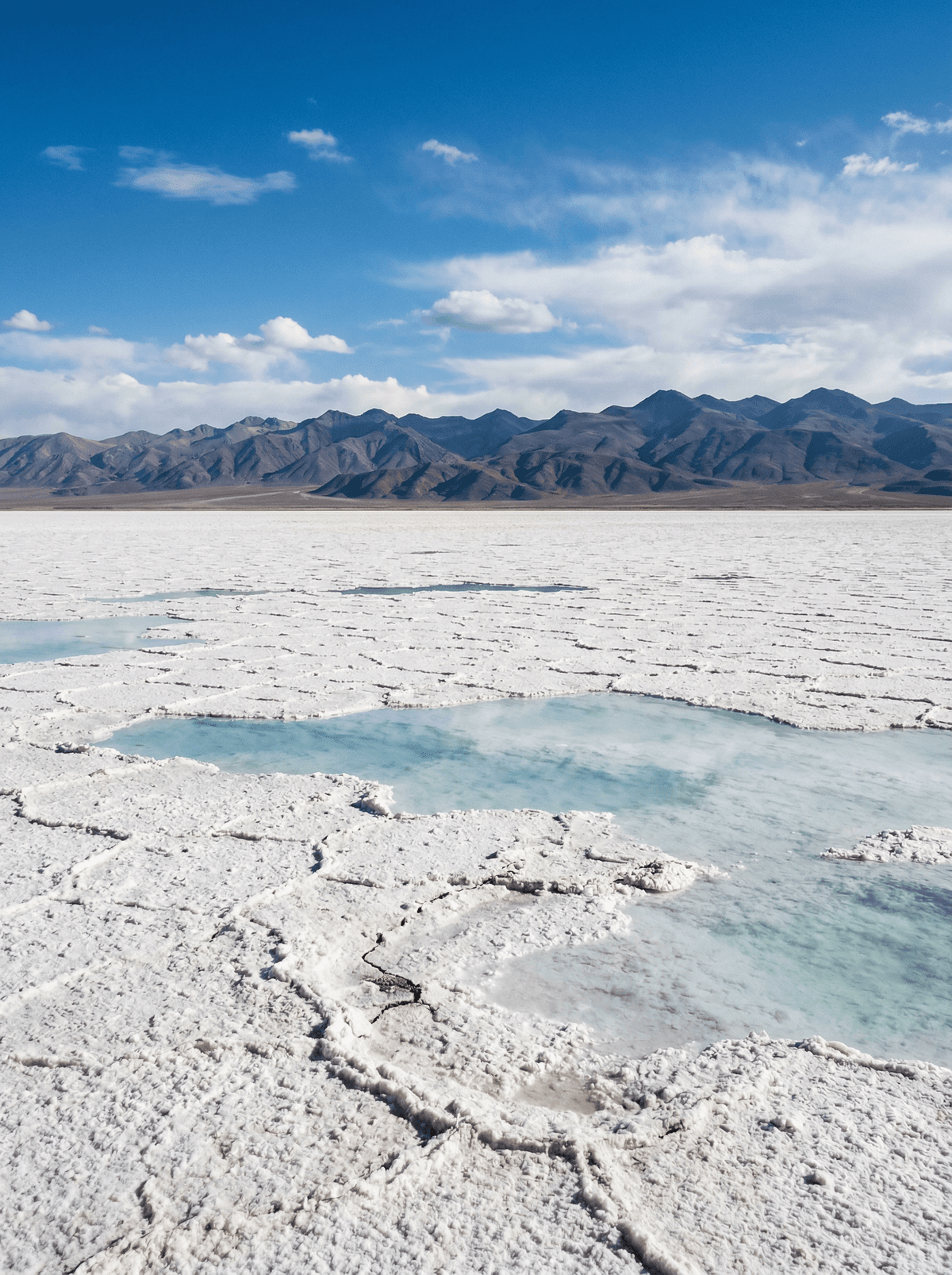
A salt flat so white it dissolves the horizon, cracked into hexagonal tiles.
Salinas Grandes lies at around 3,450 metres on the Jujuy–Salta border, an expanse of white crystal cracked into hexagonal tiles that run unbroken to every horizon. At midday the surface holds the sky with such precision that the boundary between land and air dissolves and depth perception quietly gives up. The scale has a human history too: working salt pools, and communities who have harvested here since long before the road existed.
Among South America's largest salt flats, Salinas Grandes sits on the high Puna, formed over millions of years as an endorheic basin — a closed drainage with no outlet to the sea — concentrated evaporated salts metres deep beneath the crystalline crust. Local Andean communities harvest the salt by traditional methods in continuity with pre-Columbian practice, and the visit follows their terms: authorised access points, community guides for any movement beyond the established stopping area, and respect for the working pools. The hexagonal geometry is thermal — freezing Puna nights and fierce solar days expanding and contracting the crust in endless miniature. The paved road over the Lipán Pass from Purmamarca climbs through cloud before the white appears suddenly and completely.
Solo
The flat's effect on perception — dissolving horizon, mirror sky, complete silence — rewards the sustained attention that is easier to find alone, and recalibrates scale in an hour.
Couple
Photographs taken here belong to a different register from ordinary travel images — white geometry and reflected sky unlike anything in ordinary visual experience, with the Lipán Pass climb as overture.
Family
The mirror effect and salt sculptures captivate children on contact, and the sheer improbability of a white plain at this altitude makes it a natural family stop — taken slowly, shaded, inside the community-managed zone.
Friends
Groups invariably stay longer than planned, and the surrounding Puna of flamingo lagoons and volcanic cones extends the circuit well beyond the flat — guided, on known roads.
- At altitude the sky holds a blue intensity that erases the line between ground and air.
- Salt sculptures appear for sale at the flat's authorised edge — the harvest's artisan side.
- Hexagonal cracks tile the crust, drawn by freezing nights and fierce days.
- The working salt pools lie beyond the public stopping area — entered only on community terms.
Llama empanadas from roadside vendors on the climb from Purmamarca.
Coca tea taken strong at the flat's edge, as the Puna takes it.
Saleaula Lava Fields
Samoa
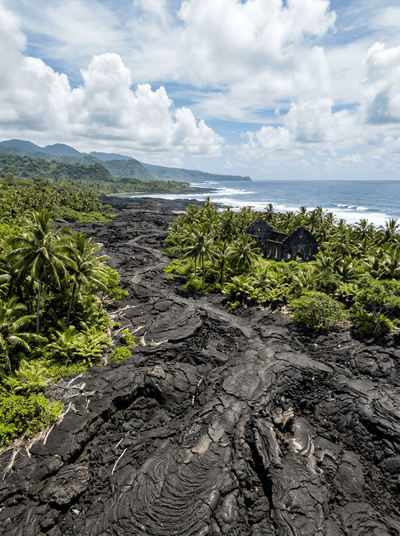
The lava filled a church to its windows yet parted around a single grave.
Painted Desert
Australia
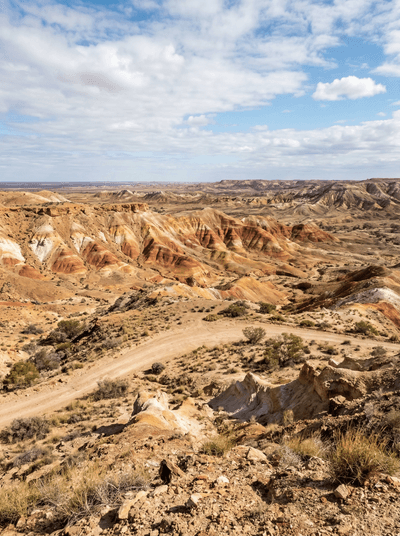
Crimson, cream and gold hills erupt from flat outback beside a remote public route.
Castellana Grotte
Italy
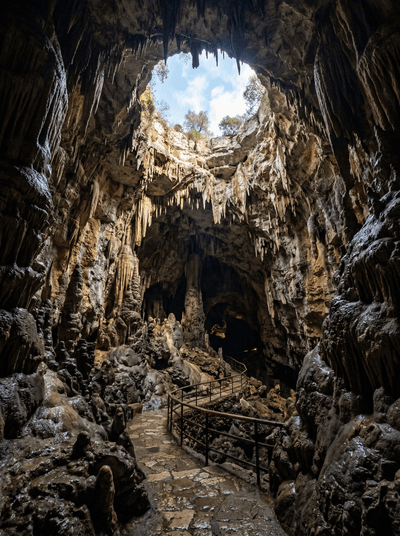
Underground caverns where a single shaft of daylight illuminates a cathedral-sized void beneath Puglia.
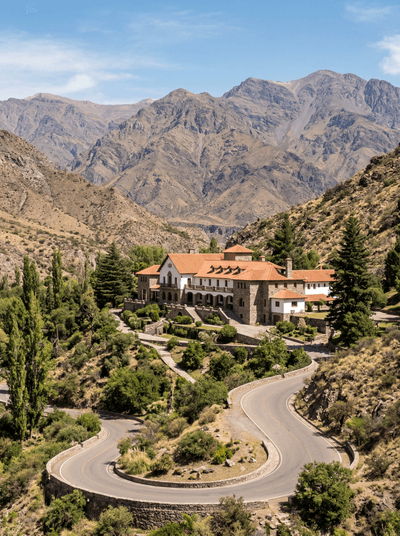
Villavicencio
Argentina
The shuttered hotel printed on every Argentine water bottle stands beyond mountain switchbacks.
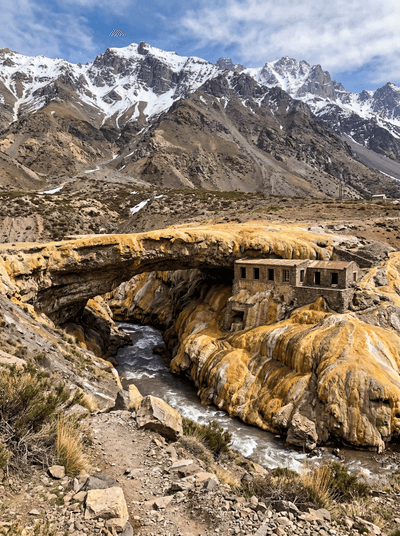
Puente del Inca
Argentina
A natural stone bridge stained sulphur-yellow, slowly absorbing the ruins of a spa hotel.

Buenos Aires
Argentina
Tango echoes through faded ballrooms where strangers dance until the city wakes.
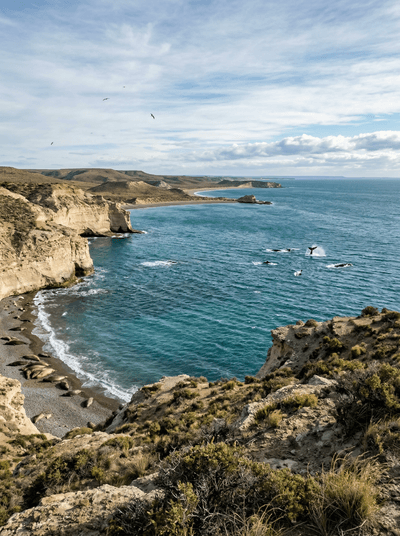
Península Valdés
Argentina
Right whales breach in sheltered gulfs where orcas hunt sea lions in the surf.