Portugal
Pico
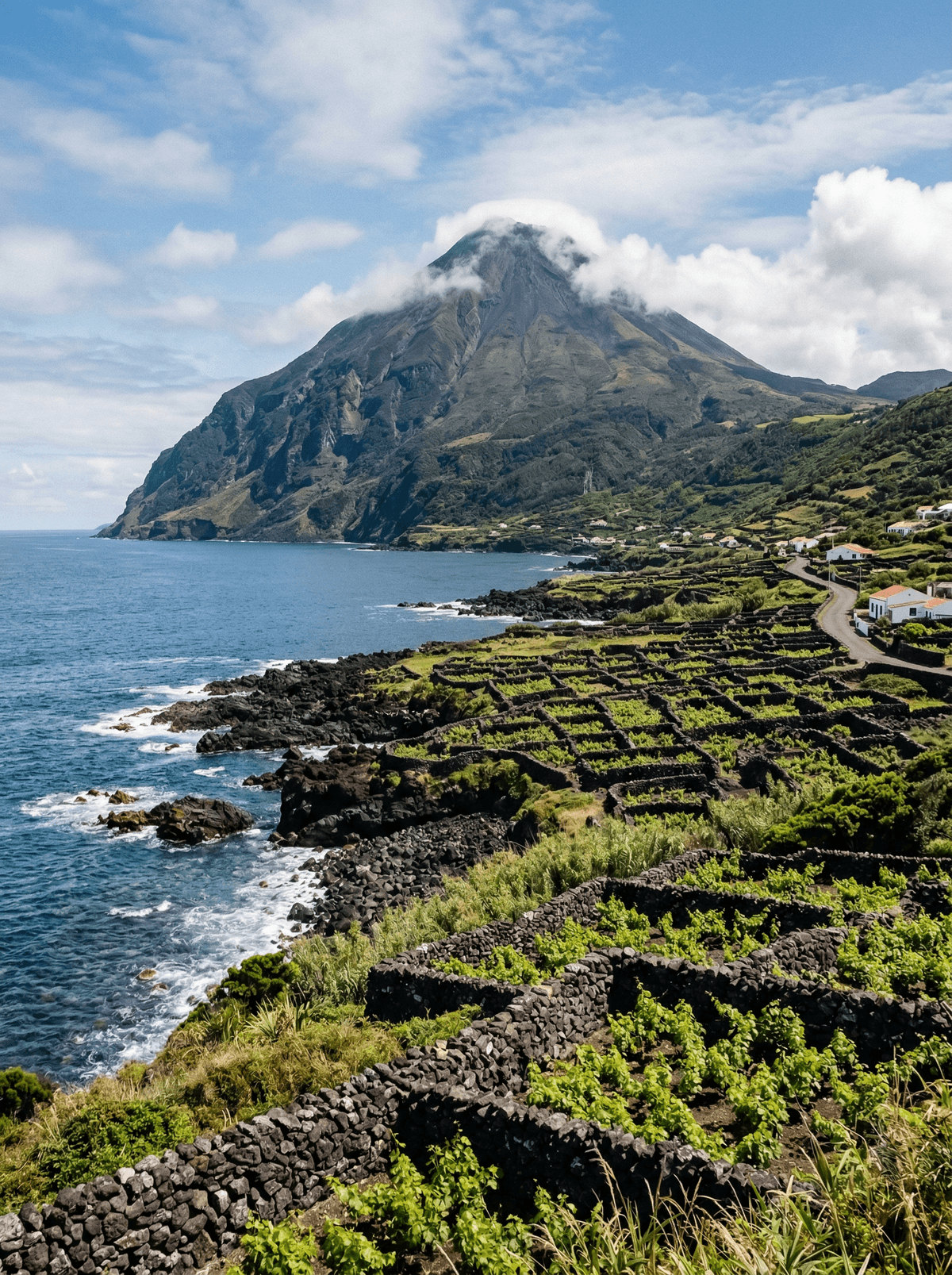
Portugal's highest peak rises from the Atlantic above vineyards in black lava corrals.
The mountain materialises at dawn — a volcanic cone punching through the cloud layer at 2,351 metres, its summit pink before the sun touches the sea below. At its base, black lava walls run in tight grids across the coastal lowlands, sheltering grapevines inside corrals so distinctive UNESCO listed the whole landscape.
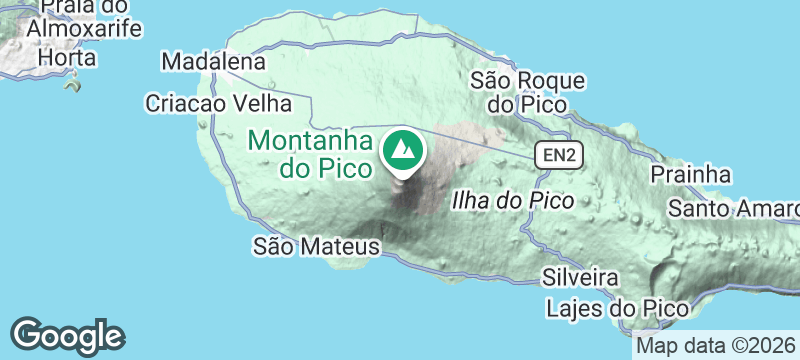
Pico joins two monumental landscapes and asks that each be taken seriously on its own. The mountain climb is registered and regulated — most parties start in darkness, hours of lava field and volcanic scree to a crater rim where fumarolic warmth still leaks, timed for sunrise with the Atlantic spread to every horizon, and attempted only on a suitable forecast. The coast below holds the other wonder: the UNESCO-listed currais, small basalt enclosures sheltering individual vines from wind and salt while the black stone banks the day's heat — a winemaking architecture unique in the world, planted since the Franciscans of the fifteenth century. Offshore, a deep canyon keeps sperm whales resident year-round, and lava tubes thread the island beneath the vineyards.
Solo
A solitary endeavour above the clouds — pre-dawn start, sunrise from the roof of Portugal — then a descent to wine among the black corrals for a complete contrast in pace.
Couple
Wine grown inside volcanic walls, sperm whales sounding beyond the harbour, and the country's highest sunrise — the raw and the refined paired for two, mountain reserved for the right forecast.
Friends
The registered climb is better shared — midnight starts, scree scrambles, Portugal's rooftop together — followed by a bottle from the lava-walled vines you have earned.
- The 2,351-metre cone rises straight from sea level with no foothills at all.
- The basalt currais are a winemaking architecture with no equal on Earth.
- A deep offshore canyon keeps sperm whales resident in these waters year-round.
- The climb runs on registration and forecast, crater fumaroles still warm at the top.
Wine from the lava-stone vineyards, vines sheltered by the black currais walls.
Grilled limpets and island cheese, washed down with volcanic-soil white.
Rincón de la Vieja
Costa Rica
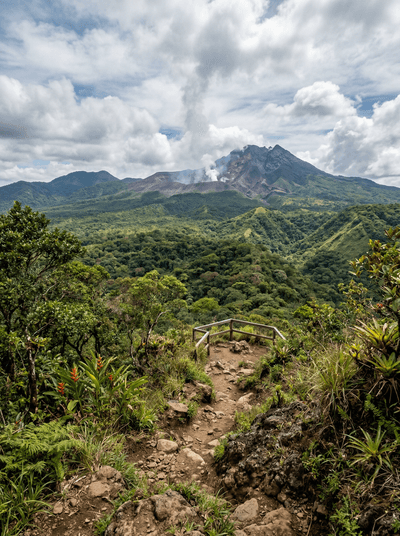
Volcanic mud pots belch and bubble through dry tropical forest like the earth digesting itself.
Edge of the World
Saudi Arabia
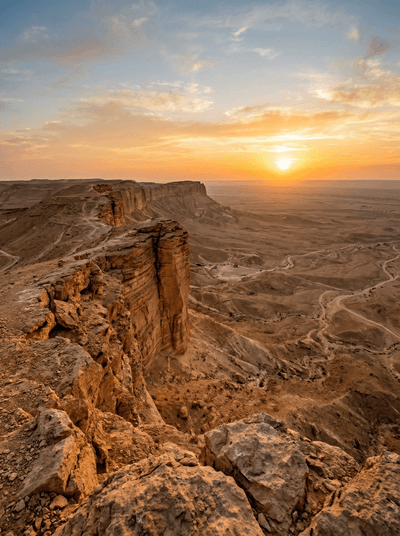
A cliff edge where the land simply stops and flat desert stretches to infinity.
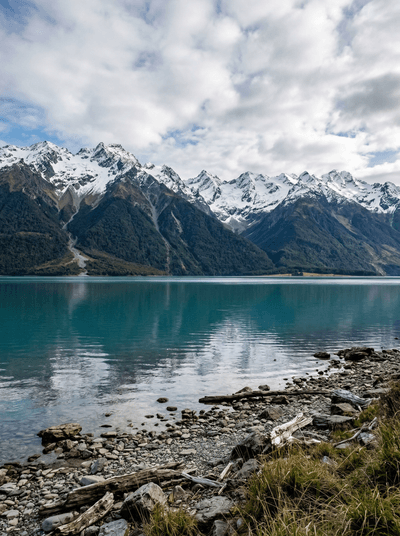
Glenorchy
New Zealand
The road stops here — a glacial lake against trackless mountains at Fiordland's edge.
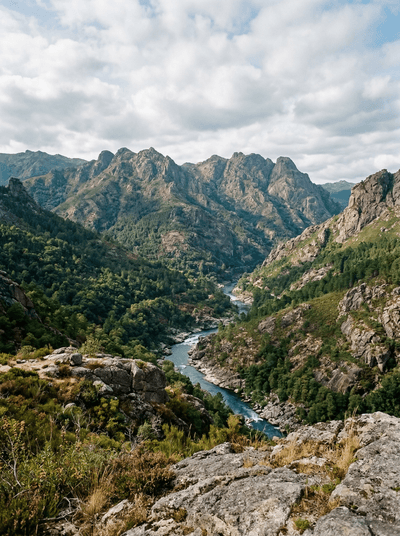
Peneda-Gerês
Portugal
Portugal's only national park — granite canyons, wild horses, Roman milestones on lost paths.
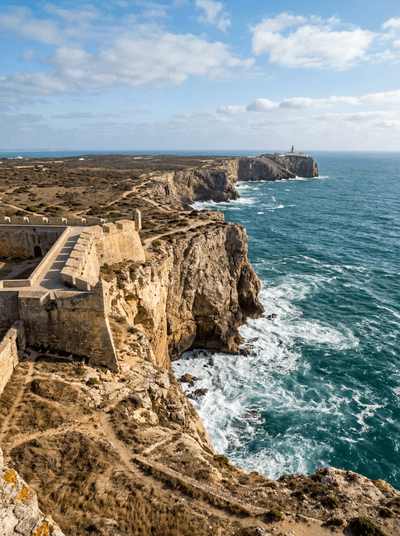
Sagres
Portugal
Wind strips the promontory raw — beyond this cliff, cartographers once drew sea monsters.
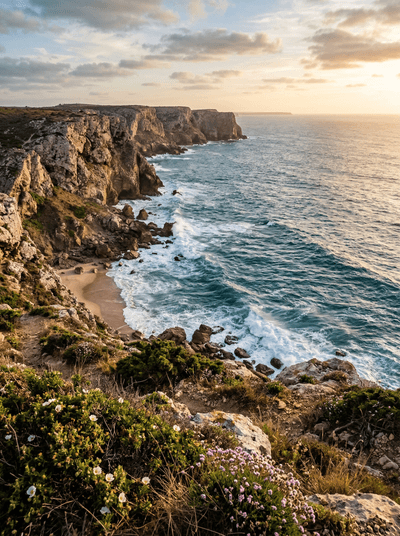
Costa Vicentina
Portugal
Among Europe's last wild coasts — empty surf detonating beneath clay-red cliffs for miles.
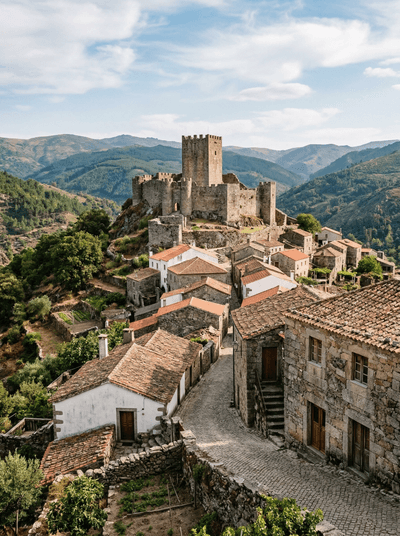
Linhares da Beira
Portugal
A medieval village doubling as a paragliding launch above a glacial valley.