Mexico
Puebla
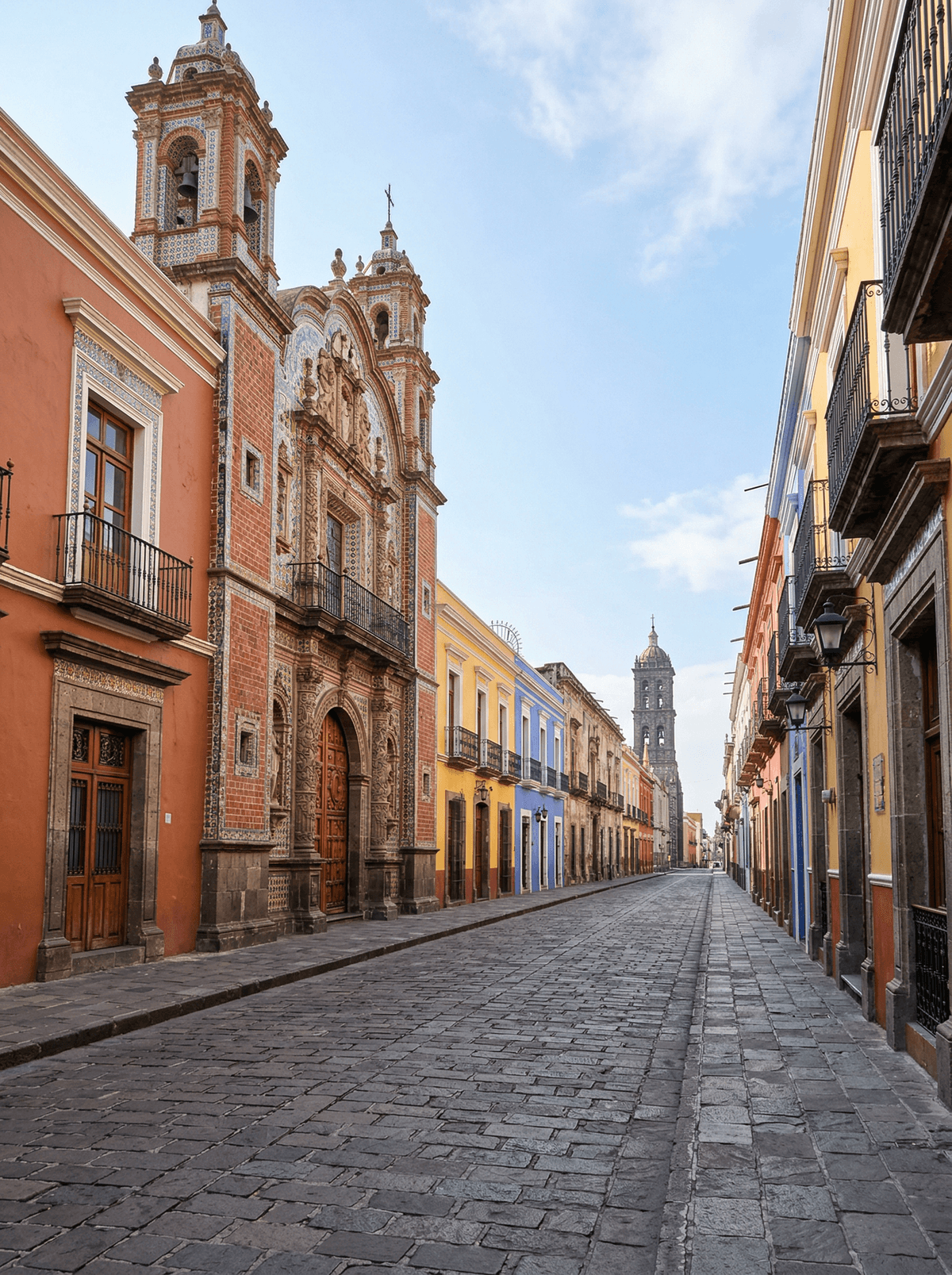
A Talavera-tiled city where facades dazzle blue and white, and mole poblano carries its name.
The tiles do the talking here. Whole building fronts wear blue-and-white Talavera, kitchens included, in a city that treats ceramics and cooking as one continuous art.
Puebla has produced Talavera pottery since the sixteenth century, and its tiled facades frame a centre that also holds the Biblioteca Palafoxiana, founded in 1646 as the Americas' oldest public library. Mole poblano's convent origin is a story the city loves to tell, and chiles en nogada came from Puebla's family kitchens rather than any single legend. Eating here is the itinerary.
Couple
Eat the canon in order: mole, cemitas, and the season's chiles en nogada.
Family
Pair the tiled streets with the library and the sweet shops of Calle de Santa Clara.
Friends
Split the centre's kitchens between you and compare moles by nightfall.
- Talavera pottery has been produced here since the sixteenth century, tiling whole facades.
- The Biblioteca Palafoxiana, founded in 1646, is the oldest public library in the Americas.
- Puebla's kitchens carry mole poblano and the seasonal chiles en nogada born in the city's family cooking.
- The centre's churches, museums and sweet shops fill days between meals.
Mole poblano over turkey balances toasted chillies, spices, seeds and cacao.
Chiles en nogada, born in Puebla's family kitchens, are dressed with fresh Castile walnuts, milk, goat's cheese and a little wine or sherry.
Sarlat-la-Canéda
France
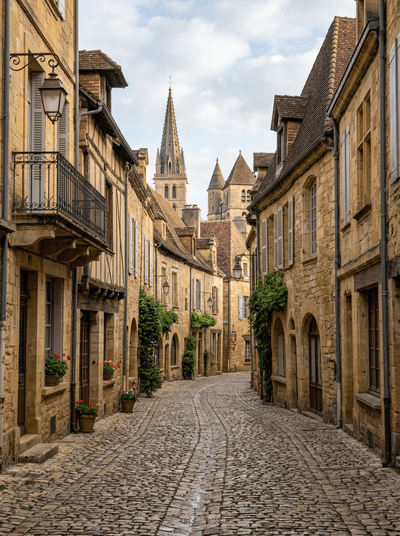
Honey-coloured stone and truffle-scented market air in a medieval town preserved almost by accident.
Taormina
Italy
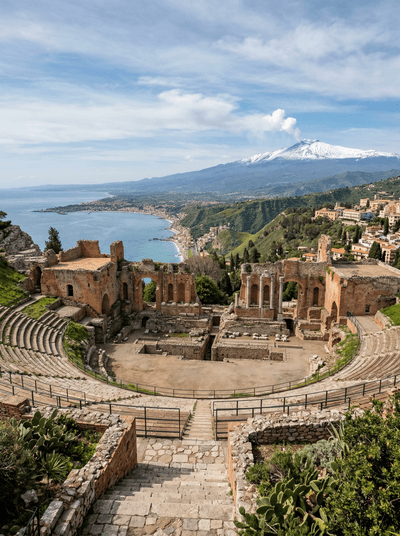
A Greek theatre where Etna smoulders behind the stage, the sea glittering far below.

Islamabad
Pakistan
Wild leopards prowl forested hills behind a mosque shaped like a Bedouin tent in white marble.
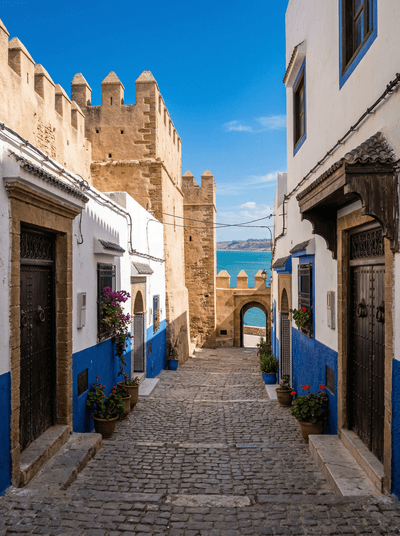
Rabat
Morocco
A forty-four-metre minaret still waits for the mosque that died with its sultan.
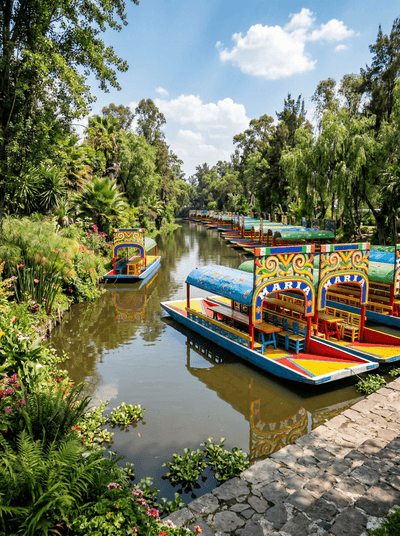
Xochimilco
Mexico
Working chinampas survive beyond the music and colour of Xochimilco's trajineras.
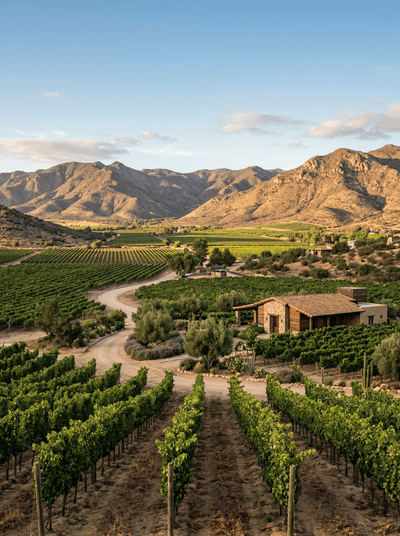
Valle de Guadalupe
Mexico
Dusty vineyard roads link cellar doors and open-fire kitchens across northern Baja.
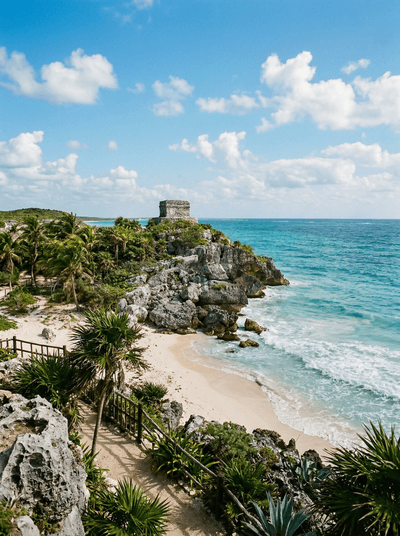
Tulum
Mexico
Grey Maya stone holds a cliff edge above white sand and turquoise surf.
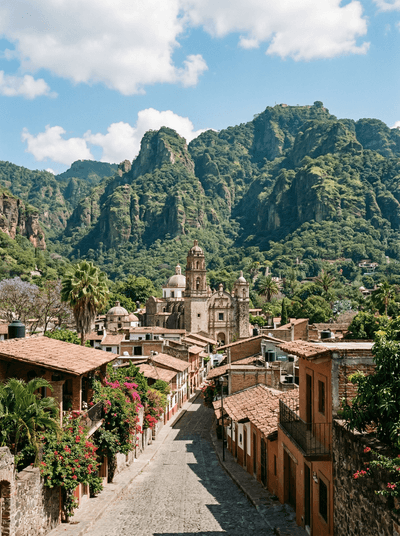
Tepoztlán
Mexico
Volcanic walls cradle a market town of chapels, food and mountain weather.