England
Ravenglass
A Roman bathhouse crumbles beside a narrow-gauge steam railway where the estuary empties to sand.
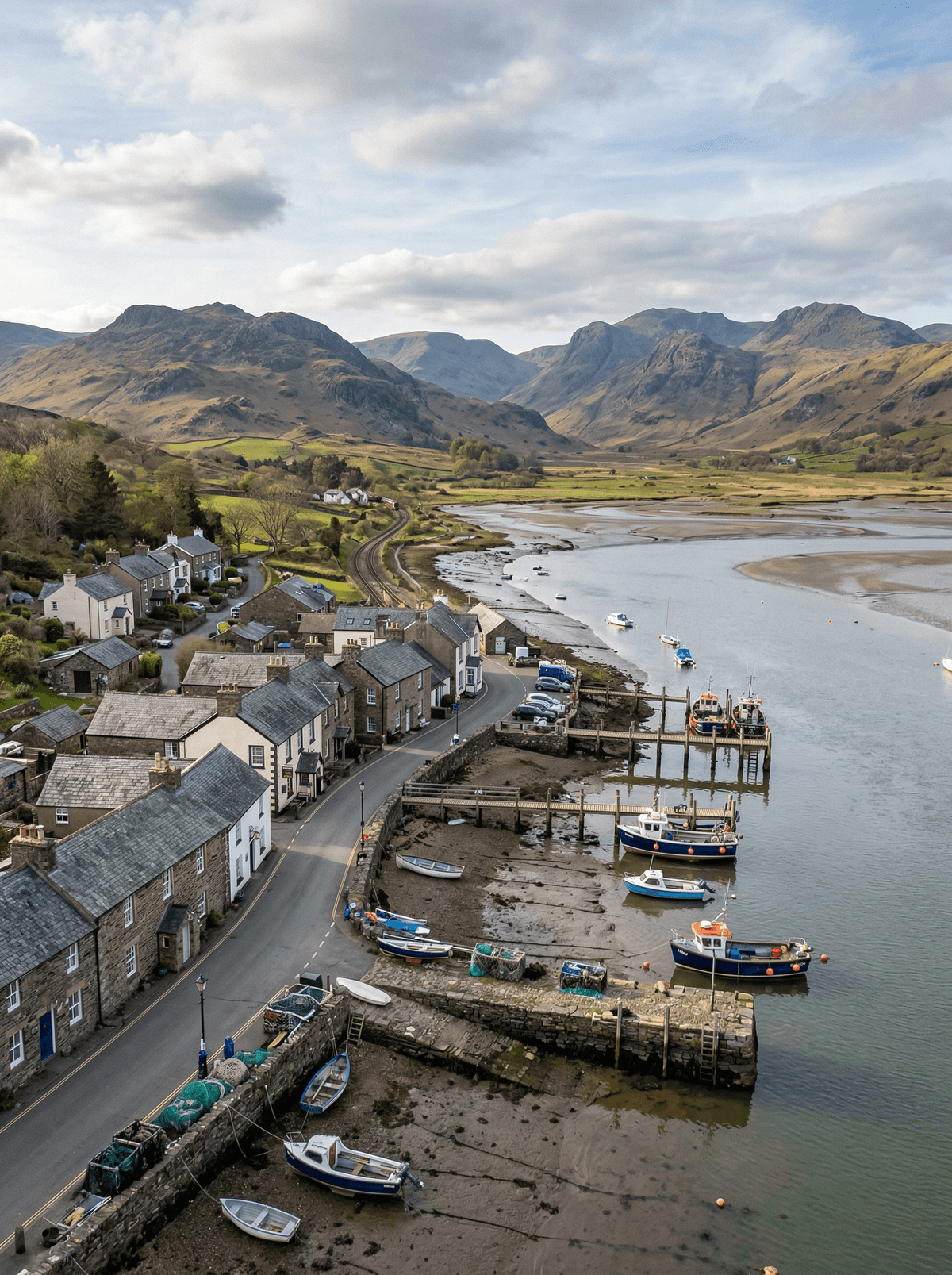
A Roman bathhouse stands roofless in a field beside a narrow-gauge railway that runs steam trains into the mountains, and between them an estuary empties to sand and silence. Ravenglass is where the Roman Empire, the Victorian railway age and the wildest coast of the Lakes converge on a single village street.
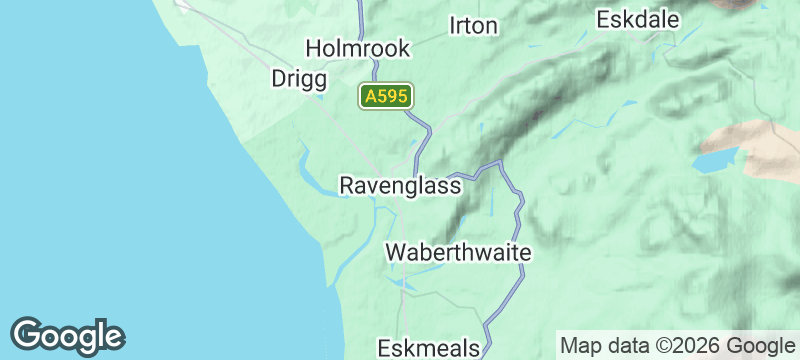
Ravenglass stands where three rivers meet — Esk, Mite and Irt — the only coastal village inside the Lake District National Park. The Roman bathhouse at Walls Castle keeps walls standing four metres high, among the tallest Roman remains in Britain, tucked behind a farmer's field with no ceremony at all. La'al Ratty — the fifteen-inch-gauge Ravenglass and Eskdale Railway — steams seven miles up the valley to Dalegarth through country no road serves, while the estuary's protected sands host breeding gulls, terns and waders in numbers that comfortably outvote the humans. Muncaster Castle, seat of the Pennington family since 1208, guards the valley mouth a mile away, and the dune coast running south is among England's least-visited national-park shorelines. A railway café, a pub, a ruin: nothing more, and nothing more needed.
Solo
The estuary at low tide, the bathhouse in its empty field, the steam whistle fading up the valley — Ravenglass layers its solitudes, and the Lakes feel like they belong to the sea.
Couple
Steam to Dalegarth, walk the river, return for the estuary sunset — Roman ruin, railway and coast covering two thousand years in a day.
Family
La'al Ratty's narrow carriages, the mountain scenery and the Dalegarth turntable delight children — add the ruin and the sands and the day teaches by doing.
- Four-metre Roman walls hide behind a farmer's field without ceremony.
- La'al Ratty steams seven miles into a valley no road reaches.
- Seals and oystercatchers outnumber people where three rivers meet the sea.
- A café, a pub and a ruin — nothing more, and nothing more needed.
A Cumberland sausage sandwich eaten hot on the platform in a cloud of steam.
A quiet pint by the estuary while the tide runs out to Roman distances.
Howick Falls and Mandela Capture Site
South Africa
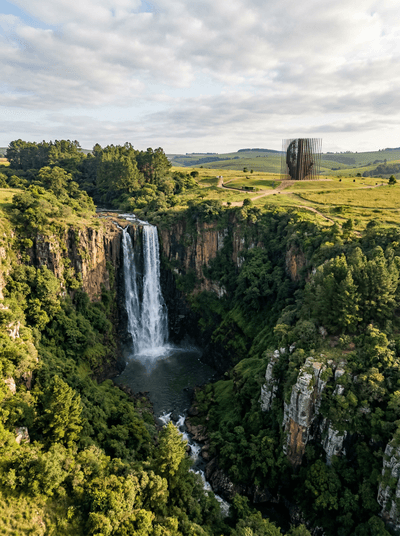
Fifty steel columns resolve into Mandela's face near the road where police arrested him.
Philae Temple
Egypt
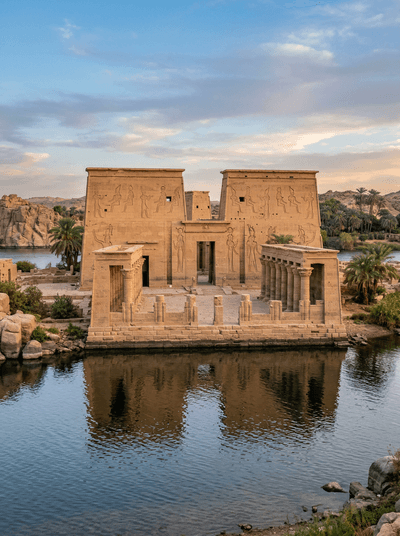
A temple rescued from rising waters, reassembled stone by stone on an island in the Nile.
Aswan
Egypt
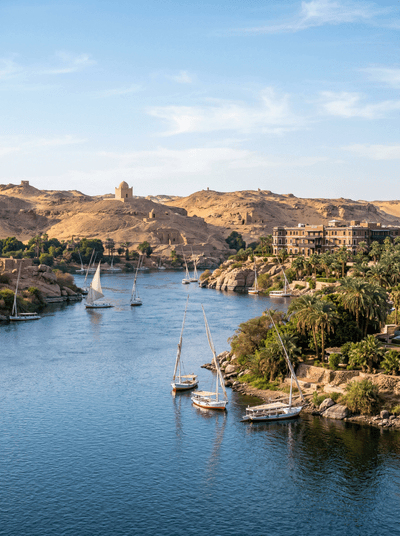
Feluccas gliding past granite islands where the Nile runs quietest and Nubian colour blazes.
Chiloé Island
Chile
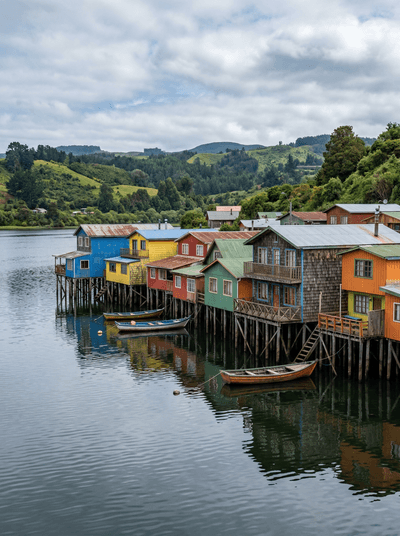
Palafitos, timber churches and ferries unfold through an archipelago softened by rain.
Oxford
England
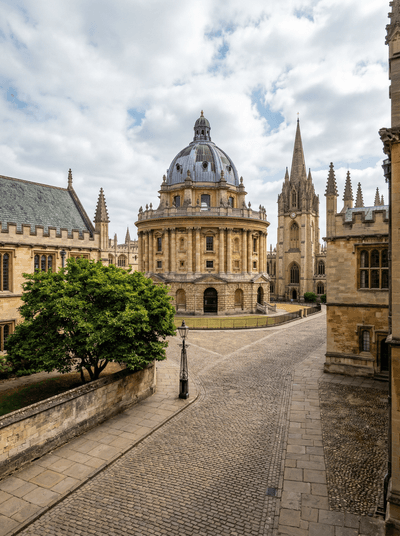
Gargoyles stare from spires so dense the skyline looks like a stone forest.
Chester
England
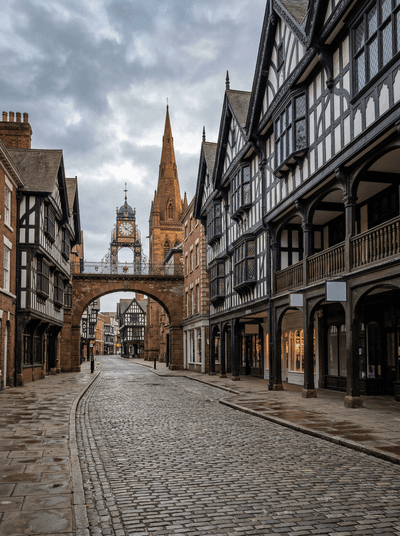
Roman walls circle a city where Tudor galleries float above street-level shopping arcades.
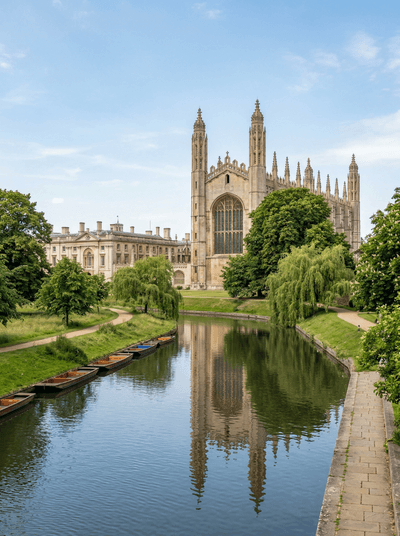
Cambridge
England
Punts glide beneath mathematical bridges over water that has mirrored genius for centuries.
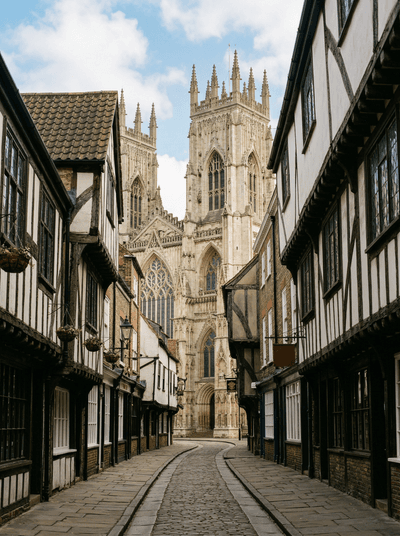
York
England
Viking streets and medieval snickelways where every alley hides a different century.