Egypt
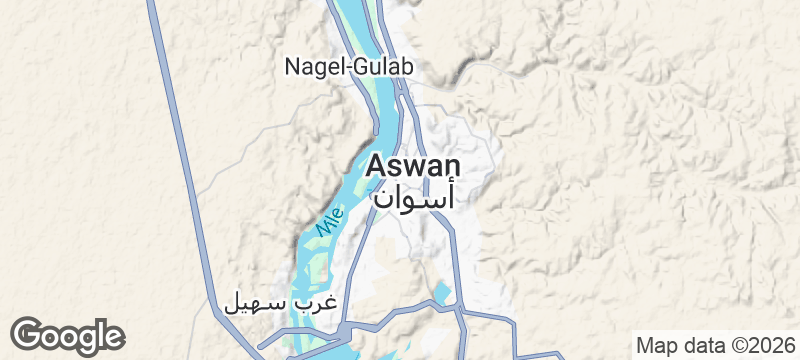
Aswan
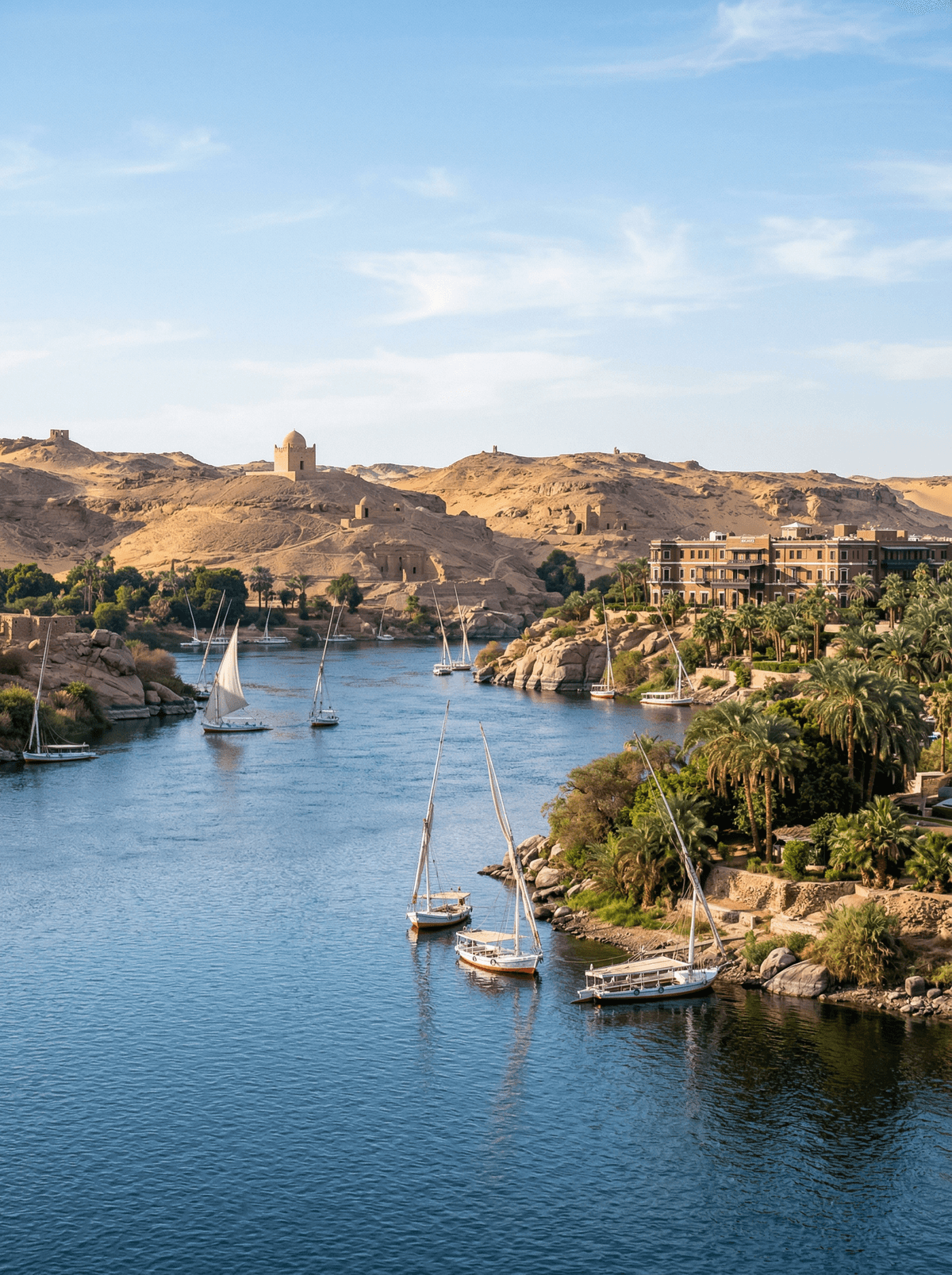
Feluccas gliding past granite islands where the Nile runs quietest and Nubian colour blazes.
The Nile runs clearest at Aswan, sliding between polished granite islands in a blue the north never sees. Felucca sails catch the late-afternoon breeze past Elephantine Island, where Nubian villages blaze turquoise, orange and violet against tawny rock. Nothing in Aswan is urgent.
Aswan marks the old frontier between Egypt and Nubia — the southern gateway, where granite was quarried for obelisks and shipped downriver. The Unfinished Obelisk still lies in its quarry bed, abandoned when a crack appeared; finished, it would have been the tallest ever raised at over forty metres. Agilkia Island holds the rescued Temple of Philae, the Aga Khan Mausoleum watches from its hilltop across the river, and the painted Nubian villages of the west bank hold the colour.
Couple
Take a felucca at the golden hour, drift past Elephantine's painted villages, and land in time for karkadeh on a terrace.
- Felucca overnights drift the current to Luxor across two or three days, sleeping on deck under stars.
- The botanical garden fills its own mid-stream island, planted with tropical species from five continents.
- The Old Cataract's terrace, where Agatha Christie wrote Death on the Nile, still serves tea facing the cataract.
- The Nubian Museum traces the civilisation through 3,000 rescued objects, prehistory to Ottoman times.
In the painted lanes of Gharb Soheil, Nubian kitchens spoon spiced lentils and peanut-sauce dishes over rice.
Karkadeh has been poured in Nubia since ancient times — drink it hot or iced in its place of origin.
Sitka
United States
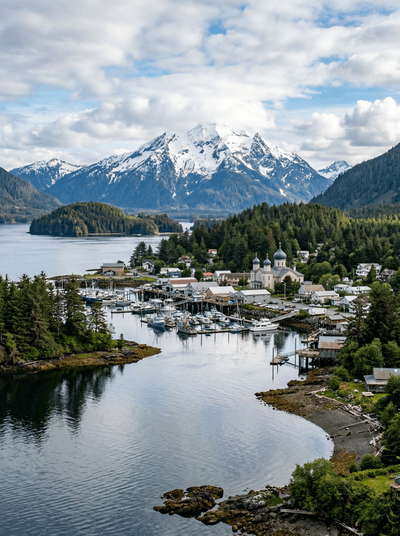
Totem poles and Russian onion domes facing each other across a harbour where humpbacks surface.

Mont-Saint-Michel
France
A granite abbey rising from a bay where the sea withdraws fifteen kilometres and races back.
Twillingate
Canada
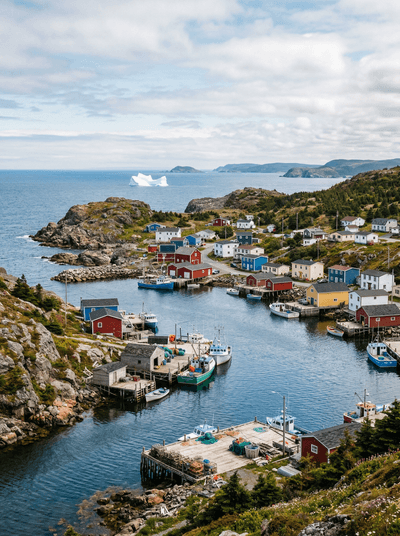
Iceberg Alley delivers its giants past cliff paths, lighthouses and harbour villages.
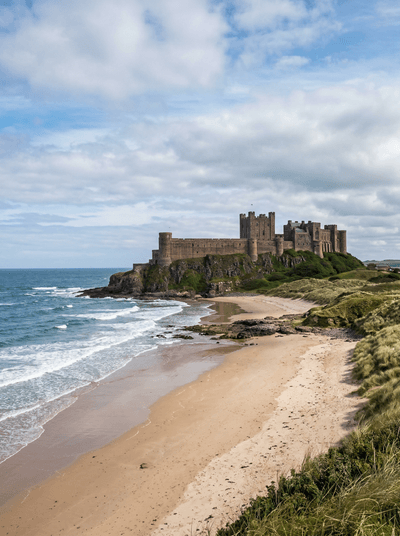
Bamburgh
England
A fortress on volcanic rock rising from sand so wide the castle looks painted.
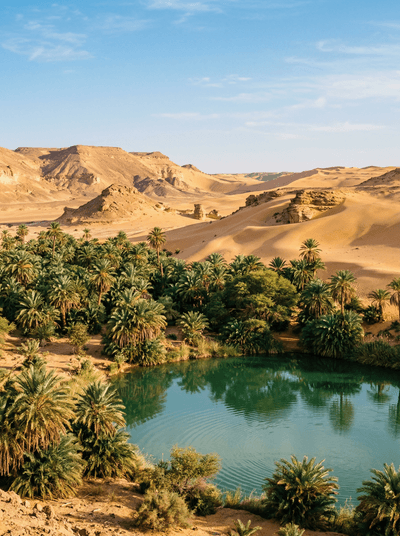
Dakhla Oasis
Egypt
Medieval mud-brick lanes and carved lintels marooned in the deep desert for eight centuries.
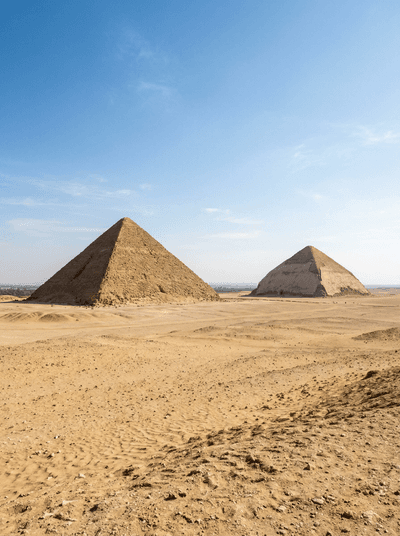
Dahshur
Egypt
Two experimental pyramids alone in empty desert — one bent, one red, hardly a visitor.
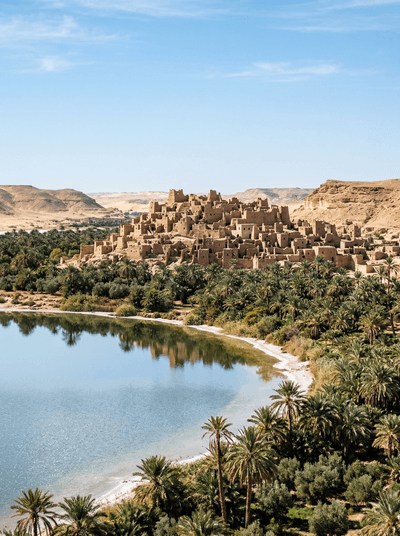
Siwa Oasis
Egypt
Salt lakes shimmering where the Great Sand Sea begins and Alexander once sought the Oracle.