Argentina
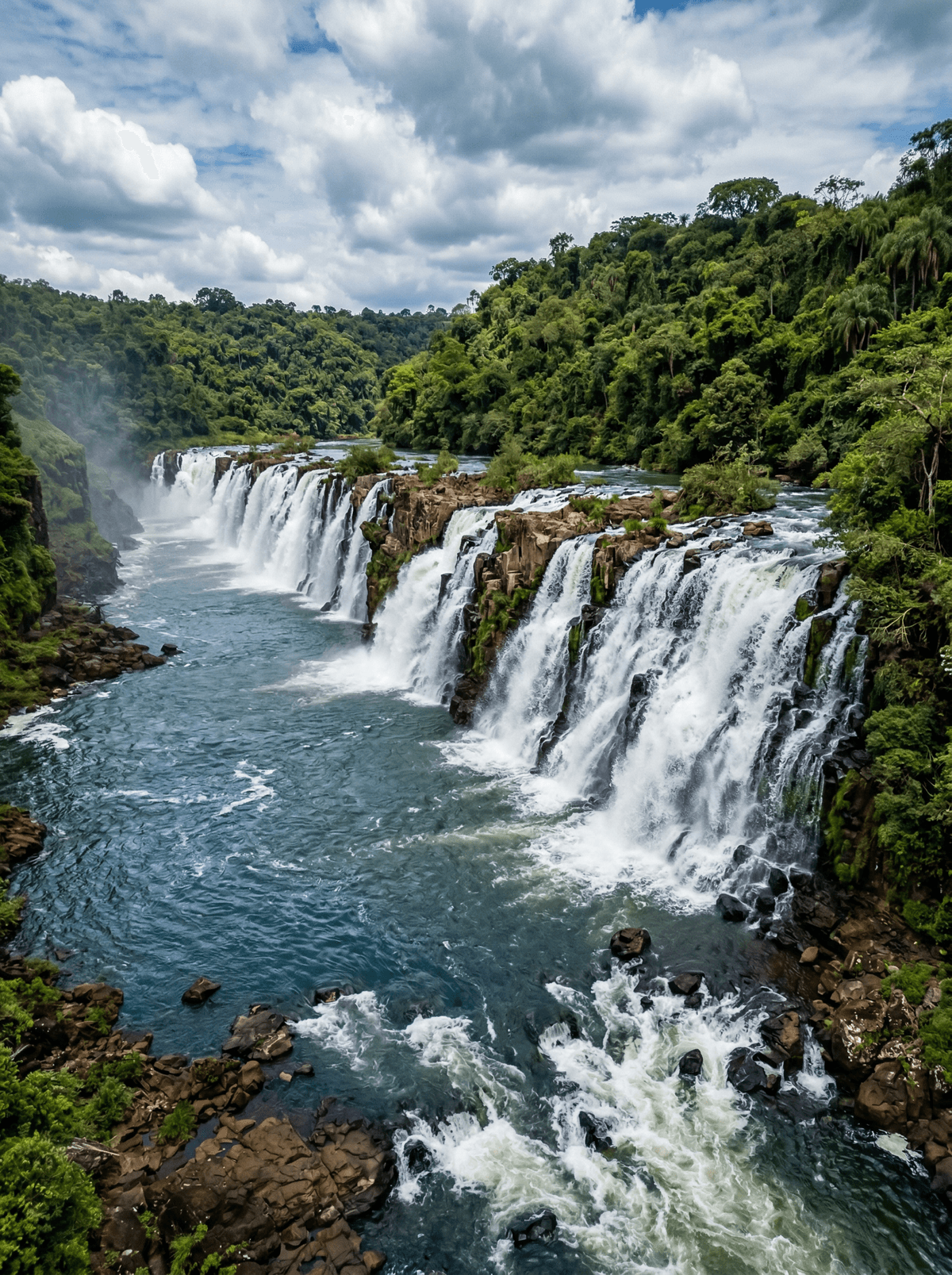
Saltos del Moconá
A waterfall running three kilometres along the river instead of across it.
The Moconá Falls break the grammar of waterfalls: a fault line running parallel to the Uruguay River lets one half of the river fall sideways into the other along nearly three kilometres of basalt edge — the longest longitudinal falls on Earth. And they are a moveable spectacle: when the Brazilian side runs high, the falls drown entirely; when levels drop too far, they shrink — the full display holds for a window of weeks each year.
The falls anchor a bi-national protected area — Parque Provincial Moconá on the Argentine side, Brazil's Turvo across the water — inside Misiones gallery forest the local Guaraní communities have held sacred for centuries. River level is the visit's ruling variable, monitored by the park administration and checked before any plan is fixed; the full three-kilometre face shows only from the water, on authorised boats out of El Soberbio when conditions allow, while the jungle path to the viewpoint runs beneath forest dense enough to close out the sky, coatis and toucans moving the treetops at their own pleasure. It is a destination that must be caught rather than simply visited — which is precisely its pull.
Solo
Catching Moconá in its window — river checked, boat confirmed, the sideways falls running full — delivers a natural phenomenon almost nobody outside Argentina has heard of.
Couple
A jungle lodge night with the falls audible from the table, then the morning boat along the drowning line, is Misiones at its most intimate.
Friends
A group timing the river, sharing the boat and the forest path, gets a story that needs a map to retell — the waterfall that runs the wrong way.
- A fault parallel to the river makes the only falls of this kind on Earth.
- High water on the Brazilian side can drown the falls entirely — a moveable spectacle.
- The full three kilometres show only from authorised boats out of El Soberbio.
- Coatis and toucans work the jungle path to the viewpoint on their own terms.
River fish grilled over coals at a jungle lodge, the Moconá falls audible from the table.
Yerba mate from local farms — Misiones is the heartland — brewed impossibly strong and shared all day.
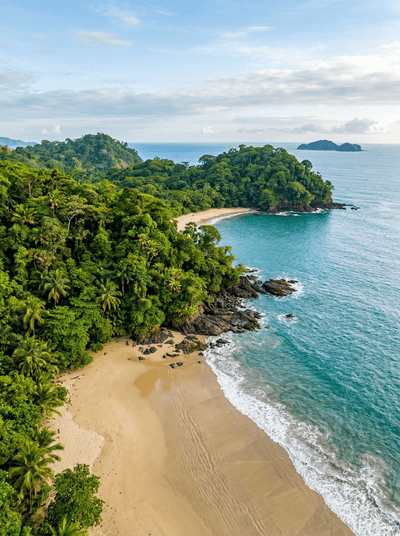
Manuel Antonio
Costa Rica
Capuchins patrol the sand beneath dozing sloths where rainforest walks into the ocean.
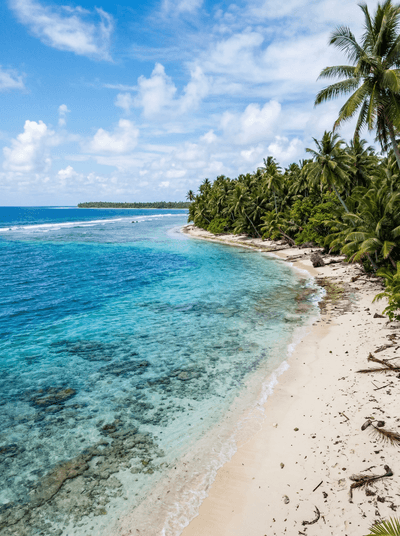
Vaitupu
Tuvalu
Tuvalu's largest island, where traditional sport te ano sends two woven balls flying at once.
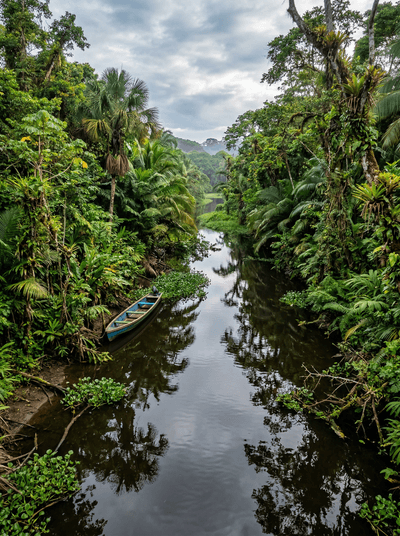
Tortuguero
Costa Rica
Jungle canals where green sea turtles haul onto black volcanic sand under a moonless sky.
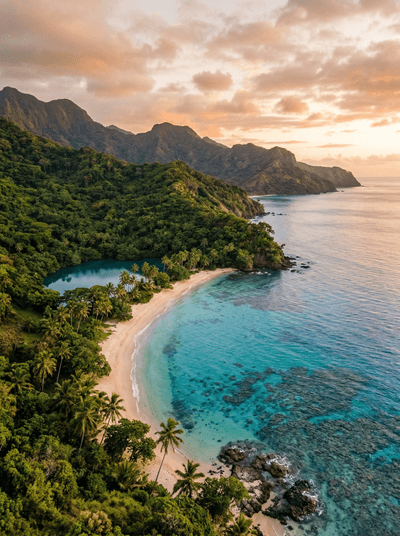
Kadavu
Fiji
Manta rays circle the world's fourth-largest barrier reef, off villages the road barely reaches.
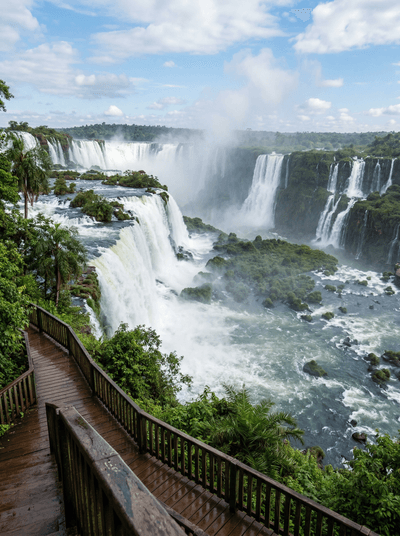
Iguazú Falls
Argentina
A river shatters into hundreds of waterfalls around the thunder of the Devil's Throat.
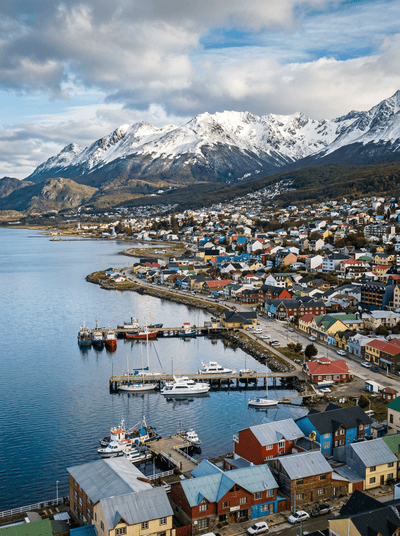
Ushuaia
Argentina
The port where Antarctica begins — beech forest climbing to glaciers at the planet's edge.
El Calafate
Argentina
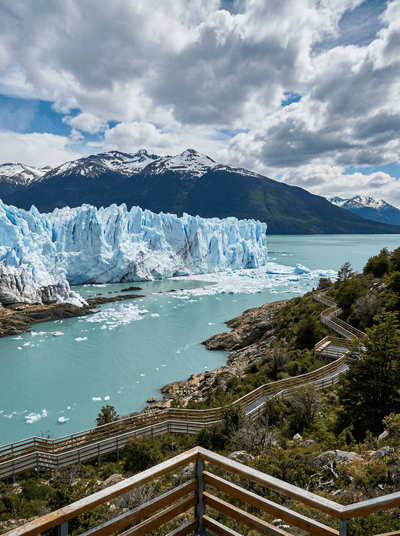
A glacier calves office-block towers of ice into turquoise water as you watch.
El Chaltén
Argentina
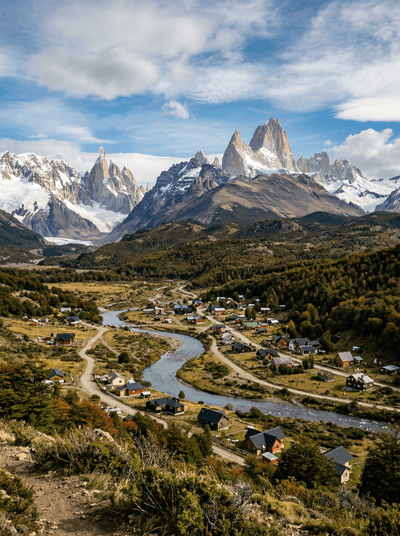
Granite spires pierce Patagonian cloud — condor country of vertical stone and wind.