Portugal
Santana
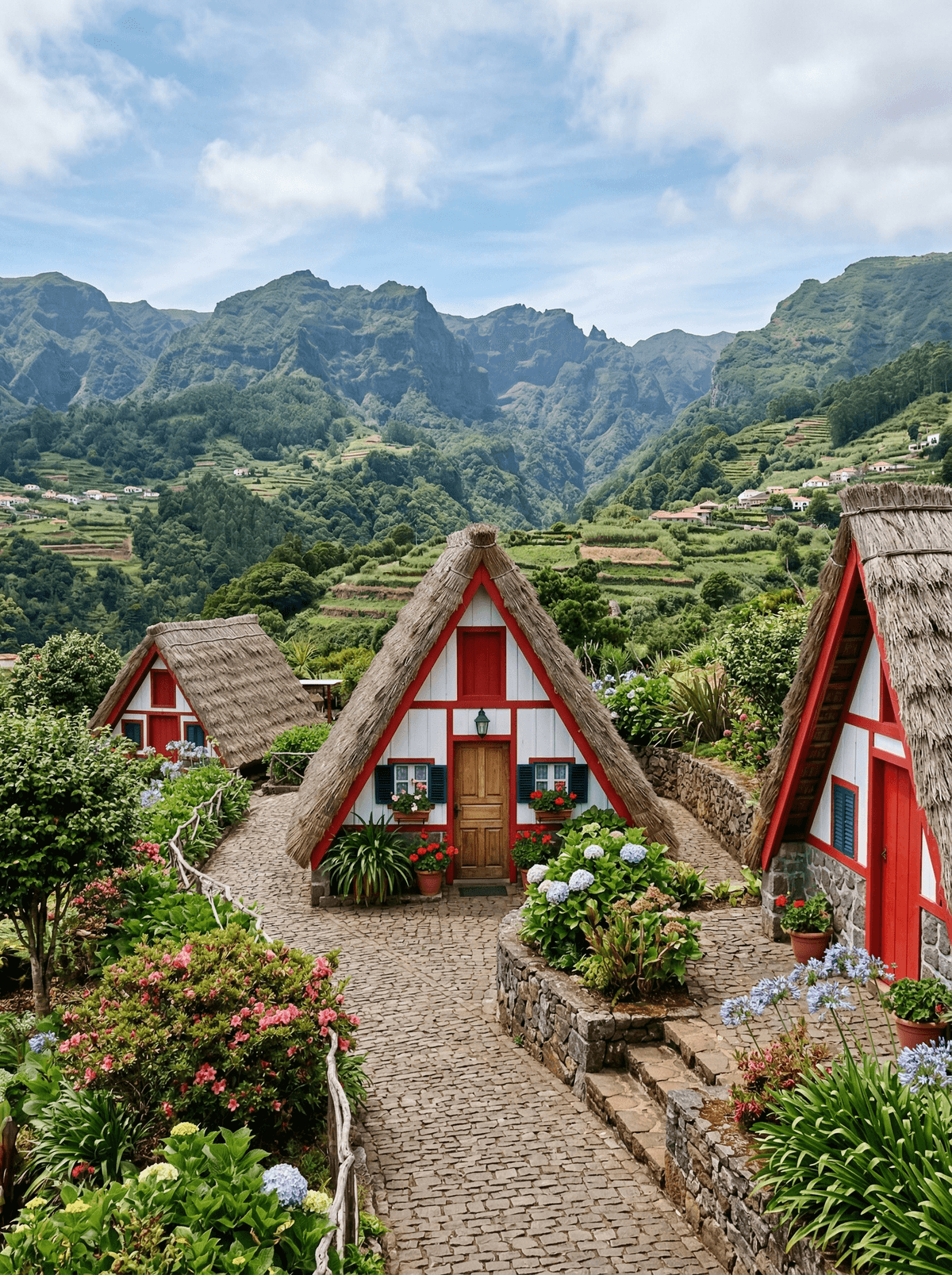
Triangular thatched houses in primary colours cluster on green slopes above the cloud.
What you notice first in Santana is the colour. Triangular thatched houses — the palheiros — stand in deep red, blue and yellow against the impossibly green slopes of northern Madeira, while mist drifts through terraced gardens where bananas and passion fruit grow at altitudes most crops refuse.
Santana holds Madeira's rain-and-mist north coast at around 400 metres, keeping its iconic A-frame houses as living heritage rather than museum pieces — the pitched thatch reaching the ground evolved for insulation and storm resistance, and the primary-colour schemes are maintained under cultural protection rules. The countryside behind is the real depth: the Queimadas Forest Park opens some of the island's most celebrated levada walks into moss-draped laurel forest, gentle-gradient paths threading the UNESCO woodland, and the natural park boundary runs beside the village itself. The village has long been the gathering ground of the island's folk traditions, and the terraced hillsides reward slow morning walks that end at village cafés before the day warms.
Couple
The quieter side of Madeira — terraced-hillside mornings, empty cafés, and countryside calm that makes an unhurried base for two.
Family
Children adore the toy-like thatched houses, and the Queimadas levada trails run flat and manageable through moss-draped forest.
- The palheiros' ground-reaching thatch was engineered against Atlantic storms.
- Cultural protection rules keep the houses in their approved primary colours.
- Queimadas opens some of Madeira's most celebrated levada walks into laurel forest.
- The north coast's mist and rain paint slopes greener than the sunny south knows.
Espetada and carne de vinha d'alhos — pork in wine, garlic and bay, the Madeiran staple.
Honey cake with hillside fruit — passion fruit, custard apple, bananas from the terraces.
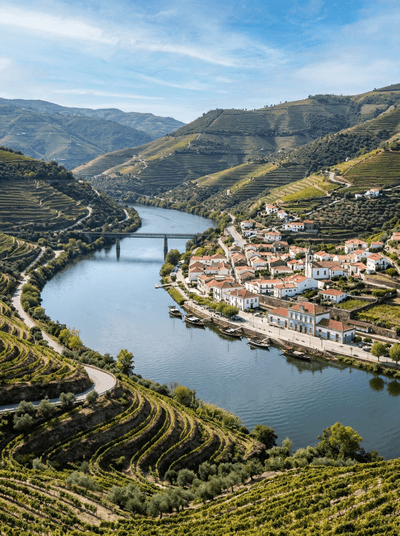
Pinhão
Portugal
Terraced vineyards plunge to the Douro so steep the harvest travels by shoulder.
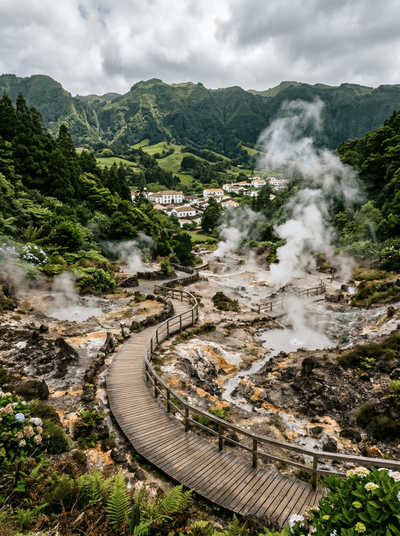
Furnas
Portugal
Hot springs bubble through botanical gardens while stew slow-cooks in volcanic earth.
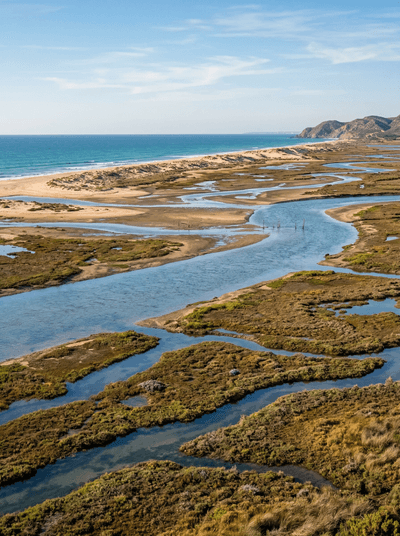
Ria Formosa
Portugal
A shifting labyrinth of barrier islands, salt marsh and seahorse nurseries off the Algarve.
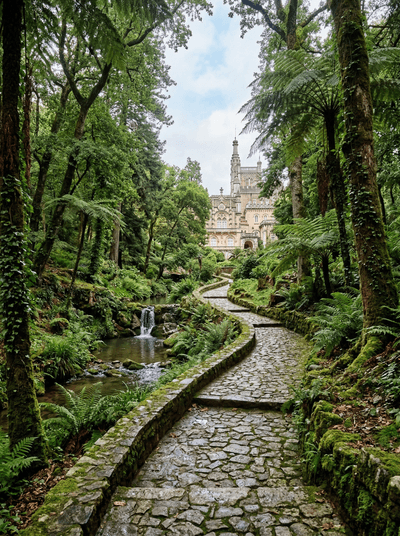
Buçaco Forest
Portugal
A walled forest of seven hundred species, its cedar Via Crucis climbing cathedral canopy.