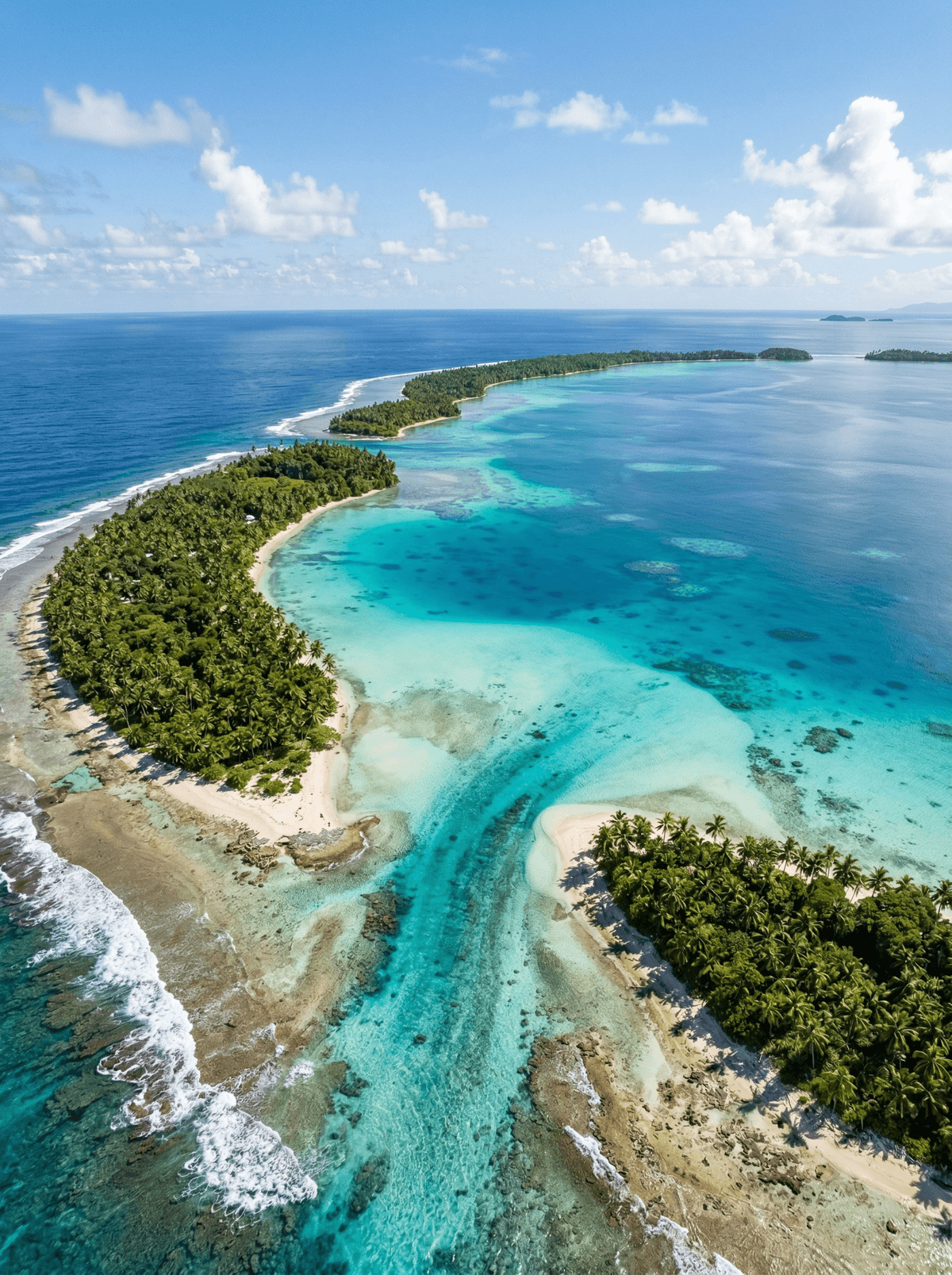
Micronesia
Sapwuahfik Atoll
Chants in a language silenced in 1837 are still sung here, learned sound by sound.
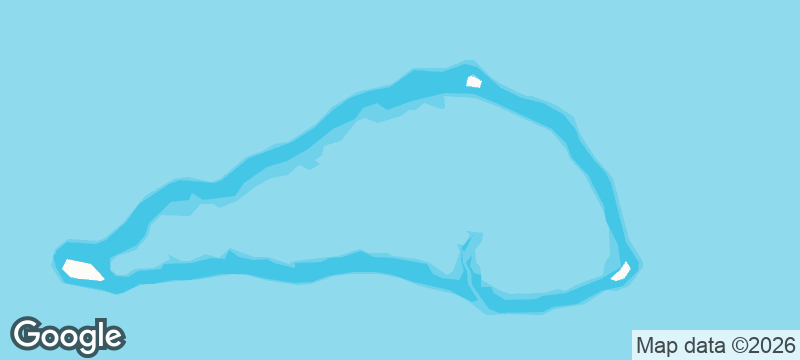
Ninety miles south of Pohnpei, one inhabited islet rides a ring of nine. In its meeting houses the dances are set to chants in old Ngatikese, the language of before 1837, passed down phonetically ever since the year that broke the island's history in two.
In 1837 the crew of a trading ship, British and American seamen with Pohnpeian allies, killed all the adult men of Ngatik, as Sapwuahfik was then called. The community that rose afterwards descends from the surviving women and children, some of the sailors, and the Pohnpeians and castaways who followed; out of that history came Ngatik Men's Creole, a men's speech register now severely endangered and held mainly by older men. None of this is a performance, and a guest does not ask for one. What a visitor actually finds is a working atoll: five sections of one islet that compete against each other in dance, coconuts counted with pride, canoes on a quiet lagoon, and the old chants sung when the calendar calls for them. A small aircraft reaches the airstrip with a short boat transfer to follow, the government ship calls on its atoll runs, and lagoon days are arranged with local guides.
Solo
A solo guest who comes in by airstrip or ship steps properly into island time: lagoon mornings guided by an islander, and dance nights when the community holds them.
- Dances at island celebrations are set to chants in the old Ngatikese language spoken before 1837, learned phonetically.
- The community descends from the surviving women and children, foreign seamen, Pohnpeian settlers and castaways, and carries that history openly.
- Ngatik Men's Creole, a men's speech register born of the island's history, is classified as severely endangered.
- A small flight reaches the airstrip with a short boat transfer, and the government ship calls on its outer-atoll runs.
Reef fish comes off the canoe into coconut milk and lime, with breadfruit filling the rest of the plate.
Provision on Pohnpei before sailing; on the islet, meals arrive from family kitchens, not menus.
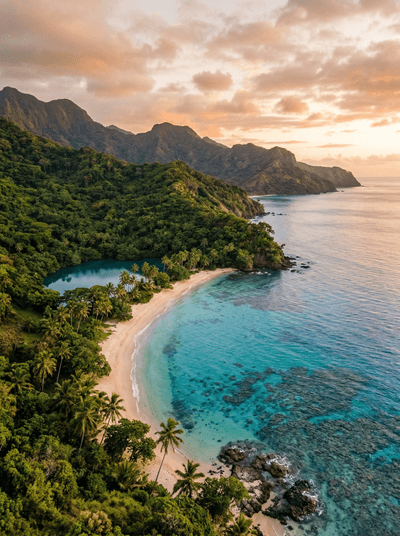
Kadavu
Fiji
Manta rays circle the world's fourth-largest barrier reef, off villages the road barely reaches.
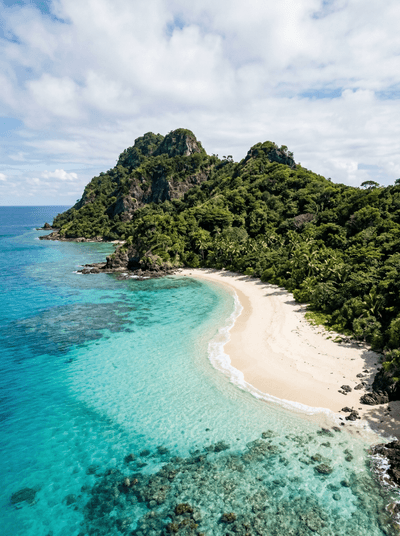
Monuriki
Fiji
The island from Cast Away truly belongs to crested iguanas brought back from the brink.
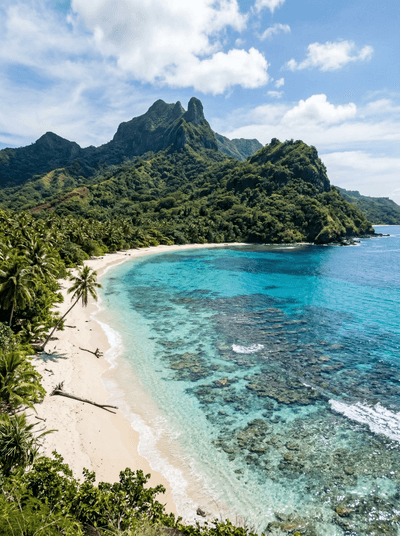
Waya Island
Fiji
Volcanic daggers erupt from reef shallows: ridgeline at sunrise, coral drop-off by noon.
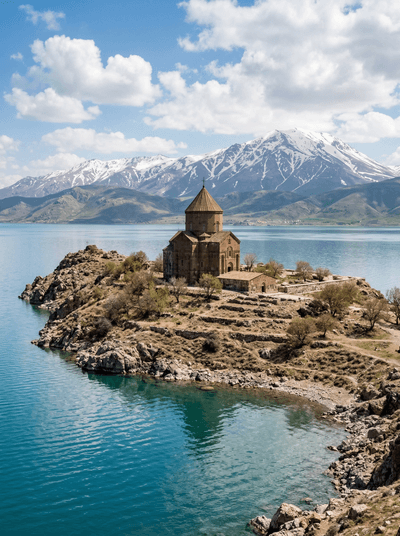
Akdamar Island
Turkey
A tenth-century Armenian church carved with biblical scenes floats alone on an island in Lake Van.
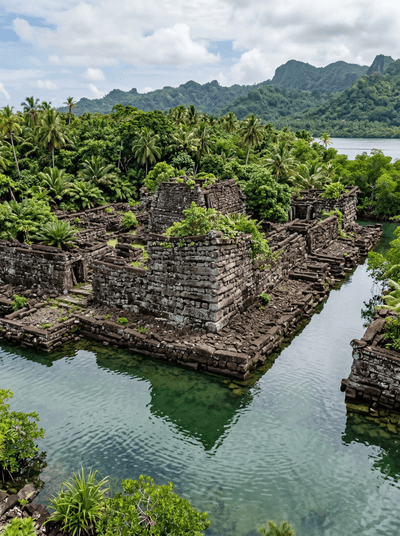
Nan Madol
Micronesia
A ghost city of black basalt rising from a lagoon, its canals silent for centuries.
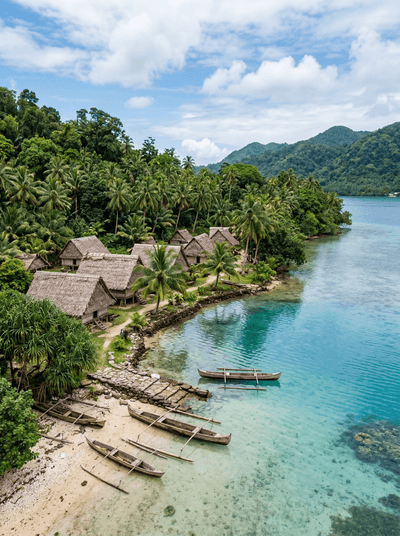
Yap
Micronesia
Stone money too heavy to move, so ownership transfers by word alone on this jungle island.
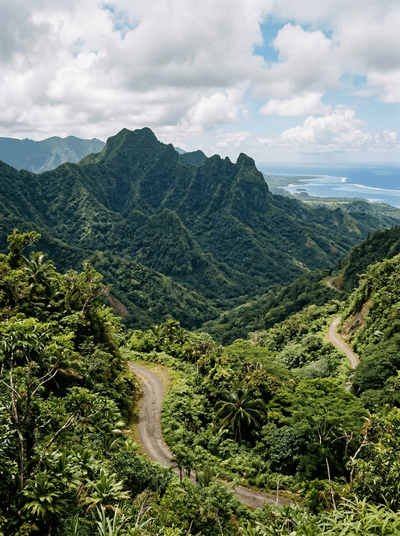
Pohnpei Highlands
Micronesia
Waterfalls spilling from cloud forest drenched by three hundred inches of rain each year.
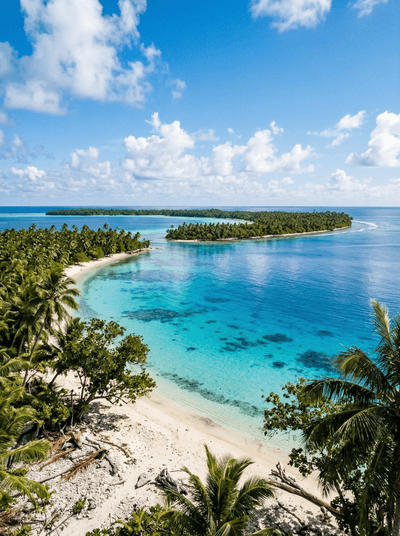
Pingelap Atoll
Micronesia
A one-airstrip atoll of palms and white sand, famous to science, barely charted by tourism.