Brazil
Serra dos Órgãos
Brazilian climbing began here in 1912, on a human pyramid, with pitons the blacksmith forged himself.
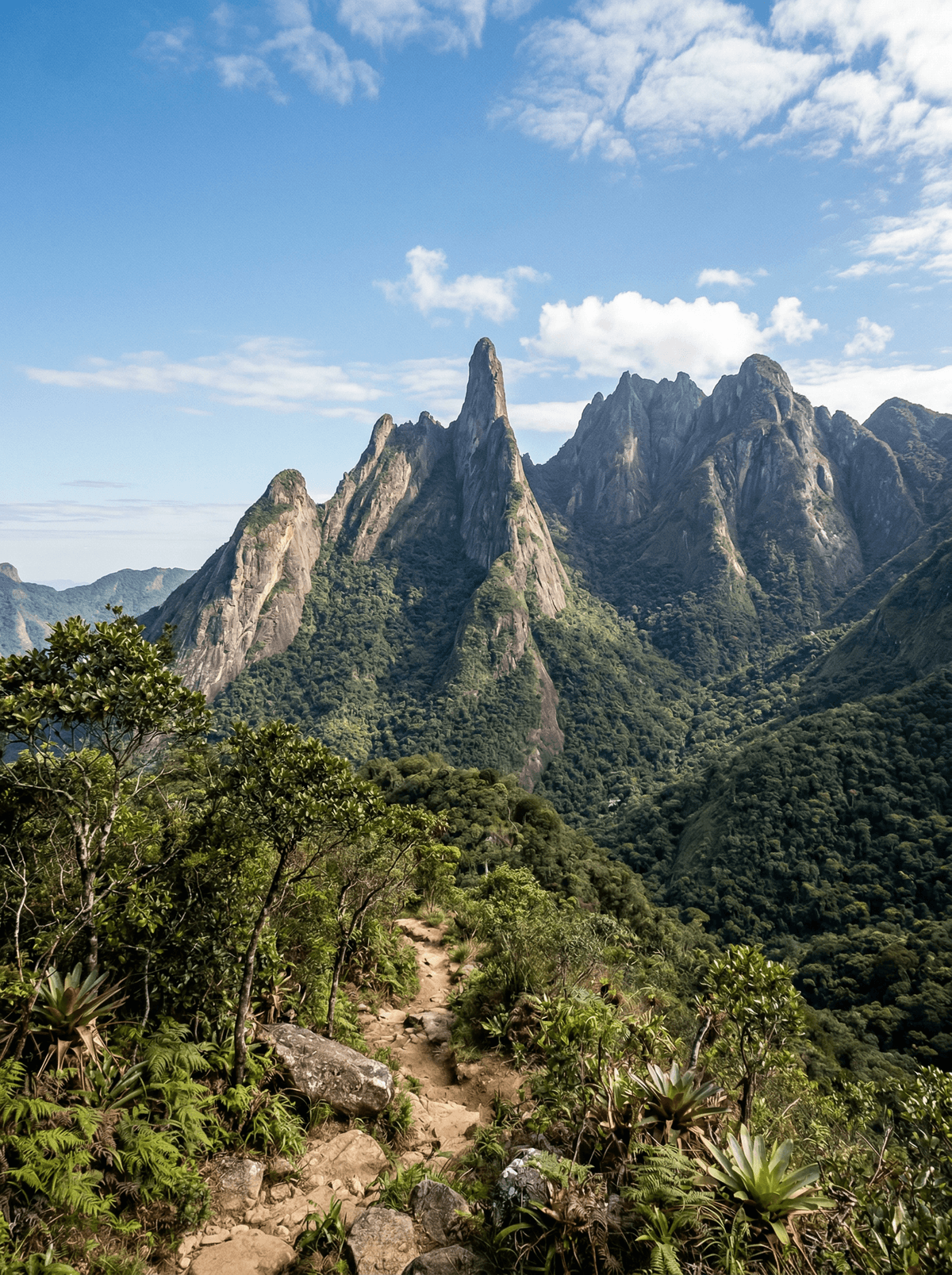
The spires rear out of the cloud forest like the pipes of an organ. Mist wraps the Dedo de Deus and then pulls back, and there it is, a vertical finger of rock with nothing above it. Foreign climbers came for that summit early in the last century and went home without it.
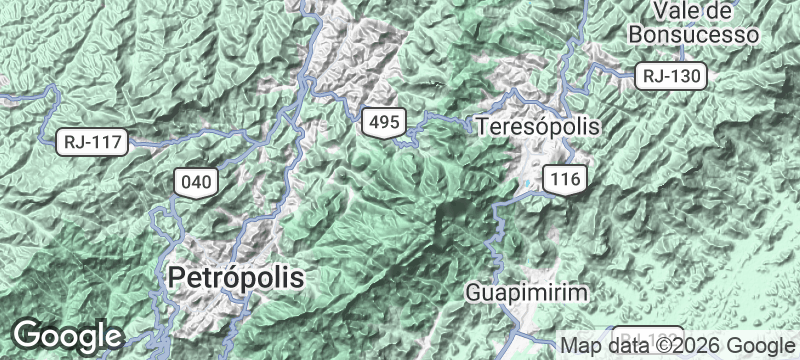
Serra dos Órgãos became a national park on 30 November 1939, the third in Brazil, and it protects 19,855 hectares of Serra do Mar across Teresópolis, Petrópolis, Magé and Guapimirim. The Dedo de Deus, 1,692 metres, is its emblem and the place the sport of climbing started in this country. In April 1912 a blacksmith from Pernambuco living in Teresópolis, José Teixeira Guimarães, put a party together with Raul Carneiro and the three Oliveira brothers; they went up on ring pitons Teixeira had made in his own forge, a tree trunk lashed to them for the vertical sections, and a human pyramid for the last overhanging four metres, sending up Alexandre because he was the lightest. They stood on top at five in the afternoon on 9 April, lit a fire so the town below could see it, slept there, raised a flag the next morning and came down to a hero's welcome. Nineteen pitons went into that climb and some of them are still in the rock; around it the park now runs the largest trail network in Brazil.
Solo
The Travessia Petrópolis to Teresópolis is thirty kilometres of climbing and dropping along the tops, normally three days, and the operators grade it heavy with technical moves. Previous mountain experience, a head for exposure and days over eight hours are the entry price, and ICMBio puts the walking season at May to September, when storms are least likely. At the other end of the same park there is a raised walkway a wheelchair can use, which is the spread of what is here.
Friends
With rope skills between you the park opens right up: the Dedo de Deus, the Agulha do Diabo, and hundreds of routes from beginner grades to some of the biggest bigwalls in the country. Entry is free at the moment across all of it, trails and campsites included, but the park shuts every Monday for maintenance, vehicle numbers are capped on arrival, and everyone shows a CPF and photo identification at the gate.
- This is the largest trail network in Brazil, more than 200 kilometres of it, running from a raised walkway a wheelchair can use up to the 30 kilometre Travessia Petrópolis-Teresópolis.
- The Dedo de Deus is 1,692 metres and foreign alpinists had failed on it before five men from Teresópolis reached the top at five in the afternoon on 9 April 1912.
- Created on 30 November 1939, this is the third oldest national park in the country, 19,855 hectares across Teresópolis, Petrópolis, Magé and Guapimirim.
- The park holds more than 2,800 catalogued plant species, 462 birds, 100 mammals, 103 amphibians and 83 reptiles, 130 of those animals on the threatened list.
Café do Colono, brewed to order through a cloth strainer with toasted fubá stirred into it, at the water-wheel mill in rural Teresópolis that still grinds the maize; the shop beside it sells paçoca de colher and jiló jam.
Teresópolis grows more leafy vegetables than anywhere else in Rio de Janeiro state, nearly 5,000 farms and over 160,000 tonnes a year, and the same basket carries trout, cheese, mushrooms, honey, gin and cachaça.
Stelvio Pass
Italy
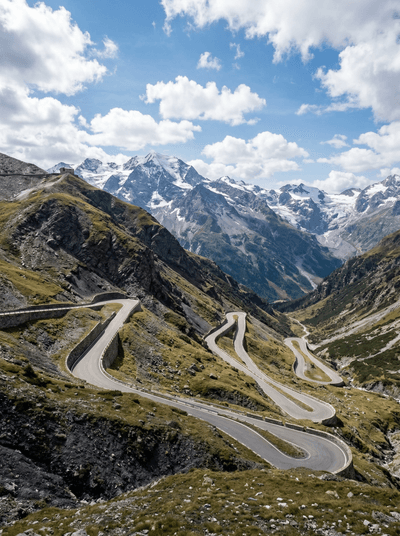
Forty-eight hairpin bends climbing to 2,757 metres, the highest paved pass in the Eastern Alps.
Mount Kilimanjaro
Tanzania
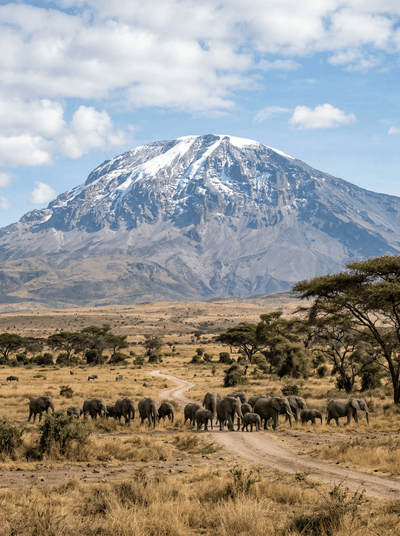
Five climates stack between the coffee farms and the ice at 5,895 metres.
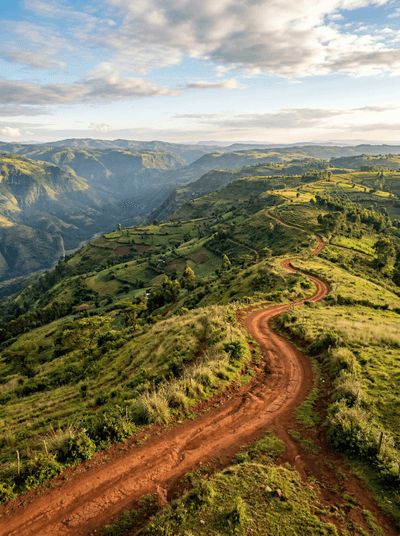
Iten
Kenya
Lean runners slice through thin air at 2,400 metres on the escarpment where champions are made.
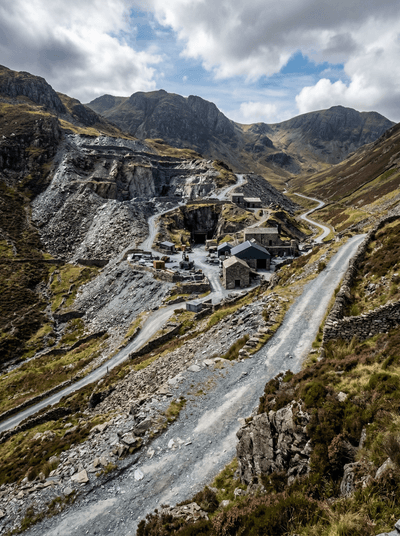
Honister Slate Mine
England
A via ferrata bolted to slate cliffs above a pass where miners once clung.
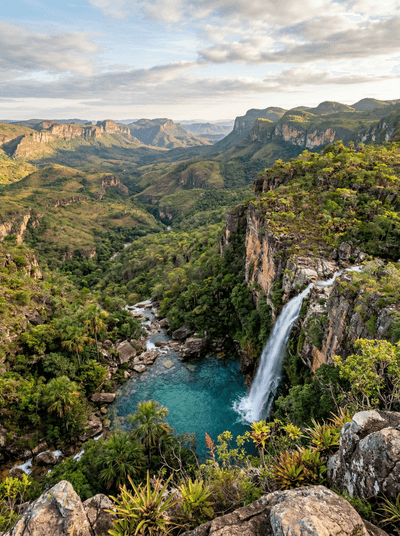
Chapada dos Veadeiros
Brazil
One trail crosses rock older than Pangaea, through abandoned crystal diggings, to a 120-metre fall.
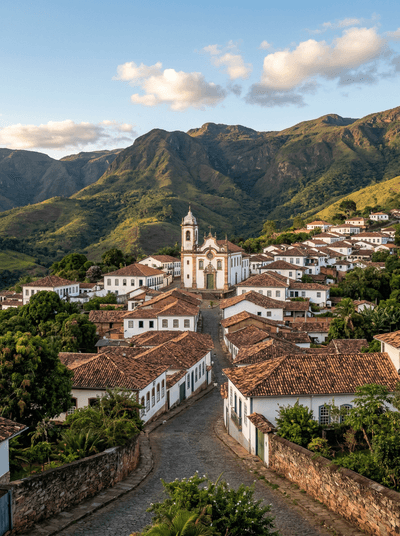
Conceição do Mato Dentro
Brazil
Three hundred and fifty-six springs rise in one park; the waterfalls below are what they become.
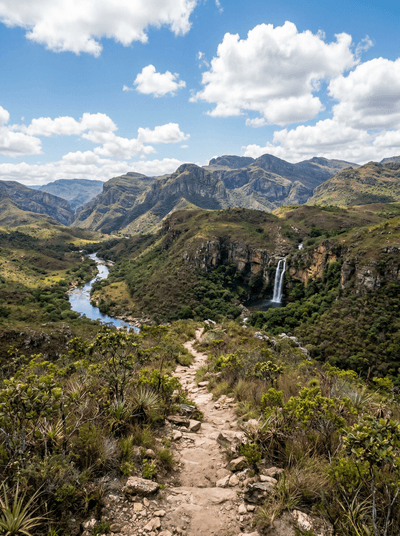
Serra do Cipó
Brazil
Stone meadows of flowers that hold their shape long after they dry, along a quartzite spine.
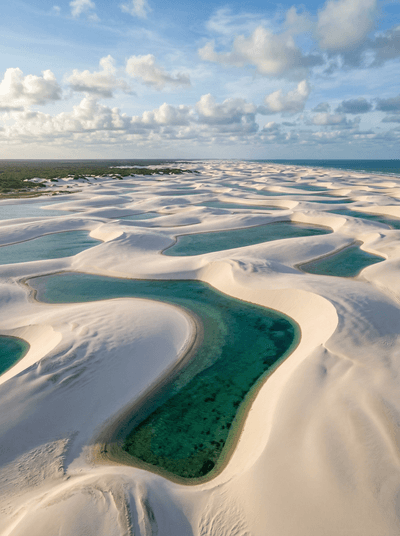
Lençóis Maranhenses
Brazil
Thousands of rain-filled lagoons between white dunes stretching to the horizon like another planet.