Portugal
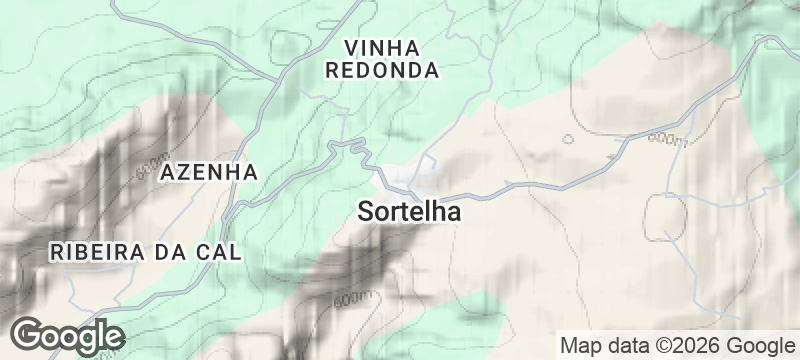
Sortelha
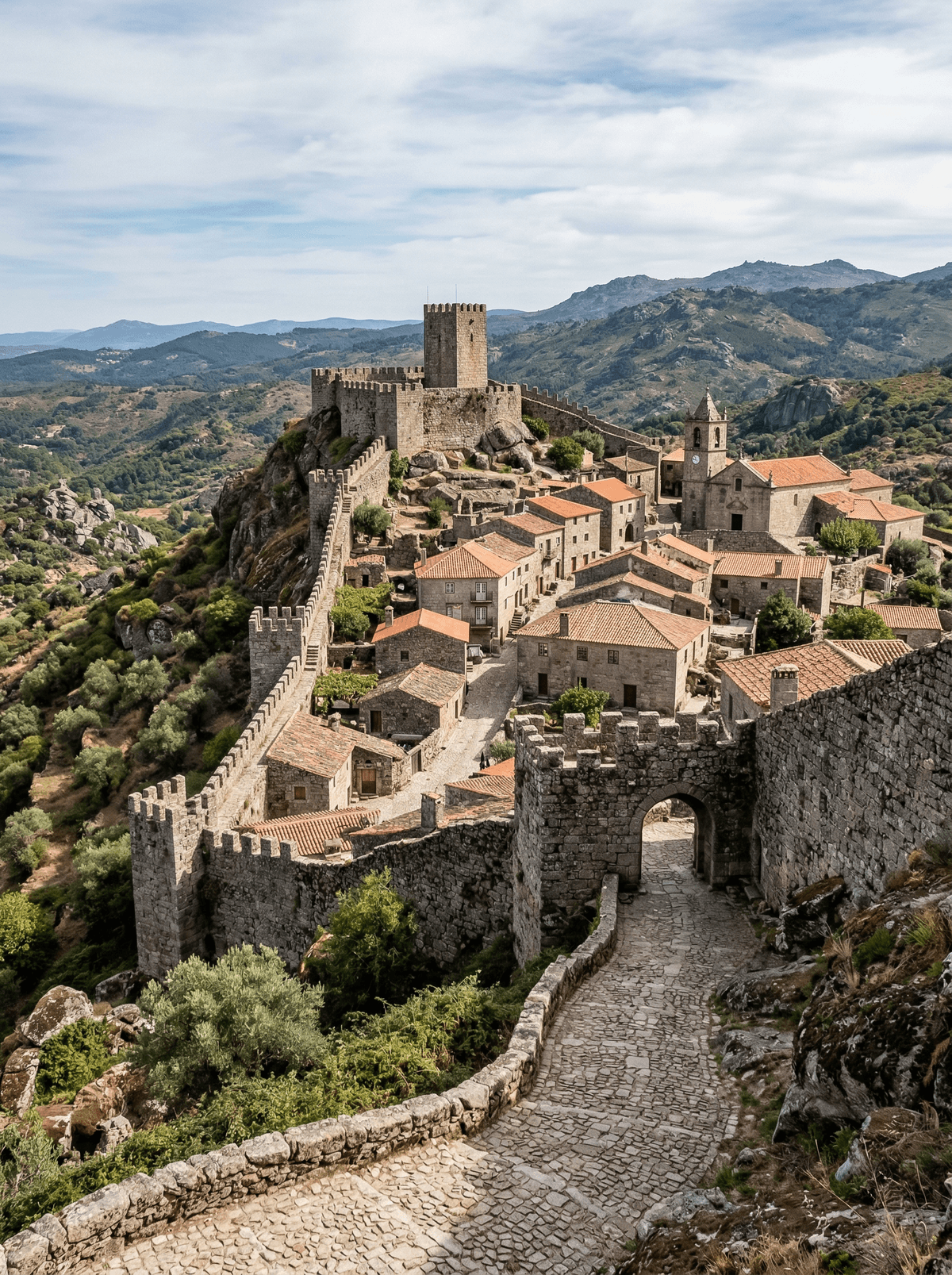
A walled medieval village where houses grow from the bedrock, granite merging with granite.
The medieval gateway still makes you duck beneath its arch to enter. Inside the walls, granite houses rise directly from the bedrock — foundations indistinguishable from the living rock beneath — and the village is quiet enough that footsteps on the flagstones echo off thirteenth-century walls.
Sortelha is among Portugal's best-preserved medieval walled villages, its castle and fortifications raised under Sancho II to hold the frontier against Castile. It sits at around 760 metres on a granite outcrop above the Zêzere valley, looking toward Serra da Estrela, and unlike most fortified towns it never spilled beyond its walls — the whole medieval core survives, Gothic gate, pillory and keep included, with the full rampart circuit still walkable and treated with the care its drops deserve. Membership of the Historical Villages network since 1994 has kept restoration careful and commercialisation at bay; these are lived-in houses, some genuinely growing from the rock formations they stand on. At the walls' edge, the granite balcony locals call the Varanda de Pilatos opens the panorama that justified a fortress here in the first place.
Solo
Arrive without a plan and let the walls contain your afternoon — tiny scale, history layered into every stone, and a viewpoint you will keep to yourself.
Couple
An enclosed, intimate world: ginjinha from a clay jug at the café, the ramparts at dusk, and the Zêzere valley filling with evening light from a terrace built seven centuries ago.
- Among the twelve Historical Villages designated in 1994, and among the quietest of them.
- The rampart circuit still walks complete, towers standing above the frontier country.
- In places the boundary between built wall and living granite is genuinely invisible.
- The Varanda de Pilatos opens the plains panorama the fortress was built to watch.
Goat cheese and smoked meats on a granite terrace above the valley.
Ginjinha poured from a clay jug, sour cherries dark at the bottom.
Tamnougalt
Morocco
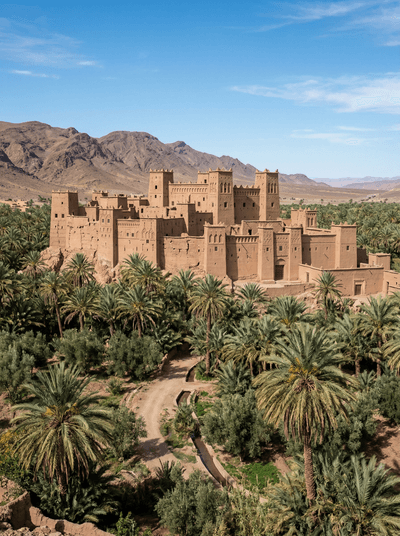
Covered earthen lanes hide caïd, servant and mellah quarters above a sea of palms.
Tétouan
Morocco
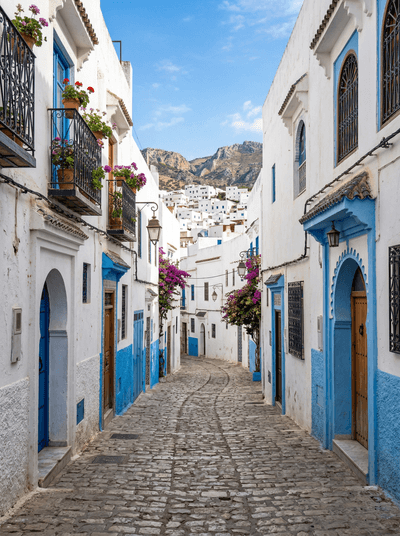
Jewish goldsmiths here shaped pendants like doves, in the city they call the White Dove.
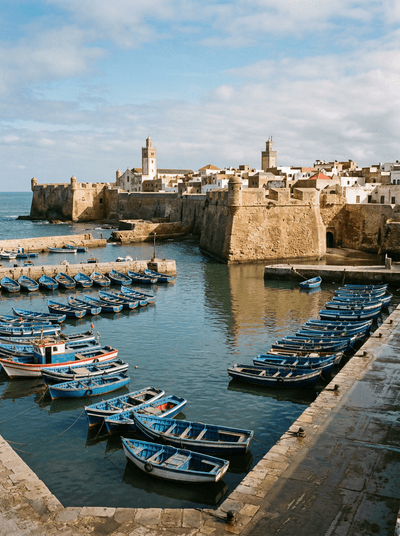
El Jadida
Morocco
Atlantic light enters Mazagan through cannon embrasures while fishing boats work below the ramparts.
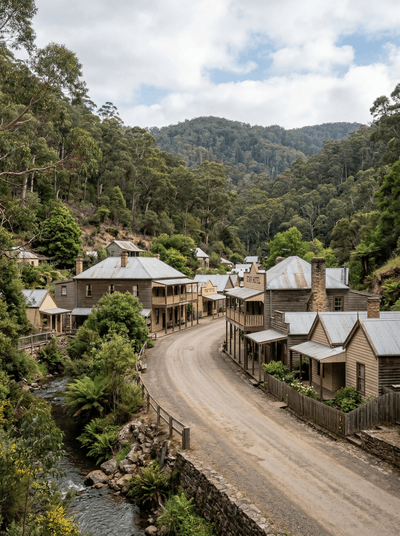
Walhalla
Australia
A railway snakes through fern valley to a gold town squeezed onto one narrow street.
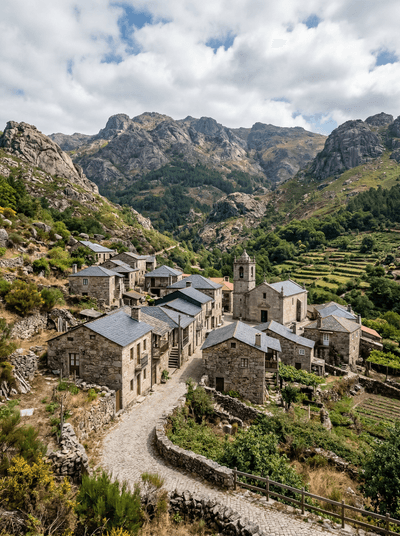
Pitões das Júnias
Portugal
A monastery abandoned to wolves and rain crumbles beside a waterfall at the road's end.
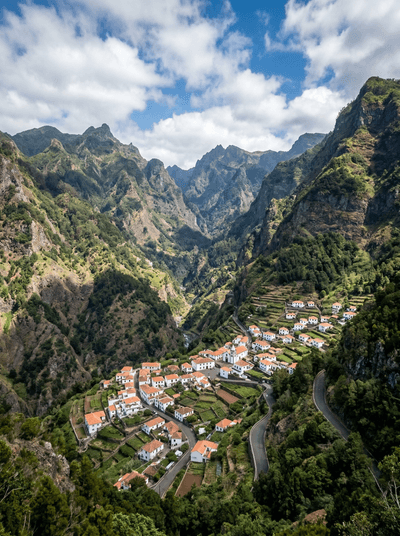
Curral das Freiras
Portugal
A village hidden in a mountain bowl so deep that nuns fled here from pirates.
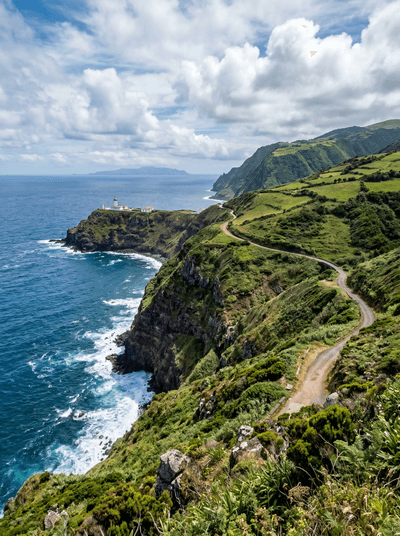
São Jorge
Portugal
Knife-edge ridges drop to coastal fajãs — green platforms born from cliff collapses.