Morocco
Tamnougalt
Covered earthen lanes hide caïd, servant and mellah quarters above a sea of palms.
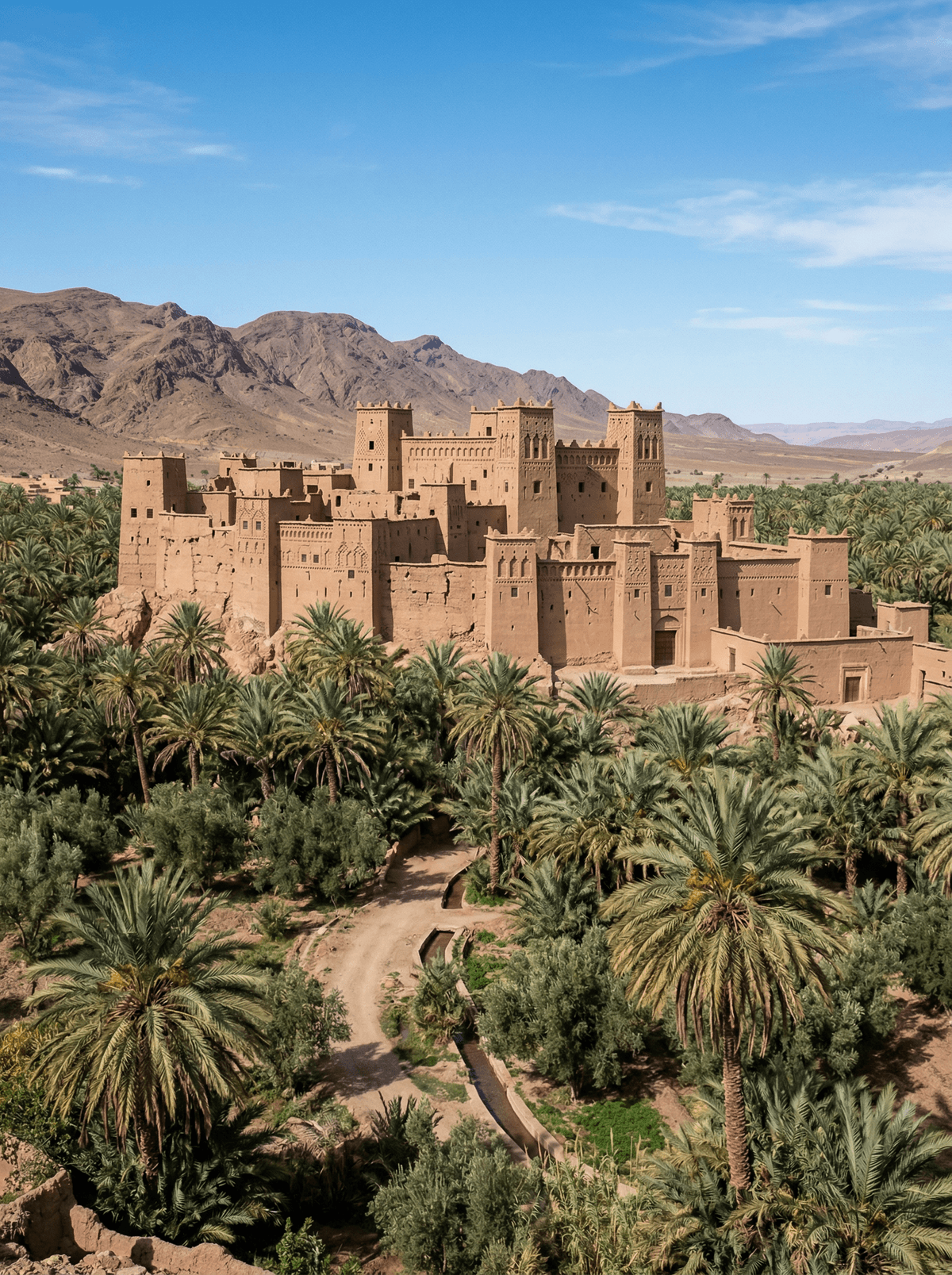
Enter beneath a low earthen passage and the desert sun disappears. Courtyard doors branch from the cool lane; climb towards the roofs and the compact brown ksar suddenly floats above an unbroken green palmery.
Tamnougalt was a Mezguita power centre whose plan still records the people who occupied it. The fortified Casbah des Caïds held the governor's family, a Tighremt housed servants, a Jewish mellah formed another district and Assarag square gathered the hammam, bazaar and marabout. Covered alleys, layered courtyards and rooflines make those relationships visible before the ksar opens towards the palmery. Dates, pomegranates and henna below give the social map its irrigated, living setting.
Solo
Use the covered lanes, courtyards and roofline to read the ksar's social map, then step into the palmery below. Fragile upper fabric and private rooms need no entry for the architecture to make sense.
Couple
Take the covered ksar while the morning is cool, then walk among dates, pomegranates and henna as light reaches the palmery. The contrast between dark passages and green oasis views sets the whole rhythm.
- Covered earthen alleys and courtyard houses form a climate-wise maze that blocks desert heat and wind.
- Caïd, servant and Jewish districts preserve the social map of a former Mezguita power centre.
- The fortified governor's residence rises within a social plan of courtyards, service quarters and shared square.
- A palmery of dates, pomegranates and henna spreads directly below the roofs towards the Drâa.
Drâa date tagine, goat or camel meat slow-cooked into the valley's characteristic sweet-savoury sauce.
Baddaz, hand-rolled corn couscous steamed three times and scented with aged smen in the Ouarzazate style.
Al Hamra
Oman
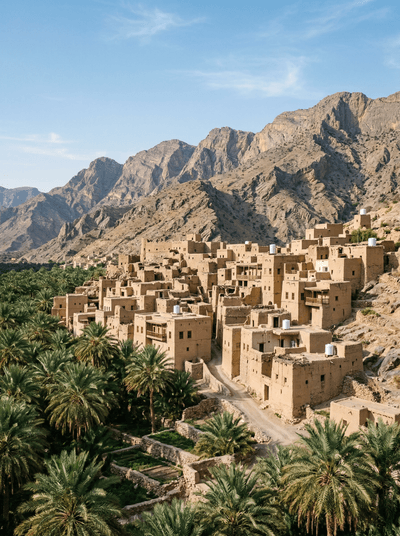
Mud-brick houses climb above the palms, and one of them still bakes its own bread.
Ternate
Indonesia
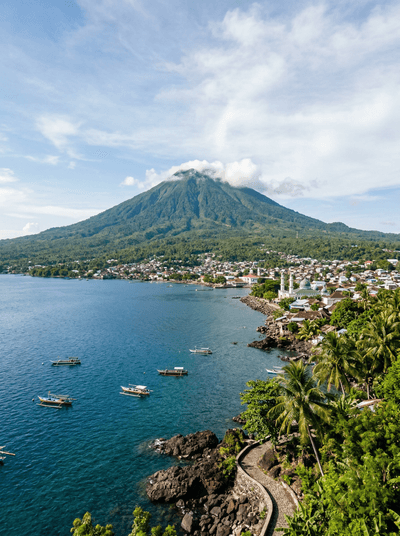
The theory of evolution was posted to Darwin from this clove island's shore.
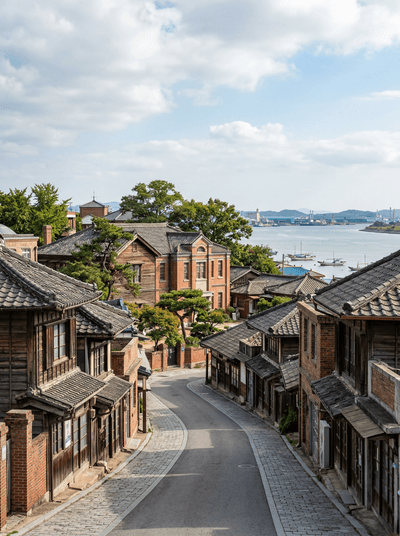
Gunsan
South Korea
Korea's oldest bakery still sells the bread it sold in 1945, streets frozen around it.
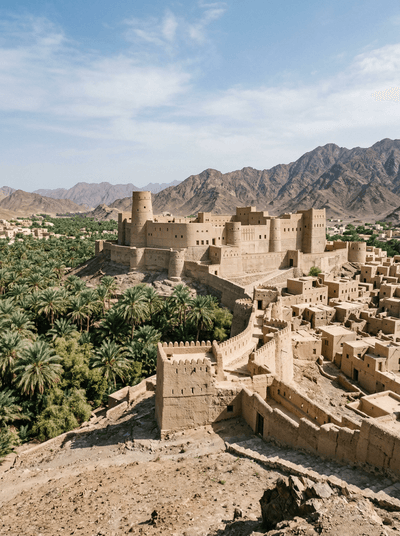
Bahla
Oman
A mud-brick fort rises from the same earth as its oasis, potters still firing beside it.
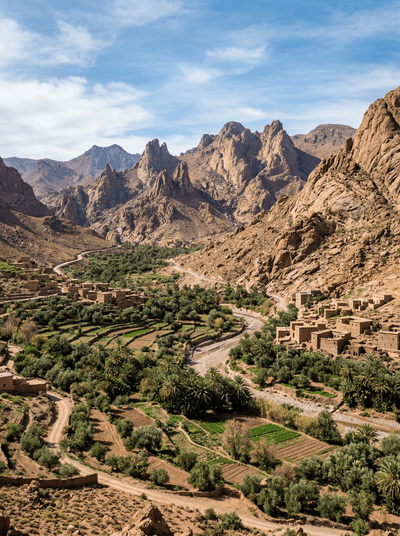
Ameln Valley
Morocco
Ochre villages disappear into Jbel Lekst while almond blossom clouds the valley floor.
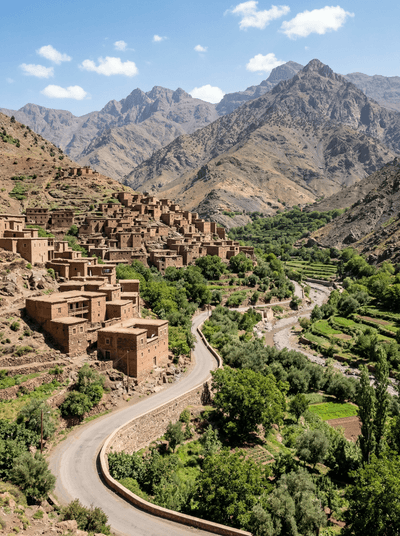
Ijoukak
Morocco
Walnut terraces drink from two rivers below the ruins of a mountain palace.
Tata Palm Groves
Morocco
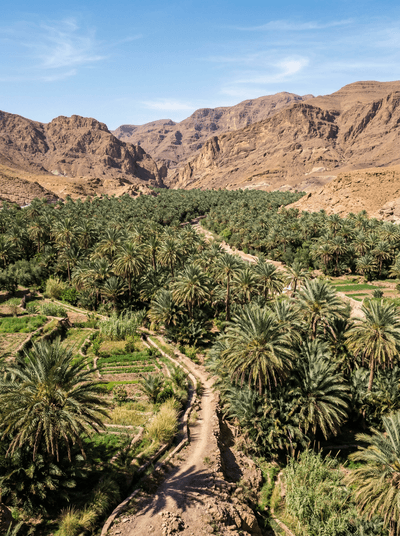
Elephants and rhinoceroses survive in stone beyond Tata's living palm shade.
Sidi Moussa d'Aglou
Morocco
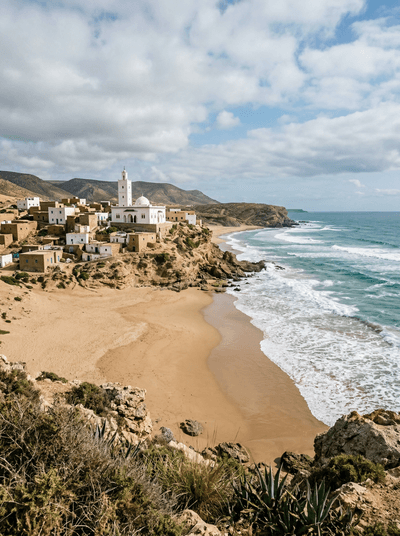
White doors puncture an Atlantic cliff where fishermen carved rooms into rock.