Costa Rica
Palo Verde National Park
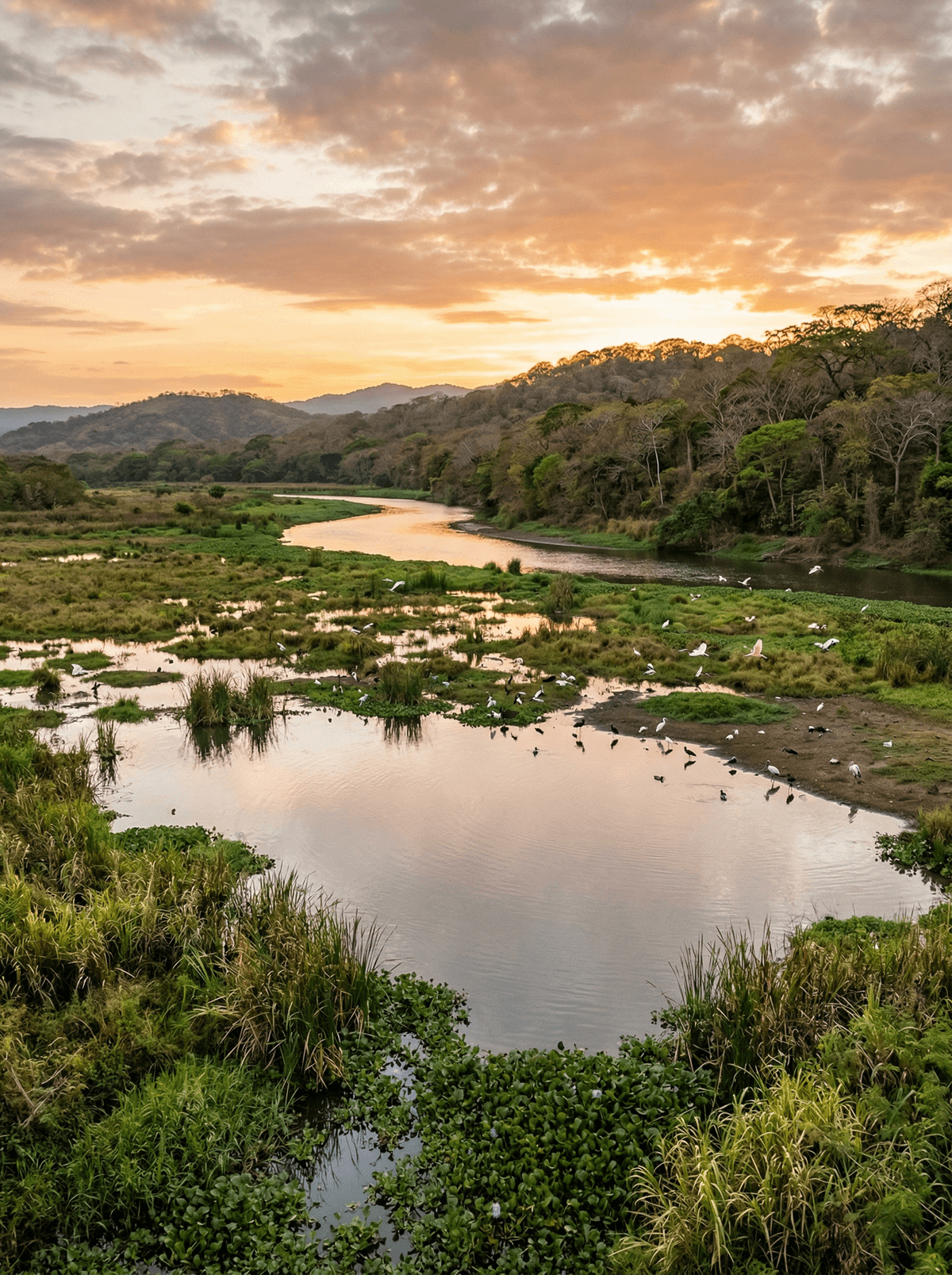
Ten thousand hectares of marsh erupt with waterbirds while crocodiles bask below limestone hills.
The noise reaches you before the birds resolve — a wall of sound off marshes crowded with wings. Roseate spoonbills flash pink against brown mud; a crocodile you took for driftwood slides off the bank. Palo Verde is Guanacaste's dry-season spectacle, and it runs to the rhythm of the Tempisque.
Palo Verde holds one of Central America's largest and most important wetlands — close to 10,000 hectares of seasonal marsh breathing with the tides of the Tempisque River. When the dry months shrink the water, native and migratory waterbirds concentrate in their thousands, the jabiru magnificent among them. Scientists have watched it happen since 1968 from the Organisation for Tropical Studies' research station, whose restoration work has brought back more than sixty bird species. Around the marsh, limestone hills carry a tropical dry forest among the most intact left in Central America — eleven distinct habitats inside one modest park. Boat tours drift the river channels, and the field-station dining hall seats naturalists and visitors at the same long tables.
Solo
A serious birder's park with a research-station atmosphere — the conversation over dinner is naturalists comparing notes — half the reward.
Couple
A slow boat drift through marsh teeming with birdlife is unexpectedly romantic — and if a jabiru lifts off nearby, the shared awe stays with you both.
Family
Guided boats put crocodiles, monkeys and clouds of waterbirds before children's eyes with not a fence in sight.
- Close to 10,000 hectares of seasonal wetland — one of Central America's largest and most important.
- The OTS research station has run here since 1968, and its restoration brought back over sixty bird species.
- Central America has few dry forests this intact — it climbs the limestone hills through eleven habitats.
- The marsh moves with the Tempisque's tides — dry-season bird concentrations are the spectacle.
Field-station meals served family-style — rice, beans and whatever the Bagaces market had that morning.
Sweet tamal for pudding — Guanacaste corn steamed in banana leaf with a sugared heart.
Souss-Massa National Park
Morocco
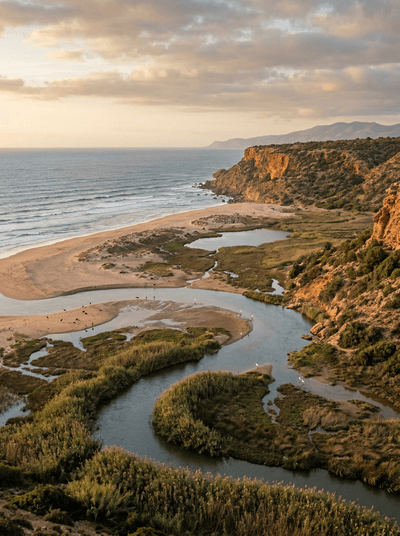
Red-faced ibises lift from Atlantic cliffs while migrants crowd a desert-edge estuary.
Tuz Gölü
Turkey
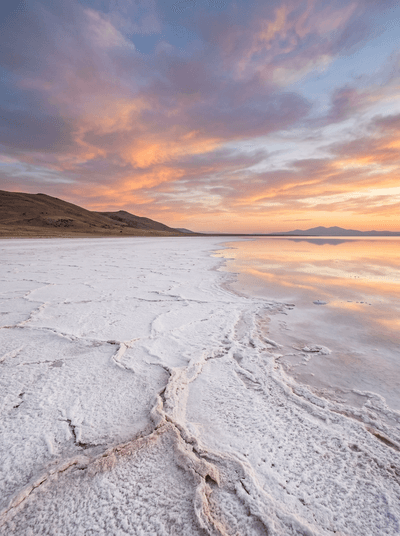
Blinding white salt stretches to every horizon, mirroring the sky when millimetres of water return.
Witsand Nature Reserve
South Africa
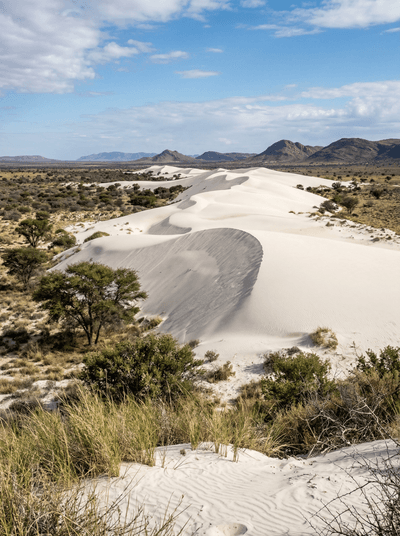
White Kalahari dunes can rumble underfoot when heat and dryness align.
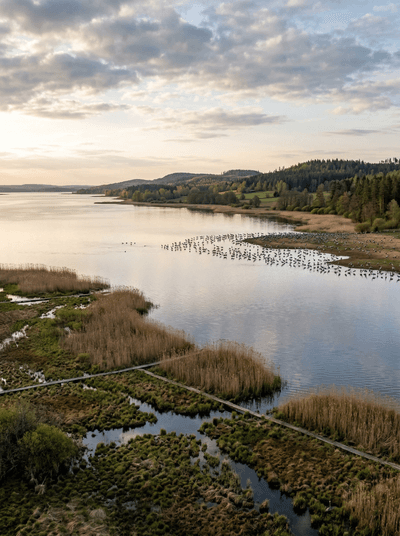
Hornborgasjön
Sweden
Thousands of cranes dancing at a restored lake each spring — a resurrection with wings.
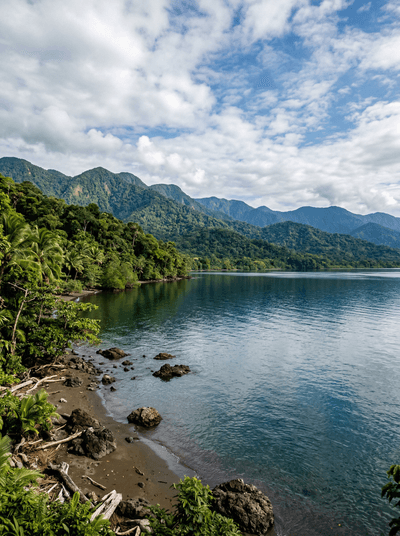
Golfo Dulce
Costa Rica
A tropical fjord of bathwater-warm calm, ringed by primary rainforest and cruised by dolphins.
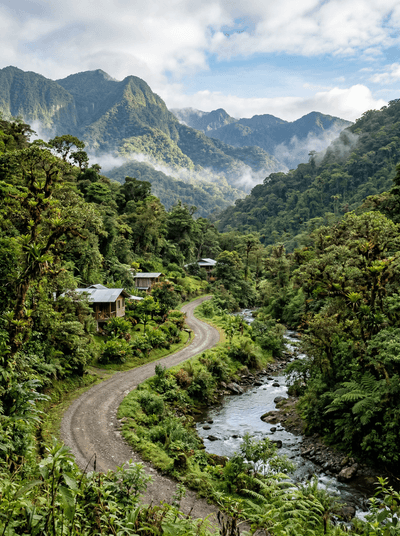
San Gerardo de Dota
Costa Rica
A bird the Maya held sacred flashes emerald through one cold valley's mist.
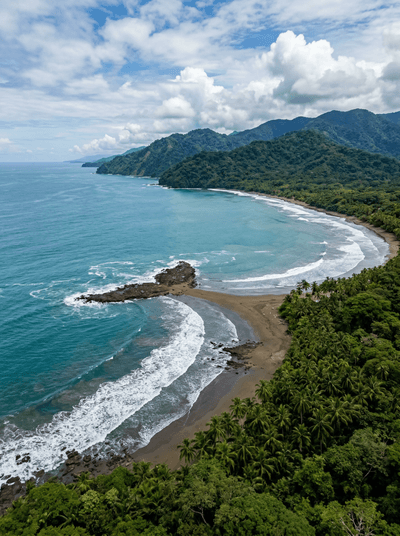
Uvita & Marino Ballena
Costa Rica
A sandbar shaped like a whale's tail emerges where real humpbacks come to breed.
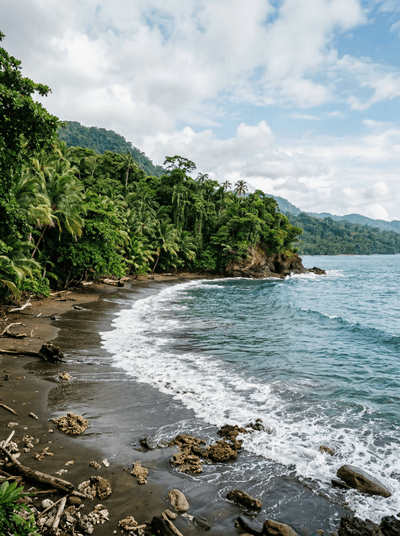
Gandoca-Manzanillo Wildlife Refuge
Costa Rica
Manatees shelter in tea-dark lagoons; the reef grows an oyster known nowhere else.