Oman
Bahla
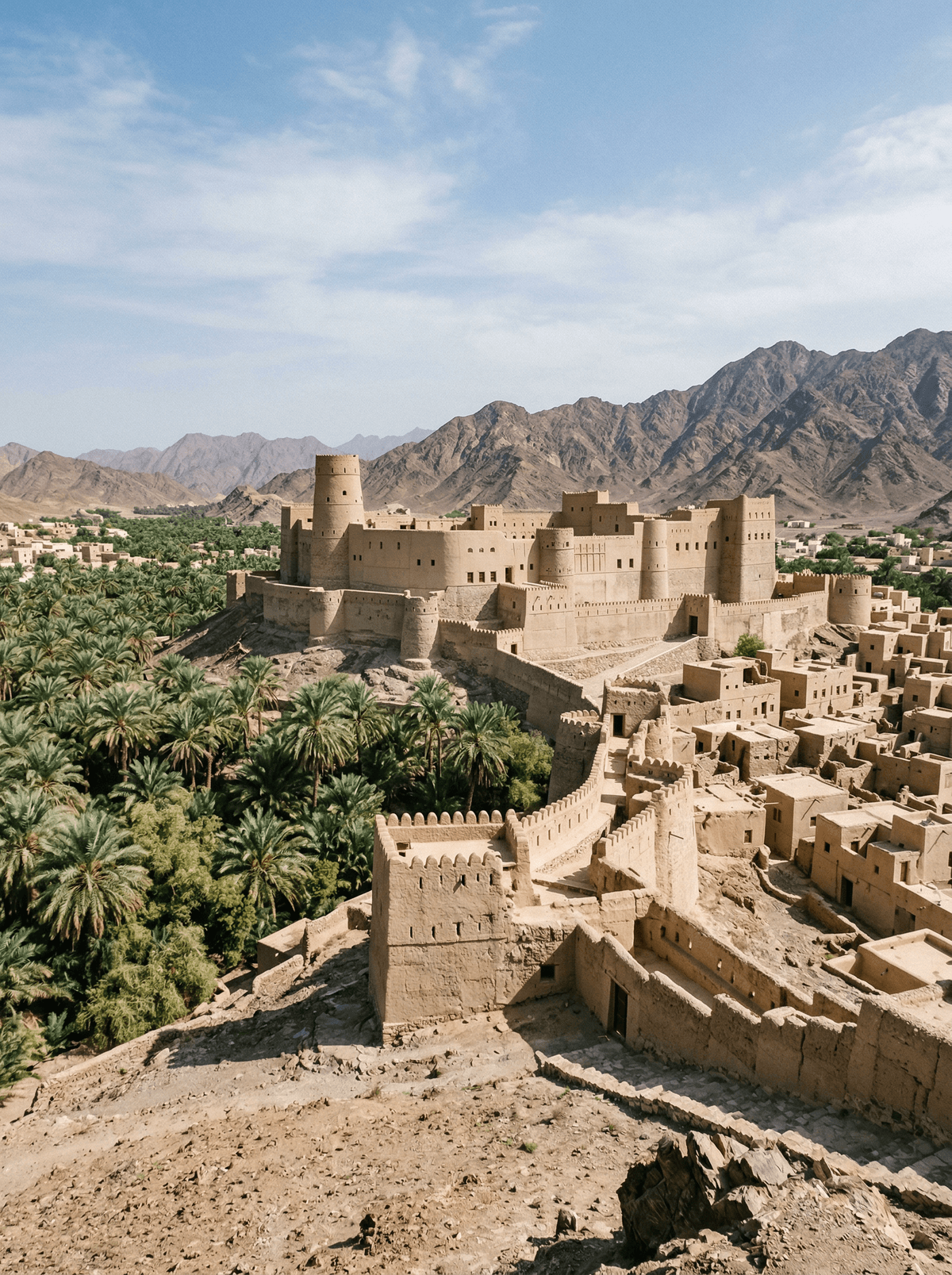
A mud-brick fort rises from the same earth as its oasis, potters still firing beside it.
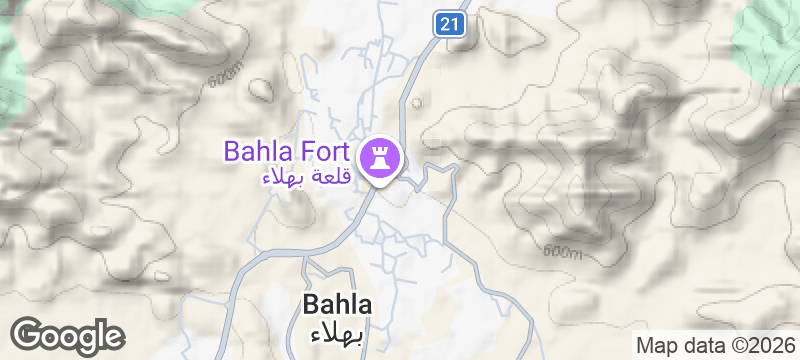
Bahla Fort's earthen walls seem to grow from the same soil as the old town. Nearby, potters shape clay while the oasis and defensive wall explain why this settlement endured.
Bahla Fort rises out of the oasis in mud brick, vast enough for UNESCO listing and old enough that its defensive wall once ran more than twelve kilometres around the settlement; long stretches of it still stand among the palms. Omani folklore has long tied Bahla to the djinn, and the stories still travel with the town's name. Below the fort, potters work clay in open workshops and the souq trades as a town's market rather than a monument's gift shop. The workshops are businesses, and a word with the maker comes before any photograph.
Solo
The fort's interior takes a genuine hour or two, and the wall fragments in the oasis reward whoever keeps walking past the façade.
Couple
Fort, pottery quarter, souq: a slow afternoon in which everything is within a few minutes' walk of the walls.
- Bahla Fort is UNESCO-listed, a vast mud-brick citadel rising from the same soil as the town.
- The old defensive wall ran more than twelve kilometres around the oasis, and long stretches still stand.
- Omani folklore ties Bahla to the djinn, and the stories still travel with the town's name.
- Bahla is particularly famous for its halwa, and its potters still work clay in open workshops.
Bahla is particularly famous for its halwa, sold in the souq below the fort.
Coffee at the café inside the fort, then rice and grilled meat at one of the town's traditional restaurants.
El Jadida
Morocco
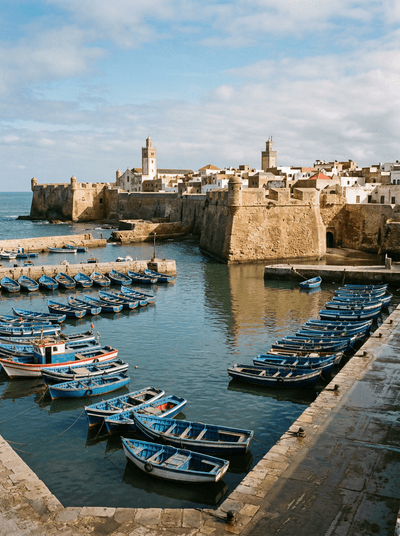
Atlantic light enters Mazagan through cannon embrasures while fishing boats work below the ramparts.
Culross
Scotland
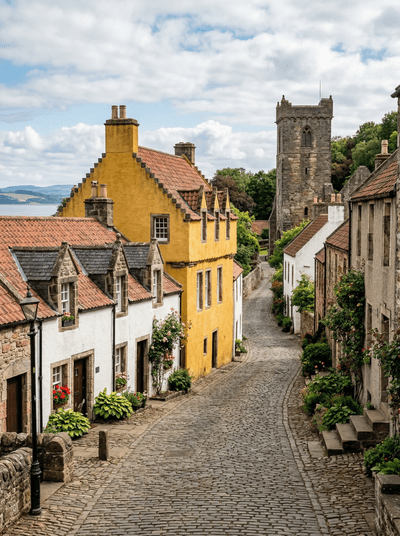
Cobblestoned lanes frozen in the 1600s, shadowed by one of Scotland's darkest witch-hunts.
Tétouan
Morocco
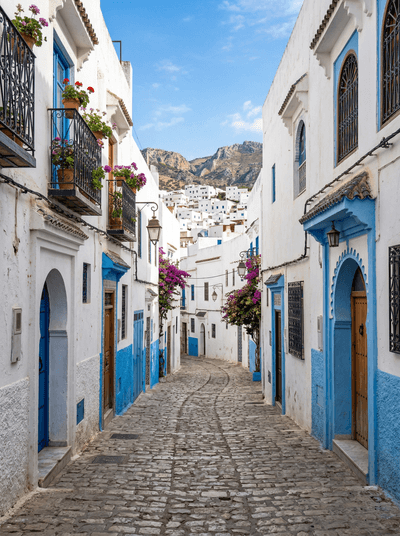
Jewish goldsmiths here shaped pendants like doves, in the city they call the White Dove.
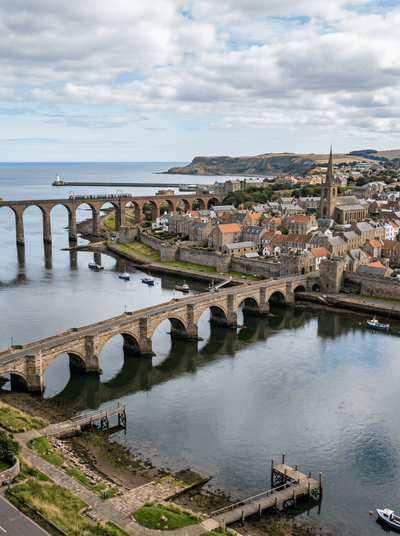
Berwick-upon-Tweed
England
A fortified border town that changed hands between England and Scotland thirteen times.