Oman
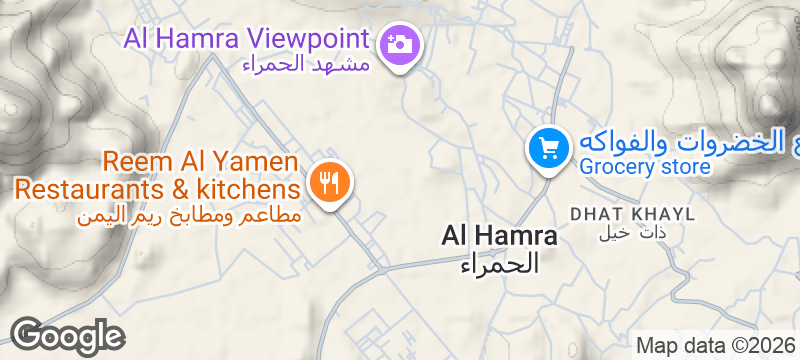
Al Hamra
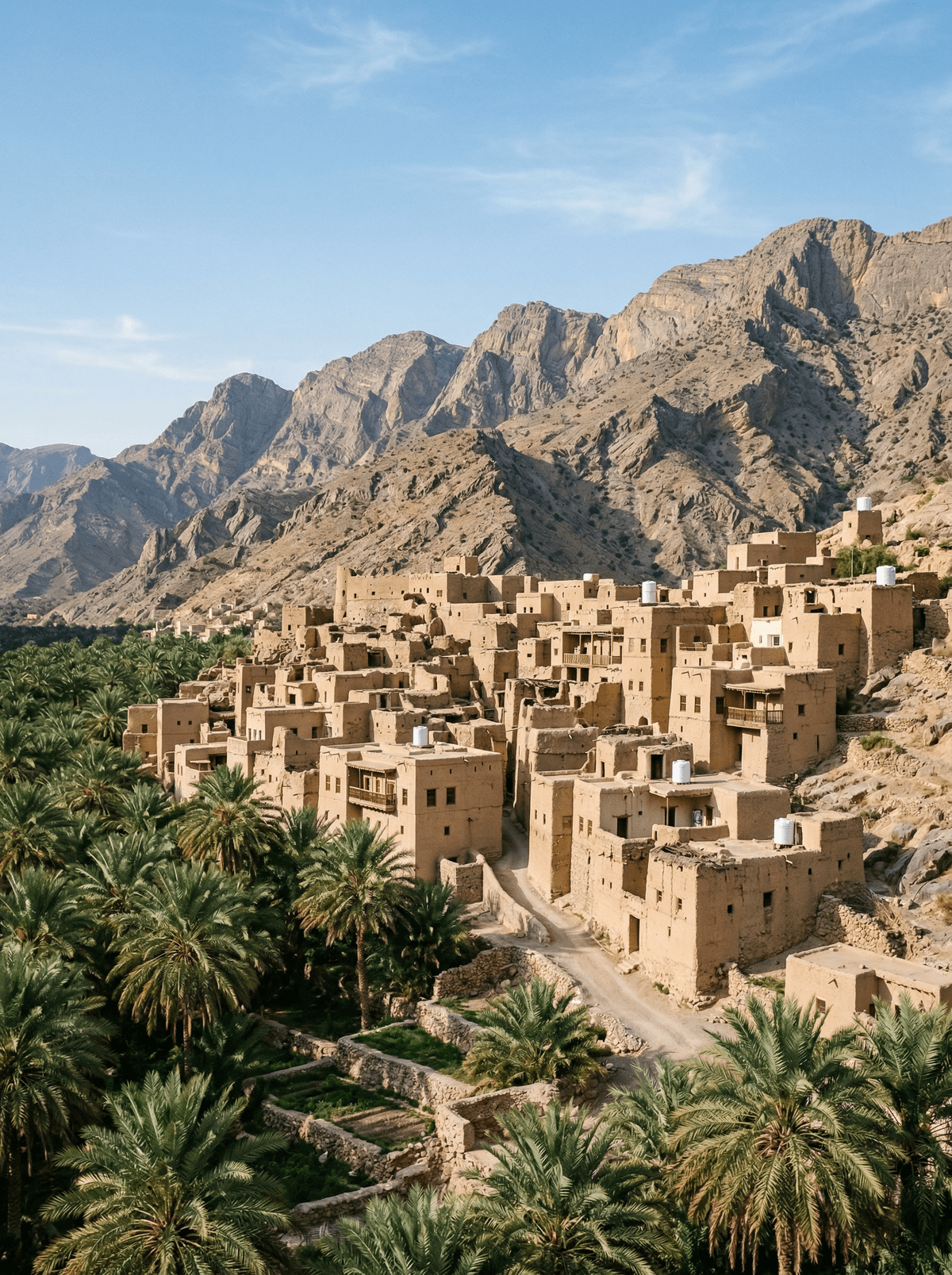
Mud-brick houses climb above the palms, and one of them still bakes its own bread.
Al Hamra's tall earthen houses hold deep shade behind small wooden doors. Below them, palms soften the edge of the old quarter and Bait Al Safah turns household history into a hosted experience.
Al Hamra's old quarter is one of Oman's best-preserved mud-brick towns, tall houses in continuous rows whose families moved out gradually through the 1980s and into the 90s. At Bait Al Safah, one of those houses stayed open as living history: village women bake bread on the fire, roast and grind coffee, and press oils while visitors sit among them. Around it, restored houses have begun a second life as cafés and small guesthouses, with the palm oasis holding the town's lower edge. Fragile buildings stay unentered, however open the doorway.
Couple
Bait Al Safah first, then the lanes and a roof-terrace coffee: a slow afternoon in a town that is quietly coming back to life.
Solo
The quarter rewards an unhurried walker with a camera and patience for shade, and the hosted house fills in everything the walls do not say.
- The old quarter's multi-storey mud houses were lived in until the 1980s and 90s, and their tall rooms still hold the shade.
- At Bait Al Safah, village women bake bread, roast coffee and press oil the old way, in a house kept as living history.
- Restored houses around the quarter now run small cafés and guesthouses, some with roof terraces over the palms.
- The palm oasis below ties the architecture to the water and farming that built it.
Bread from the fire and fresh-roasted coffee at Bait Al Safah, made in front of you.
Coffee on a roof terrace above the palms, in one of the old houses now run as a café.
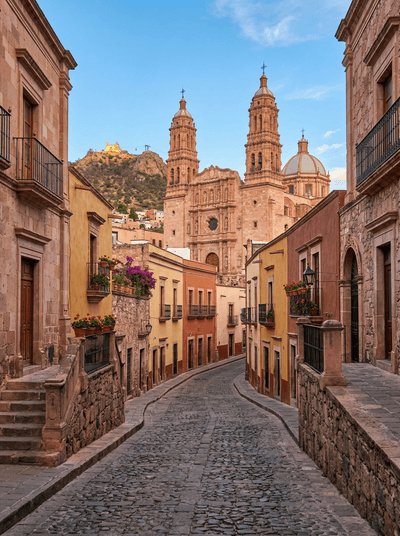
Zacatecas
Mexico
A pink-sandstone city climbs from silver mines to a cathedral carved like frozen lace.
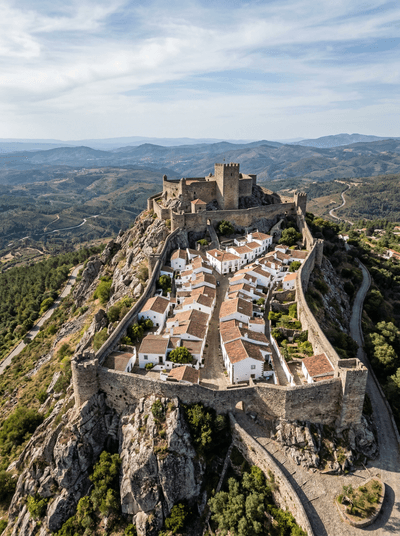
Marvão
Portugal
An eagle's-nest village at 862 metres, watching Spain dissolve into heat haze.
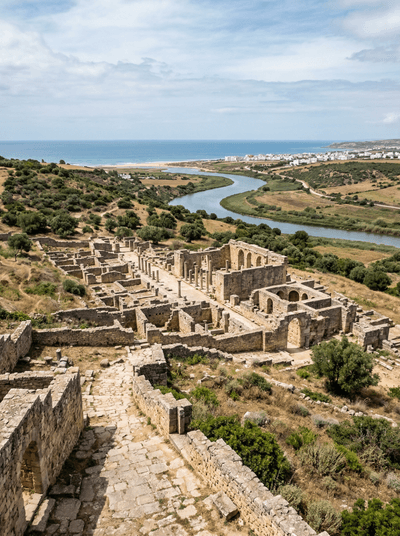
Lixus
Morocco
Roman garum vats cover a hillside ancient writers called the Garden of the Hesperides.
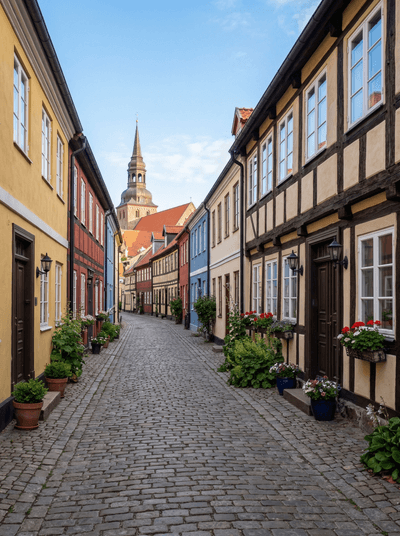
Ystad
Sweden
Wallander's rain-streaked medieval port, where half-timbered lanes still feel like a crime scene.