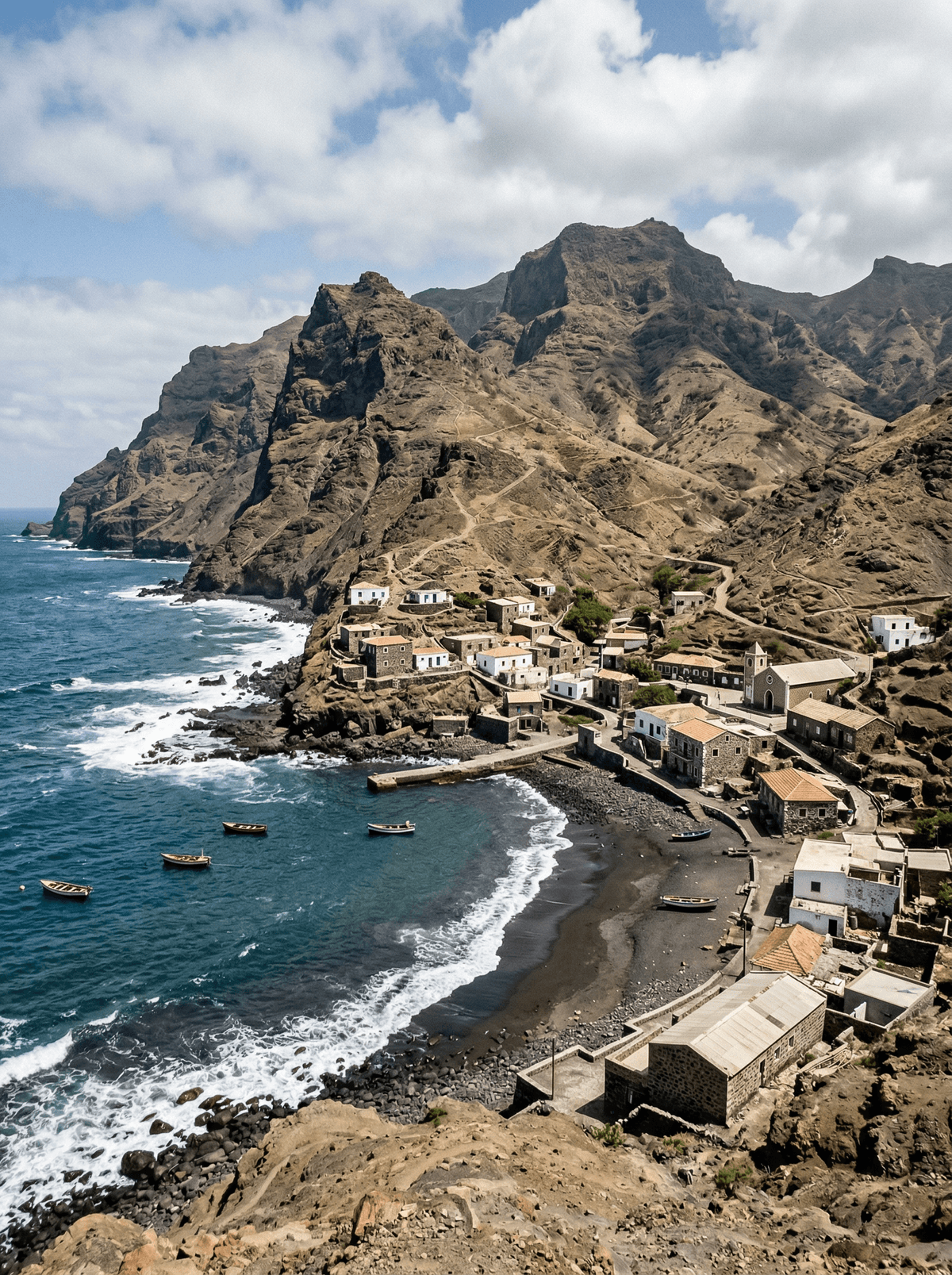
Cape Verde
Tarrafal de Monte Trigo
A black-sand cove where the day's menu is written by whatever the fishing boats bring home.
Black sand curves between the sea and irrigated plots, fishing boats hauled up on the shore and palms rattling in the trade wind. Behind the village, Santo Antão's dry western wall climbs into bare volcanic high ground, and the road in feels like a decision.
Tarrafal de Monte Trigo faces the evening sun on Santo Antão's south-west coast, a fishing and farming village where the long rough road from Porto Novo ends. Isolation here is relative rather than absolute, but it still sets the tone: kitchens cook to order from what the boats and the plots provide, and the village's small producers bottle young grogue, liqueurs and guava and papaya preserves made entirely from Santo Antão ingredients. The shore is dark volcanic sand, the water deep blue, and the day's structure belongs to the fishermen. Come with time, a booked bed and no particular plan.
Solo
Come by arranged vehicle from Porto Novo, stay a night or two, and let the village's rhythm of boats, plots and evening light set yours.
Couple
Book the bed and the dinner, then do very little, deliberately: black sand, the day's fish, a glass of village grogue at dusk.
- Tarrafal de Monte Trigo is a fishing and farming village on Santo Antão's dry south-west coast.
- Village kitchens build daily menus around fresh fish, with lobster prepared on request.
- Local producers bottle grogue, liqueurs and fruit preserves from wholly Santo Antão ingredients.
- A long road from Porto Novo reaches the village, keeping its remoteness real but no longer absolute.
Marina d'Tarrafal writes its menu daily around the catch: fresh fish always, lobster if you ask ahead, with yam, breadfruit and cassava alongside.
Take home Ti Gust's young grogue and guava or papaya preserves, made entirely from island-grown ingredients.
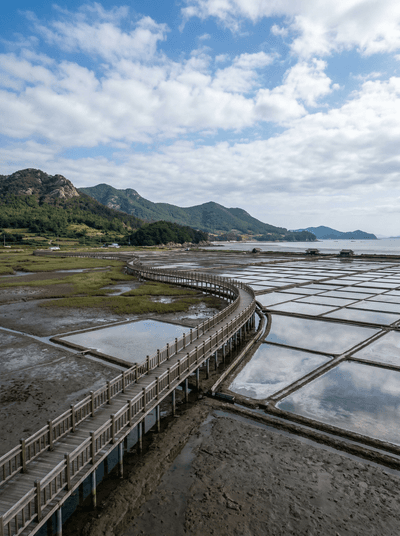
Jeungdo
South Korea
Checkerboard salt pans mirror the sky on an island that farms the sea.
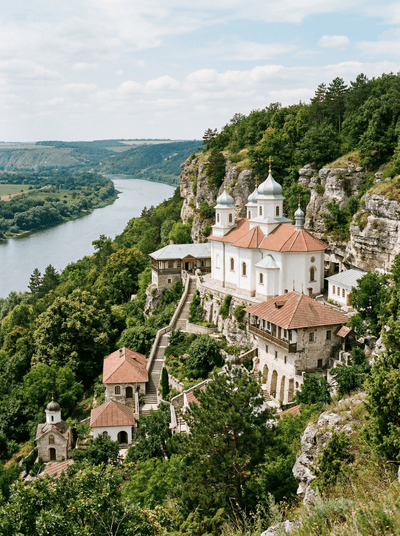
Japca Monastery
Moldova
Every monastery in Moldova closed under the Soviets except this one, praying above the Dniester.
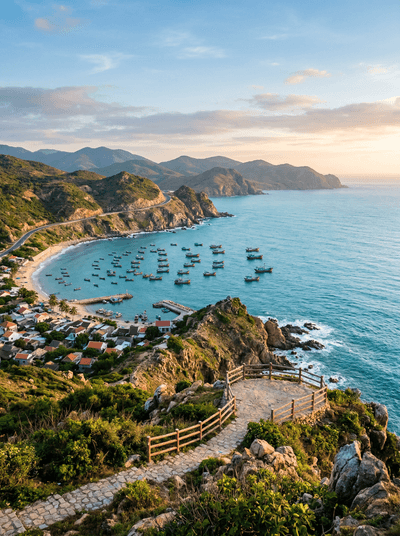
Quy Nhon
Vietnam
Ancient Cham brick towers watching over fishing coracles bobbing in a crescent bay.
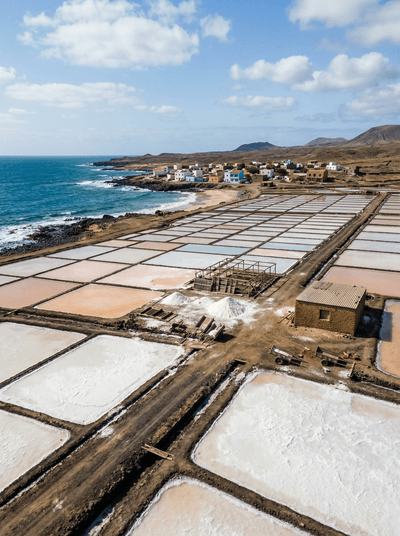
Salinas de Porto Inglês
Cape Verde
Women of the island's salt cooperative still harvest white gold from wetland pans.
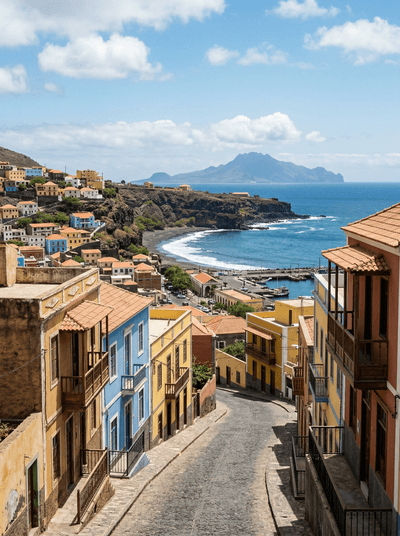
São Filipe
Cape Verde
A hundred pastel sobrados crowd the clifftop above a beach of jet-black volcanic sand.
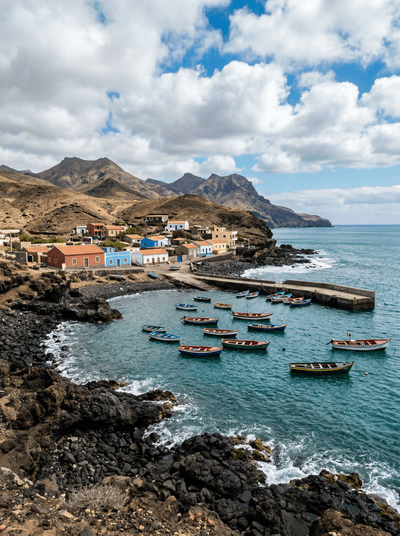
Calhau
Cape Verde
Climb a dead volcano from the beach and count three uninhabited islands from its rim.
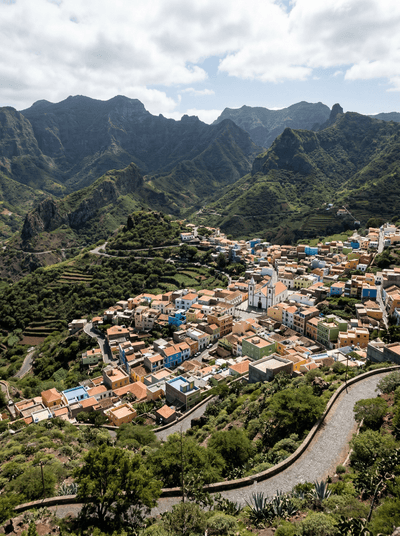
Assomada
Cape Verde
Papaya, maize and market din fill the highland town that feeds all Santiago.