Solomon Islands
Tikopia
A Polynesian speck beyond the horizon, governed by four chiefs who control every mouthful grown.
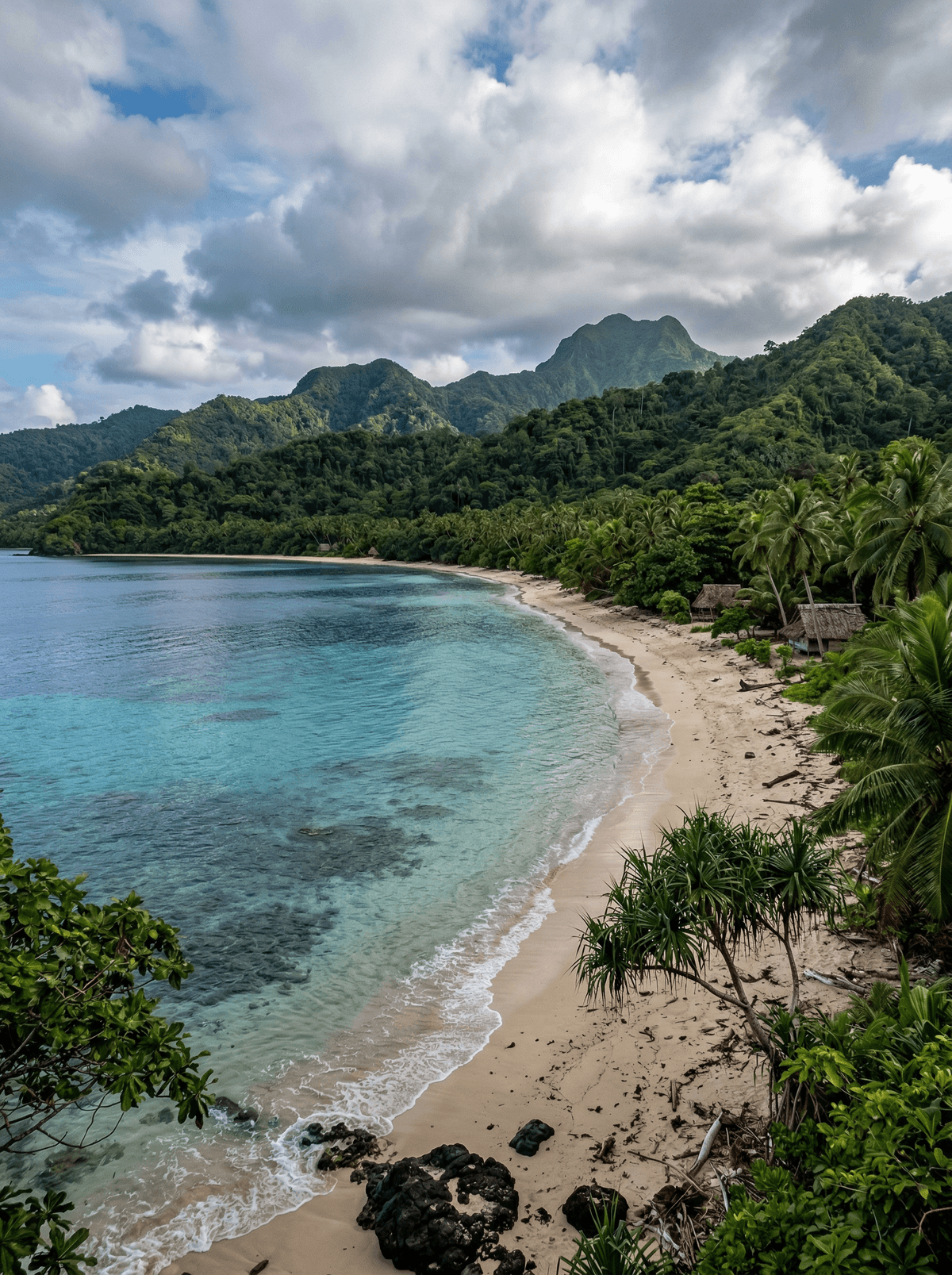
The island appears as a green ring on an empty ocean — a volcanic crater with a lake inside, three days by boat from anywhere. Tikopia's four hereditary chiefs still govern every aspect of daily life, from who fishes which reef to how many mouths each garden can feed. The smoke of cooking fires rises from beneath a canopy managed as carefully as any European estate.
Tikopia is a Polynesian outlier in the far eastern Solomon Islands, culturally and linguistically distinct from its Melanesian neighbours. Fewer than 2,000 people live on just five square kilometres, making it one of the most densely managed food-production systems on Earth. The chiefs' ariki system controls planting, harvesting, and population — a governance model anthropologist Raymond Firth documented in 1928 and that remains largely intact. Te Roto, the crater lake at the island's centre, was once open to the sea before villagers sealed it centuries ago. Reaching Tikopia requires a multi-day boat journey from Lata on Nendo, and visits depend on chiefly permission and seasonal shipping schedules.
Solo
Tikopia is the anthropological journey of a lifetime — a self-contained Polynesian society operating on principles older than most nation-states. Solo visitors integrate more easily into the rhythms of chiefly hospitality.
Couple
Three days by sea to reach an island where time operates differently. The journey is part of the experience, and the reward is witnessing a food-management system and social order that has sustained itself for a millennium.
- Tikopia's four hereditary chiefs (ariki) control land tenure, fishing rights, and food distribution — external intervention in island governance has been consistently refused for as long as the island has had contact with the outside world.
- The island has a population of approximately 1,200 people on 4.6 square kilometres — one of the Pacific's most densely populated and entirely self-sustaining communities, with no imports of food.
- Tikopians converted to Christianity in 1955 but maintain pre-Christian food taboos and rituals alongside their faith; the coexistence of the two systems has been studied by anthropologists since the 1920s.
- Getting here typically requires a cargo boat from Honiara taking over 30 hours, or a rare charter aircraft — there is no hotel and visitors stay with island families who receive them according to the chiefs' allocation.
Breadfruit and taro cultivated under a chiefly food-management system older than European agriculture.
Fresh bonito roasted over coconut husks, caught by traditional line from outrigger canoes.
Hideaway Island
Vanuatu
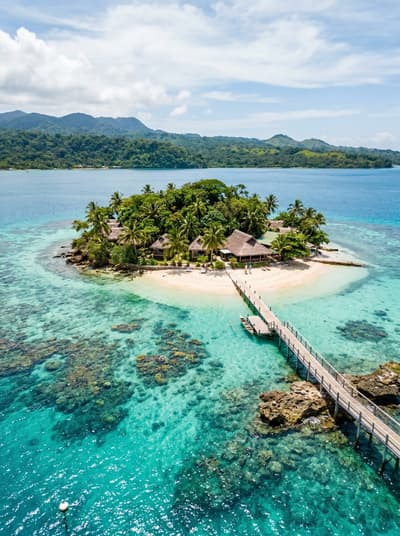
Post a waterproof postcard from the world's only underwater post office, then snorkel its coral reef.
Ureparapara
Vanuatu
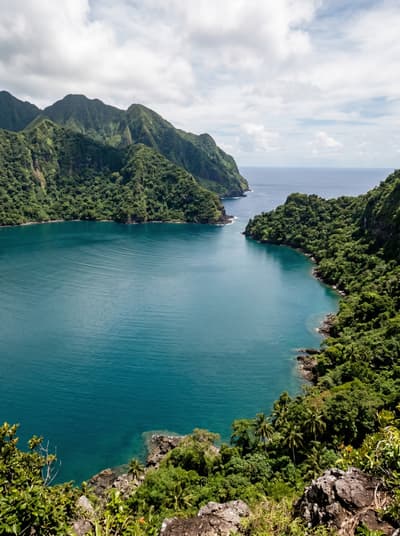
Sail into the flooded crater of a horseshoe-shaped volcanic island where fewer than 500 people remain.
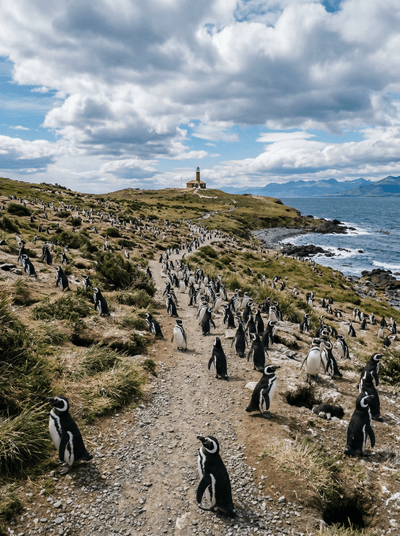
Isla Magdalena
Chile
Magellanic penguins in their tens of thousands, nesting so close you walk through their colony.
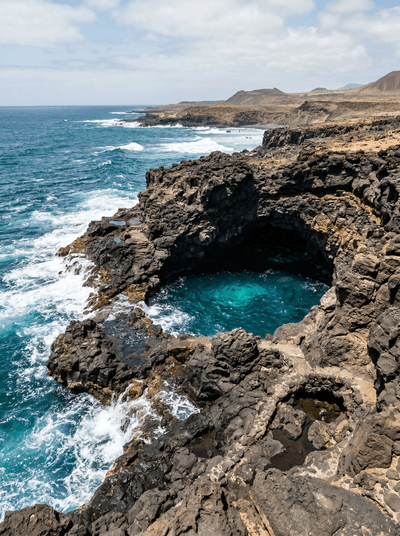
Buracona
Cape Verde
At midday, sunlight plunges through volcanic rock and ignites an underwater cave into electric blue.
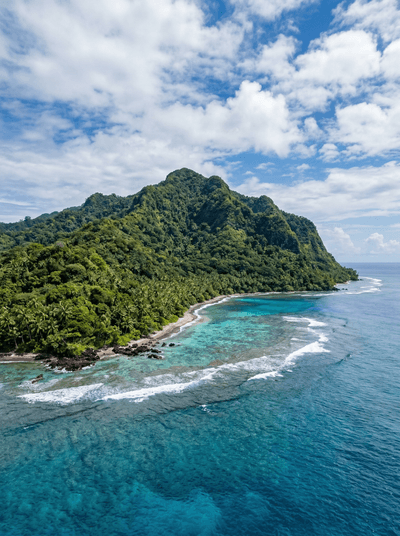
Anuta
Solomon Islands
Three hundred people share a coral speck half a mile across in the open Pacific.
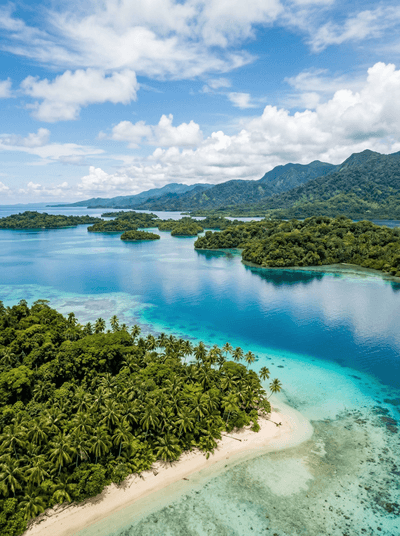
Roviana Lagoon
Solomon Islands
Head-hunting shrines and coral petroglyphs line a lagoon that launched war canoe raids for centuries.
Nendo
Solomon Islands
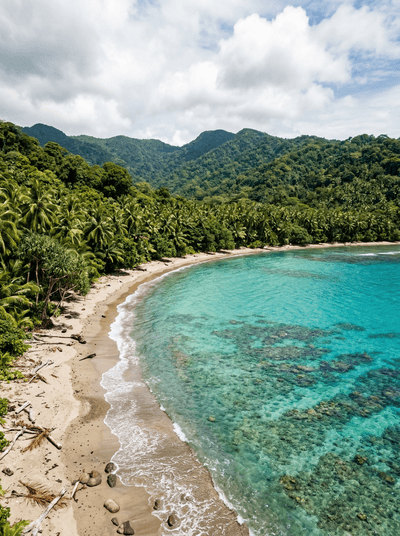
Red feather money still circulates on an island where Melanesian and Polynesian bloodlines converge.
Reef Islands
Solomon Islands
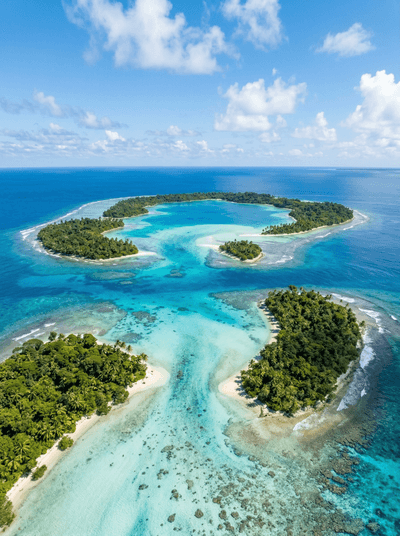
Coral islets scattered like gravel across open ocean, reached by canoe navigators reading the stars.